Philosophy
The love of wisdom in every tradition — Indian, Buddhist, Chinese, Greek, Islamic, European.
Open the realm →Literature
The stories, plays and poems that give ideas a face — every great work told in full.
Open the realm →Today's Desk
Enter the Library
⌘K to search anythingThinkers & Authors
Philosophers, poets, novelists, sages — the voices in the conversation.
85Works
Treatises, dialogues, novels, plays, scriptures.
36Ideas
The concepts that move through history and change shape.
32Schools & Movements
Traditions of thought, their members, and their quarrels.
8Debates
Thesis, objection, reply — who answered whom.
19Characters
The people of literature who carry ideas on their backs.
22Great Scenes
The moments worth remembering and retelling.
16Themes
Where philosophy and literature meet on the same question.
14Great Questions
One question followed across centuries and civilizations — who said what, in order, and who answered whom.
61Sententiae
Latin, Greek, Sanskrit, German — the phrases that sound best in the original.
190Quote Finder
The right line for the right moment, with exact references.
122Timeline
Every life on one river of time, lane by tradition.
1990The Atlas
The whole conversation drawn as a map.
Begin Here
featured
Albert Camus
Algerian-born novelist and essayist of the absurd and of revolt — “There is but one truly serious philosophical problem, and that is suicide.”
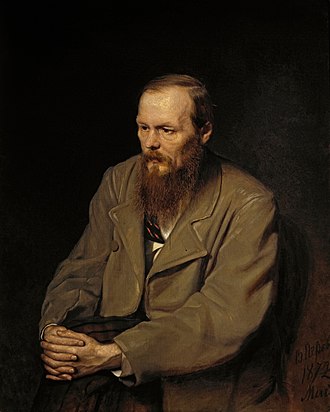
Fyodor Dostoevsky
The Russian novelist of the abyss — crime, faith, freedom, suffering — whose characters argue philosophy with their lives. Nietzsche called him the only psychologist he had anything to learn from.

Immanuel Kant
The philosopher who tried to end the war between rationalism and empiricism by asking what the mind itself contributes to experience — the “Copernican revolution” in philosophy.

Friedrich Nietzsche
Philosopher with a hammer who announced the death of God, unmasked the genealogy of morality, and called for new values — the will to power, eternal recurrence, the Übermensch, amor fati.

Plato
Socrates’ student and Aristotle’s teacher, author of the dialogues, founder of the Academy, and the philosopher of the Forms — of whom Whitehead said all Western philosophy is a series of footnotes.

William Shakespeare
The playwright and poet of Stratford whose 37-odd plays and 154 sonnets gave English its richest store of quotation and gave philosophy Hamlet, Lear and Macbeth.
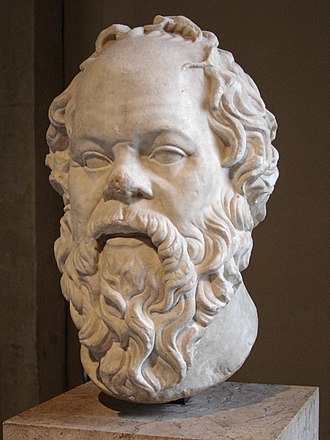
Socrates
The Athenian gadfly who wrote nothing, claimed to know nothing, questioned everyone — and was put to death for it, becoming philosophy’s martyr.
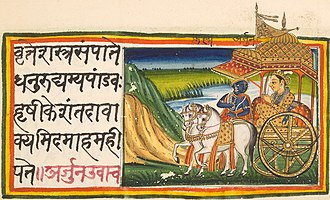
The Bhagavad Gītā
The “Song of the Lord” — Kṛṣṇa’s teaching to the despairing warrior Arjuna on the battlefield of Kurukṣetra, on duty, action without attachment, knowledge and devotion.

The Brothers Karamazov
Dostoevsky’s last and greatest novel — a murdered father, three brothers (the sensualist, the intellectual, the saint), and the deepest debate about God and evil in literature.
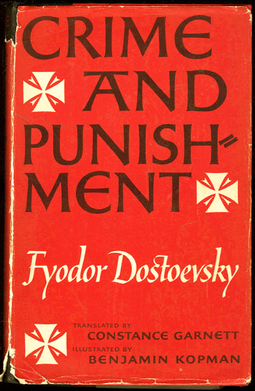
Crime and Punishment
A poor ex-student in St Petersburg murders an old pawnbroker to prove he is an “extraordinary man” — and is undone not by the police but by his own conscience and by Sonya’s love.
The Dhammapada
423 verses of the Buddha’s teaching in 26 chapters — on the mind, the fool and the wise, anger, craving, the path and the true Brahmin. The best-loved Buddhist scripture, and the shortest door into the Buddha’s ethics.

Hamlet
Shakespeare’s longest play — a prince ordered by his father’s ghost to avenge a murder thinks, doubts, delays, feigns madness, and dies in the act.
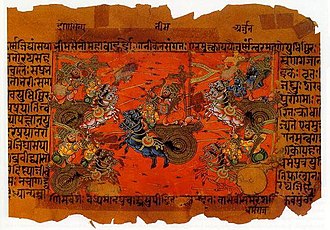
The Mahābhārata
The great epic of India — the war between the Pāṇḍavas and the Kauravas, cousins fighting for a kingdom — and, at about 100,000 couplets, the longest poem ever composed, containing the Bhagavad Gītā and almost the whole of Indian thought on dharma.

The Rāmāyaṇa
Vālmīki’s epic of Rāma, the exiled prince who crosses the sea to rescue his wife Sītā from the demon king Rāvaṇa — India’s ādikāvya, the “first poem”, and the model of dharma for two thousand years.
The Ṛg Veda
The oldest text of India and one of the oldest in any Indo-European language — 1,028 hymns to the gods of fire, storm, sky and order, composed c. 1500–1000 BCE and preserved orally, syllable for syllable, for over three thousand years. Its final book already asks how the universe began, and whether even its creator knows.
The Recognition of Śakuntalā
Kālidāsa’s seven-act masterpiece — a king and a hermit girl fall in love in a forest, a curse erases his memory, a lost ring restores it, and the lovers are reunited in heaven. The most celebrated play in Sanskrit, which astonished Goethe and Europe.
The Upaniṣads
The philosophical dialogues that close the Vedas (c. 800–200 BCE) — forest teachings in which kings, priests, women and a boy at Death’s door ask what the Self is, what Brahman is, and how to be free. The source of Vedānta, and of almost every later Indian idea about the self.
The Yoga Sūtras
Patañjali’s 196 aphorisms — the root text of classical Yoga — which define yoga as the stilling of the mind’s fluctuations, diagnose the afflictions that cause suffering, set out the eight limbs of practice, and end in the “isolation” of pure consciousness.
Dharma
The central idea of Indian civilisation — the order that holds the world together, and the duty, law, virtue and right way of living that each being owes to it. For Buddhists, the Dhamma is also the Buddha’s teaching and the ultimate constituents of reality.
Buddhism
The tradition founded by the Buddha — suffering, impermanence, no-self, and the path to nirvāṇa — later dividing into Theravāda, Mahāyāna (Madhyamaka, Yogācāra) and Vajrayāna.
The Bhakti Movement
The great devotional revolution of Indian religion — from the Tamil Āḻvārs and Nāyaṉārs (6th–9th centuries) to Kabīr, Mīrābāī, Tulsīdās and Tukārām — which made passionate, personal love of God, sung in the languages of the people, a path to liberation open to every caste and to women.
Existentialism
The philosophy of the existing individual — freedom, anxiety, authenticity, the absurd — running from Kierkegaard and Dostoevsky through Nietzsche and Heidegger to Sartre and Camus.
Jainism
The ancient Indian tradition of the Jinas — radical non-violence toward every living being, a soul weighed down by karmic matter, the “many-sidedness” of truth, and liberation by self-discipline without a creator God. Small in numbers, immense in influence.
Nyāya
India’s great school of logic and epistemology — the theory of valid knowledge (pramāṇa), the five-membered syllogism, the catalogue of fallacies, realist metaphysics, and the most famous arguments for God in Indian philosophy. Its later form, Navya-Nyāya, became the technical language of all Indian scholarship.
Russian Nihilism
The 1860s movement of young Russian radicals who rejected tradition, religion, art and authority in the name of science, utility and the people.
Sāṃkhya
The oldest of the classical Indian systems — a radical dualism of pure, inactive consciousness (puruṣa) and active, unconscious nature (prakṛti) with its three strands, the guṇas. Liberation is seeing that consciousness was never really entangled in nature.
Stoicism
The Hellenistic and Roman philosophy of virtue, reason and acceptance — happiness lies in what is up to us, our judgments and choices, not in external things.
Yoga (darśana)
The classical school of Patañjali — Sāṃkhya’s dualism of consciousness and nature, plus a God and a practical method — defining yoga as “the stilling of the fluctuations of the mind” and mapping the eight limbs from ethics to absorption.
Rationalism vs. Empiricism
The great quarrel of early modern philosophy — does knowledge come from reason or from experience? Kant tried to end it.
Śaṅkara vs. Rāmānuja
The great Vedāntic debate — is the self identical with Brahman, and the world an illusion? Or are souls and world real, the body of a personal God?
Gandhi vs. Ambedkar
The great argument of modern India — can caste be reformed from within Hinduism, as Gandhi believed, or must it be annihilated, with the scriptures that sanctify it, as Ambedkar argued?
Is There a Self? Nyāya vs. the Buddhists
The thousand-year Indian debate between Nyāya logicians, who argued that memory and recognition prove an enduring self, and Buddhist philosophers, who held that a person is a stream of momentary events.
The Allegory of the Cave
Prisoners chained since birth see only shadows on a cave wall; one is freed, dragged into the sunlight, and returns to tell the others — who would kill him if they could.
The Death of Cordelia
Lear enters carrying his hanged daughter, howling, searching for her breath with a mirror and a feather — “Never, never, never, never, never.”
The Grand Inquisitor
Ivan Karamazov’s prose-poem — Christ returns to sixteenth-century Seville, and the aged Cardinal Inquisitor imprisons him, explaining that humanity cannot bear the freedom He offered.
Lear Wakes: "No Cause, No Cause"
Lear wakes from madness to find Cordelia beside him, thinks he is in hell, begs her forgiveness — and she answers with two words that undo the whole tragedy.
The Storm on the Heath
Shut out by his daughters, Lear rages at the storm, prays for the poor, and meets “unaccommodated man” in the naked Poor Tom.
To Be, or Not to Be
Hamlet’s soliloquy weighing life against death — the most famous speech in English, and a compressed treatise on suicide, fear and the paralysis of thought.
Tat Tvam Asi — Salt in Water
Uddālaka tells his son Śvetaketu to dissolve salt in water and taste it — invisible, yet everywhere — “that is the Self; that thou art.”
Alas, Poor Yorick
In the graveyard, Hamlet is handed the skull of the jester who carried him on his back as a child — and sees where all flesh, wit and glory end.
Nihilism
The belief — or the fear — that nothing has value, meaning, or truth. Coined by Jacobi, popularized by Turgenev, diagnosed by Nietzsche, dramatized by Dostoevsky.
Does God Exist?
The proofs, the refutations, the wagers and the leaps — the great argument about God from the Upanishads to Nietzsche.
How Should One Act? — Dharma, Karma and Freedom
The Indian argument about action — from Vedic sacrifice to the Gītā’s action without attachment, the Buddha’s intention, the Jain refusal to harm, Kauṭilya’s realism, Gandhi’s satyāgraha and Ambedkar’s constitutional morality.
What Is the Meaning of Life?
Liberation, virtue, tranquillity, God, the will, revolt — the great answers to the greatest question.
What Are the Limits of the Human Mind?
Can reason know everything — or are there things the mind can never reach? From the Upanishads’ unknowable knower to Kant’s boundary and Wittgenstein’s silence.
What Can We Know?
The relay race of epistemology — from Plato’s Cave to Kant’s categories, via Descartes’ demon and Hume’s billiard balls.
What Is the Self?
From ātman to anattā, from the cogito to the bundle, from Kierkegaard’s task of becoming oneself to Sartre’s nothingness.
What Is the Self? — The Indian Argument
Three thousand years of Indian argument about the “I” — from the Upaniṣads’ Self that is Brahman, through the Buddha’s no-self, the Jain soul, the Nyāya substance, Sāṃkhya’s witness, to Ramana’s “Who am I?” and Ambedkar’s social self.
Great Quarrels
all debates →Being vs. Becoming
Is change real?
Faith vs. Reason
What has Athens to do with Jerusalem?
Sartre vs. Camus
Can revolutionary violence be justified by history?
Lines to Carry
quote finder →God is dead. God remains dead. And we have killed him.
Gott ist tot! Gott bleibt tot! Und wir haben ihn getödtet!
The struggle itself toward the heights is enough to fill a man’s heart. One must imagine Sisyphus happy.
La lutte elle-même vers les sommets suffit à remplir un cœur d'homme. Il faut imaginer Sisyphe heureux.
That which is the finest essence — this whole world has that as its Self. That is the Truth. That is the Self. That thou art, Śvetaketu.
स य एषोऽणिमैतदात्म्यमिदं सर्वं तत्सत्यं स आत्मा तत्त्वमसि श्वेतकेतो
Two things fill the mind with ever new and increasing admiration and awe, the more often and steadily we reflect upon them: the starry heavens above me and the moral law within me.
Zwei Dinge erfüllen das Gemüt mit immer neuer und zunehmender Bewunderung und Ehrfurcht, je öfter und anhaltender sich das Nachdenken damit beschäftigt: der bestirnte Himmel über mir und das moralische Gesetz in mir.
Beauty will save the world.
Мир спасёт красота.
Alas, poor Yorick! I knew him, Horatio — a fellow of infinite jest, of most excellent fancy.
Follow a Question
all threads →Does God Exist?
Can the existence of God be proved, disproved, or only believed?
How Should One Act? — Dharma, Karma and Freedom
If every action binds us, how can we act well — and still be free?
Are We Free?
If everything has a cause, can anyone be free — and can anyone be responsible?