Macbeth cannot wash the blood from his hands; Raskolnikov’s theory collapses under his own conscience; Josef K. is guilty of a crime no one names. Nietzsche traces guilt (Schuld) back to debt (Schulden) in the On the Genealogy of Morality.
Thinkers & Authors
7
Sophocles
The Athenian tragedian of Oedipus and Antigone — the poet of human blindness, unbending will and the collision of laws — whom Aristotle took as the model of tragedy.

Augustine of Hippo
North African bishop, convert, and the most influential Christian thinker of the Latin West — inventor of the autobiography of the inner self.

Dante Alighieri
The Florentine poet of the Divine Comedy — the journey through Hell, Purgatory and Paradise that summed up medieval thought and created the Italian language.

William Shakespeare
The playwright and poet of Stratford whose 37-odd plays and 154 sonnets gave English its richest store of quotation and gave philosophy Hamlet, Lear and Macbeth.
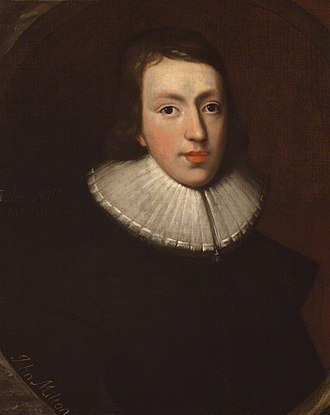
John Milton
English poet, polemicist and revolutionary whose Paradise Lost — written blind, after the defeat of his cause — retells the Fall of Man to “justify the ways of God to men”, and gave literature its most magnificent rebel, Satan.
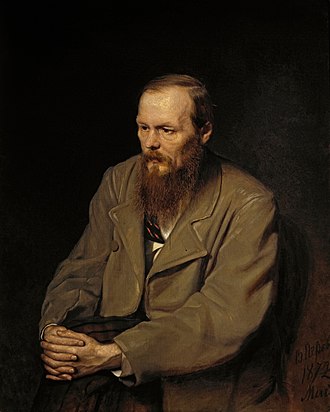
Fyodor Dostoevsky
The Russian novelist of the abyss — crime, faith, freedom, suffering — whose characters argue philosophy with their lives. Nietzsche called him the only psychologist he had anything to learn from.

Franz Kafka
Prague insurance clerk whose parables of guilt, bureaucracy and metamorphosis became the defining images of modern anxiety — and the word “Kafkaesque”.
Works
10
Oedipus the King
Sophocles’ tragedy of the king who hunts down the murderer of his predecessor — and discovers that he himself killed his father and married his mother. Aristotle’s model of the perfect tragedy.
The Manusmṛti
The most famous of the Hindu law books — a treatise on dharma covering creation, the four classes, the stages of life, the duties of kings, marriage, inheritance, crime and penance. Revered for two millennia as the code of Hindu society, and condemned in modern times as the charter of caste and of women’s subordination.

The Divine Comedy
Dante’s journey through Hell, Purgatory and Paradise — the summa of medieval thought in a hundred cantos, and one of the greatest poems ever written.

Hamlet
Shakespeare’s longest play — a prince ordered by his father’s ghost to avenge a murder thinks, doubts, delays, feigns madness, and dies in the act.

Macbeth
Shakespeare’s shortest tragedy — a brave soldier, prompted by witches and his wife, murders his king and wades so deep in blood that life becomes “a tale told by an idiot”.

Faust
Goethe’s two-part dramatic poem of the scholar who wagers his soul with Mephistopheles that no moment of pleasure will ever satisfy him — the defining myth of modern restless striving.
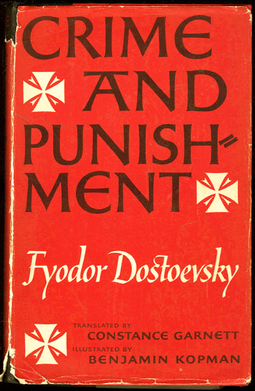
Crime and Punishment
A poor ex-student in St Petersburg murders an old pawnbroker to prove he is an “extraordinary man” — and is undone not by the police but by his own conscience and by Sonya’s love.

The Brothers Karamazov
Dostoevsky’s last and greatest novel — a murdered father, three brothers (the sensualist, the intellectual, the saint), and the deepest debate about God and evil in literature.
On the Genealogy of Morality
Nietzsche’s three essays tracing “good and evil”, guilt, and the ascetic ideal back to their hidden, all-too-human origins.

The Trial
Josef K. is arrested one morning without having done anything wrong, and spends a year trying to understand an invisible court — until two men take him to a quarry and kill him “like a dog”.
Ideas
1Characters
4Josef K.
A bank officer arrested on his thirtieth birthday for an unnamed crime, who spends a year failing to reach the court that has already judged him.
Rodion Raskolnikov
Impoverished ex-student who murders a pawnbroker to prove he is an “extraordinary man” beyond morality — and is broken and reborn by his conscience.
Nikolai Stavrogin
The magnetic, empty aristocrat at the centre of Demons — everyone’s idol, nobody’s master, strength without belief.
Sonya Marmeladova
The meek young prostitute who reads Raskolnikov the raising of Lazarus and follows him to Siberia — Dostoevsky’s image of redemptive love.
Great Scenes
4Before the Law
A man from the country asks to be admitted to the Law; the doorkeeper says “not now”; he waits his whole life — and learns as he dies that this door was meant only for him.
The Blinding of Gloucester
Betrayed by Edmund, Gloucester is tied to a chair and blinded by Cornwall while Regan watches — and learns in the same instant that Edgar was innocent.
Lear Wakes: "No Cause, No Cause"
Lear wakes from madness to find Cordelia beside him, thinks he is in hell, begs her forgiveness — and she answers with two words that undo the whole tragedy.
Sonya Reads Lazarus
In her bare room, by a candle-end, the prostitute Sonya reads the murderer Raskolnikov the Gospel story of the raising of Lazarus.
Lines to Remember
10 quotationsGrant me chastity and continence — but not yet.
da mihi castitatem et continentiam, sed noli modo
Context & when to use it
For procrastination and weakness of will (akrasia), with humour.
Someone must have slandered Josef K., for one morning, without having done anything wrong, he was arrested.
Context & when to use it
For arbitrary power, bureaucracy, guilt without crime.
No one else could ever be admitted here, since this gate was made only for you. I am now going to shut it.
Context & when to use it
For missed chances, waiting for permission, the path only you could walk.
Each of us is guilty before all, for all, and I more than the others.
Context & when to use it
The dying youth Markel’s revelation, which shapes Zosima’s whole teaching.
For universal responsibility (Levinas loved this line), against blaming others.
I wanted to find out then and quickly whether I was a louse like everybody else or a man.
Context & when to use it
Raskolnikov’s confession to Sonya — the murder was a test of whether he dared to “step over”.
For the will to power, the Napoleonic complex, ideas that kill.
Did I murder the old woman? I murdered myself, not her! I crushed myself once for all, for ever.
Context & when to use it
To Sonya. The crime destroyed the criminal.
For how evil acts deform the doer; guilt as self-destruction.
Something is rotten in the state of Denmark.
Context & when to use it
Spoken by the officer Marcellus as Hamlet follows the Ghost — corruption at the top of the state.
For institutional corruption, political rot, or anything that “smells wrong”.
⚠ Spoken by Marcellus, not Hamlet. Often misquoted as “something is wrong” or “something’s rotten”.
Out, damned spot! Out, I say!
Context & when to use it
Sleepwalking, she tries to wash imagined blood from her hands.
For guilt that cannot be washed away.
How sharper than a serpent’s tooth it is to have a thankless child!
Context & when to use it
For ingratitude, especially of children.
The play’s the thing wherein I’ll catch the conscience of the king.
Context & when to use it
For art as a mirror that reveals guilt.
Sententiae
phrases in the originalHamartia
Origin. Aristotle, Poetics 13. Later translated as “tragic flaw”, though Aristotle meant an error of judgment. — Aristotle
⚠ In the New Testament the same word means “sin”.
For Lear’s vanity, Macbeth’s ambition, Hamlet’s delay.
Explore Next
related by shared connections
Homer
The legendary blind poet of Greece to whom the Iliad and the Odyssey are attributed — the founding works of Western literature, and for the Greeks the “educator of Hellas”.

King Lear
An old king divides his kingdom between the daughters who flatter him and banishes the one who loves him — and is stripped of everything on a heath in a storm.

Anton Chekhov
Russian doctor, short-story writer and playwright who revolutionised both forms — stories without neat plots or morals, plays where the drama happens beneath ordinary talk — and became the great artist of wasted lives, quiet longing and compassion.

Demons
Dostoevsky’s prophetic political novel — a provincial town possessed by revolutionary nihilists, the murder of one of their own, and the hollow charisma of Stavrogin.

Friedrich Nietzsche
Philosopher with a hammer who announced the death of God, unmasked the genealogy of morality, and called for new values — the will to power, eternal recurrence, the Übermensch, amor fati.

Søren Kierkegaard
The melancholy Dane, father of existentialism, who set the passionate individual against Hegel’s System and faith against reason — “truth is subjectivity”.