
Contents · 12 sections · 18 min
Key Ideas
The journey from sin through repentance to beatitude.
Contrapasso — the punishment that mirrors the sin.
Love as the moving force of the universe; sin as disordered love.
Reason (Virgil) can lead us far, but only grace (Beatrice) leads to God.
Politics and the corruption of the Church.
Nel mezzo del cammin di nostra vita mi ritrovai per una selva oscura, ché la diritta via era smarrita.
In the middle of the journey of our life, I found myself in a dark wood, for the straight way was lost.
So begins the Divine Comedy. On the night before Good Friday in the year 1300, the poet Dante, thirty-five — halfway through the biblical life-span of seventy years — finds himself lost in a dark wood. Over the next week he travels down through the nine circles of Hell to the centre of the earth, climbs the mountain of Purgatory on the other side of the world, and rises through the nine heavens to the presence of God. His guide through Hell and Purgatory is the Roman poet Virgil; through Paradise, Beatrice, the Florentine woman he loved. On the way he meets some six hundred souls — mythological, biblical, historical, and contemporary — and talks with many of them.
The poem is at once a personal story of conversion, an allegory of every soul’s journey to God, an encyclopedia of medieval science, philosophy and theology, a scathing commentary on Italian politics and the corruption of the Church, and a love poem. It is written in terza rima — tercets rhyming aba bcb cdc… — a form Dante invented, which pulls the reader forward without rest, like the journey itself.
Background
Dante began the poem in exile, probably around 1308, and finished it shortly before his death in 1321. See Dante Alighieri. Its world rests on the cosmology of Ptolemy and Aristotle (a spherical Earth at the centre of nine rotating heavens), the theology of Thomas Aquinas and Augustine of Hippo, and a long tradition of visionary journeys to the afterlife — Aeneas’s descent to the underworld in Virgil’s Aeneid VI, St Paul’s vision, and Islamic accounts of Muhammad’s night journey, which may have reached Dante in translation.
The structure
Everything is ordered by numbers, especially three (the Trinity) and its multiples:
| Inferno | Purgatorio | Paradiso | |
|---|---|---|---|
| Place | A funnel-shaped pit beneath Jerusalem | A mountain on an island in the southern hemisphere, opposite Jerusalem | The nine concentric heavens and the Empyrean |
| Cantos | 34 (1 introductory + 33) | 33 | 33 |
| Divisions | Vestibule + 9 circles | Ante-Purgatory + 7 terraces + Earthly Paradise | 9 heavens + the Empyrean |
| Guide | Virgil | Virgil (then Beatrice) | Beatrice (then St Bernard) |
| Souls | The damned, without hope | The saved, purging their sins, in hope | The blessed, in joy |
| Last word | stelle | stelle | stelle |
The moral map of Hell
Hell is organized according to Aristotle‘s Ethics (explained by Virgil in Inferno 11): sins of incontinence (lack of self-control), of violence, and of fraud — the worst, because it abuses reason, what is distinctively human.
| Circle | Sinners | Punishment (contrapasso) |
|---|---|---|
| Vestibule | The neutral, who lived “without infamy and without praise” | Chase a blank banner forever, stung by wasps |
| 1. Limbo | Virtuous pagans and unbaptized infants | No torment, only longing without hope |
| 2. | The lustful | Blown forever by a hurricane |
| 3. | Gluttons | Lie in freezing, stinking slush, guarded by Cerberus |
| 4. | The avaricious and the prodigal | Push great weights against each other |
| 5. | The wrathful and the sullen | Fight in the swamp of the Styx / gurgle beneath it |
| City of Dis | ||
| 6. | Heretics | Lie in burning tombs |
| 7. | The violent — against others, self (suicides), God, nature and art | A river of boiling blood; a wood of trees that bleed; a desert of burning sand under a rain of fire |
| 8. Malebolge (ten ditches) | The fraudulent — panders, flatterers, simonists, fortune-tellers, corrupt officials, hypocrites, thieves, false counsellors, sowers of discord, falsifiers | Whipped by demons; plunged in excrement; upside down in holes with flaming feet; heads twisted backwards; boiled in pitch; weighted with gilded lead cloaks; turned into serpents; wrapped in flames; split open; diseased |
| 9. Cocytus | Traitors — to kin, country, guests, lords | Frozen in a lake of ice |
| Centre | Satan | Frozen to the waist, chewing Judas, Brutus and Cassius |
The moral map of Purgatory
Purgatory is organized by the seven deadly sins, understood as disordered love: love directed toward evil — pride, envy, wrath; love too weak toward the good — sloth; love excessive toward lesser goods — avarice, gluttony, lust. On each terrace the souls practise the opposite virtue and meditate on examples of virtue and vice. At the summit lies the Earthly Paradise, the Garden of Eden.
Paradise
The heavens correspond to the Ptolemaic spheres — Moon, Mercury, Venus, Sun, Mars, Jupiter, Saturn, the Fixed Stars, the Primum Mobile — each associated with a kind of blessed soul (the inconstant, the ambitious, lovers, theologians, warriors of faith, just rulers, contemplatives). All the blessed actually dwell together in the Empyrean, beyond space and time, in the form of a great white rose; they appear in the spheres only to accommodate Dante’s human understanding.
Synopsis
Hell
Lost in the dark wood, Dante sees a sunlit hill and tries to climb it, but is driven back by three beasts — a leopard, a lion and a she-wolf (often read as lust, pride and avarice). The shade of Virgil appears: sent by Beatrice in heaven, through the Virgin Mary and St Lucy, he will lead Dante by another way — through Hell and Purgatory; then a worthier soul will lead him into Paradise. Dante hesitates — “I am not Aeneas, I am not Paul” — then consents.
They come to the gate of Hell, whose inscription ends: “Abandon all hope, you who enter here” (Lasciate ogne speranza, voi ch’intrate). In the vestibule run the neutral souls, whom neither heaven nor hell will accept. Charon ferries them across the river Acheron; Dante faints.
He wakes in Limbo, a castle in a green meadow where the virtuous pagans dwell, sighing without torment but without hope. Here are the great poets — Homer, Horace, Ovid, Lucan — who welcome Dante as “sixth among such wisdom”; and the philosophers, gathered around “the master of those who know” — Aristotle — with Socrates, Plato, Democritus, Heraclitus, Euclid, Ptolemy, Hippocrates, Avicenna (Ibn Sīnā) and Averroes (Ibn Rushd) “who made the great commentary”. (See God & Faith for the question of the virtuous pagans.)
In the second circle, the lustful are swept around by an eternal storm. Dante asks to speak with two lovers who move together: Francesca da Rimini and Paolo Malatesta. Francesca tells their story: married to Paolo’s brother, they were reading together the romance of Lancelot and Guinevere, and when they read how Lancelot kissed the queen, Paolo kissed her, “all trembling” — “that day we read no further” — and her husband killed them both. “Love, which absolves no beloved from loving…” Dante, overwhelmed with pity, faints “as a dead body falls”. It is the most famous episode in the poem — and a test of the reader: Dante the pilgrim pities; Dante the poet has placed them in Hell.
Through the circles of the gluttons (among them the Florentine Ciacco, who prophesies Dante’s city’s woes), the avaricious and prodigal (many clergy), and the wrathful in the swamp of Styx — where Dante shows contempt for the furious Filippo Argenti — they reach the walls of Dis, the city of the lower Hell, guarded by fallen angels and Furies, who bar the way until a heavenly messenger opens the gates.
Among the heretics in their burning tombs, Farinata degli Uberti, a proud Ghibelline leader who once saved Florence from destruction, rises from his tomb “as if he held Hell in great disdain”, argues politics with Dante, and prophesies his exile. Beside him, Cavalcante de’ Cavalcanti, father of Dante’s best friend, the poet Guido Cavalcanti, asks why his son is not with Dante — and, misunderstanding Dante’s hesitation, falls back believing him dead.
In the seventh circle, guarded by the Minotaur and centaurs, tyrants and murderers boil in a river of blood. In the wood of the suicides, souls have become gnarled trees, torn by Harpies; when Dante snaps a twig, it bleeds and speaks: it is Pier della Vigna, minister of the Emperor Frederick II, who killed himself after being falsely accused. On the burning sand, Dante meets his old teacher Brunetto Latini, among the sodomites, and treats him with tender respect: “you taught me how man makes himself eternal.”
Carried down on the back of the monster Geryon, an image of fraud, they enter Malebolge, ten concentric ditches of fraud. Flatterers wallow in excrement; simoniac popes are stuck head-down in holes with their feet on fire — Pope Nicholas III mistakes Dante for Boniface VIII, arriving early. Fortune-tellers walk with their heads twisted backwards, weeping down their backs. Corrupt officials boil in pitch, guarded by a comic, vicious squad of demons. Hypocrites trudge in cloaks gilded outside and lead within. Thieves are bitten by serpents and transformed into them in horrifying metamorphoses.
In the eighth ditch, the false counsellors move wrapped in flames. One double flame holds Ulysses and Diomedes. Virgil asks Ulysses how he died, and Ulysses tells a story not in Homer: after returning from Circe, neither love for his son nor his old father nor Penelope could overcome his longing “to gain experience of the world, and of human vice and worth”. He set sail with a few old companions through the Pillars of Hercules into the forbidden ocean, urging them: “Consider your origin: you were not made to live like brutes, but to follow virtue and knowledge.” After five months they saw a great mountain — Purgatory — and a whirlwind sank them. It is one of the most magnificent passages in the poem, and one of the most debated: a heroic image of the human thirst for knowledge, or its condemnation as hubris? (Primo Levi recited it to a fellow prisoner in Auschwitz.) See The Odyssey.
Then the sowers of discord, split open by a demon’s sword — Muhammad among them (a passage that remains offensive and controversial) — and Bertran de Born carrying his severed head like a lantern; and the falsifiers, rotting with disease.
At last, the ninth circle: Cocytus, a lake of ice, where traitors are frozen to varying depths. In the region for traitors to their country, Dante finds two heads frozen in one hole, one gnawing the other’s skull: Count Ugolino, a Pisan nobleman, gnawing Archbishop Ruggieri, who betrayed him. Ugolino tells his story: imprisoned with his sons and grandsons in a tower, the door was nailed shut; he watched his children starve; they offered him their own flesh to eat; one by one they died, and “then fasting did what grief could not” — a line whose ambiguity (did he die of hunger, or eat his children?) has haunted readers ever since.
At the very centre of the earth, frozen to his chest in the ice, is Satan — vast, three-faced, with six bat-like wings whose beating freezes the lake, weeping from six eyes, chewing in his three mouths the three arch-traitors: Judas, who betrayed Christ, and Brutus and Cassius, who betrayed Caesar (and so the divinely sanctioned Empire). Virgil, with Dante clinging to his back, climbs down Satan’s shaggy flank — and at the centre of gravity turns upside down and climbs up through a passage to the other side of the world. They emerge to see the stars.
Purgatory
On Easter morning, Dante and Virgil arrive on the shore of an island at the foot of a mountain in the southern ocean, beneath four bright stars. The guardian, Cato of Utica — a pagan suicide, strangely saved — tells Virgil to wash Dante’s face of Hell’s grime and gird him with a reed. A boat steered by an angel brings souls singing a psalm; among them is the musician Casella, Dante’s friend, who sings one of Dante’s own songs so sweetly that all stand entranced until Cato scolds them.
In Ante-Purgatory wait the excommunicated and the late-repentant: Manfred, the excommunicated king, saved by a last-minute tear of repentance — “so great is the infinite goodness”; Belacqua, a lazy Florentine friend who sits in the shade, too indolent to climb. Dante sleeps and dreams; St Lucy carries him to the gate of Purgatory proper, where an angel inscribes seven Ps (for peccatum, sin) on his forehead, to be erased one by one.
On the terrace of pride, souls bend under huge stones, studying carvings of humility; the artist Oderisi da Gubbio reflects on the vanity of fame — Cimabue was surpassed by Giotto; one poet will chase another from the nest (perhaps Dante himself). On the terrace of envy, the envious sit with eyelids sewn shut with wire. On the terrace of wrath, souls walk through blinding smoke. Midway up the mountain, Virgil explains the theory of love: all action springs from love; sin is disordered love; and free will is the power to choose rightly among loves. On the terrace of sloth, the souls run ceaselessly. On the terrace of avarice, they lie face down on the ground; an earthquake shakes the mountain as the Roman poet Statius completes his purification and joins Dante and Virgil — revealing that Virgil’s poetry led him to Christianity: “through you I was a poet, through you a Christian.” On the terrace of gluttony, emaciated souls starve near fruit trees; Dante meets his friend Forese Donati and the poet Bonagiunta, who names Dante’s style the dolce stil novo, “the sweet new style”. On the terrace of lust, the souls walk in fire, among them poets — Guido Guinizzelli and Arnaut Daniel, who speaks in Provençal.
To reach the summit, Dante must walk through the wall of fire. He is terrified; Virgil tells him that Beatrice is on the other side, and he goes through. At the top, Virgil crowns and mitres Dante over himself — his will is now free, upright and whole — and falls silent.
In the Earthly Paradise, a beautiful woman, Matelda, gathers flowers by a stream. A great allegorical pageant approaches — the procession of the Church, with a griffin drawing a chariot — and on the chariot, veiled, appears Beatrice. Dante turns to Virgil to say “not a drop of blood is left in me that does not tremble” — and Virgil is gone. Dante weeps. Beatrice rebukes him, severely, for straying after her death into false pursuits. He confesses, faints with remorse, and is drawn through the river Lethe, which washes away the memory of sin, and the Eunoë, which restores the memory of good. “Pure and ready to rise to the stars.”
Paradise
Gazing at Beatrice, who gazes at the sun, Dante rises through the heavens without knowing how. In the Moon, he meets Piccarda Donati, a nun forced from her convent into marriage, who explains why the souls in the lowest heaven are content: “In His will is our peace.” In Mercury, the Emperor Justinian tells the history of the Roman Empire. In Venus, souls who loved. In the Sun, two rings of wise spirits — among them Thomas Aquinas, who praises St Francis (though a Dominican), and St Bonaventure, a Franciscan, who praises St Dominic; Albert the Great, Boethius, Solomon, Siger of Brabant (the Averroist whom Aquinas opposed — here reconciled).
In Mars, the souls of crusaders form a great cross of light. Dante’s great-great-grandfather Cacciaguida describes the simple, virtuous Florence of old, foretells Dante’s exile — “you shall learn how salt is the taste of another’s bread” — and charges him to write everything he has seen, however bitter: “let them scratch where it itches.”
In Jupiter, the souls of just rulers spell out in letters of light DILIGITE IUSTITIAM QUI IUDICATIS TERRAM — “Love justice, you who judge the earth” — and form an eagle, which speaks with one voice of many, and addresses the problem of the virtuous heathen: why should a man born on the banks of the Indus, who never heard of Christ and lived without sin, be damned? The eagle answers that divine justice is beyond human understanding — and then reveals two pagans in heaven, the Roman emperor Trajan and the Trojan Ripheus.
In Saturn, a golden ladder of contemplatives; St Peter Damian denounces corrupt prelates. In the Fixed Stars, Dante is examined on faith by St Peter, on hope by St James, and on love by St John, and sees Adam. St Peter erupts in fury against the corrupt popes of Dante’s day. In the Primum Mobile, Beatrice explains the angelic hierarchies, as Dante sees God as a point of intense light surrounded by nine rings of angels.
In the Empyrean, beyond space and time, Dante sees the river of light and the blessed arranged as petals of an immense white rose. Beatrice takes her place in the rose; St Bernard of Clairvaux becomes his final guide and prays to the Virgin Mary to grant Dante the vision of God — the prayer that begins “Virgin Mother, daughter of your Son.” Dante looks into the eternal light. He sees, bound by love into one volume, all that is scattered through the universe; three circles of three colours, the Trinity; and within one circle, the image of a human face — the Incarnation. He strives to understand how the image fits the circle, like a geometer trying to square the circle — and his mind is struck by a flash in which his desire is fulfilled. His power of imagination fails; but his desire and will are now turned, like a wheel moving evenly,
by the love that moves the sun and the other stars. (l’amor che move il sole e l’altre stelle)
Characters
- Dante — the pilgrim, who learns, pities, fears, rebukes, faints; and the poet, who judges.
- Virgil — the Roman poet of the Aeneid, symbol of human reason and classical wisdom; a virtuous pagan who must return to Limbo.
- Beatrice — Dante’s beloved, now among the blessed; symbol of divine grace, revelation and theology.
- St Bernard — the mystic who leads Dante to the final vision.
- Francesca, Farinata, Pier della Vigna, Brunetto Latini, Ulysses, Ugolino — the great figures of Hell.
- Cato, Manfred, Statius — figures of Purgatory.
- Piccarda, Justinian, Aquinas, Cacciaguida — figures of Paradise.
Themes
The journey
The Comedy is a story of conversion — one man’s, written by the man himself. Its allegory works on several levels at once, as Dante explained in a letter: literally, the state of souls after death; allegorically, the soul’s journey from sin to grace in this life. “Comedy” in Dante’s sense: a story that begins in misery and ends in happiness, in humble language.
Justice and contrapasso
Each punishment in Hell is a contrapasso (“counter-suffering”), mirroring the sin: the lustful, who were swept away by passion, are swept away forever by wind; the fortune-tellers, who tried to see the future, have their heads twisted backwards; the sowers of discord are split apart. The damned are fixed in the sin they chose: Hell is the eternal consequence of a will that refused God. “Justice moved my maker on high… I was made by divine power, highest wisdom, and primal love” (inscription on the gate). Whether such justice is just has troubled readers from Dante’s time to ours.
Love
The poem’s driving force: from Francesca’s misdirected love in Hell, through Virgil’s theory of love in Purgatory, to Beatrice’s love that leads Dante upward, and the love that moves the stars. See God & Faith.
Reason and grace
Virgil — reason, philosophy, the best of pagan wisdom — can lead Dante through Hell and up Purgatory, but not into Paradise; for that, Beatrice — grace and revelation — is needed. This mirrors Thomas Aquinas‘s view that reason can reach far but is perfected by faith. Virgil’s disappearance at the summit is one of the most moving moments in the poem: reason, however noble, cannot save itself. See Faith vs. Reason.
Politics
The Comedy is a political poem. Florence is denounced again and again; corrupt popes fill the holes of the simonists; the Empire and the Church should each keep to its sphere. Brutus and Cassius, betrayers of Caesar, are chewed with Judas in Satan’s mouths.
Fame and art
Dante places himself among the great poets, and returns again and again to the vanity — and the necessity — of fame. The Comedy is also a poem about poetry: its guides, friends and souls include many poets; its last cantos confess language’s failure before the vision of God.
Form
Terza rima — tercets with interlocking rhyme (aba, bcb, cdc…) — gives the poem relentless forward momentum. The number three and its multiples structure everything: three canticles, thirty-three cantos each plus one introduction (100), nine circles, nine terraces (with ante-Purgatory and Eden), nine heavens. Dante’s similes, drawn from everyday Italian life — peasants, shipyards, children, falcons — make the supernatural concrete. His language mixes the high and the low, the theological and the obscene, as no poet before him.
Interpretations and reception
Boccaccio lectured on the poem in Florence in 1373–74; within a century there were dozens of commentaries. The Romantics found in its Inferno the sublime of terror; the Victorians loved its Paradiso. T. S. Eliot’s essay “Dante” (1929) made him the model of the “visual imagination” and of poetry that thinks. Erich Auerbach’s Dante, Poet of the Secular World (1929) and Mimesis (1946) showed how Dante’s damned are more vividly individual, more fully themselves, than any characters before him — the beginning of modern realism. Osip Mandelstam’s “Conversation about Dante” (1933) treated the poem as a living, moving structure. Jorge Luis Borges, in Nine Dantesque Essays, argued that the whole Comedy was written for the single encounter with Beatrice.
Legacy
The Comedy created literary Italian. It influenced Chaucer, Milton, Blake, Byron, Shelley, Tennyson, Eliot, Pound, Beckett, Primo Levi, Borges, Seamus Heaney. It has been illustrated by Botticelli, Blake, Doré, Dalí and Rauschenberg; set to music by Liszt (Dante Symphony) and Tchaikovsky (Francesca da Rimini); sculpted by Rodin (The Gates of Hell, The Kiss — Paolo and Francesca — and The Thinker). “Abandon all hope”, “the ninth circle of hell” and “Dantesque” are proverbial.
Lines to carry
- “In the middle of the journey of our life, I found myself in a dark wood, for the straight way was lost.” (Inf. 1.1–3)
- “Abandon all hope, you who enter here.” (Inf. 3.9)
- “Love, which absolves no beloved from loving…” — Francesca (Inf. 5.103)
- “You were not made to live like brutes, but to follow virtue and knowledge.” — Ulysses (Inf. 26.119–20)
- “In His will is our peace.” — Piccarda (Par. 3.85)
- “How salt is the taste of another’s bread.” — Cacciaguida (Par. 17.58–59)
- “The love that moves the sun and the other stars.” (Par. 33.145)
Keywords
- Terza rima
- Dante's interlocking rhyme scheme, aba bcb cdc…
- Contrapasso
- The principle by which each punishment mirrors its sin.
- Malebolge
- "Evil ditches" — the ten trenches of the eighth circle, for the fraudulent.
- Cocytus
- The frozen lake of the traitors at the bottom of Hell.
- Limbo
- The first circle, home of virtuous pagans and unbaptized infants.
- Dolce stil novo
- "The sweet new style" — the love poetry of Dante's circle.
- Empyrean
- The highest heaven, beyond space and time, where God and the blessed dwell.
Using Dante in conversation
- On mid-life crisis: “the straight way was lost” — Dante at thirty-five.
- On justice: contrapasso — punishments that fit the crime.
- On neutrality: the neutral souls, rejected by both heaven and hell — “the hottest places in hell are reserved for those who in times of moral crisis maintain their neutrality” is a popular misquotation, not Dante’s line, but it captures the vestibule.
- On the thirst for knowledge: Ulysses’ “follow virtue and knowledge”.
The Divine Comedy in two minutes
A man lost in a dark wood is led through Hell and up the mountain of Purgatory by Virgil, and through the heavens by Beatrice, to the vision of God.
Dante’s journey through Hell, Purgatory and Paradise — the summa of medieval thought in a hundred cantos, and one of the greatest poems ever written.
- The journey from sin through repentance to beatitude.
- Contrapasso — the punishment that mirrors the sin.
- Love as the moving force of the universe; sin as disordered love.
- Reason (Virgil) can lead us far, but only grace (Beatrice) leads to God.
- Politics and the corruption of the Church.
“In the middle of the journey of our life I found myself in a dark wood, for the straight way was lost.” — Inferno 1.1–3
Curiosities
did you know?- Dante called it simply the ‘Commedia’ — a comedy because it begins in misery and ends in happiness, and is written in the vernacular. Boccaccio added ‘Divina’.
- Each of the three parts ends with the word ‘stelle’ — stars.
- The journey takes place over Easter week of 1300 — about a week in all.
- Rodin’s sculpture The Thinker was originally conceived as Dante, contemplating his poem above the Gates of Hell.
Questions to Argue About
debate club →- Is eternal punishment ever just?
- Why does Dante pity Francesca and then faint?
- Can reason alone — Virgil — bring us to happiness?
Lines to Remember
5 quotationsIn the middle of the journey of our life I found myself in a dark wood, for the straight way was lost.
Nel mezzo del cammin di nostra vita mi ritrovai per una selva oscura, ché la diritta via era smarrita.
Context & when to use it
For mid-life crisis, losing one’s way, the beginning of every spiritual journey.
Abandon all hope, you who enter here.
Lasciate ogne speranza, voi ch'intrate.
Context & when to use it
The last line of the inscription over the gate of Hell.
For hopeless places — usually with dark humour.
⚠ Often misquoted as “Abandon hope all ye who enter here”.
Consider your origin — you were not made to live like brutes, but to follow virtue and knowledge.
fatti non foste a viver come bruti, ma per seguir virtute e canoscenza
Context & when to use it
Ulysses urges his old companions on their last voyage beyond the known world — which ends in shipwreck.
For the thirst for knowledge — and its risks. Primo Levi recited it in Auschwitz.
The love that moves the sun and the other stars.
l'amor che move il sole e l'altre stelle
Context & when to use it
The last line of the Divine Comedy.
For love as the principle of the universe; for endings.
You shall learn how salt is the taste of another’s bread, and how hard a road it is to go down and up another’s stairs.
Context & when to use it
Dante’s ancestor prophesies his exile.
For exile, dependence, homesickness.
Explore Next
related by shared connections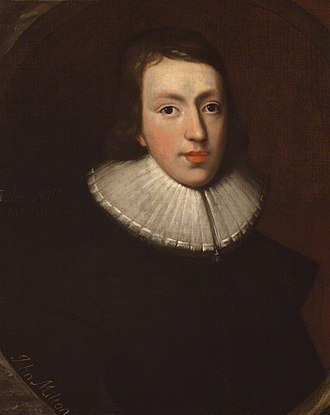
John Milton
English poet, polemicist and revolutionary whose Paradise Lost — written blind, after the defeat of his cause — retells the Fall of Man to “justify the ways of God to men”, and gave literature its most magnificent rebel, Satan.
On the Genealogy of Morality
Nietzsche’s three essays tracing “good and evil”, guilt, and the ascetic ideal back to their hidden, all-too-human origins.
Basavaṇṇa (Basava)
The 12th-century Kannada saint, poet and statesman who founded the Vīraśaiva (Liṅgāyat) movement — rejecting caste, temples, priests and the Vedas, preaching that work is worship and that every devotee carries Śiva on his body.

Antigone
Sophocles’ tragedy of the young woman who buries her brother against the king’s decree — the founding drama of conscience against the state, which Hegel read as the collision of two rights.
Master and Slave Morality
Nietzsche’s genealogy — “good/bad” was the self-affirmation of nobles; “good/evil” was invented by the resentful weak to revenge themselves on the strong.
Aśoka
The Mauryan emperor (r. c. 268–232 BCE) who, after the slaughter of his conquest of Kaliṅga, turned to Buddhism and governed by “dhamma” — non-violence, tolerance and welfare — proclaimed in edicts carved on rocks and pillars across India. His lion capital is India’s emblem; his wheel is on its flag.