Plato’s Cave and Śaṅkara’s rope-snake, Descartes’ demon and Zhuangzi’s butterfly, Hume’s billiard balls and Kant’s categories. Follow it in the thread What Can We Know?.
Map of Influence
who answered whom, inside this roomThinkers & Authors
66Uddālaka Āruṇi
Upanishadic teacher who instructed his son Śvetaketu with salt in water and the seed of a banyan, ending each lesson — “tat tvam asi”, that thou art.

Yājñavalkya
The boldest sage of the Upanishads, who taught that the Self (ātman) is the unseen seer, describable only as “neti neti” — not this, not this.
Gārgī Vācaknavī
The woman philosopher who challenged Yājñavalkya at King Janaka’s court with questions about what the universe is “woven on” — pressing him until he warned that her head would fall off, then returning with two questions “like arrows”. One of the earliest named women philosophers in history.
Maitreyī
Yājñavalkya’s wife, “a discourser on Brahman”, who asked whether all the wealth in the world could make her immortal — and, refusing her share of his property, received instead his teaching that all love is love of the Self.
Kapila
The legendary founder of Sāṃkhya, revered as the “first knower” (ādividvān) and, in later Hinduism, as an incarnation of Viṣṇu — a sage known almost entirely through myth, to whom India credits the first systematic philosophy of consciousness and nature.

Laozi
The legendary “Old Master” credited with the Tao Te Ching — the short, paradoxical classic of the Way that cannot be named, of yielding water and effortless action.

Heraclitus
The obscure philosopher of Ephesus for whom everything flows, strife is the father of all things, and a hidden logos governs the endless change.

Parmenides
The stern pre-Socratic of Elea who argued that only what-is can be thought, that nothing comes from nothing, and that change and plurality are illusions.

Sophocles
The Athenian tragedian of Oedipus and Antigone — the poet of human blindness, unbending will and the collision of laws — whom Aristotle took as the model of tragedy.
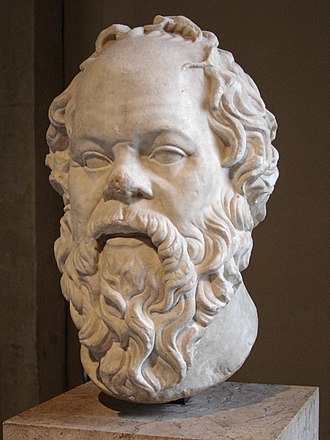
Socrates
The Athenian gadfly who wrote nothing, claimed to know nothing, questioned everyone — and was put to death for it, becoming philosophy’s martyr.
Pāṇini
The grammarian of ancient Gandhāra whose Aṣṭādhyāyī — 4,000 rules generating the whole of Sanskrit — is the most rigorous description of any language before modern linguistics, and one of the great intellectual achievements of antiquity.

Plato
Socrates’ student and Aristotle’s teacher, author of the dialogues, founder of the Academy, and the philosopher of the Forms — of whom Whitehead said all Western philosophy is a series of footnotes.

Aristotle
Plato’s greatest student and tutor of Alexander the Great, who founded logic, systematized biology, ethics and politics, and brought the Forms down to earth.
Kauṭilya (Cāṇakya)
The Brahmin strategist who, by tradition, made Candragupta Maurya emperor and wrote the Arthaśāstra — the ancient world’s most comprehensive treatise on statecraft, economics, law, diplomacy, espionage and war. India’s Machiavelli, two thousand years before Machiavelli.
Zhuangzi
The wittiest of Chinese philosophers — the butterfly dreamer, sceptic, and teller of tales — who mocked fixed perspectives and taught the free and easy wandering of a mind attuned to the Dao.
Jaimini
The sage credited with the Mīmāṃsā Sūtras, the founding text of Vedic hermeneutics — and, in legend, a disciple of Vyāsa who heard the Mahābhārata from his master.
Kaṇāda
The founder of Vaiśeṣika and traditional author of the Vaiśeṣika Sūtras — the sage remembered as India’s first atomist, who taught that everything perceptible is built from eternal, indivisible particles.
Bādarāyaṇa
The author, by tradition, of the Brahma Sūtras — the systematisation of the Upaniṣads that became the root text of every school of Vedānta. Often identified with Vyāsa, compiler of the Vedas and author of the Mahābhārata.
Gautama Akṣapāda
The founder of the Nyāya school and traditional author of the Nyāya Sūtras — the first systematic Indian treatise on logic, knowledge and debate. Legend gave him eyes in his feet.

Nāgārjuna
Founder of the Madhyamaka (“Middle Way”) school of Buddhism, who argued that all things are empty (śūnya) of independent existence — including emptiness itself.
Patañjali
The compiler of the Yoga Sūtras — 196 terse aphorisms that define yoga as the stilling of the mind — honoured by tradition also as the grammarian of the Great Commentary on Pāṇini and as an incarnation of the serpent Ādiśeṣa.

Tertullian
Fiery early Christian writer from Carthage, father of Latin theology, remembered for setting faith against philosophy — “What has Athens to do with Jerusalem?”
Kundakunda
The most revered Digambara Jain teacher — author of the Samayasāra, which distinguishes the absolute standpoint, from which the soul is pure consciousness untouched by karma, from the conventional standpoint, from which it is bound.
Asaṅga
Co-founder of Yogācāra Buddhism, who after twelve years of fruitless meditation found the future Buddha Maitreya in a wounded dog — and wrote the great maps of the bodhisattva path and of consciousness.
Vasubandhu
The 4th–5th century Buddhist philosopher who wrote the definitive summary of Abhidharma — and then, converted by his brother Asaṅga, became co-founder of Yogācāra, arguing that the world we experience is “representation only”.
Buddhaghosa
The 5th-century Indian monk who went to Sri Lanka and translated and systematised the Theravāda commentaries — author of the Visuddhimagga, “The Path of Purification”, the definitive map of Theravāda doctrine and meditation.
Bhartṛhari
The 5th-century philosopher of language who taught that ultimate reality is the Word (śabda-brahman), that meaning flashes forth as a whole (sphoṭa), and that all knowledge is shot through with language — and, by tradition, the poet of the Three Centuries on love, worldly wisdom and renunciation.
Dignāga
The founder of Buddhist logic and epistemology — only perception and inference give knowledge, perception grasps bare particulars, concepts are constructions, and words mean by excluding (apoha). He revolutionised the logic of every Indian school.
Gauḍapāda
The earliest systematic teacher of Advaita Vedānta, whose verses on the Māṇḍūkya Upaniṣad taught that nothing has ever really been born — the waking world is like a dream, and the one consciousness only seems to become many.
Dharmakīrti
The 7th-century Buddhist logician who perfected Dignāga’s epistemology — proving momentariness, refuting a creator God and the Veda’s authority, and defining knowledge by its reliability — the most formidable philosophical opponent the Hindu schools ever faced.
Kumārila Bhaṭṭa
The 7th-century Mīmāṃsā philosopher who turned Vedic ritual hermeneutics into a full philosophy — defending the authorless Veda, the self-validity of knowledge and a realist world against the Buddhists, and arguing that no creator God is needed.

Ādi Śaṅkara
The great systematizer of Advaita (non-dual) Vedānta — Brahman alone is real, the world is māyā, and the individual self is none other than Brahman.
Abhinavagupta
The towering Kashmiri polymath (c. 950–1016) — the great systematiser of non-dual Kashmir Śaivism and the greatest theorist of Indian aesthetics, who taught that in the experience of art (rasa) the self tastes its own blissful consciousness.
Udayana
The great Nyāya philosopher of Mithilā who gave Indian philosophy its classic proofs of God’s existence, defended the reality of the self against the Buddhists, and closed the classical age of Nyāya-Vaiśeṣika.

Avicenna (Ibn Sīnā)
Persian polymath — physician, metaphysician, logician — whose Canon of Medicine was taught in Europe for 500 years and whose distinction between essence and existence reshaped philosophy in Islam and the Latin West.

Rāmānuja
Founder of Viśiṣṭādvaita — “qualified non-dualism” — who argued against Śaṅkara that the world and souls are real, forming the body of a personal God.

Al-Ghazālī
Theologian, jurist and mystic whose Incoherence of the Philosophers attacked Avicenna’s Aristotelianism, anticipated Hume on causation, and whose spiritual autobiography records a crisis of doubt.
Hemacandra
The Jain polymath of 12th-century Gujarat — grammarian, poet, logician, lexicographer, historian and royal adviser — called “the omniscient of the Kali age”, who persuaded a king to ban animal slaughter.

Averroes (Ibn Rushd)
Andalusian judge and philosopher — “the Commentator” on Aristotle — who defended philosophy against al-Ghazālī and argued that reason and revelation cannot contradict each other.

Thomas Aquinas
Dominican friar and the greatest of the scholastics, who wove Aristotle’s philosophy and Christian theology into a single vast system — the Summa Theologiae — with five ways to prove God.
Madhva
The 13th-century philosopher from Udupi who founded Dvaita Vedānta — the uncompromising teaching that God, souls and matter are eternally distinct, and that Viṣṇu alone is independent.
Jñāneśvar
The 13th-century Marathi saint-poet who, at about twenty, wrote the Jñāneśvarī — a 9,000-verse commentary on the Bhagavad Gītā in Marathi that founded Marathi literature and the Vārkarī devotional tradition — and entered living samādhi at twenty-one.
Gaṅgeśa Upādhyāya
The 14th-century logician of Mithilā who founded Navya-Nyāya, the “New Logic”, in his Tattvacintāmaṇi — a technical language of such precision that it became the common idiom of Indian scholarship for five centuries.

Michel de Montaigne
The inventor of the essay, who made himself the subject of his book — sceptical, curious, tolerant, candid — and asked, “Que sais-je?” — What do I know?
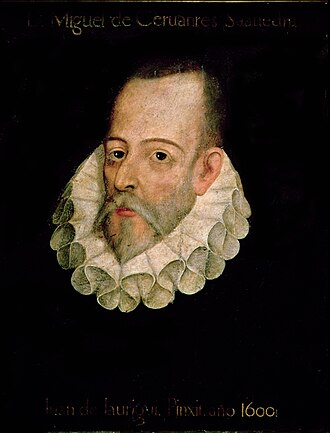
Miguel de Cervantes
Soldier, captive, tax collector and the father of the modern novel — whose Don Quixote made a deluded old knight and his earthy squire the most famous pair in literature.
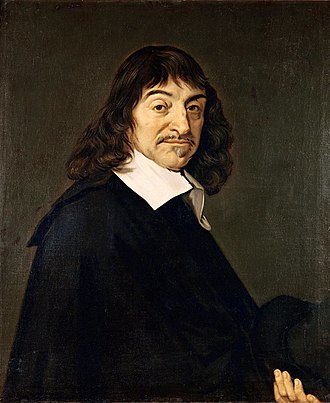
René Descartes
The father of modern philosophy, who doubted everything that could be doubted and found one thing that could not — that he himself was thinking.
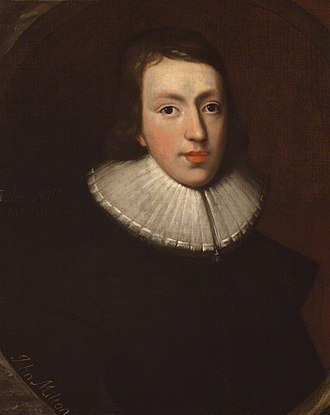
John Milton
English poet, polemicist and revolutionary whose Paradise Lost — written blind, after the defeat of his cause — retells the Fall of Man to “justify the ways of God to men”, and gave literature its most magnificent rebel, Satan.

Blaise Pascal
Mathematician, physicist, inventor and Christian apologist whose fragmentary Pensées confront the misery and greatness of the human being — the thinking reed — and propose the Wager.

John Locke
Father of British empiricism and of liberalism — the mind begins as a blank slate, and government rests on the consent of the governed.

Gottfried Wilhelm Leibniz
Universal genius — co-inventor of calculus, philosopher of monads and pre-established harmony — who argued that ours is the best of all possible worlds.

Voltaire
The wittiest man of the Enlightenment — playwright, historian, satirist and campaigner against intolerance — whose Candide demolished Leibnizian optimism and whose cry was “Écrasez l’infâme!”

David Hume
The great Scottish sceptic who showed that causation, the self, and induction cannot be justified by reason — and that reason is, and ought only to be, the slave of the passions.

Immanuel Kant
The philosopher who tried to end the war between rationalism and empiricism by asking what the mind itself contributes to experience — the “Copernican revolution” in philosophy.

Friedrich Heinrich Jacobi
German critic of the Enlightenment who sparked the Pantheism Controversy and gave philosophy the word “nihilism”.
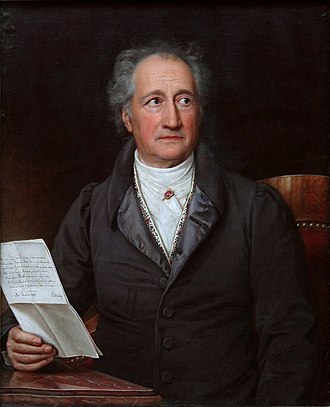
Johann Wolfgang von Goethe
Germany’s greatest writer — poet, novelist, dramatist, scientist and statesman — whose Faust is the modern myth of the striving soul, and whose life was itself treated as a work of art.

Georg Wilhelm Friedrich Hegel
The philosopher of Spirit and dialectic, for whom reality is a rational process working itself out through contradiction in history — “the real is the rational”.
Raja Rammohun Roy
The Bengali reformer (1772–1833) called the “father of modern India” — translator of the Upaniṣads as rational monotheism, founder of the Brahmo Samāj, campaigner against satī, and champion of modern education and a free press.
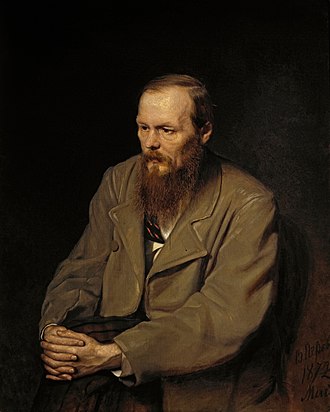
Fyodor Dostoevsky
The Russian novelist of the abyss — crime, faith, freedom, suffering — whose characters argue philosophy with their lives. Nietzsche called him the only psychologist he had anything to learn from.
Dayānanda Sarasvatī
The Gujarati ascetic (1824–1883) who founded the Ārya Samāj with the cry “Back to the Vedas!” — rejecting idol-worship, caste by birth, and the Purāṇas, and calling for a rational Vedic religion, education for women and the reconversion of those who had left Hinduism.

Nikolai Chernyshevsky
Radical critic and author of What Is to Be Done? — the utopian novel of “rational egoism” that inspired Lenin and provoked Dostoevsky’s Underground Man.
Sri Aurobindo
The revolutionary nationalist turned yogi and philosopher of Pondicherry, whose The Life Divine and Integral Yoga teach that evolution is spirit’s ascent through matter, life and mind toward a “supermind” that will divinise earthly life.
Ramana Maharshi
The silent sage of Arunachala (1879–1950), who at sixteen experienced his own death and the deathless Self, and taught one practice above all — self-inquiry, “Who am I?” — the simplest and most direct path of Advaita.
Sarvepalli Radhakrishnan
The philosopher-statesman who presented Indian philosophy to the West as a living tradition — Oxford’s Spalding Professor of Eastern Religions, author of Indian Philosophy, and India’s second President. Teachers’ Day is his birthday.

Martin Heidegger
The philosopher of Being, who argued that the West had forgotten the question of what it means to be, and analysed human existence (Dasein) as thrown, anxious, being-toward-death.

Ludwig Wittgenstein
The Viennese-Cambridge philosopher who twice transformed philosophy — first by mapping the limits of what language can say (Tractatus), then by showing that meaning is use in the countless “language games” of ordinary life (Philosophical Investigations).
Jiddu Krishnamurti
The philosopher raised by the Theosophists to be a “World Teacher”, who renounced the role in 1929 — “truth is a pathless land” — and spent sixty years teaching that freedom comes only from seeing the movement of one’s own mind, without authority, method or guru.
Works
36The Ṛg Veda
The oldest text of India and one of the oldest in any Indo-European language — 1,028 hymns to the gods of fire, storm, sky and order, composed c. 1500–1000 BCE and preserved orally, syllable for syllable, for over three thousand years. Its final book already asks how the universe began, and whether even its creator knows.
The Upaniṣads
The philosophical dialogues that close the Vedas (c. 800–200 BCE) — forest teachings in which kings, priests, women and a boy at Death’s door ask what the Self is, what Brahman is, and how to be free. The source of Vedānta, and of almost every later Indian idea about the self.

Bṛhadāraṇyaka Upaniṣad
The “Great Forest” Upanishad, oldest and longest, home of Yājñavalkya’s debates, the teaching to Maitreyī, and “neti neti”.

Chāndogya Upaniṣad
One of the oldest Upanishads, famed for Uddālaka’s teaching to Śvetaketu — tat tvam asi — and Satyakāma’s honest answer about his birth.
Taittirīya Upaniṣad
The Upaniṣad of the five sheaths and the graduation address — it defines Brahman as “truth, knowledge, infinity”, peels away the layers of the self from food to bliss, measures the bliss of Brahman, and tells departing students “Treat your mother as a god.”

Kaṭha Upaniṣad
The story of the boy Naciketas, who goes to the house of Death and asks what happens after death — receiving the teaching of the immortal Self.
Kena Upaniṣad
The “By whom?” Upaniṣad — by whom is the mind sent forth, the breath set going, speech uttered? Its answer is the paradox that Brahman is known only by those who know they do not know it — and a story of the gods humbled by a blade of grass.

Oedipus the King
Sophocles’ tragedy of the king who hunts down the murderer of his predecessor — and discovers that he himself killed his father and married his mother. Aristotle’s model of the perfect tragedy.
Muṇḍaka Upaniṣad
The Upaniṣad of the “shaven head” — it distinguishes the “lower knowledge” of the Vedas and sciences from the “higher knowledge” of the imperishable, compares ritual to leaky boats, gives the image of two birds on one tree, and India its national motto, “Truth alone triumphs”.
Śvetāśvatara Upaniṣad
The most theistic of the principal Upaniṣads — it identifies Brahman with Rudra-Śiva, a personal Lord to be loved, blends Vedānta with early Sāṃkhya and Yoga, and first uses the words māyā and bhakti in their later senses.

Tao Te Ching
The 81 short chapters of the “Classic of the Way and its Power” — the foundational text of Daoism and one of the most translated books ever written.
The Apology of Socrates
Plato’s account of Socrates’ defence speech at his trial in 399 BCE — a manifesto for the philosophical life.
The Republic
Plato’s great dialogue on justice — in the soul and in the city — containing the philosopher-kings, the Allegory of the Cave, and the banishment of the poets.
Brahma Sūtras
Bādarāyaṇa’s 555 terse aphorisms systematizing the Upanishads — so condensed they are unreadable without the commentaries that founded the schools of Vedānta.
The Nāṭyaśāstra
Bharata’s encyclopaedia of the performing arts — theatre, dance, music, costume, architecture, and the theory of rasa — called the “fifth Veda”, composed for all classes of people. The foundation of Indian aesthetics.
The Nyāya Sūtras
The root text of Indian logic — about 530 aphorisms on the means of valid knowledge, the structure of argument, the art of debate and its dishonest tricks, and the self, the world and liberation.
The Pañcatantra
The ancient Indian book of animal fables written to teach princes the art of practical wisdom (nīti) — the jackals Karaṭaka and Damanaka, the monkey and the crocodile, the lion and the hare — translated into more languages than almost any book except the Bible.
Māṇḍūkya Upaniṣad
The shortest Upaniṣad — twelve verses on the syllable Oṃ and the four states of consciousness, waking, dreaming, deep sleep and the “fourth” (turīya), the pure Self. Said to be enough, by itself, for liberation.
The Questions of King Milinda
A dialogue between the Indo-Greek king Menander and the Buddhist monk Nāgasena — the chariot argument for no-self, the flame of rebirth, and a Greek king’s sharp questions answered with Indian wit. A meeting of Greece and India in the 2nd century BCE.
Mūlamadhyamakakārikā
Nāgārjuna’s 450 verses in 27 chapters — the founding text of Madhyamaka, which examines causation, motion, the self, time and nirvāṇa, and shows that nothing has intrinsic existence; everything is empty because everything is dependent.
Tattvārtha Sūtra
Umāsvāti’s “Manual of the Meaning of the Reals” — the first Sanskrit summary of Jain philosophy, 350 sūtras accepted by both Digambaras and Śvetāmbaras, covering knowledge, souls, the universe, karma, ethics and liberation.
The Heart Sūtra
The shortest and most famous Mahāyāna scripture — a single page in which the bodhisattva Avalokiteśvara declares that “form is emptiness, emptiness is form”, negates every Buddhist category, and ends with a mantra: “gone, gone, gone beyond, gone altogether beyond — awakening, hail!”
The Yoga Sūtras
Patañjali’s 196 aphorisms — the root text of classical Yoga — which define yoga as the stilling of the mind’s fluctuations, diagnose the afflictions that cause suffering, set out the eight limbs of practice, and end in the “isolation” of pure consciousness.
Sāṃkhya Kārikā
Īśvarakṛṣṇa’s 72-verse poem that is the classical statement of Sāṃkhya philosophy — from the threefold suffering of life, through the evolution of nature in twenty-five principles, to the liberating vision in which nature, “seen”, stops dancing.

Summa Theologiae
Aquinas’s unfinished masterpiece — a systematic theology in some 3,000 articles, each a model of fair argument, synthesizing Aristotle and Christian revelation.

Don Quixote
Cervantes’s comic masterpiece about a country gentleman driven mad by chivalric romances, who sets out as a knight-errant with his squire Sancho Panza — often called the first modern novel and the greatest ever written.

Pensées
Pascal’s unfinished defence of Christianity, left as nearly a thousand fragments — on the thinking reed, diversion, the infinite spaces, and the Wager.

Candide
Voltaire’s comic philosophical tale, in which a naïve young man and his optimist tutor suffer every disaster the eighteenth century could offer — ending with “we must cultivate our garden”.

Critique of Pure Reason
Kant’s masterwork, asking what reason can know without experience — and answering that it can know the forms of all possible experience, but nothing beyond.
Prolegomena to Any Future Metaphysics
Kant’s short, clearer restatement of the first Critique, where he credits Hume with waking him from his dogmatic slumber.
Phenomenology of Spirit
Hegel’s first masterpiece — the “voyage of discovery” of consciousness through sense-certainty, self-consciousness, reason, spirit and religion to absolute knowing.

Faust
Goethe’s two-part dramatic poem of the scholar who wagers his soul with Mephistopheles that no moment of pleasure will ever satisfy him — the defining myth of modern restless striving.
What Is to Be Done?
Chernyshevsky’s prison-written utopian novel of “new people” and rational egoism — badly written, enormously influential, the target of Dostoevsky’s Underground Man.

Notes from Underground
A spiteful, hyper-conscious ex-official rants from his “mousehole” against reason, progress and the Crystal Palace — often called the first existentialist novel.
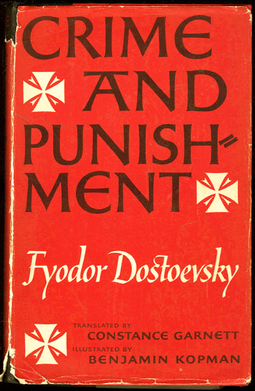
Crime and Punishment
A poor ex-student in St Petersburg murders an old pawnbroker to prove he is an “extraordinary man” — and is undone not by the police but by his own conscience and by Sonya’s love.
Beyond Good and Evil
Nietzsche’s “prelude to a philosophy of the future” — an attack on the prejudices of philosophers, from Plato to Kant, and a sketch of the free spirit.
Ideas
19Ātman is Brahman
The central Upanishadic insight — the innermost Self of each being is identical with the ultimate reality of the universe.
Anekāntavāda
The Jain doctrine that reality is many-sided — that every thing has infinite aspects and every statement captures only one, so that truth requires holding many viewpoints together. Expressed in the parable of the blind men and the elephant and formalised in the sevenfold logic of syādvāda.
Nothing from Nothing
The ancient principle that nothing comes from nothing — the foundation of Greek physics and the target of the Christian doctrine of creation from nothing.
Pratītyasamutpāda (Dependent Origination)
The Buddha’s central insight — “when this exists, that comes to be; when this ceases, that ceases.” Nothing exists independently; everything arises from conditions. Applied to suffering, it becomes the twelve-linked chain from ignorance to death.
The Forms
Plato’s eternal, perfect, unchanging realities — Beauty itself, Justice itself, the Good — of which the things we see are imperfect copies.
Śūnyatā (Emptiness)
Emptiness — the Mahāyāna teaching that all things lack intrinsic, independent existence (svabhāva), because they arise in dependence on causes, parts and concepts. Not nothingness, but the openness that makes change and freedom possible.
Rasa
The Indian theory of aesthetic experience — the “flavour” or “relish” that art evokes in the audience. Bharata named eight rasas; Abhinavagupta added peace and explained rasa as the self tasting its own consciousness through universalised emotion.
Māyā
The power of appearance — in Advaita, the cosmic illusion by which the one Brahman appears as a world of many things.
Cogito, ergo sum
I think, therefore I am — the one certainty Descartes found after doubting everything else.
The Problem of Induction
No non-circular argument shows that the future will resemble the past — yet all science and daily life depend on it.
Hume's Fork
Every meaningful claim is either a relation of ideas (certain but empty) or a matter of fact (informative but uncertain) — metaphysics is neither.
Synthetic a priori
Judgments that are informative about the world yet knowable independently of experience. Kant’s master question was how they are possible.
The Thing-in-Itself
Reality as it is independently of how it appears to us — for Kant, thinkable but never knowable.
The Categorical Imperative
Kant’s supreme principle of morality — act only on maxims you could will as universal laws; treat humanity always as an end, never merely as a means.
The Copernican Revolution
Kant’s reversal — instead of the mind conforming to objects, objects must conform to the mind’s forms of knowing.
Dialectic
The movement of thought — and for Hegel, of reality — through contradiction toward a richer unity.
Geist (Spirit)
Hegel’s name for reality as self-knowing mind unfolding through nature, history, culture and philosophy.
Rational Egoism
Chernyshevsky’s doctrine that people always act from self-interest, and that enlightened self-interest will make everyone good.
Dasein
Heidegger’s term for the human being — “being-there” — the entity whose own being is an issue for it.
Schools & Movements
25Vedānta
“The end of the Veda” — the schools that interpret the Upanishads, Bhagavad Gītā and Brahma Sūtras to understand Brahman, the Self, and liberation.
Cārvāka (Lokāyata)
India’s materialist school — only perception is knowledge, only matter is real, there is no soul, no rebirth, no karma and no God, and the purpose of life is pleasure. Its own books are lost; we know it through the furious refutations of every other school.
Jainism
The ancient Indian tradition of the Jinas — radical non-violence toward every living being, a soul weighed down by karmic matter, the “many-sidedness” of truth, and liberation by self-discipline without a creator God. Small in numbers, immense in influence.
The Pre-Socratics
The first Greek philosophers — from Thales to Democritus — who asked what everything is made of and replaced myth with argument.
Buddhism
The tradition founded by the Buddha — suffering, impermanence, no-self, and the path to nirvāṇa — later dividing into Theravāda, Mahāyāna (Madhyamaka, Yogācāra) and Vajrayāna.
Sāṃkhya
The oldest of the classical Indian systems — a radical dualism of pure, inactive consciousness (puruṣa) and active, unconscious nature (prakṛti) with its three strands, the guṇas. Liberation is seeing that consciousness was never really entangled in nature.
Daoism
The Chinese tradition of the Dao — the nameless Way of nature — teaching spontaneity, simplicity, effortless action and harmony with the flow of things.
Platonism
The tradition descending from Plato — eternal Forms, an immortal soul, and a reality higher than the senses — from the Academy through Neoplatonism to Christian theology.
Mīmāṃsā
The school of Vedic interpretation — the hermeneutics of ritual and duty that treated the Veda as eternal and authorless, defended the self-validity of knowledge, denied a creator God, and developed theories of language, meaning and law that shaped all of Hindu jurisprudence.
Theravāda and the Abhidharma
The oldest surviving school of Buddhism — the Pāli Canon, the arhat ideal, and the Abhidhamma analysis of experience into momentary ultimate realities — living today in Sri Lanka, Myanmar, Thailand, Laos and Cambodia.
Nyāya
India’s great school of logic and epistemology — the theory of valid knowledge (pramāṇa), the five-membered syllogism, the catalogue of fallacies, realist metaphysics, and the most famous arguments for God in Indian philosophy. Its later form, Navya-Nyāya, became the technical language of all Indian scholarship.
Vaiśeṣika
India’s school of natural philosophy and atomism — reality analysed into six (later seven) categories, the world built from eternal, indivisible atoms of earth, water, fire and air, combined by an unseen moral force. Merged with Nyāya, it gave Indian realism its map of what exists.
Yoga (darśana)
The classical school of Patañjali — Sāṃkhya’s dualism of consciousness and nature, plus a God and a practical method — defining yoga as “the stilling of the fluctuations of the mind” and mapping the eight limbs from ethics to absorption.
Madhyamaka
Nāgārjuna’s school of emptiness — nothing has intrinsic existence (svabhāva), all things are empty because they arise in dependence, and even emptiness is empty. Its dialectic dismantles every view, and it became the summit of Tibetan Buddhist philosophy.
Yogācāra
The “mind-only” school of Mahāyāna Buddhism, founded by Asaṅga and Vasubandhu — the world we experience is a construction of consciousness, carried by a “storehouse” of karmic seeds; awakening is the transformation of the basis of consciousness itself.
Advaita Vedānta
Non-dualist Vedānta — Brahman alone is real, the world is appearance (māyā), and the self is identical with Brahman.
Kashmir Śaivism
The non-dual Śaiva philosophy of medieval Kashmir — reality is the free, self-aware consciousness of Śiva, who playfully contracts himself into the many selves and the world, and liberation is the recognition that you are Śiva. The world is not illusion but God’s self-expression.
Scholasticism
The method and philosophy of the medieval universities — rigorous disputation, the reconciliation of faith and reason, and the absorption of Aristotle into Christian, Jewish and Islamic thought.
Dvaita Vedānta
Madhva’s realist, theistic Vedānta — God (Viṣṇu) alone is independent; souls and matter are real, eternally distinct from God and from each other, and wholly dependent on him. The most uncompromising rejection of Advaita in Indian thought.
Continental Rationalism
The seventeenth-century conviction that reason alone, unaided by the senses, can reach certain knowledge of the deepest truths.
The Enlightenment
The eighteenth-century movement that put reason, science, tolerance and individual liberty at the centre of human affairs — “Sapere aude!”
British Empiricism
The view that all knowledge comes from experience — the mind begins as a blank slate on which the senses write.
German Idealism
The extraordinary philosophical movement after Kant — Fichte, Schelling, Hegel — that tried to complete his revolution by showing reality itself to be the work of mind or Spirit.
Russian Nihilism
The 1860s movement of young Russian radicals who rejected tradition, religion, art and authority in the name of science, utility and the people.
Phenomenology
Husserl’s method of describing experience exactly as it appears — “to the things themselves!” — which Heidegger and Sartre turned toward existence.
Debates
6Being vs. Becoming
The first great quarrel in Western philosophy — is reality one and changeless (Parmenides) or everlasting flux (Heraclitus)?
Is There a Self? Nyāya vs. the Buddhists
The thousand-year Indian debate between Nyāya logicians, who argued that memory and recognition prove an enduring self, and Buddhist philosophers, who held that a person is a stream of momentary events.
Faith vs. Reason
Can God be reached by argument — or does faith begin exactly where reason fails? From Tertullian’s Athens and Jerusalem to Kierkegaard’s leap and Camus’s refusal.
Can God Be Proved? Udayana vs. the Mīmāṃsakas and Buddhists
The classical Indian debate on a creator God — Nyāya’s proofs from effects, atoms and the Veda, against the Mīmāṃsā and Buddhist arguments that no creator is needed or possible.
Śaṅkara vs. Rāmānuja
The great Vedāntic debate — is the self identical with Brahman, and the world an illusion? Or are souls and world real, the body of a personal God?
Rationalism vs. Empiricism
The great quarrel of early modern philosophy — does knowledge come from reason or from experience? Kant tried to end it.
Characters
3Rodion Raskolnikov
Impoverished ex-student who murders a pawnbroker to prove he is an “extraordinary man” beyond morality — and is broken and reborn by his conscience.
Lear's Fool
The king’s jester, who tells Lear the truth in riddles, songs and jokes — and vanishes from the play after the storm.
The Underground Man
Dostoevsky’s nameless, spiteful, hyper-conscious narrator who rebels against reason, progress and his own interests to prove he is free.
Great Scenes
5The Death of Socrates
In prison, on his last day, Socrates argues for the immortality of the soul, drinks the hemlock calmly, and asks that a cock be offered to Asclepius.
The Allegory of the Cave
Prisoners chained since birth see only shadows on a cave wall; one is freed, dragged into the sunlight, and returns to tell the others — who would kill him if they could.
The Blinding of Gloucester
Betrayed by Edmund, Gloucester is tied to a chair and blinded by Cornwall while Regan watches — and learns in the same instant that Edgar was innocent.
Naciketas at the House of Death
Given away by his angry father, the boy Naciketas waits three days at Death’s door, and refuses all the riches Yama offers until Death tells him what lies beyond.
Tat Tvam Asi — Salt in Water
Uddālaka tells his son Śvetaketu to dissolve salt in water and taste it — invisible, yet everywhere — “that is the Self; that thou art.”
Great Questions
7Does God Exist?
The proofs, the refutations, the wagers and the leaps — the great argument about God from the Upanishads to Nietzsche.
What Are the Limits of the Human Mind?
Can reason know everything — or are there things the mind can never reach? From the Upanishads’ unknowable knower to Kant’s boundary and Wittgenstein’s silence.
How Is the Mind Related to the Body?
Witness-consciousness and matter, the soul as form, two substances, one substance, Dasein — the mind–body problem across civilizations.
What Is Beauty — and What Is Art For?
From Plato’s ladder of love and Aristotle’s catharsis to Kant’s disinterested pleasure, Schopenhauer’s music and Nietzsche’s Apollo and Dionysus.
What Can We Know?
The relay race of epistemology — from Plato’s Cave to Kant’s categories, via Descartes’ demon and Hume’s billiard balls.
What Is Time?
Flux and permanence, the moving image of eternity, Augustine’s puzzle, Kant’s form of intuition, eternal recurrence, Heidegger’s temporality.
What Is the Self? — The Indian Argument
Three thousand years of Indian argument about the “I” — from the Upaniṣads’ Self that is Brahman, through the Buddha’s no-self, the Jain soul, the Nyāya substance, Sāṃkhya’s witness, to Ramana’s “Who am I?” and Ambedkar’s social self.
Voices
quotations from this traditionThe unexamined life is not worth living.
ὁ δὲ ἀνεξέταστος βίος οὐ βιωτὸς ἀνθρώπῳ
I am wiser than this man; for neither of us really knows anything fine and good, but this man thinks he knows something when he does not, whereas I, as I do not know anything, do not think I do either.
Now it is time to go away, I to die, and you to live; but which of us goes to the better lot is known to none but God.
Crito, we owe a cock to Asclepius. Pay it and do not neglect it.
They see only their own shadows, or the shadows of one another, which the fire throws on the opposite wall of the cave.
Until philosophers are kings, or the kings and princes of this world have the spirit and power of philosophy… cities will never have rest from their evils.
You cannot step twice into the same river; for other waters are ever flowing on to you.
Character is destiny.
ἦθος ἀνθρώπῳ δαίμων
War is the father of all and king of all.
πόλεμος πάντων μὲν πατήρ ἐστι, πάντων δὲ βασιλεύς
For it is the same thing to think and to be.
τὸ γὰρ αὐτὸ νοεῖν ἐστίν τε καὶ εἶναι
One swallow does not make a spring, nor does one fine day; and so too one day, or a short time, does not make a man blessed and happy.
Man is by nature a political animal… he who is unable to live in society, or who has no need because he is sufficient for himself, must be either a beast or a god.