Key Ideas
Vera Pavlovna escapes an arranged marriage and runs a sewing cooperative.
Rational egoism — virtue is enlightened self-interest.
Rakhmetov, the “extraordinary man” who sleeps on nails.
The fourth dream — the Crystal Palace of the future.
Lenin borrowed the title for his 1902 pamphlet on the revolutionary party.
Sententiae
phrases in the originalChto delat?
Origin. Title of Chernyshevsky’s 1863 novel, then of Tolstoy’s 1886 treatise and Lenin’s 1902 pamphlet — the great Russian question. — Nikolai Chernyshevsky, What Is to Be Done?
⚠ Its partner question, “Kto vinovat?” (Who is to blame?), is the title of Herzen’s 1846 novel.
For moving from diagnosis to action.
Explore Next
related by shared connectionsThe Underground Man
Dostoevsky’s nameless, spiteful, hyper-conscious narrator who rebels against reason, progress and his own interests to prove he is free.
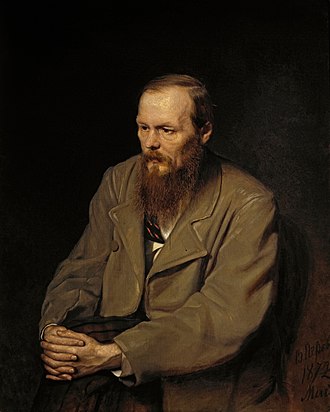
Fyodor Dostoevsky
The Russian novelist of the abyss — crime, faith, freedom, suffering — whose characters argue philosophy with their lives. Nietzsche called him the only psychologist he had anything to learn from.
Russian Nihilism
The 1860s movement of young Russian radicals who rejected tradition, religion, art and authority in the name of science, utility and the people.

Karl Marx
Philosopher, economist and revolutionary who turned Hegel’s dialectic into historical materialism — the history of all hitherto existing society is the history of class struggles.
Geist (Spirit)
Hegel’s name for reality as self-knowing mind unfolding through nature, history, culture and philosophy.

Ivan Turgenev
The most Western of the great Russian novelists, whose Fathers and Sons created Bazarov and gave the word “nihilist” to an entire generation.