For Socrates and the rationalists reason is the royal road. David Hume demotes it (“the slave of the passions”); Immanuel Kant puts it on trial in its own court. Then literature revolts: Dostoevsky’s The Underground Man declares that twice two makes four is “a piece of insolence”, and Rodion Raskolnikov shows what happens when a theory is allowed to decide who may live.
Thinkers & Authors
27
Parmenides
The stern pre-Socratic of Elea who argued that only what-is can be thought, that nothing comes from nothing, and that change and plurality are illusions.
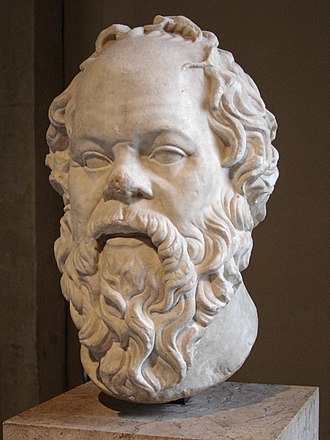
Socrates
The Athenian gadfly who wrote nothing, claimed to know nothing, questioned everyone — and was put to death for it, becoming philosophy’s martyr.
Pāṇini
The grammarian of ancient Gandhāra whose Aṣṭādhyāyī — 4,000 rules generating the whole of Sanskrit — is the most rigorous description of any language before modern linguistics, and one of the great intellectual achievements of antiquity.

Plato
Socrates’ student and Aristotle’s teacher, author of the dialogues, founder of the Academy, and the philosopher of the Forms — of whom Whitehead said all Western philosophy is a series of footnotes.
Gautama Akṣapāda
The founder of the Nyāya school and traditional author of the Nyāya Sūtras — the first systematic Indian treatise on logic, knowledge and debate. Legend gave him eyes in his feet.

Tertullian
Fiery early Christian writer from Carthage, father of Latin theology, remembered for setting faith against philosophy — “What has Athens to do with Jerusalem?”
Dignāga
The founder of Buddhist logic and epistemology — only perception and inference give knowledge, perception grasps bare particulars, concepts are constructions, and words mean by excluding (apoha). He revolutionised the logic of every Indian school.
Dharmakīrti
The 7th-century Buddhist logician who perfected Dignāga’s epistemology — proving momentariness, refuting a creator God and the Veda’s authority, and defining knowledge by its reliability — the most formidable philosophical opponent the Hindu schools ever faced.
Kumārila Bhaṭṭa
The 7th-century Mīmāṃsā philosopher who turned Vedic ritual hermeneutics into a full philosophy — defending the authorless Veda, the self-validity of knowledge and a realist world against the Buddhists, and arguing that no creator God is needed.
Udayana
The great Nyāya philosopher of Mithilā who gave Indian philosophy its classic proofs of God’s existence, defended the reality of the self against the Buddhists, and closed the classical age of Nyāya-Vaiśeṣika.

Al-Ghazālī
Theologian, jurist and mystic whose Incoherence of the Philosophers attacked Avicenna’s Aristotelianism, anticipated Hume on causation, and whose spiritual autobiography records a crisis of doubt.

Averroes (Ibn Rushd)
Andalusian judge and philosopher — “the Commentator” on Aristotle — who defended philosophy against al-Ghazālī and argued that reason and revelation cannot contradict each other.

Thomas Aquinas
Dominican friar and the greatest of the scholastics, who wove Aristotle’s philosophy and Christian theology into a single vast system — the Summa Theologiae — with five ways to prove God.
Gaṅgeśa Upādhyāya
The 14th-century logician of Mithilā who founded Navya-Nyāya, the “New Logic”, in his Tattvacintāmaṇi — a technical language of such precision that it became the common idiom of Indian scholarship for five centuries.
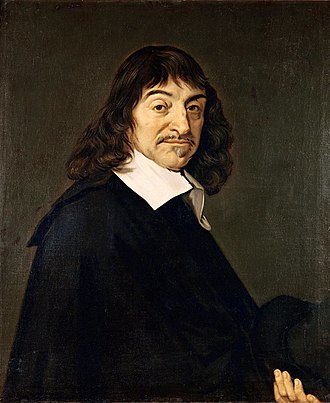
René Descartes
The father of modern philosophy, who doubted everything that could be doubted and found one thing that could not — that he himself was thinking.

Blaise Pascal
Mathematician, physicist, inventor and Christian apologist whose fragmentary Pensées confront the misery and greatness of the human being — the thinking reed — and propose the Wager.

Gottfried Wilhelm Leibniz
Universal genius — co-inventor of calculus, philosopher of monads and pre-established harmony — who argued that ours is the best of all possible worlds.

Voltaire
The wittiest man of the Enlightenment — playwright, historian, satirist and campaigner against intolerance — whose Candide demolished Leibnizian optimism and whose cry was “Écrasez l’infâme!”

David Hume
The great Scottish sceptic who showed that causation, the self, and induction cannot be justified by reason — and that reason is, and ought only to be, the slave of the passions.

Immanuel Kant
The philosopher who tried to end the war between rationalism and empiricism by asking what the mind itself contributes to experience — the “Copernican revolution” in philosophy.

Friedrich Heinrich Jacobi
German critic of the Enlightenment who sparked the Pantheism Controversy and gave philosophy the word “nihilism”.

Georg Wilhelm Friedrich Hegel
The philosopher of Spirit and dialectic, for whom reality is a rational process working itself out through contradiction in history — “the real is the rational”.
Raja Rammohun Roy
The Bengali reformer (1772–1833) called the “father of modern India” — translator of the Upaniṣads as rational monotheism, founder of the Brahmo Samāj, campaigner against satī, and champion of modern education and a free press.
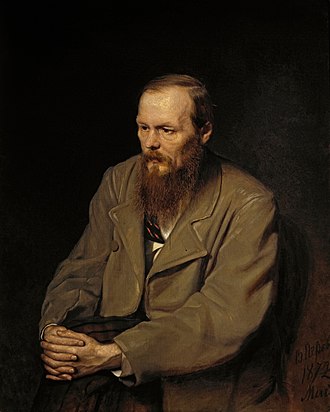
Fyodor Dostoevsky
The Russian novelist of the abyss — crime, faith, freedom, suffering — whose characters argue philosophy with their lives. Nietzsche called him the only psychologist he had anything to learn from.
Dayānanda Sarasvatī
The Gujarati ascetic (1824–1883) who founded the Ārya Samāj with the cry “Back to the Vedas!” — rejecting idol-worship, caste by birth, and the Purāṇas, and calling for a rational Vedic religion, education for women and the reconversion of those who had left Hinduism.

Nikolai Chernyshevsky
Radical critic and author of What Is to Be Done? — the utopian novel of “rational egoism” that inspired Lenin and provoked Dostoevsky’s Underground Man.

Ludwig Wittgenstein
The Viennese-Cambridge philosopher who twice transformed philosophy — first by mapping the limits of what language can say (Tractatus), then by showing that meaning is use in the countless “language games” of ordinary life (Philosophical Investigations).
Works
9The Nyāya Sūtras
The root text of Indian logic — about 530 aphorisms on the means of valid knowledge, the structure of argument, the art of debate and its dishonest tricks, and the self, the world and liberation.

Summa Theologiae
Aquinas’s unfinished masterpiece — a systematic theology in some 3,000 articles, each a model of fair argument, synthesizing Aristotle and Christian revelation.

Pensées
Pascal’s unfinished defence of Christianity, left as nearly a thousand fragments — on the thinking reed, diversion, the infinite spaces, and the Wager.

Candide
Voltaire’s comic philosophical tale, in which a naïve young man and his optimist tutor suffer every disaster the eighteenth century could offer — ending with “we must cultivate our garden”.

Critique of Pure Reason
Kant’s masterwork, asking what reason can know without experience — and answering that it can know the forms of all possible experience, but nothing beyond.
Phenomenology of Spirit
Hegel’s first masterpiece — the “voyage of discovery” of consciousness through sense-certainty, self-consciousness, reason, spirit and religion to absolute knowing.
What Is to Be Done?
Chernyshevsky’s prison-written utopian novel of “new people” and rational egoism — badly written, enormously influential, the target of Dostoevsky’s Underground Man.

Notes from Underground
A spiteful, hyper-conscious ex-official rants from his “mousehole” against reason, progress and the Crystal Palace — often called the first existentialist novel.
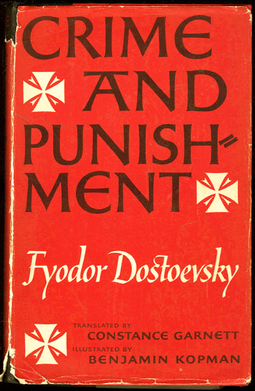
Crime and Punishment
A poor ex-student in St Petersburg murders an old pawnbroker to prove he is an “extraordinary man” — and is undone not by the police but by his own conscience and by Sonya’s love.
Ideas
7Anekāntavāda
The Jain doctrine that reality is many-sided — that every thing has infinite aspects and every statement captures only one, so that truth requires holding many viewpoints together. Expressed in the parable of the blind men and the elephant and formalised in the sevenfold logic of syādvāda.
The Problem of Induction
No non-circular argument shows that the future will resemble the past — yet all science and daily life depend on it.
Synthetic a priori
Judgments that are informative about the world yet knowable independently of experience. Kant’s master question was how they are possible.
The Categorical Imperative
Kant’s supreme principle of morality — act only on maxims you could will as universal laws; treat humanity always as an end, never merely as a means.
Dialectic
The movement of thought — and for Hegel, of reality — through contradiction toward a richer unity.
Geist (Spirit)
Hegel’s name for reality as self-knowing mind unfolding through nature, history, culture and philosophy.
Rational Egoism
Chernyshevsky’s doctrine that people always act from self-interest, and that enlightened self-interest will make everyone good.
Schools & Movements
9Cārvāka (Lokāyata)
India’s materialist school — only perception is knowledge, only matter is real, there is no soul, no rebirth, no karma and no God, and the purpose of life is pleasure. Its own books are lost; we know it through the furious refutations of every other school.
Mīmāṃsā
The school of Vedic interpretation — the hermeneutics of ritual and duty that treated the Veda as eternal and authorless, defended the self-validity of knowledge, denied a creator God, and developed theories of language, meaning and law that shaped all of Hindu jurisprudence.
Nyāya
India’s great school of logic and epistemology — the theory of valid knowledge (pramāṇa), the five-membered syllogism, the catalogue of fallacies, realist metaphysics, and the most famous arguments for God in Indian philosophy. Its later form, Navya-Nyāya, became the technical language of all Indian scholarship.
Vaiśeṣika
India’s school of natural philosophy and atomism — reality analysed into six (later seven) categories, the world built from eternal, indivisible atoms of earth, water, fire and air, combined by an unseen moral force. Merged with Nyāya, it gave Indian realism its map of what exists.
Scholasticism
The method and philosophy of the medieval universities — rigorous disputation, the reconciliation of faith and reason, and the absorption of Aristotle into Christian, Jewish and Islamic thought.
Continental Rationalism
The seventeenth-century conviction that reason alone, unaided by the senses, can reach certain knowledge of the deepest truths.
The Enlightenment
The eighteenth-century movement that put reason, science, tolerance and individual liberty at the centre of human affairs — “Sapere aude!”
German Idealism
The extraordinary philosophical movement after Kant — Fichte, Schelling, Hegel — that tried to complete his revolution by showing reality itself to be the work of mind or Spirit.
Russian Nihilism
The 1860s movement of young Russian radicals who rejected tradition, religion, art and authority in the name of science, utility and the people.
Debates
3Faith vs. Reason
Can God be reached by argument — or does faith begin exactly where reason fails? From Tertullian’s Athens and Jerusalem to Kierkegaard’s leap and Camus’s refusal.
Can God Be Proved? Udayana vs. the Mīmāṃsakas and Buddhists
The classical Indian debate on a creator God — Nyāya’s proofs from effects, atoms and the Veda, against the Mīmāṃsā and Buddhist arguments that no creator is needed or possible.
Rationalism vs. Empiricism
The great quarrel of early modern philosophy — does knowledge come from reason or from experience? Kant tried to end it.
Characters
2Rodion Raskolnikov
Impoverished ex-student who murders a pawnbroker to prove he is an “extraordinary man” beyond morality — and is broken and reborn by his conscience.
The Underground Man
Dostoevsky’s nameless, spiteful, hyper-conscious narrator who rebels against reason, progress and his own interests to prove he is free.
Great Questions
3Does God Exist?
The proofs, the refutations, the wagers and the leaps — the great argument about God from the Upanishads to Nietzsche.
What Are the Limits of the Human Mind?
Can reason know everything — or are there things the mind can never reach? From the Upanishads’ unknowable knower to Kant’s boundary and Wittgenstein’s silence.
What Can We Know?
The relay race of epistemology — from Plato’s Cave to Kant’s categories, via Descartes’ demon and Hume’s billiard balls.
Lines to Remember
23 quotationsFor it is the same thing to think and to be.
τὸ γὰρ αὐτὸ νοεῖν ἐστίν τε καὶ εἶναι
Context & when to use it
For idealism, the unity of thought and reality, the limits of what can be thought.
Two things fill the mind with ever new and increasing admiration and awe, the more often and steadily we reflect upon them: the starry heavens above me and the moral law within me.
Zwei Dinge erfüllen das Gemüt mit immer neuer und zunehmender Bewunderung und Ehrfurcht, je öfter und anhaltender sich das Nachdenken damit beschäftigt: der bestirnte Himmel über mir und das moralische Gesetz in mir.
Context & when to use it
The closing of the second Critique. The first “thing” humbles us — we are specks in an infinite cosmos; the second elevates us — as moral beings we stand outside the mechanism of nature. It is engraved on Kant’s tomb in Königsberg.
For wonder, for the dignity of conscience, or to answer anyone who says science has made morality small.
I had to deny knowledge in order to make room for faith.
Ich musste also das Wissen aufheben, um zum Glauben Platz zu bekommen.
Context & when to use it
By limiting knowledge to appearances, Kant leaves God, freedom and immortality beyond disproof — matters for practical reason and faith, not theory.
When discussing whether reason can prove or disprove God.
Thoughts without content are empty, intuitions without concepts are blind.
Gedanken ohne Inhalt sind leer, Anschauungen ohne Begriffe sind blind.
Context & when to use it
The whole Kantian synthesis in eight words — rationalism without senses is empty; empiricism without concepts is blind.
The perfect one-liner for “theory vs. experience” arguments.
If you would be a real seeker after truth, it is necessary that at least once in your life you doubt, as far as possible, all things.
Context & when to use it
For methodical doubt and intellectual honesty.
Reason is, and ought only to be the slave of the passions, and can never pretend to any other office than to serve and obey them.
Context & when to use it
Against the idea that reason alone motivates; for psychology over logic.
I dine, I play a game of back-gammon, I converse, and am merry with my friends; and when after three or four hours’ amusement, I would return to these speculations, they appear so cold, and strained, and ridiculous.
Context & when to use it
Hume’s cure for sceptical despair — nature and company.
When philosophy has gone too far; for common sense and conviviality.
I have laboured carefully not to mock, lament, or execrate human actions, but to understand them.
sedulo curavi humanas actiones non ridere, non lugere, neque detestari, sed intelligere
Context & when to use it
For scientific and compassionate understanding of human behaviour.
The owl of Minerva spreads its wings only with the falling of the dusk.
Die Eule der Minerva beginnt erst mit der einbrechenden Dämmerung ihren Flug.
Context & when to use it
Philosophy understands an age only when it is ending.
For hindsight; why theory lags behind history.
What is rational is actual; and what is actual is rational.
Was vernünftig ist, das ist wirklich; und was wirklich ist, das ist vernünftig.
Context & when to use it
For Hegel’s rationalism — read conservatively by the Right Hegelians, critically by the Left.
What is your aim in philosophy? — To show the fly the way out of the fly-bottle.
Context & when to use it
Philosophy as therapy for confusions created by language.
For dissolving rather than solving a problem.
Philosophy is a battle against the bewitchment of our intelligence by means of language.
Context & when to use it
For debates that are really verbal confusions.
Who kills a man kills a reasonable creature, God’s image; but he who destroys a good book, kills reason itself.
Context & when to use it
Against censorship and book-burning.
Twice two makes four is no longer life, gentlemen, but the beginning of death.
Context & when to use it
Against a world fully explained by reason — he even admits “twice two makes five is sometimes a very charming thing too.”
Against technocracy, determinism, utopias of calculation.
Man… would deliberately desire the most fatal rubbish… simply to prove to himself that men are still men and not the keys of a piano.
Context & when to use it
Against rational egoism — the most advantageous advantage is one’s own free, even foolish, choice.
Against behavioural economics, social engineering, algorithmic prediction of humans.
To be too conscious is an illness — a real thorough-going illness.
Context & when to use it
Hyper-consciousness paralyses action — the Underground Man as a Hamlet in a mousehole.
For overthinking, anxiety, the intellectual’s paralysis.
A decent chemist is twenty times more useful than any poet.
Context & when to use it
Bazarov’s utilitarian contempt for art.
For science versus the humanities; utility versus beauty.
Nature is not a temple, but a workshop, and man’s the workman in it.
Context & when to use it
Against Romantic reverence for nature.
For instrumental reason, the technological attitude (Heidegger’s “standing-reserve”).
Thus conscience does make cowards of us all, And thus the native hue of resolution Is sicklied o’er with the pale cast of thought.
Context & when to use it
Reflection paralyses action. “Conscience” means consciousness as much as moral scruple.
Against overthinking; for analysis paralysis; for the intellectual who never acts.
There are more things in heaven and earth, Horatio, than are dreamt of in your philosophy.
Context & when to use it
After seeing the Ghost, to his rationalist university friend.
Against narrow rationalism or scientism; for the limits of any system — Kant’s noumena in one line.
⚠ “Your philosophy” means philosophy in general, not Horatio’s personal philosophy.
Though this be madness, yet there is method in’t.
Context & when to use it
Polonius, aside, on Hamlet’s “mad” answers.
For strategies that look crazy but have logic.
⚠ Usually quoted “there’s method in my madness” — not Shakespeare’s wording.
Many things are wonderful, but nothing is more wonderful than man.
πολλὰ τὰ δεινὰ κοὐδὲν ἀνθρώπου δεινότερον πέλει
Context & when to use it
The “Ode to Man” — deinos means both wonderful and terrible; human ingenuity can lead to good or to evil.
For human greatness and its danger — technology, ambition, power.
Grey, dear friend, is all theory, and green the golden tree of life.
Grau, teurer Freund, ist alle Theorie, und grün des Lebens goldner Baum.
Context & when to use it
For life over abstraction — with a wink about who says it.
⚠ Spoken by the devil, mocking a student — not Goethe’s sincere verdict on theory.
Sententiae
phrases in the originalLogos
Origin. For Heraclitus the rational order of the cosmos; for the Stoics divine reason in all things; for John’s Gospel the divine Word (“In the beginning was the Logos”). — Heraclitus
For the idea that the world has a rational structure.
Sapere aude!
Origin. Horace, Epistles I.2.40 (“dimidium facti qui coepit habet; sapere aude” — “he who has begun is half done; dare to be wise”). Kant made it the motto of the Enlightenment in “What Is Enlightenment?” (1784). — Immanuel Kant
For intellectual courage and thinking for yourself.
Credo ut intelligam
Origin. Anselm of Canterbury, Proslogion ch. 1 (1078), echoing Augustine. Anselm’s motto was “fides quaerens intellectum” — faith seeking understanding.
For faith as the starting point of reason, not its enemy — the opposite of Tertullian’s paradox.
Zeitgeist
Origin. Herder and Goethe popularized it; associated with Hegel’s philosophy of history (though Hegel preferred “Geist der Zeit”). — Georg Wilhelm Friedrich Hegel
For the mood and ideas of an era.
Aufheben
Origin. Hegel’s key dialectical verb, exploiting the triple meaning of the German word. — Georg Wilhelm Friedrich Hegel
For progress that keeps what it overcomes.
Le cœur a ses raisons que la raison ne connaît point
Origin. Blaise Pascal, Pensées (1670), §277 (Brunschvicg).
⚠ Pascal means the heart’s intuitive knowledge of God and first principles — not romantic love.
For intuition and faith beyond argument.
Explore Next
related by shared connections
Søren Kierkegaard
The melancholy Dane, father of existentialism, who set the passionate individual against Hegel’s System and faith against reason — “truth is subjectivity”.

John Locke
Father of British empiricism and of liberalism — the mind begins as a blank slate, and government rests on the consent of the governed.

Avicenna (Ibn Sīnā)
Persian polymath — physician, metaphysician, logician — whose Canon of Medicine was taught in Europe for 500 years and whose distinction between essence and existence reshaped philosophy in Islam and the Latin West.

Augustine of Hippo
North African bishop, convert, and the most influential Christian thinker of the Latin West — inventor of the autobiography of the inner self.

Baruch Spinoza
The excommunicated lens-grinder of Amsterdam who identified God with Nature, wrote ethics in the form of geometry, and found freedom in understanding necessity.
Buddhism
The tradition founded by the Buddha — suffering, impermanence, no-self, and the path to nirvāṇa — later dividing into Theravāda, Mahāyāna (Madhyamaka, Yogācāra) and Vajrayāna.