Core Theses
Some knowledge is innate or a priori — not derived from experience.
Reason, modelled on geometry, can deduce substantive truths about God, mind and world.
The senses are confused; the intellect is clear.
The universe is rationally intelligible through and through (the principle of sufficient reason).
The rationalists — René Descartes, Baruch Spinoza and Gottfried Wilhelm Leibniz — wanted philosophy to be as certain as geometry. Spinoza even wrote his Ethics in the form of Euclid, with definitions, axioms, propositions and proofs.
They disagreed wildly about the result: two substances (Descartes), one substance that is God-or-Nature (Spinoza), infinitely many windowless monads (Leibniz). That spectacle of rival certainties is part of what Immanuel Kant meant when he called pre-critical metaphysics a “battlefield of endless controversies.”
See the great quarrel: Rationalism vs. Empiricism.
Members
3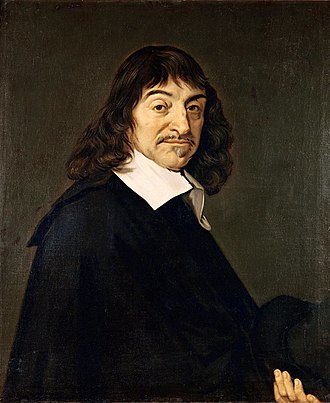
René Descartes
The father of modern philosophy, who doubted everything that could be doubted and found one thing that could not — that he himself was thinking.

Baruch Spinoza
The excommunicated lens-grinder of Amsterdam who identified God with Nature, wrote ethics in the form of geometry, and found freedom in understanding necessity.

Gottfried Wilhelm Leibniz
Universal genius — co-inventor of calculus, philosopher of monads and pre-established harmony — who argued that ours is the best of all possible worlds.
Explore Next
related by shared connectionsRationalism vs. Empiricism
The great quarrel of early modern philosophy — does knowledge come from reason or from experience? Kant tried to end it.

John Locke
Father of British empiricism and of liberalism — the mind begins as a blank slate, and government rests on the consent of the governed.

David Hume
The great Scottish sceptic who showed that causation, the self, and induction cannot be justified by reason — and that reason is, and ought only to be, the slave of the passions.

Critique of Pure Reason
Kant’s masterwork, asking what reason can know without experience — and answering that it can know the forms of all possible experience, but nothing beyond.

Friedrich Heinrich Jacobi
German critic of the Enlightenment who sparked the Pantheism Controversy and gave philosophy the word “nihilism”.
Prolegomena to Any Future Metaphysics
Kant’s short, clearer restatement of the first Critique, where he credits Hume with waking him from his dogmatic slumber.