English literature has its centre of gravity in one man: William Shakespeare, whose plays — Hamlet, King Lear, Macbeth and thirty-five more — gave the language its richest store of words, characters and quotations. Around him stretch a thousand years.
The medieval — Beowulf (an Anglo-Saxon epic of monsters and mortality), Chaucer’s Canterbury Tales (pilgrims telling stories, the comedy of human types).
The Renaissance — Marlowe’s Doctor Faustus, who sells his soul; Shakespeare; Donne’s metaphysical poems; and Milton’s Paradise Lost (1667), the epic of the Fall, whose Satan (“Better to reign in Hell, than serve in Heav’n”) the Romantics took for its true hero.
The eighteenth century — Swift’s Gulliver’s Travels, the birth of the novel (Defoe, Richardson, Fielding, Sterne’s wildly modern Tristram Shandy), Dr Johnson.
The Romantics — Blake, Wordsworth, Coleridge, Byron, Shelley, Keats: nature, imagination, revolution; Mary Shelley’s Frankenstein (1818) — the modern Prometheus.
The Victorians — the great age of the novel: Dickens, the Brontës, George Eliot (Middlemarch, “the first novel written for grown-up people”, said Virginia Woolf), Thackeray, Hardy; the poetry of Tennyson and Browning.
The moderns — Conrad, Joyce (Ulysses), Woolf, T. S. Eliot (The Waste Land, which ends with the Upanishads’ “Shantih shantih shantih”), Beckett (Waiting for Godot), Orwell.
America — Melville’s Moby-Dick, Dickinson, Whitman, Twain, James, Faulkner, Morrison.
These pages are being written. Start with Shakespeare’s tragedies.
Map of Influence
who answered whom, inside this roomThinkers & Authors
3
William Shakespeare
The playwright and poet of Stratford whose 37-odd plays and 154 sonnets gave English its richest store of quotation and gave philosophy Hamlet, Lear and Macbeth.
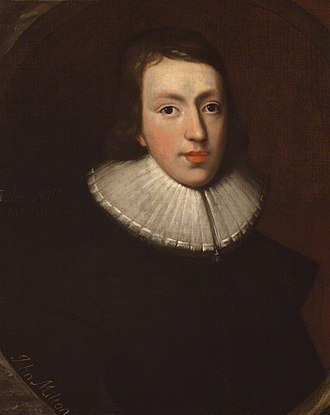
John Milton
English poet, polemicist and revolutionary whose Paradise Lost — written blind, after the defeat of his cause — retells the Fall of Man to “justify the ways of God to men”, and gave literature its most magnificent rebel, Satan.

Samuel Beckett
Irish playwright, novelist and poet who wrote in English and French, the master of minimalism and the absurd — Waiting for Godot made a play in which “nothing happens, twice” into the defining drama of the twentieth century.
Works
3
Hamlet
Shakespeare’s longest play — a prince ordered by his father’s ghost to avenge a murder thinks, doubts, delays, feigns madness, and dies in the act.

King Lear
An old king divides his kingdom between the daughters who flatter him and banishes the one who loves him — and is stripped of everything on a heath in a storm.

Macbeth
Shakespeare’s shortest tragedy — a brave soldier, prompted by witches and his wife, murders his king and wades so deep in blood that life becomes “a tale told by an idiot”.
Characters
5Cordelia
Lear’s youngest daughter, who will not flatter, is disinherited, returns to rescue him, forgives him with “No cause, no cause” — and is hanged.
Edmund
Gloucester’s illegitimate son — the brilliant, charming, self-made villain of King Lear, who worships Nature as amoral force and scorns “the plague of custom”.
Hamlet
Prince of Denmark — scholar, wit, mourner, avenger who cannot avenge — the most quoted and most interpreted character in literature.
King Lear
The proud old king who divides his kingdom by a love test, banishes the daughter who loves him, and is stripped of everything until he learns, too late, what love and suffering are.
Lear's Fool
The king’s jester, who tells Lear the truth in riddles, songs and jokes — and vanishes from the play after the storm.
Great Scenes
8The Blinding of Gloucester
Betrayed by Edmund, Gloucester is tied to a chair and blinded by Cornwall while Regan watches — and learns in the same instant that Edgar was innocent.
The Death of Cordelia
Lear enters carrying his hanged daughter, howling, searching for her breath with a mirror and a feather — “Never, never, never, never, never.”
The Dover Cliff
Edgar leads his blind father to a “cliff” that isn’t there, lets him leap, and convinces him he has survived by a miracle — curing his despair with a theatrical trick.
Lear Wakes: "No Cause, No Cause"
Lear wakes from madness to find Cordelia beside him, thinks he is in hell, begs her forgiveness — and she answers with two words that undo the whole tragedy.
The Storm on the Heath
Shut out by his daughters, Lear rages at the storm, prays for the poor, and meets “unaccommodated man” in the naked Poor Tom.
To Be, or Not to Be
Hamlet’s soliloquy weighing life against death — the most famous speech in English, and a compressed treatise on suicide, fear and the paralysis of thought.
Tomorrow, and Tomorrow, and Tomorrow
Macbeth, told that his wife is dead, delivers the bleakest speech in Shakespeare — life is a walking shadow, a tale told by an idiot, signifying nothing.
Alas, Poor Yorick
In the graveyard, Hamlet is handed the skull of the jester who carried him on his back as a child — and sees where all flesh, wit and glory end.
Coming to the Library
27 pages being writtenVoices
quotations from this traditionEver tried. Ever failed. No matter. Try again. Fail again. Fail better.
You must go on. I can’t go on. I’ll go on.
They give birth astride of a grave, the light gleams an instant, then it’s night once more.
Nothing is funnier than unhappiness.
Better to reign in Hell, than serve in Heaven.
The mind is its own place, and in itself / Can make a Heaven of Hell, a Hell of Heaven.
I made him just and right, / Sufficient to have stood, though free to fall.
Who kills a man kills a reasonable creature, God’s image; but he who destroys a good book, kills reason itself.
They also serve who only stand and wait.
To be, or not to be: that is the question: Whether ‘tis nobler in the mind to suffer The slings and arrows of outrageous fortune, Or to take arms against a sea of troubles, And by opposing end them?
The undiscover’d country from whose bourn No traveller returns, puzzles the will.
Thus conscience does make cowards of us all, And thus the native hue of resolution Is sicklied o’er with the pale cast of thought.