



Contents · 12 sections · 14 min
Shakespeare in Five Ideas
the essentialsThe inward self
Hamlet’s soliloquies stage thought itself — doubt, delay, self-reproach. Harold Bloom claimed Shakespeare “invented the human”.
Nothing
“Nothing will come of nothing” — Lear begins with a nothing and ends in “never, never, never, never, never”.
Ambition and conscience
Macbeth shows ambition overriding conscience — and conscience returning as hallucination and sleeplessness.
All the world's a stage
Jaques’ Seven Ages of Man — life as a sequence of roles ending in “mere oblivion, sans teeth, sans eyes, sans taste, sans everything.”
Life as tale
Life’s but a walking shadow… a tale told by an idiot, full of sound and fury, signifying nothing.
William Shakespeare is the most performed, most quoted, most translated and most studied writer in the English language — perhaps in any language. His thirty-eight or so plays and 154 sonnets gave English somewhere between a few hundred and a couple of thousand words and phrases (the number depends on how you count), and a much larger stock of characters, situations and lines that have become part of how people think: Hamlet’s indecision, Lear’s folly, Macbeth’s ambition, Othello’s jealousy, Romeo and Juliet’s doomed love, Prospero’s farewell. For philosophers he matters because he dramatized, more richly than any treatise, the questions they ask: what a self is, whether life has meaning, what power does to people, how we know what is real, and how to face death.
This essay sketches the little we know of his life, his theatre and his career, then reads the plays most important for philosophy and literature, and ends with his reception and the quarrel over his very identity.
Life
Stratford
Shakespeare was baptized on 26 April 1564 in Holy Trinity Church, Stratford-upon-Avon, a market town in Warwickshire. (His birthday is traditionally celebrated on 23 April, St George’s Day — also the day he died.) His father, John Shakespeare, was a glover and wool dealer who rose to be bailiff (mayor) of Stratford before falling into debt in the late 1570s. His mother, Mary Arden, came from a more prosperous landed family.
He probably attended the King’s New School in Stratford, a grammar school where boys spent long days on Latin grammar, rhetoric and classical authors — Ovid (his favourite), Virgil, Cicero, Terence, Seneca. Ben Jonson’s later jibe that Shakespeare had “small Latin and less Greek” was relative: by modern standards his classical education was solid.
At eighteen, in November 1582, he married Anne Hathaway, eight years older and three months pregnant. Their daughter Susanna was born in May 1583, and twins, Hamnet and Judith, in 1585. Then come the “lost years” (1585–92), for which there is no record. Legends make him a schoolmaster in the country, a deer poacher fleeing prosecution, a horse-holder outside London theatres.
London
By 1592 he was in London and successful enough to be attacked: the dying playwright Robert Greene warned fellow university-educated writers against “an upstart Crow, beautified with our feathers, that with his Tiger’s heart wrapped in a Player’s hide supposes he is as well able to bombast out a blank verse as the best of you… in his own conceit the only Shake-scene in a country” — a parody of a line from Henry VI, Part 3.
When plague closed the theatres (1592–94), he published two long narrative poems, Venus and Adonis (1593) and The Rape of Lucrece (1594), dedicated to the young Earl of Southampton — his only works he saw carefully through the press.
In 1594 he became a founding sharer in the Lord Chamberlain’s Men, the acting company that also included the great tragedian Richard Burbage and the clown Will Kemp. In 1599 the company built the Globe on Bankside, south of the Thames, with timber from their previous playhouse, the Theatre. Shakespeare was actor, playwright and part-owner — the only major dramatist of his time with such a stake. After James I’s accession in 1603, the company became the King’s Men, and from 1608 they also played indoors at the Blackfriars theatre.
In 1596 his son Hamnet died at eleven. The same year, his father was granted a coat of arms (motto: Non sanz droict, “Not without right”). In 1597 Shakespeare bought New Place, the second-largest house in Stratford. He invested in property and tithes.
Retirement and death
Around 1610–13 he seems to have withdrawn to Stratford, though he collaborated on late plays (Henry VIII, The Two Noble Kinsmen) with John Fletcher. In 1613 the Globe burned down during a performance of Henry VIII when a cannon set the thatch alight. He died on 23 April 1616, aged fifty-two, and was buried in the chancel of Holy Trinity. His gravestone carries a curse:
Good friend for Jesus’ sake forbear, To dig the dust enclosed here. Blessed be the man that spares these stones, And cursed be he that moves my bones.
His will famously left his wife “my second best bed with the furniture” — whether a slight or an affectionate gift (the best bed was for guests) is debated.
The First Folio
In 1623, two fellow actors, John Heminges and Henry Condell, published Mr. William Shakespeares Comedies, Histories, & Tragedies — the First Folio — containing thirty-six plays, eighteen of which had never been printed before and would otherwise have been lost (including Macbeth, The Tempest, Twelfth Night, Julius Caesar and Antony and Cleopatra). Ben Jonson’s prefatory poem called him “Soul of the Age! / The applause! delight! the wonder of our Stage!” and declared: “He was not of an age, but for all time!”
The theatre
Shakespeare wrote for a popular, commercial theatre. The Globe held perhaps three thousand people — “groundlings” standing in the yard for a penny, gentry seated in the galleries. Plays were performed in the afternoon, in daylight, on a large thrust stage with almost no scenery; the words had to create night, storm, battlefield and forest. Female roles were played by boys. Performances were fast: the Prologue to Romeo and Juliet speaks of “the two hours’ traffic of our stage”.
His language is mostly blank verse — unrhymed iambic pentameter — mixed with prose (for clowns, letters, madness and intimate wit) and rhymed couplets (for scene endings and formal moments). Its range is unequalled: from the plainest monosyllables (“Never, never, never, never, never”) to elaborate coinages (“the multitudinous seas incarnadine”).
The canon
Scholars group the plays (with much overlap) as follows:
| Genre | Plays (selection) |
|---|---|
| Comedies | The Comedy of Errors, The Taming of the Shrew, A Midsummer Night’s Dream, The Merchant of Venice, Much Ado About Nothing, As You Like It, Twelfth Night |
| “Problem plays” | Measure for Measure, All’s Well That Ends Well, Troilus and Cressida |
| English histories | Richard II, Henry IV Parts 1 & 2, Henry V, Henry VI (3 parts), Richard III |
| Roman plays | Julius Caesar, Antony and Cleopatra, Coriolanus, Titus Andronicus |
| Tragedies | Romeo and Juliet, Hamlet, Othello, King Lear, Macbeth, Timon of Athens |
| Romances (late plays) | Pericles, Cymbeline, The Winter’s Tale, The Tempest |
Plus the Sonnets (published 1609), addressed mostly to a beautiful young man and a “dark lady”, meditating on time, beauty, love, betrayal and poetry’s power to outlast death: “So long as men can breathe or eyes can see, / So long lives this, and this gives life to thee” (Sonnet 18).
The great tragedies and philosophy
Hamlet: consciousness and death
Hamlet (c. 1600) is the play philosophers love most. Its hero, a student from Wittenberg (Luther’s university), is the first great dramatic portrait of a mind thinking about itself. His soliloquies — “O that this too too solid flesh would melt”, “O what a rogue and peasant slave am I”, “To be or not to be”, “How all occasions do inform against me” — stage doubt, self-reproach, disgust with the world, and the problem of action. See Hamlet, To Be, or Not to Be, Alas, Poor Yorick.
Its philosophical themes include:
- Seeming and being. “Seems, madam? Nay, it is; I know not ‘seems’” (1.2). Everyone in Elsinore is acting a part — and Hamlet’s “antic disposition” adds another layer.
- Knowledge and scepticism. Is the Ghost his father, or a devil sent to damn him? Hamlet needs proof — and devises the play-within-a-play to “catch the conscience of the king”. “There are more things in heaven and earth, Horatio, / Than are dreamt of in your philosophy” (1.5).
- Suicide and the afterlife. “To be or not to be” weighs the Epicurean hope that death is sleep against the Christian dread of “what dreams may come”.
- Thought and action. “Thus conscience does make cowards of us all.” Friedrich Nietzsche (Birth of Tragedy §7) said Hamlet’s problem is not too much reflection but true knowledge: having seen into the horror of existence, he finds action futile.
- Death as leveller. The graveyard scene, Yorick’s skull, Alexander’s dust stopping a beer-barrel.
- Providence. “There’s a divinity that shapes our ends, / Rough-hew them how we will” (5.2); “the readiness is all”.
King Lear: nothing
King Lear (c. 1605–06) is often considered the greatest and most terrible of the tragedies. An old king divides his kingdom among his daughters according to how much they say they love him; the two who flatter are rewarded, the one who refuses — Cordelia, who answers “Nothing, my lord” — is disinherited. “Nothing will come of nothing.” The word “nothing” echoes through the play: Lear is stripped of power, family, shelter, clothing, and reason, until on the heath in the storm he meets “Poor Tom”, a naked beggar (actually Edgar in disguise), and recognizes “unaccommodated man… a poor, bare, forked animal”.
Its philosophical questions: Is nature a moral order or a war of all against all (Edmund’s “Thou, Nature, art my goddess”)? Do the gods care (“As flies to wanton boys are we to th’ gods”)? What remains of a human being without the “lendings” of society? Can love be spoken? And the ending — Cordelia hanged, Lear dying over her body — refuses consolation so completely that Dr Johnson could hardly bear to reread it, and for a century and a half audiences saw Nahum Tate’s happy-ending adaptation instead. Jan Kott (Shakespeare Our Contemporary, 1964) read it beside Beckett’s Endgame.
Macbeth: ambition and meaninglessness
In Macbeth (c. 1606), a brave general, prompted by the prophecies of three witches and the will of his wife, murders his king and becomes a tyrant. It is a study of ambition overriding conscience — “I have no spur / To prick the sides of my intent, but only / Vaulting ambition” — and of conscience returning as hallucination (the dagger, Banquo’s ghost), insomnia (“Macbeth does murder sleep”), and Lady Macbeth’s sleepwalking (“Out, damned spot!”). Its questions: Do the witches cause anything, or merely name what Macbeth already desires? Is he free? And its climax is the most famous expression of nihilism in English — “Tomorrow, and tomorrow, and tomorrow… a tale / Told by an idiot, full of sound and fury, / Signifying nothing” (see Tomorrow, and Tomorrow, and Tomorrow).
Othello: jealousy and the knowledge of others
Othello (c. 1603–04): the Moorish general of Venice, a great soldier and an outsider, is manipulated by his ensign Iago into believing that his wife Desdemona is unfaithful, and murders her. Iago is the most chilling villain in Shakespeare — his motives shifting, possibly nonexistent (“motive-hunting of a motiveless malignity”, Coleridge said). The play is about the impossibility of certain knowledge of another’s mind — Othello demands “ocular proof” — about race and otherness in Venice, and about how a lie can be built from true details. Stanley Cavell (The Claim of Reason, 1979) read it as a tragedy of scepticism about other minds.
Antony and Cleopatra, Coriolanus, Julius Caesar
The Roman plays are Shakespeare’s political philosophy. Julius Caesar (1599) dramatizes the conflict between republican principle (Brutus) and personal loyalty and power, and contains the most famous political speeches in English: Brutus’s prose to the crowd, and Mark Antony’s “Friends, Romans, countrymen, lend me your ears” — a masterclass in manipulation. Coriolanus shows a proud aristocrat who cannot stoop to flatter the people. Antony and Cleopatra sets Roman duty against Egyptian passion: “Let Rome in Tiber melt, and the wide arch / Of the ranged empire fall! Here is my space.”
The Tempest: farewell
The Tempest (c. 1610–11), probably the last play Shakespeare wrote alone, is set on an island ruled by the magician Prospero, a deposed duke, with his daughter Miranda, the spirit Ariel and the “savage” Caliban. Prospero raises a storm to bring his enemies to the island, then forgives them: “The rarer action is / In virtue than in vengeance.” His speech after the masque — “We are such stuff / As dreams are made on, and our little life / Is rounded with a sleep” — and his renunciation of magic — “I’ll break my staff… And deeper than did ever plummet sound / I’ll drown my book” — have long been read as Shakespeare’s farewell to the stage. Caliban — “You taught me language, and my profit on’t / Is I know how to curse” — has become a central figure in postcolonial readings (Aimé Césaire’s Une Tempête, 1969).
The histories and political philosophy
The English history plays, from Richard II to Henry V, form an epic of kingship. Richard II explores the divine right of kings and its collapse — “For God’s sake let us sit upon the ground / And tell sad stories of the death of kings” — and shows a king who is a poet but not a ruler. Henry IV sets Prince Hal between his father the usurper and Falstaff, the fat, witty, cowardly, life-loving knight — perhaps Shakespeare’s greatest comic creation — whom Hal finally rejects (“I know thee not, old man”). Falstaff’s catechism on honour (“What is honour? A word… Who hath it? He that died o’ Wednesday”) is a philosophical deflation of martial values. Henry V is both a patriotic epic (“Once more unto the breach, dear friends”; “We few, we happy few, we band of brothers”) and, read closely, a study of the costs of war and the Machiavellian arts of power.
Machiavelli was the spectre behind these plays: “the murderous Machiavel” (as Richard of Gloucester calls himself in Henry VI Part 3) who can “smile, and murder whiles I smile”. Richard III is the theatrical incarnation of the amoral politician.
The comedies and love
Shakespeare’s romantic comedies — A Midsummer Night’s Dream, As You Like It, Twelfth Night, Much Ado About Nothing — are about love, illusion, disguise and identity. Heroines like Rosalind and Viola, disguised as boys (played by boys playing girls playing boys), explore gender as performance centuries before Judith Butler. In A Midsummer Night’s Dream, Theseus links “the lunatic, the lover and the poet” as “of imagination all compact”. In As You Like It, the melancholy Jaques delivers the “Seven Ages of Man”: “All the world’s a stage, / And all the men and women merely players.”
The Merchant of Venice (c. 1596–97) is the most troubling comedy: its Jewish moneylender, Shylock, is both a villain and a man who asks, “Hath not a Jew eyes?… If you prick us, do we not bleed?… and if you wrong us, shall we not revenge?” Its treatment of anti-Semitism remains fiercely debated.
Shakespeare’s thought
Did Shakespeare have a philosophy? He gives the most powerful lines to characters of every persuasion — believers and atheists, Machiavellians and saints, fools and kings — and never speaks in his own voice. Keats described this as negative capability: “when a man is capable of being in uncertainties, Mysteries, doubts, without any irritable reaching after fact & reason” — and said Shakespeare possessed it “so enormously”. Coleridge called him “myriad-minded”.
Yet certain preoccupations recur:
- Appearance and reality: “Fair is foul, and foul is fair”; “Seems, madam? Nay, it is.”
- Time and mortality: the Sonnets’ war against “devouring Time”; Yorick’s skull; “Golden lads and girls all must, / As chimney-sweepers, come to dust” (Cymbeline).
- Order and chaos: Ulysses’ speech on “degree” in Troilus and Cressida — “Take but degree away, untune that string, / And hark what discord follows.”
- Power and its corruption: from Richard III to Angelo in Measure for Measure (“man, proud man, / Dressed in a little brief authority”).
- Forgiveness and grace: the late romances — The Winter’s Tale’s statue that comes to life, The Tempest’s pardon.
Philosophical readers have found in him Montaigne (whose Essays, translated by John Florio in 1603, Shakespeare certainly read — Gonzalo’s ideal commonwealth in The Tempest comes from Montaigne’s “Of Cannibals”), Stoicism, Christian Neoplatonism, Machiavelli, and scepticism. Harold Bloom’s Shakespeare: The Invention of the Human (1998) argued that Shakespeare created the modern sense of personality — characters who “overhear themselves” and change as a result.
Reception
England
Shakespeare’s reputation grew steadily: Dryden called him “the man who of all modern, and perhaps ancient poets, had the largest and most comprehensive soul”. Restoration adaptors “improved” him (Tate’s happy Lear). The actor David Garrick’s Shakespeare Jubilee at Stratford in 1769 launched “Bardolatry”. The Romantics — Coleridge, Hazlitt, Keats, Lamb — made him the supreme genius of the imagination.
Germany
Germany adopted him almost as a national poet. Lessing set Shakespeare against French neoclassical rules; the Sturm und Drang writers (Herder, the young Goethe) hailed him as a force of nature. The Schlegel–Tieck translation (1797–1833) made him a German classic. Goethe’s Wilhelm Meister’s Apprenticeship (1795–96) contains a famous reading of Hamlet as “a great deed laid upon a soul unequal to the performance of it… an oak tree planted in a costly jar”. Hegel used Shakespeare’s characters to define modern tragedy as tragedy of individual character rather than of colliding ethical powers.
Russia
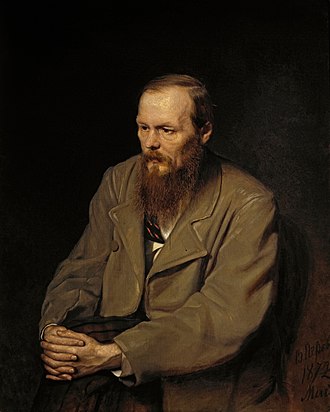
Russians adored and argued about him. Ivan Turgenev‘s essay “Hamlet and Don Quixote” (1860) made Hamlet the type of the reflective, self-absorbed intellectual and Don Quixote the type of the self-sacrificing believer in an ideal. Fyodor Dostoevsky revered him and drew on Macbeth’s guilt for Raskolnikov. Leo Tolstoy, in “Shakespeare and the Drama” (1906), attacked him furiously: the plays were immoral, unnatural, artificial, and King Lear was absurd — to which George Orwell replied, in “Lear, Tolstoy and the Fool” (1947), that Tolstoy, who had renounced his estate and been betrayed by his family, hated Lear because he saw himself in it.
Everywhere
Shakespeare has been translated into over a hundred languages and adapted into every art: Verdi’s Otello and Falstaff, Prokofiev’s Romeo and Juliet, Kurosawa’s Throne of Blood (Macbeth) and Ran (Lear), West Side Story (Romeo and Juliet), The Lion King (Hamlet), Vishal Bhardwaj’s Indian trilogy Maqbool, Omkara and Haider (Macbeth, Othello, Hamlet).
The authorship question
Since the mid-nineteenth century, some have argued that the man from Stratford — a provincial glover’s son without a university education — could not have written the plays, and proposed Francis Bacon, Christopher Marlowe, or (most popularly) Edward de Vere, 17th Earl of Oxford (who died in 1604, before Macbeth, Lear and The Tempest were written). Mark Twain, Sigmund Freud and several actors have been doubters. Virtually all scholars reject these theories: contemporary documents — the First Folio, Ben Jonson’s testimony, the Stratford monument, theatrical records — identify the Stratford man as the author; Elizabethan grammar-school education was sufficient; and the snobbery behind the doubt (genius must be aristocratic) is itself revealing.
Key terms
- Blank verse
- Unrhymed iambic pentameter — the basic line of Shakespeare's drama.
- Soliloquy
- A speech by a character alone on stage, revealing their thoughts.
- First Folio
- The 1623 collected edition of 36 plays, compiled by Heminges and Condell.
- Quarto
- A small single-play edition; some ("bad quartos") contain corrupt texts.
- Groundlings
- The audience standing in the yard of the Globe.
Using Shakespeare in conversation
- Get the speaker right: “Something is rotten in the state of Denmark” — Marcellus, not Hamlet. “To thine own self be true” — Polonius, a windbag. “All the world’s a stage” — Jaques, a melancholic.
- On meaninglessness: Macbeth’s “tale told by an idiot”.
- On cosmic cruelty: Gloucester’s “flies to wanton boys”.
- On power: “man, proud man, dressed in a little brief authority” (Measure for Measure).
William Shakespeare in two minutes
The playwright and poet of Stratford whose 37-odd plays and 154 sonnets gave English its richest store of quotation and gave philosophy Hamlet, Lear and Macbeth.
- The inward self. Hamlet’s soliloquies stage thought itself — doubt, delay, self-reproach. Harold Bloom claimed Shakespeare “invented the human”.
- Nothing. “Nothing will come of nothing” — Lear begins with a nothing and ends in “never, never, never, never, never”.
- Ambition and conscience. Macbeth shows ambition overriding conscience — and conscience returning as hallucination and sleeplessness.
- All the world's a stage. Jaques’ Seven Ages of Man — life as a sequence of roles ending in “mere oblivion, sans teeth, sans eyes, sans taste, sans everything.”
- Life as tale. Life’s but a walking shadow… a tale told by an idiot, full of sound and fury, signifying nothing.
“Something is rotten in the state of Denmark.” — 1.4.90
Answering: Homer, Seneca, Dante Alighieri, Niccolò Machiavelli, Michel de Montaigne · Answered by: Ivan Turgenev, Fyodor Dostoevsky, Friedrich Nietzsche
Curiosities
did you know?- Eighteen of his plays would be lost if two fellow actors had not published the First Folio in 1623.
- He left his wife his ‘second best bed’.
- His gravestone curses anyone who moves his bones.
- By tradition he died on his own birthday, 23 April.
Questions to Argue About
debate club →- Is Hamlet’s delay cowardice, wisdom or madness?
- Does power always corrupt, as in Macbeth?
- Is life ‘a tale told by an idiot’?
In Their Own Words
16 quotationsSomething is rotten in the state of Denmark.
Context & when to use it
Spoken by the officer Marcellus as Hamlet follows the Ghost — corruption at the top of the state.
For institutional corruption, political rot, or anything that “smells wrong”.
⚠ Spoken by Marcellus, not Hamlet. Often misquoted as “something is wrong” or “something’s rotten”.
This above all — to thine own self be true.
Context & when to use it
Pompous advice to his son Laertes from a man who spies on everyone.
For authenticity — with a wink, since Polonius is a hypocrite.
⚠ Spoken by Polonius, whom Shakespeare treats as a windbag. Quoting it as Shakespeare’s own wisdom misses the irony.
Though this be madness, yet there is method in’t.
Context & when to use it
Polonius, aside, on Hamlet’s “mad” answers.
For strategies that look crazy but have logic.
⚠ Usually quoted “there’s method in my madness” — not Shakespeare’s wording.
Nothing will come of nothing. Speak again.
Context & when to use it
Cordelia refuses to flatter, saying “Nothing, my lord.” Lear warns her that she will inherit nothing.
Ex nihilo nihil fit, in Shakespeare’s mouth. For causation, for silence, for refusing flattery.
As flies to wanton boys are we to th’ gods; they kill us for their sport.
Context & when to use it
The blinded Gloucester on the cruelty of the cosmos.
For the problem of evil, cosmic indifference, tragic fate.
Unaccommodated man is no more but such a poor, bare, forked animal as thou art.
Context & when to use it
In the storm, Lear looks at the half-naked “Poor Tom” and tears off his own clothes.
For what humans are without culture, property and status — the existential condition laid bare.
Thou’lt come no more, never, never, never, never, never.
Context & when to use it
Lear holding the dead Cordelia. A line of pure trochees — the heartbeat of grief.
For irreversible loss.
Men must endure their going hence, even as their coming hither. Ripeness is all.
Context & when to use it
Edgar to his despairing father.
For accepting death in its time; Stoic consolation.
Life’s but a walking shadow, a poor player That struts and frets his hour upon the stage And then is heard no more. It is a tale Told by an idiot, full of sound and fury, Signifying nothing.
Context & when to use it
On hearing of his wife’s death, near his own end.
The definitive line for nihilism and meaninglessness — the absurd before Camus.
Fair is foul, and foul is fair.
Context & when to use it
The witches’ chant — the moral world turned upside down.
For moral inversion, propaganda, a transvaluation of values.
Out, damned spot! Out, I say!
Context & when to use it
Sleepwalking, she tries to wash imagined blood from her hands.
For guilt that cannot be washed away.
I have no spur to prick the sides of my intent, but only vaulting ambition, which o’erleaps itself and falls on th’ other.
Context & when to use it
Macbeth admits he has no reason to kill Duncan except ambition.
For overreach, hubris, the will to power without justification.
All the world’s a stage, And all the men and women merely players; They have their exits and their entrances, And one man in his time plays many parts.
Context & when to use it
The melancholy Jaques’ “Seven Ages of Man”, ending in “mere oblivion, sans teeth, sans eyes, sans taste, sans everything.”
For social roles, the self as performance (Goffman, Sartre’s waiter), the stages of life.
We are such stuff As dreams are made on, and our little life Is rounded with a sleep.
Context & when to use it
Prospero ends the masque — the “cloud-capp’d towers” and “the great globe itself” shall dissolve.
For māyā, the dreamlike unreality of the world, and the brevity of life. Perfect beside Śaṅkara or Zhuangzi’s butterfly.
⚠ “Made on”, not “made of”.
The fault, dear Brutus, is not in our stars, but in ourselves, that we are underlings.
Context & when to use it
Cassius tempting Brutus to conspire against Caesar.
For free will against fate, responsibility, Sartre before Sartre.
Cowards die many times before their deaths; the valiant never taste of death but once.
Context & when to use it
Caesar dismissing Calpurnia’s fears on the morning of the Ides.
For courage in the face of death.
Through Their Characters
16To be, or not to be: that is the question: Whether ‘tis nobler in the mind to suffer The slings and arrows of outrageous fortune, Or to take arms against a sea of troubles, And by opposing end them?
Context & when to use it
Hamlet, alone (he thinks), weighs whether to endure life’s suffering or end it — and why fear of the afterlife stops us.
Any debate about suicide, nihilism, meaning, or choosing between endurance and action. Philosophy, literature and Shakespeare in one line.
The undiscover’d country from whose bourn No traveller returns, puzzles the will.
Context & when to use it
Death as a land no one has come back from to report on.
For fear of death and the unknown; agnosticism about the afterlife.
Thus conscience does make cowards of us all, And thus the native hue of resolution Is sicklied o’er with the pale cast of thought.
Context & when to use it
Reflection paralyses action. “Conscience” means consciousness as much as moral scruple.
Against overthinking; for analysis paralysis; for the intellectual who never acts.
Alas, poor Yorick! I knew him, Horatio — a fellow of infinite jest, of most excellent fancy.
Context & when to use it
Hamlet holds the skull of the court jester who carried him on his back as a child.
Memento mori; mourning someone who brought joy; the vanity of wit and fame.
⚠ Often misquoted as “Alas, poor Yorick, I knew him well.”
Imperious Caesar, dead and turn’d to clay, Might stop a hole to keep the wind away.
Context & when to use it
Following the dust of great men to its humblest use.
Against pride, empire and power — every conqueror ends as dirt.
There is nothing either good or bad, but thinking makes it so.
Context & when to use it
To Rosencrantz and Guildenstern — Denmark is a prison to Hamlet, though not to them.
For moral relativism, Stoic or Buddhist ideas that suffering lies in judgment, or perspectivism (Nietzsche).
What a piece of work is a man! How noble in reason, how infinite in faculty… the beauty of the world, the paragon of animals; and yet, to me, what is this quintessence of dust?
Context & when to use it
Renaissance humanism’s hymn to man — undercut in the same breath by melancholy.
For humanism versus nihilism; human greatness and insignificance at once.
There are more things in heaven and earth, Horatio, than are dreamt of in your philosophy.
Context & when to use it
After seeing the Ghost, to his rationalist university friend.
Against narrow rationalism or scientism; for the limits of any system — Kant’s noumena in one line.
⚠ “Your philosophy” means philosophy in general, not Horatio’s personal philosophy.
How weary, stale, flat and unprofitable seem to me all the uses of this world!
Context & when to use it
His first soliloquy — wishing “this too too solid flesh would melt”.
For depression, ennui, Weltschmerz.
There is special providence in the fall of a sparrow… the readiness is all.
Context & when to use it
Before the fatal duel, Hamlet has stopped resisting fate.
For acceptance, amor fati, Stoic calm before what must come.
The rest is silence.
Context & when to use it
Hamlet’s last words.
For endings, death, and what cannot be said (compare Wittgenstein — “whereof one cannot speak”).
How sharper than a serpent’s tooth it is to have a thankless child!
Context & when to use it
For ingratitude, especially of children.
O, reason not the need! Our basest beggars are in the poorest thing superfluous.
Context & when to use it
Lear’s daughters strip him of his retinue, asking why he needs any knights at all.
For human dignity beyond bare necessity.
Through tattered clothes small vices do appear; robes and furred gowns hide all.
Context & when to use it
For injustice, privilege and hypocrisy in the justice system.
The play’s the thing wherein I’ll catch the conscience of the king.
Context & when to use it
For art as a mirror that reveals guilt.
Do you think I am easier to be played on than a pipe?
Context & when to use it
For resisting manipulation.
Explore Next
related by shared connections
Martin Heidegger
The philosopher of Being, who argued that the West had forgotten the question of what it means to be, and analysed human existence (Dasein) as thrown, anxious, being-toward-death.
Socrates
The Athenian gadfly who wrote nothing, claimed to know nothing, questioned everyone — and was put to death for it, becoming philosophy’s martyr.

Epicurus
The gentle materialist who taught that pleasure — understood as the absence of pain and fear — is the goal of life, and that death is nothing to us.

Arthur Schopenhauer
The great pessimist, who said the thing-in-itself is blind, insatiable Will, that life swings like a pendulum between pain and boredom, and that art, compassion and renunciation are our only escape.

Albert Camus
Algerian-born novelist and essayist of the absurd and of revolt — “There is but one truly serious philosophical problem, and that is suicide.”
Muhammad Iqbal
The Urdu and Persian poet-philosopher of Lahore who preached “khudī” — the self’s dynamic development — as the heart of a reconstructed Islam, wrote “Sāre jahāṅ se acchā” for India, and later envisioned a Muslim homeland that became Pakistan.