- 1
 c. 500 BCE · Indian
Kaṭha Upaniṣad
The boy Naciketas refuses every pleasure Death offers until Death teaches him that the Self is never born and never dies.
Read the full argument → - 2
 c. 563–483 BCE · Indian
Gautama Buddha
All conditioned things decay; clinging to what must pass is suffering. “Strive on with diligence.”
Read the full argument → - 3
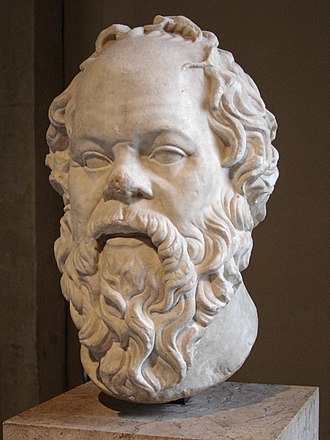 470–399 BCE · Ancient Greek
Socrates
Philosophy is practice for dying; death is either dreamless sleep or a conversation with the great dead — neither to be feared.
Read the full argument → - 4 Zc. 369–286 BCE · Chinese
Zhuangzi
When his wife died he drummed on a bowl and sang — death is a transformation, like the turning of the seasons.
Read the full argument → - 5
 341–270 BCE · Ancient Greek
Epicurus
“Where death is, I am not; where I am, death is not.” What we cannot experience cannot harm us.
Read the full argument → - 6
 c. 99–55 BCE · Roman & Latin
Lucretius
The eternity after death is like the eternity before birth — and that never troubled us.
Read the full argument → - 7
 4 BCE – 65 · Roman & Latin
Seneca
Rehearse death daily; “it is a great thing to learn how to die” — and life is long enough if well used.
Read the full argument → - 8
 121 – 180 · Roman & Latin
Marcus Aurelius
Alexander and his mule-driver ended in the same place. Do not act as if you had ten thousand years.
Read the full argument → - 9
 1533 – 1592 · French
Michel de Montaigne
“To philosophize is to learn to die” — but in the end, better to learn to live; death will teach itself.
Read the full argument → - 10
 1564 – 1616 · British & Irish
William Shakespeare
Hamlet fears “what dreams may come”; holding Yorick’s skull, he sees where all glory ends — “the readiness is all”.
Read the full argument → - 11
 1828 – 1910 · Russian
Leo Tolstoy
Ivan Ilyich discovers, dying, that his correct life was not real life — and at the last finds the light.
Read the full argument → - 12
 1889 – 1976 · German-language
Martin Heidegger
Being-toward-death individualizes us; facing our ownmost possibility calls us out of the anonymous “they” into authenticity.
Read the full argument → - 13
 1913 – 1960 · French
Albert Camus
Death makes life absurd — but not meaningless. Live without appeal, with full intensity.
Read the full argument →
Explore Next
related by shared connectionsWhat Is the Meaning of Life?
Liberation, virtue, tranquillity, God, the will, revolt — the great answers to the greatest question.
Epicureanism
The school of the Garden — a materialist philosophy aiming at tranquillity through friendship, simple pleasures and freedom from the fear of gods and death.
Stoicism
The Hellenistic and Roman philosophy of virtue, reason and acceptance — happiness lies in what is up to us, our judgments and choices, not in external things.
What Is Time?
Flux and permanence, the moving image of eternity, Augustine’s puzzle, Kant’s form of intuition, eternal recurrence, Heidegger’s temporality.
The Road of Nihilism
How “nothing matters” became an idea, a movement, a diagnosis, and a test — from Jacobi to Camus.
What Are the Limits of the Human Mind?
Can reason know everything — or are there things the mind can never reach? From the Upanishads’ unknowable knower to Kant’s boundary and Wittgenstein’s silence.