Contents · 9 sections · 4 min
Core Theses
Virtue — wisdom, justice, courage, temperance — is the only true good, and is sufficient for happiness.
Health, wealth, reputation and even life are “indifferents” — preferable or not, but not good or bad in themselves.
Some things are up to us (judgments, desires, choices); everything else is not.
We suffer not from things but from our judgments about things.
The cosmos is a rational, living whole governed by logos (providence); to live well is to live in agreement with nature.
All human beings are citizens of one world-city (cosmopolis).
Stoicism was founded around 300 BCE in Athens by Zeno of Citium (c. 334–262 BCE), a Phoenician merchant from Cyprus who, according to legend, was shipwrecked, wandered into a bookshop, read about Socrates, and asked where such men could be found. The bookseller pointed to the Cynic Crates passing by: “Follow that man.” Zeno studied with Cynics and Platonists, then taught in the Stoa Poikilē, the Painted Porch in the Athenian agora — whence “Stoics”.
The school was systematized by Chrysippus (c. 279–206 BCE), of whom it was said, “Without Chrysippus, there would be no Stoa.” He wrote some 700 books, all lost. In Rome, Stoicism became the philosophy of statesmen and emperors: Seneca, the freed slave Epictetus, and the emperor Marcus Aurelius — whose writings, unlike those of the Greek founders, survive and have never stopped being read.
The three parts of philosophy
The Stoics divided philosophy into logic, physics and ethics, comparing it to an egg (logic the shell, ethics the white, physics the yolk) or an orchard (logic the wall, physics the trees, ethics the fruit).
Physics: a rational cosmos
The universe is a single living organism, permeated by logos — divine reason, also called God, Zeus, nature, fate and providence — conceived as a fiery breath (pneuma). Everything happens by fate, an unbreakable chain of causes; yet this fate is rational and good. The cosmos undergoes eternal cycles, ending in a universal conflagration (ekpyrōsis) and beginning again, identically — an idea Friedrich Nietzsche echoed in the Eternal Recurrence.
Logic
The Stoics developed a sophisticated propositional logic (Chrysippus’s five “indemonstrables” — if p then q; p; therefore q, and so on) and a theory of knowledge based on “cognitive impressions” (phantasia katalēptikē) — impressions so clear that they compel assent.
Ethics: living according to nature
The goal (telos) is “to live in agreement with nature” — with our own rational nature and with the rational order of the cosmos. This is virtue, and virtue is the only good. Everything else — health, wealth, pleasure, reputation, life itself — is an indifferent (adiaphoron). Some indifferents are “preferred” (health over sickness) and it is rational to select them, but their presence or absence does not make a life good or bad.
What is up to us
The famous dichotomy, from the opening of Epictetus’s Handbook:
Some things are up to us and some are not. Up to us are opinion, impulse, desire, aversion — in a word, whatever is our own doing. Not up to us are body, property, reputation, office — in a word, whatever is not our own doing.
Happiness depends entirely on what is up to us. If we place our good in what is not up to us, we will be anxious, frustrated, envious, enslaved.
The passions
The Stoics taught that passions (pathē) — fear, desire, distress, excessive pleasure — are not blind forces but false judgments: the belief that some external thing is genuinely good or bad. Grief is the judgment that a great evil has befallen me; anger the judgment that I have been wronged and revenge is good. Since these judgments are false, the wise person is free of passions — apatheia, not apathy but freedom from disturbance. The sage still feels “good feelings” (eupatheiai) — joy, caution, rational wishing.
Practices
Stoicism was a way of life, with exercises:
- Premeditation of evils (praemeditatio malorum) — imagining losses in advance, so they do not take us by surprise.
- The view from above — seeing human affairs from the perspective of the cosmos.
- Evening review — Seneca examined his day each night.
- The dichotomy of control — asking of each trouble, “is this up to me?”
- Memento mori — remembering death.
- Voluntary discomfort — Seneca recommended living for a few days a month on the cheapest food in rough clothing: “Is this the condition that I feared?”
Cosmopolitanism
Since all humans share reason, all are citizens of one community — the cosmopolis. Diogenes the Cynic had called himself “a citizen of the world”; the Stoics made it a doctrine. Seneca wrote that slaves are human beings, “sprung from the same seed”. This universalism influenced Roman law, Christianity, and modern ideas of natural law and human rights.
Influence
Stoicism shaped early Christianity (Paul’s letters, Tertullian, Augustine’s debates), Renaissance “Neostoicism” (Justus Lipsius, Montaigne), Spinoza, Kant (duty, the good will), and the founders of the United States. In the twentieth century, Albert Ellis and Aaron Beck built cognitive therapy on the Stoic insight that emotions follow judgments. James Stockdale, an American pilot held as a prisoner of war for seven years in Vietnam, credited Epictetus with his survival. Today “modern Stoicism” is a popular movement — sometimes thin, but rooted in a genuine ancient practice.
Critics
- Epicureans: pleasure, not virtue, is the good; Stoic fate is incompatible with freedom.
- Academic Sceptics (Carneades): no impression is so clear it cannot be false.
- Augustine: Stoic self-sufficiency is pride; the Stoic sage’s tranquility is incompatible with Christian compassion and grief.
- Modern critics: Stoicism can counsel passivity before injustice (“it’s not up to me”) and suppression of healthy emotion.
The Stoics and the Gītā
The parallels between Stoicism and the The Bhagavad Gītā are striking: act according to your role and duty (svadharma / one’s officium), without attachment to the fruits; the wise person is unmoved by pleasure and pain; the self is untouched by what happens to the body. Both arose in societies of soldiers and statesmen seeking inner freedom amid outer necessity.
Stoicism in two minutes
The Hellenistic and Roman philosophy of virtue, reason and acceptance — happiness lies in what is up to us, our judgments and choices, not in external things.
- Virtue — wisdom, justice, courage, temperance — is the only true good, and is sufficient for happiness.
- Health, wealth, reputation and even life are “indifferents” — preferable or not, but not good or bad in themselves.
- Some things are up to us (judgments, desires, choices); everything else is not.
- We suffer not from things but from our judgments about things.
- The cosmos is a rational, living whole governed by logos (providence); to live well is to live in agreement with nature.
- All human beings are citizens of one world-city (cosmopolis).
Curiosities
did you know?- Zeno of Citium came to philosophy after a shipwreck left him in Athens; he said, ‘I made a prosperous voyage when I suffered shipwreck.’
- The school’s name comes from the painted colonnade in the Athenian agora where Zeno taught.
- Cognitive behavioural therapy (CBT) explicitly drew on Epictetus’ saying that we are disturbed not by things but by our judgments of them.
Questions to Argue About
debate club →- Is it possible — or desirable — not to be disturbed by anything outside your control?
- Is virtue really enough for happiness, even on the rack?
- Should we love our fate, as the Stoics and Nietzsche urged?
Members
3
Seneca
Roman Stoic, playwright and statesman — tutor and adviser to Nero — whose letters on time, death, anger and friendship are among the most readable works of ancient philosophy.

Epictetus
The former slave who became the greatest teacher of Stoicism — “We are disturbed not by things, but by our judgments about things.”

Marcus Aurelius
Roman emperor and Stoic philosopher whose private notebook, the Meditations, is the most intimate record of a mind trying to be good while ruling the world.
Explore Next
related by shared connections
Meditations
The private notebook of the Stoic emperor Marcus Aurelius, written on campaign — the most intimate and enduring work of ancient practical philosophy.
How Should We Face Death?
Naciketas at Death’s door, Socrates’ hemlock, Epicurus’s argument, the Stoics’ rehearsal, Hamlet’s skull, Ivan Ilyich’s scream, Heidegger’s being-toward-death.
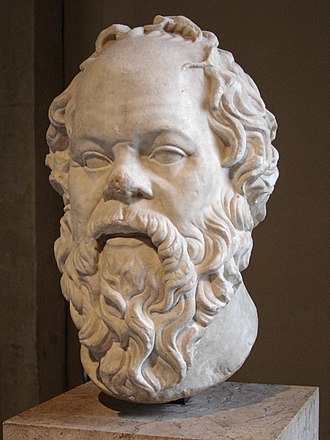
Socrates
The Athenian gadfly who wrote nothing, claimed to know nothing, questioned everyone — and was put to death for it, becoming philosophy’s martyr.
Aśoka
The Mauryan emperor (r. c. 268–232 BCE) who, after the slaughter of his conquest of Kaliṅga, turned to Buddhism and governed by “dhamma” — non-violence, tolerance and welfare — proclaimed in edicts carved on rocks and pillars across India. His lion capital is India’s emblem; his wheel is on its flag.
The Jātakas
547 stories of the Buddha’s previous lives — as a hare, a monkey king, a merchant, a prince — told to illustrate the virtues that lead to awakening. India’s great treasury of folk tales, carved on stūpas and painted in caves.
Nirvāṇa
The Buddhist goal — the “blowing out” of the fires of greed, hatred and delusion, the end of suffering and of rebirth. The Buddha described it as unborn and unconditioned, and refused to say whether the awakened exist after death.