

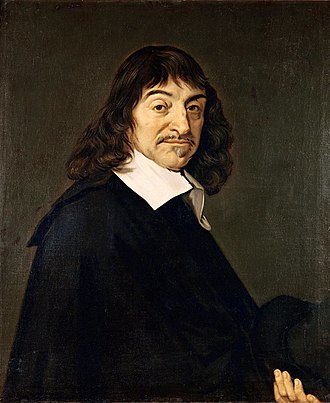

Contents · 5 sections · 3 min
Montaigne in Five Ideas
the essentialsI am myself the matter of my book
Montaigne invented the essay — an “attempt” — to explore his own changing self, with all its contradictions.
Que sais-je?
His motto — “What do I know?” — and the long Apology for Raymond Sebond’s demolition of human pretensions to knowledge.
To philosophize is to learn to die
Echoing Cicero, he made the familiarity with death the aim of his early essays — and later came to think it better to learn to live.
Of cannibals
The “savages” of Brazil are no more barbarous than Europeans who torture each other over religion. “Each man calls barbarism whatever is not his own practice.”
Friendship
Of his friend La Boétie — “Because it was he; because it was I.”
Michel Eyquem de Montaigne was born in 1533 at the Château de Montaigne in the Périgord, near Bordeaux, into a wealthy merchant family recently ennobled. His father, who had fought in Italy and admired Renaissance learning, gave him an extraordinary upbringing: he was sent to live with peasants as a baby to know the common people, woken each morning by music, and taught Latin as his first language by a German tutor who spoke no French, the whole household being forbidden to speak anything else to him.
He studied law, became a magistrate in the Bordeaux parlement, and there met Étienne de La Boétie, author of Discourse on Voluntary Servitude. Their friendship, lasting only four years until La Boétie’s death in 1563, was the great emotional event of Montaigne’s life. Asked why he loved him, he wrote: “If you press me to say why I loved him, I feel that it cannot be expressed except by answering: Because it was he; because it was I.”
In 1571, at thirty-eight, he retired to his château — to the round tower where he kept his library of a thousand books — to live “in freedom, tranquillity and leisure”. There he began writing the Essays. But public life called him back: he travelled through Germany, Switzerland and Italy (1580–81), served two terms as mayor of Bordeaux, and negotiated between the Catholic king and the Protestant Henry of Navarre during the Wars of Religion. He suffered from kidney stones, which he describes with candour. He died in 1592.
The Essays
Essais means “attempts”, “trials”, “tests”. The book (first edition 1580; expanded 1588; posthumous edition 1595) is 107 chapters of wildly varying length — from a page to a hundred — on everything: idleness, liars, smells, thumbs, cannibals, cruelty, coaches, experience, the education of children, sleep, repentance, vanity. And always, on himself:
Thus, reader, I am myself the matter of my book; you would be unreasonable to spend your leisure on so frivolous and vain a subject. (“To the Reader”)
I do not portray being: I portray passing… My history needs to be adapted to the moment. I may presently change, not only by fortune, but also by intention. (“Of Repentance”)
He was the first writer to make the ordinary, fluctuating self — its moods, its body, its inconsistencies — the subject of serious reflection. “Every man bears the whole form of the human condition.”
Scepticism
The longest essay, the “Apology for Raymond Sebond”, is a sustained attack on human pride in reason. Animals may be wiser than we think — “When I play with my cat, who knows if I am not a pastime to her more than she is to me?” Our senses deceive, our reasonings contradict each other, our customs vary endlessly. Montaigne revived ancient Pyrrhonian scepticism for the modern world; his motto was “Que sais-je?” — “What do I know?”
This scepticism has a moral edge. In “Of Cannibals”, he reports on the Tupinambá of Brazil and finds them noble — “we call barbarism whatever is not our own custom” — while Europeans roast heretics alive “under the cloak of piety and religion”. In “Of Cruelty”, he declares cruelty the worst of vices — a value as modern as anything in the Renaissance.
Death and life
The early essay “That to Philosophize Is to Learn to Die” counsels constant meditation on death, in Stoic fashion: “Let us deprive death of its strangeness… let us have nothing on our minds as often as death.” But after a near-fatal riding accident in which he felt death as a gentle drifting away, and after years of illness, his view softened. In the last essay, “Of Experience”, he concludes:
We are great fools. “He has spent his life in idleness,” we say… What! have you not lived? That is not only the fundamental but the most illustrious of your occupations… Our great and glorious masterpiece is to live appropriately.
Influence
Montaigne shaped William Shakespeare (through John Florio’s 1603 translation), Francis Bacon (who borrowed the essay form), René Descartes (who answered his scepticism), Blaise Pascal (who argued with him on every page of the Pensées), Rousseau, Emerson, Friedrich Nietzsche (“that such a man wrote has truly augmented the joy of living on this earth”), Virginia Woolf, and every personal essayist and blogger since. Sarah Bakewell’s How to Live: A Life of Montaigne in One Question and Twenty Attempts at an Answer (2010) is a delightful introduction.
Using Montaigne in conversation
- On certainty: “Que sais-je?” — what do I know?
- On other cultures: each calls barbarism what is not his own custom.
- On friendship: “Because it was he; because it was I.”
- On living well: “Our great and glorious masterpiece is to live appropriately.”
Curiosities
did you know?- He was raised speaking only Latin until he was six — his father ordered the whole household to speak Latin to him.
- He retired at 38 to a tower in his château, whose ceiling beams he painted with fifty-seven Latin and Greek sayings.
- He had a medal struck with the motto ‘Que sais-je?’ and an image of scales in balance.
Questions to Argue About
debate club →- Is it possible to know yourself when you change from day to day?
- Are we in a position to call other cultures barbarous?
Explore Next
related by shared connectionsZhuangzi
The wittiest of Chinese philosophers — the butterfly dreamer, sceptic, and teller of tales — who mocked fixed perspectives and taught the free and easy wandering of a mind attuned to the Dao.

Seneca
Roman Stoic, playwright and statesman — tutor and adviser to Nero — whose letters on time, death, anger and friendship are among the most readable works of ancient philosophy.
Cogito, ergo sum
I think, therefore I am — the one certainty Descartes found after doubting everything else.

Al-Ghazālī
Theologian, jurist and mystic whose Incoherence of the Philosophers attacked Avicenna’s Aristotelianism, anticipated Hume on causation, and whose spiritual autobiography records a crisis of doubt.

Kaṭha Upaniṣad
The story of the boy Naciketas, who goes to the house of Death and asks what happens after death — receiving the teaching of the immortal Self.

Marcus Aurelius
Roman emperor and Stoic philosopher whose private notebook, the Meditations, is the most intimate record of a mind trying to be good while ruling the world.