- 1
 c. 800–700 BCE · Indian
Yājñavalkya
The knower can never be known as an object — “you cannot see the seer of seeing”. The deepest reality is reached not by grasping but by negation, neti neti.
Read the full argument → - 2
 c. 515–450 BCE · Ancient Greek
Parmenides
Reason is supreme — it shows that change, which the senses report everywhere, is impossible. Trust thought over perception.
Read the full argument → - 3
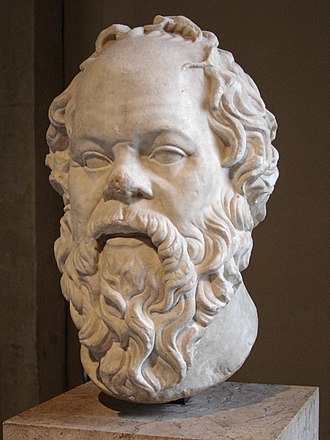 470–399 BCE · Ancient Greek
Socrates
Wisdom begins by knowing that you do not know. The human mind is limited, and the wise person knows its limits.
Read the full argument → - 4
 c. 571–471 BCE · Chinese
Laozi
“The Dao that can be spoken of is not the eternal Dao.” Words and concepts cannot capture the source of things.
Read the full argument → - 5
 c. 428–348 BCE · Ancient Greek
Plato
The senses show only shadows; reason, turned toward the Forms, can climb out of the Cave — but the Good itself is “beyond being”.
Read the full argument → - 6 Zc. 369–286 BCE · Chinese
Zhuangzi
How do I know that what I call knowing is not really not-knowing? Every judgment comes from a perspective — even this one.
Read the full argument → - 7
 c. 150 – c. 250 · Indian
Nāgārjuna
Every view about the self-existence of things collapses under analysis. Reason can show the emptiness of all views — including its own.
Read the full argument → - 8
 1058 – 1111 · Islamic & Arabic
Al-Ghazālī
Reason cannot prove the world’s eternity or even that causes necessitate effects; certainty comes from the light God casts into the heart.
Read the full argument → - 9
 1225 – 1274 · Patristic & Medieval
Thomas Aquinas
Reason can prove that God exists and much about God — but the Trinity and Incarnation exceed it; revelation completes reason without contradicting it.
Read the full argument → - 10
 1533 – 1592 · French
Michel de Montaigne
“Que sais-je?” — What do I know? Human reason is a “two-edged sword”; our customs, senses and arguments all fail us.
Read the full argument → - 11
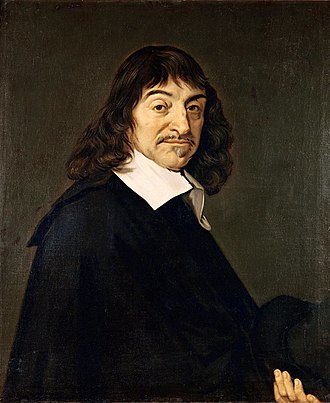 1596 – 1650 · French
René Descartes
Doubt everything, and the cogito survives. From this one certainty reason can rebuild knowledge — with God’s guarantee.
Read the full argument → - 12
 1623 – 1662 · French
Blaise Pascal
“The heart has its reasons which reason does not know.” Reason’s last step is to recognize that infinitely many things exceed it.
Read the full argument → - 13
 1711 – 1776 · British & Irish
David Hume
Reason cannot justify induction, causation or the self. We believe them by custom; reason is the slave of the passions.
Read the full argument → - 14
 1724 – 1804 · German-language
Immanuel Kant
The decisive boundary. We know phenomena with necessity, shaped by our own forms — but things in themselves, God, freedom and the soul lie beyond knowledge, though not beyond thought.
Read the full argument → - 15
 1770 – 1831 · German-language
Georg Wilhelm Friedrich Hegel
To draw a limit is already to be beyond it. Reason is not trapped behind appearances — truth is the whole, Spirit knowing itself.
Read the full argument → - 16
 1813 – 1855 · Scandinavian
Søren Kierkegaard
The existing individual cannot be captured by any system. Faith begins where reason ends — in the leap.
Read the full argument → - 17
 1844 – 1900 · German-language
Friedrich Nietzsche
There are no facts, only interpretations; the “will to truth” itself must be questioned. Knowledge is perspective all the way down.
Read the full argument → - 18
 1913 – 1960 · French
Albert Camus
The absurd is the confrontation between our longing to understand and the world’s silence. “I want to know whether I can live with what I know and with that alone.”
Read the full argument → - 19
 1889 – 1951 · Austrian & Central European
Ludwig Wittgenstein
The limit is drawn in language. What can be said can be said clearly; the rest — ethics, God, the meaning of life — can only be shown. “Whereof one cannot speak, thereof one must be silent.”
Read the full argument →
This is one of the oldest and deepest questions in philosophy, and almost every tradition gives a different answer. Read the ladder top to bottom: notice how the Indian, Chinese and Greek beginnings already contain the whole range — confidence in reason (Parmenides, Plato), humility before what words cannot reach (Yājñavalkya, Laozi), and radical scepticism (Zhuangzi, Nāgārjuna).
The decisive modern moment is Kant: after him, the question is not “what can reason prove?” but “what are the conditions and limits of any possible knowledge?” Everything after — Hegel’s denial of limits, Kierkegaard’s leap, Nietzsche’s perspectivism, Camus’s absurd — is a response.
Ask yourself, at each rung: is this thinker saying the mind is too weak, or that reality is too strange, or that the very idea of a limit is confused?
Explore Next
related by shared connectionsWhat Can We Know?
The relay race of epistemology — from Plato’s Cave to Kant’s categories, via Descartes’ demon and Hume’s billiard balls.
Faith vs. Reason
Can God be reached by argument — or does faith begin exactly where reason fails? From Tertullian’s Athens and Jerusalem to Kierkegaard’s leap and Camus’s refusal.
What Is the Self?
From ātman to anattā, from the cogito to the bundle, from Kierkegaard’s task of becoming oneself to Sartre’s nothingness.
Does God Exist?
The proofs, the refutations, the wagers and the leaps — the great argument about God from the Upanishads to Nietzsche.
What Is Beauty — and What Is Art For?
From Plato’s ladder of love and Aristotle’s catharsis to Kant’s disinterested pleasure, Schopenhauer’s music and Nietzsche’s Apollo and Dionysus.

Heraclitus
The obscure philosopher of Ephesus for whom everything flows, strife is the father of all things, and a hidden logos governs the endless change.