- 1
 c. 428–348 BCE · Ancient Greek
Plato
Art imitates appearances and stirs the passions — banish the poets. Yet love rises by a ladder from beautiful bodies to Beauty itself.
Read the full argument → - 2
 384–322 BCE · Ancient Greek
Aristotle
Imitation is natural and instructive; tragedy purges pity and fear; poetry is more philosophical than history.
Read the full argument → - 3
 551–479 BCE · Chinese
Confucius
Music and ritual shape character — hearing the Shao music, he forgot the taste of meat for three months.
Read the full argument → - 4
 c. 571–471 BCE · Chinese
Laozi
“When all the world knows beauty as beauty, ugliness arises.” Beauty and ugliness define each other.
Read the full argument → - 5
 1711 – 1776 · British & Irish
David Hume
Beauty is a sentiment, but true judges — of strong sense and delicate taste — set the standard; Sancho’s kinsmen and the key in the wine-cask.
Read the full argument → - 6
 1724 – 1804 · German-language
Immanuel Kant
The beautiful pleases without interest and without a concept; it is “purposiveness without a purpose”. The sublime reveals our reason’s power over nature.
Read the full argument → - 7
 1770 – 1831 · German-language
Georg Wilhelm Friedrich Hegel
Art is the sensuous appearing of the Idea — and in modernity “a thing of the past” as the highest vehicle of truth.
Read the full argument → - 8
 1788 – 1860 · German-language
Arthur Schopenhauer
In aesthetic contemplation we escape the Will for a moment; music is a direct copy of the Will itself.
Read the full argument → - 9
 1844 – 1900 · German-language
Friedrich Nietzsche
Art is the union of Apollonian form and Dionysian ecstasy; “only as an aesthetic phenomenon is existence justified”.
Read the full argument → - 10
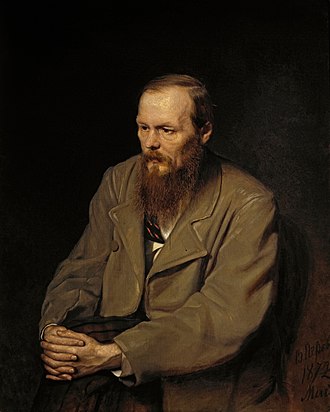 1821 – 1881 · Russian
Fyodor Dostoevsky
“Beauty will save the world” — reported, with irony, in The Idiot; and Dmitri: “beauty is a terrible thing… there God and the devil are fighting”.
Read the full argument → - 11
 1828 – 1910 · Russian
Leo Tolstoy
Art is the transmission of feeling from artist to audience — and true art must be accessible to all.
Read the full argument →
The Indian theory of rasa (the emotional “flavour” of art, systematized by Bharata and Abhinavagupta) will join this ladder with the Indian aesthetics pages.
Explore Next
related by shared connectionsWhat Can We Know?
The relay race of epistemology — from Plato’s Cave to Kant’s categories, via Descartes’ demon and Hume’s billiard balls.
What Is Justice?
From Thrasymachus’s “advantage of the stronger” to Rawls’s veil of ignorance — the question of what we owe each other and who should rule.
What Are the Limits of the Human Mind?
Can reason know everything — or are there things the mind can never reach? From the Upanishads’ unknowable knower to Kant’s boundary and Wittgenstein’s silence.
What Is the Meaning of Life?
Liberation, virtue, tranquillity, God, the will, revolt — the great answers to the greatest question.
What Is Time?
Flux and permanence, the moving image of eternity, Augustine’s puzzle, Kant’s form of intuition, eternal recurrence, Heidegger’s temporality.
Are We Free?
Fate, karma, determinism, compatibilism, radical freedom — the long argument over whether we choose what we do.