- 1
 c. 535–475 BCE · Ancient Greek
Heraclitus
“Character is destiny” — our fate flows from who we are.
Read the full argument → - 2
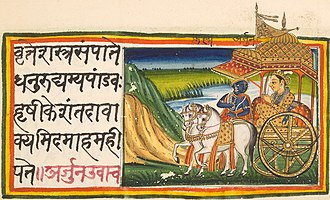 c. 200 BCE · Indian
The Bhagavad Gītā
Act according to your duty, but surrender the fruits — freedom lies not in controlling outcomes but in the spirit of action.
Read the full argument → - 3
 341–270 BCE · Ancient Greek
Epicurus
Atoms sometimes swerve unpredictably; this swerve breaks the chain of fate and makes room for free choice.
Read the full argument → - 4
 c. 50 – c. 135 · Ancient Greek
Epictetus
Everything external is fated; but our judgments and choices are always our own. No one can enslave the will.
Read the full argument → - 5
 354 – 430 · Patristic & Medieval
Augustine of Hippo
The will is free to choose evil; it needs grace to choose the good. God’s foreknowledge does not compel.
Read the full argument → - 6
 1225 – 1274 · Patristic & Medieval
Thomas Aquinas
Free choice is a power of reason and will; God moves the will without violating its freedom.
Read the full argument → - 7
 1632 – 1677 · Dutch
Baruch Spinoza
Free will is an illusion — we are conscious of our desires but ignorant of their causes. True freedom is understanding necessity.
Read the full argument → - 8
 1711 – 1776 · British & Irish
David Hume
Liberty and necessity are compatible: we are free when we act according to our will, even if our will has causes.
Read the full argument → - 9
 1724 – 1804 · German-language
Immanuel Kant
As phenomena we are causally determined; as rational agents we must think ourselves free — “ought implies can”.
Read the full argument → - 10
 1788 – 1860 · German-language
Arthur Schopenhauer
Man can do what he wills, but he cannot will what he wills.
Read the full argument → - 11
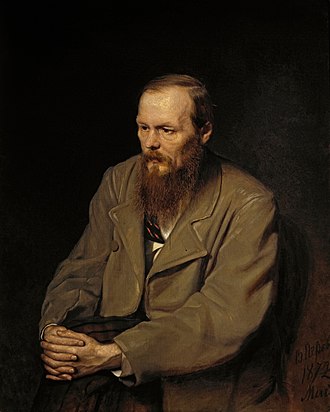 1821 – 1881 · Russian
Fyodor Dostoevsky
The Underground Man would sooner go mad than be a piano key; the Grand Inquisitor says humanity cannot bear freedom.
Read the full argument → - 12
 1844 – 1900 · German-language
Friedrich Nietzsche
Free will is a theologians’ invention to make us guilty — and yet he calls us to become who we are and love our fate.
Read the full argument → - 13
 1905 – 1980 · French
Jean-Paul Sartre
We are condemned to be free. There are no excuses; even refusing to choose is a choice.
Read the full argument →
Notice the three families of answer that recur across cultures: fatalism (everything is fixed; accept it — the Stoics, in part the Gītā); libertarian freedom (we can genuinely do otherwise — Epicurus’s swerve, Sartre); and compatibilism (freedom is acting from your own will, even if that will has causes — Hume, and in a different key Spinoza and Kant). Modern neuroscience has revived the debate, but the arguments were already here.
Explore Next
related by shared connectionsDoes God Exist?
The proofs, the refutations, the wagers and the leaps — the great argument about God from the Upanishads to Nietzsche.
What Is Justice?
From Thrasymachus’s “advantage of the stronger” to Rawls’s veil of ignorance — the question of what we owe each other and who should rule.
What Is Beauty — and What Is Art For?
From Plato’s ladder of love and Aristotle’s catharsis to Kant’s disinterested pleasure, Schopenhauer’s music and Nietzsche’s Apollo and Dionysus.
What Is the Self?
From ātman to anattā, from the cogito to the bundle, from Kierkegaard’s task of becoming oneself to Sartre’s nothingness.
The Categorical Imperative
Kant’s supreme principle of morality — act only on maxims you could will as universal laws; treat humanity always as an end, never merely as a means.
What Is the Meaning of Life?
Liberation, virtue, tranquillity, God, the will, revolt — the great answers to the greatest question.