- 1
 551–479 BCE · Chinese
Confucius
Justice flows from virtue — when rulers are humane and names fit realities, the people follow like grass bending in the wind.
Read the full argument → - 2
 c. 428–348 BCE · Ancient Greek
Plato
Thrasymachus says justice is the advantage of the stronger; Socrates answers that justice is the harmony of the soul and the city, each part doing its own work.
Read the full argument → - 3
 384–322 BCE · Ancient Greek
Aristotle
Distributive justice gives equals equal shares in proportion to merit; corrective justice restores balance; equity corrects the law where it is too general.
Read the full argument → - 4
 c. 200 BCE · Indian
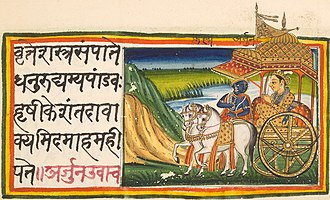
The Bhagavad Gītā
Justice as dharma — each fulfilling the duty of their station; Arjuna must fight a righteous war.
Read the full argument → - 5
 354 – 430 · Patristic & Medieval
Augustine of Hippo
Without justice, what are kingdoms but great bands of robbers?
Read the full argument → - 6
 1225 – 1274 · Patristic & Medieval
Thomas Aquinas
Human law must accord with natural law; “an unjust law is no law at all”.
Read the full argument → - 7
 1469 – 1527 · Italian
Niccolò Machiavelli
Politics has its own logic; the prince must learn how not to be good.
Read the full argument → - 8
 1632 – 1704 · British & Irish
John Locke
Justice protects natural rights to life, liberty and property; governments that violate them may be resisted.
Read the full argument → - 9
 1711 – 1776 · British & Irish
David Hume
Justice is an “artificial virtue” — a convention that arises because goods are scarce and benevolence limited.
Read the full argument → - 10
 1712 – 1778 · French
Jean-Jacques Rousseau
Inequality began with private property; legitimate law expresses the general will.
Read the full argument → - 11
 1724 – 1804 · German-language
Immanuel Kant
Justice is the coexistence of each person’s freedom with everyone’s under universal law; persons have dignity, never mere price.
Read the full argument → - 12
 1818 – 1883 · German-language
Karl Marx
Justice under capitalism is class domination dressed as fairness; “from each according to his ability, to each according to his needs”.
Read the full argument → - 13
 1844 – 1900 · German-language
Friedrich Nietzsche
“Justice” often hides ressentiment — the revenge of the weak; noble justice is the generosity of the strong.
Read the full argument → - 14
 1913 – 1960 · French
Albert Camus
Rebellion must have limits; no revolution may murder in the name of future justice.
Read the full argument →
The planned page on John Rawls (A Theory of Justice, 1971 — the “veil of ignorance”) will complete this ladder in the modern era.
Explore Next
related by shared connectionsWhat Can We Know?
The relay race of epistemology — from Plato’s Cave to Kant’s categories, via Descartes’ demon and Hume’s billiard balls.
Are We Free?
Fate, karma, determinism, compatibilism, radical freedom — the long argument over whether we choose what we do.
What Is Beauty — and What Is Art For?
From Plato’s ladder of love and Aristotle’s catharsis to Kant’s disinterested pleasure, Schopenhauer’s music and Nietzsche’s Apollo and Dionysus.
Faith vs. Reason
Can God be reached by argument — or does faith begin exactly where reason fails? From Tertullian’s Athens and Jerusalem to Kierkegaard’s leap and Camus’s refusal.
The Enlightenment
The eighteenth-century movement that put reason, science, tolerance and individual liberty at the centre of human affairs — “Sapere aude!”
Does God Exist?
The proofs, the refutations, the wagers and the leaps — the great argument about God from the Upanishads to Nietzsche.