Marginalia
⟿  7 paths

Reading Paths

Like a very short introduction you walk through: each path is a sequence of pages and books, in order, with the reason for every step. Tick steps off as you go — your progress stays in this browser.

beginner · about 10 hours of reading

First Steps in Philosophy

The ten pages to read first if you have never studied philosophy — the questions that started it, the people who changed it, in order.

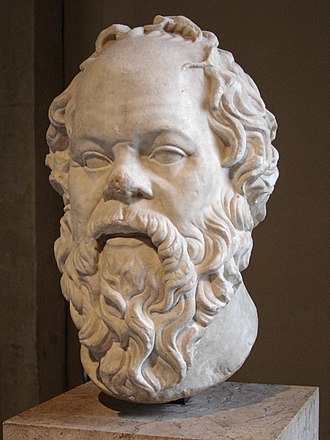
  1. Socrates
    Thinker · 25 min

    Socrates

    Start with the man who wrote nothing and asked everything. Philosophy as a way of life — and a death.

  2. Ao
    Scene · 10 min

    The Allegory of the Cave

    The single most famous image in philosophy, and the key to Plato.

  3. Plato
    Thinker · 40 min

    Plato

    The Forms, the soul, love, justice — the founding vocabulary of the West.

  4. Aristotle
    Thinker · 40 min

    Aristotle

    The great systematizer — logic, ethics, politics, the good life.

  5. Gautama Buddha
    Thinker · 25 min

    Gautama Buddha

    The same century, the other side of the world — suffering, impermanence, no-self.

  6. Confucius
    Thinker · 20 min

    Confucius

    The third great teacher of the Axial Age — how to live well together.

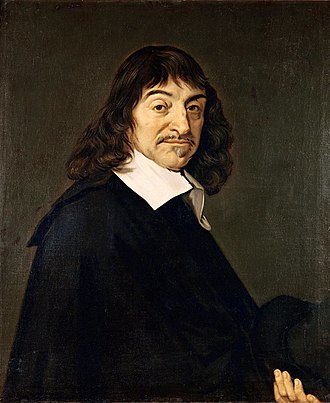
  7. René Descartes
    Thinker · 25 min

    René Descartes

    Modern philosophy begins with doubt — “I think, therefore I am”.

  8. David Hume
    Thinker · 45 min

    David Hume

    The sceptic who showed reason cannot justify causation, induction or the self.

  9. Immanuel Kant
    Thinker · 40 min

    Immanuel Kant

    The hinge of modern thought — what the mind brings to experience, and the dignity of persons.

  10. Friedrich Nietzsche
    Thinker · 40 min

    Friedrich Nietzsche

    God is dead — what now? The philosopher of the modern crisis.

beginner · the pages: 4 hours · the novels: a winter

The Russian Novel and the Accursed Questions

How Russian novelists argued about God, nihilism and revolution — read the pages, then the books.

  1. N
    Theme

    Nihilism

    The word, the movement, and the idea.

  2. Fathers and Sons
    Work

    Fathers and Sons

    Bazarov, the first nihilist.

  3. Notes from Underground
    Work

    Notes from Underground

    Dostoevsky’s answer to the rationalists.

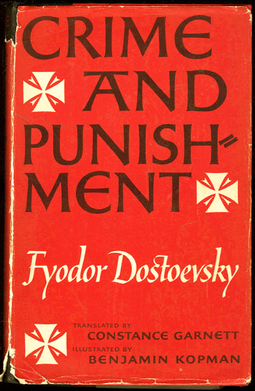
  4. Crime and Punishment
    Work

    Crime and Punishment

    A theory that kills.

  5. The Death of Ivan Ilyich
    Work

    The Death of Ivan Ilyich

    Tolstoy on death and the life not lived.

  6. Demons
    Work

    Demons

    The prophecy of revolutionary terror.

  7. The Brothers Karamazov
    Work

    The Brothers Karamazov

    The summit — God, evil, freedom.

beginner · about 3 hours

Shakespeare for Thinkers

The philosophical Shakespeare — consciousness, nothing, power, meaning — in the order that builds understanding.

  1. William Shakespeare
    Thinker

    William Shakespeare

    The life, the theatre, the canon.

  2. Hamlet
    Work

    Hamlet

    The play of consciousness and doubt.

  3. TB
    Scene

    To Be, or Not to Be

    The soliloquy on suicide.

  4. AP
    Scene

    Alas, Poor Yorick

    Memento mori.

  5. King Lear
    Work

    King Lear

    The play of nothing — told in full.

  6. So
    Scene

    The Storm on the Heath

    Unaccommodated man.

  7. Do
    Scene

    The Death of Cordelia

    The ending audiences could not bear.

  8. Macbeth
    Work

    Macbeth

    Ambition, guilt and meaninglessness.

  9. Ta
    Scene

    Tomorrow, and Tomorrow, and Tomorrow

    A tale told by an idiot.

beginner · about 12 hours of reading

Indian Philosophy from Zero

Twelve pages that take you from the first hymn to the Constitution — the questions, the schools, and the arguments that still divide India.

  1. D
    Idea · 15 min

    Dharma

    The word that holds everything together — and the first thing to understand.

  2. ṚV
    Work · 25 min

    The Ṛg Veda

    The oldest text, and a creation hymn that ends in doubt.

  3. Kaṭha Upaniṣad
    Work · 15 min

    Kaṭha Upaniṣad

    A boy at the house of Death — the most dramatic of the Upaniṣads.

  4. Chāndogya Upaniṣad
    Work · 20 min

    Chāndogya Upaniṣad

    Salt in water, and “that thou art”.

  5. Gautama Buddha
    Thinker · 35 min

    Gautama Buddha

    The great alternative — suffering, no-self, and the way out.

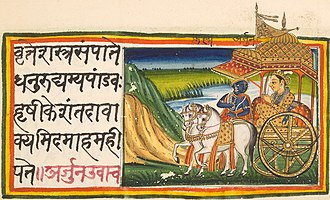
  6. The Bhagavad Gītā
    Work · 35 min

    The Bhagavad Gītā

    A soldier refuses to fight; God answers with three paths to freedom.

  7. Read · 10 min

    The Darśanas — the map of the schools

    See the whole family of schools at once, and where each stands.

  8. N
    School · 25 min

    Nyāya

    India’s logic — how to argue, and how to catch a cheat.

  9. AV
    School · 25 min

    Advaita Vedānta

    The rope and the snake — the most famous Indian philosophy.

  10. BM
    School · 25 min

    The Bhakti Movement

    When love became the path, and the saints sang in the people’s languages.

  11. MG
    Thinker · 35 min

    Mahatma Gandhi

    Non-violence as a politics.

  12. Ao
    Work · 15 min

    Annihilation of Caste

    The argument India still has with itself.

intermediate · about 8 hours

Existentialism in Twelve Stops

From a Danish believer and a Russian novelist to the cafés of post-war Paris — freedom, anxiety, the absurd.

  1. Søren Kierkegaard
    Thinker

    Søren Kierkegaard

    The father of existentialism — the individual against the System.

  2. Ao
    Scene

    Abraham on Mount Moriah

    Faith beyond ethics — the most disturbing story in the Bible, retold.

  3. Notes from Underground
    Work

    Notes from Underground

    The first existentialist novel — a spiteful man in a mousehole.

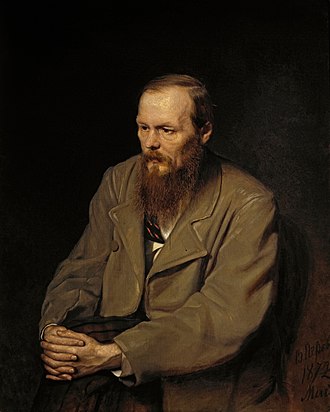
  4. Fyodor Dostoevsky
    Thinker

    Fyodor Dostoevsky

    Freedom, God and evil, argued with lives.

  5. GI
    Scene

    The Grand Inquisitor

    Can humanity bear freedom?

  6. Friedrich Nietzsche
    Thinker

    Friedrich Nietzsche

    The death of God and the creation of values.

  7. A
    Idea

    Anxiety

    The dizziness of freedom.

  8. Martin Heidegger
    Thinker

    Martin Heidegger

    Being-toward-death and authenticity.

  9. Jean-Paul Sartre
    Thinker

    Jean-Paul Sartre

    Existence precedes essence; condemned to be free.

  10. BF
    Idea

    Bad Faith

    How we lie to ourselves about our freedom.

  11. Albert Camus
    Thinker

    Albert Camus

    The absurd — and why not to despair.

  12. Sa
    Scene

    Sisyphus at the Foot of the Mountain

    One must imagine Sisyphus happy.

intermediate · about 6 hours

The Indian Road — From the Upanishads to Vedānta

The Self, Brahman and liberation — following the great conversation from the forest sages to Śaṅkara and Rāmānuja.

  1. Read

    The Indian Philosophy room

    Begin with the map — the Vedas, the six darśanas, the epics, the great debates. (Philosophy → Indian Philosophy)

  2. Kaṭha Upaniṣad
    Work

    Kaṭha Upaniṣad

    A boy at the house of Death — the most dramatic Upanishad.

  3. Na
    Scene

    Naciketas at the House of Death

    The dialogue with Death in full.

  4. UĀ
    Thinker

    Uddālaka Āruṇi

    Salt in water — “that thou art”.

  5. Yājñavalkya
    Thinker

    Yājñavalkya

    The unseen seer; neti neti; Maitreyī’s question.

  6. Āi
    Idea

    Ātman is Brahman

    The central identity, and the four great sayings.

  7. The Bhagavad Gītā
    Work

    The Bhagavad Gītā

    Arjuna’s crisis and the three paths — action, knowledge, devotion.

  8. Gautama Buddha
    Thinker

    Gautama Buddha

    The great dissent — no permanent self.

  9. Ādi Śaṅkara
    Thinker

    Ādi Śaṅkara

    Non-dualism — Brahman alone is real.

  10. Śv
    Debate

    Śaṅkara vs. Rāmānuja

    The defining debate of Vedānta.

advanced · about 5 hours

East Meets West — The Great Parallels

Pairs of thinkers who never met but asked the same questions — read each pair side by side with the Compare tool.

  1. Parmenides
    Thinker

    Parmenides

    Being is one and changeless — read with Śaṅkara.

  2. Ādi Śaṅkara
    Thinker

    Ādi Śaṅkara

    Brahman alone is real. (Compare Parmenides ⇋ Śaṅkara.)

  3. David Hume
    Thinker

    David Hume

    The self as a bundle of perceptions.

  4. A
    Idea

    Anattā (No-Self)

    The self as five aggregates. (Compare Hume ⇋ the Buddha.)

  5. Heraclitus
    Thinker

    Heraclitus

    Everything flows; opposites unite.

  6. Laozi
    Thinker

    Laozi

    Reversal is the movement of the Dao. (Compare Heraclitus ⇋ Laozi.)

  7. René Descartes
    Thinker

    René Descartes

    The dream argument.

  8. Z
    Thinker

    Zhuangzi

    The butterfly dream. (Compare Descartes ⇋ Zhuangzi.)

  9. S
    School

    Stoicism

    Act without attachment to outcomes.

  10. The Bhagavad Gītā
    Work

    The Bhagavad Gītā

    Your right is to action alone, never to its fruits.