Contents · 11 sections · 18 min
Key Ideas
Ṛta — the cosmic order that keeps the sun moving, the rivers flowing and people truthful; the ancestor of dharma.
Sacrifice (yajña) as the bond that holds gods and humans together.
“Truth is one; the wise call it by many names” (1.164.46).
The Nāsadīya Sūkta — the creation hymn that ends in doubt.
The Puruṣa Sūkta — the cosmic person whose sacrifice makes the world (and, notoriously, the four varṇas).
Speech (vāc) as sacred power — the beginning of India’s obsession with language.
The Ṛg Veda (Sanskrit ṛc, “verse of praise”, + veda, “knowledge”) is the oldest of the four Vedas, the foundational scriptures of Hinduism, and the oldest surviving text of any Indian language. It is a collection of 1,028 hymns (sūktas), about 10,600 verses in all, arranged in ten books called maṇḍalas. They were composed in an archaic form of Sanskrit by hereditary families of poet-priests in the north-west of the Indian subcontinent — the land of the seven rivers, the Sapta Sindhu, roughly modern Punjab and its surroundings — over several centuries around 1500–1000 BCE. For most of their history they were never written down. They were memorised and recited, generation after generation, with a fidelity that has no parallel in the ancient world, so that a Brahmin chanting a hymn to Agni in Kerala today pronounces it, in all likelihood, almost exactly as it was pronounced three thousand years ago.
Most of the Ṛg Veda is liturgy: hymns that praised the gods and called them to a fire-sacrifice, where they were offered butter, grain and the intoxicating drink soma. But it is also poetry of great power and strangeness, and in its later layers it begins to ask the questions that Indian philosophy would pursue for the next three millennia. Its last book contains the Nāsadīya Sūkta, a hymn of creation that ends by wondering whether even the highest god knows how the world began — perhaps the first expression of philosophical doubt in world literature. It contains the Puruṣa Sūkta, in which the universe is made from the sacrifice of a cosmic man — and from which later India drew its justification of the four social classes. And it introduces the idea of ṛta, a cosmic and moral order underlying everything, which would grow into the central Indian idea of dharma.
Background
The Vedas
Veda means “knowledge”, from the same Indo-European root as Latin videre, “to see”, and English wit and wise. In Hindu tradition the Vedas are śruti, “what was heard”: not composed by any human author but eternal, “seen” or “heard” by inspired seers (ṛṣis) at the beginning of each cosmic age. All other sacred literature — the epics, the law books, the Purāṇas — is smṛti, “what is remembered”, human tradition that derives its authority from the Veda.
There are four Vedas. The Ṛg Veda is the book of hymns. The Sāma Veda sets mostly Ṛg Vedic verses to melodies for chanting. The Yajur Veda contains the prose formulas spoken by the priest who performs the physical actions of the sacrifice. The Atharva Veda, later and once of lower status, collects spells and charms — for healing, love, protection against snakes and enemies — together with some remarkable speculative hymns.
Each Veda in turn grew in layers. The oldest is the saṃhitā, the collection of hymns or formulas. Then came the brāhmaṇas (c. 900–700 BCE), enormous prose manuals explaining the meaning of the rituals; the āraṇyakas, “forest books”, on the more esoteric rites; and finally the Upaniṣads (from c. 800 BCE), the philosophical dialogues that close the Veda and are therefore called Vedānta, “the end of the Veda”. When people speak of “the Ṛg Veda” they usually mean the Ṛg Veda Saṃhitā, the hymn collection itself.
Who composed it
The hymns are attributed to named poets and to the families of seers who preserved them. The six “family books”, Books 2 to 7, are each the property of a single lineage — the Gṛtsamadas, Viśvāmitras, Vāmadevas, Atris, Bharadvājas and Vasiṣṭhas — and these are the oldest parts. Book 8 belongs mainly to the Kaṇva family. Book 9 collects all the hymns to Soma, gathered from the other books. Books 1 and 10 were added last; Book 10 especially contains the cosmological, philosophical and secular hymns that read so differently from the rest.
The composers called themselves Ārya, “noble” or “hospitable”, a word that originally named a linguistic and cultural community rather than a race. Their language belongs to the Indo-Iranian branch of the Indo-European family, the same family as Greek, Latin, Persian, German and English. Vedic pitṛ is Latin pater and English father; Vedic dyaus pitṛ, “father sky”, is Greek Zeus patēr and Latin Iuppiter. The Ṛg Veda is closely related in language and religion to the oldest Iranian scripture, the Avestan Gāthās of Zarathustra.
Where it came from
How the Indo-Aryan language arrived in South Asia is one of the most contested questions in Indian history. The mainstream view among linguists, archaeologists and geneticists is that Indo-Aryan speakers migrated into the north-west of the subcontinent from Central Asia in the second millennium BCE, after the decline of the Indus Valley (Harappan) civilisation (c. 2600–1900 BCE), mixing with the existing population; ancient DNA studies published since 2018 have supported a movement of steppe ancestry into South Asia in this period. A minority of Indian scholars defend an “out of India” or indigenous origin, identifying the Vedic people with the Harappans. The hymns themselves describe a semi-pastoral people who valued cattle and horses, fought with chariots, knew bronze but not yet iron, and moved between the Kabul River in Afghanistan and the Gaṅgā–Yamunā region. The river most often praised, after the Indus, is the Sarasvatī — “best of mothers, best of rivers, best of goddesses” — which many identify with the now-dry Ghaggar-Hakra channel.
Preservation: a library made of memory
Perhaps the most remarkable fact about the Ṛg Veda is how it was preserved. Writing was not used in India until the Mauryan period (3rd century BCE), and even after that, Brahmin tradition held that the Veda must be learned from the mouth of a teacher, not from a book; to write it down was almost a sacrilege. The text survived instead in human memory, through a system of extraordinary redundancy.
A student first learned the saṃhitāpāṭha, the continuous text, in which words run together according to the rules of sound-combination (sandhi). Then the padapāṭha, attributed to the grammarian Śākalya, in which each word is pronounced separately. Then progressively more elaborate patterns: kramapāṭha (words in overlapping pairs: ab, bc, cd…), jaṭāpāṭha (“braid”: ab ba ab, bc cb bc…), and ghanapāṭha (“dense”: ab ba abc cba abc…), among eleven methods in all. Every syllable carried a pitch accent, marked by hand gestures. A mistake in one pattern would be caught by the others.
The result is that the Ṛg Veda was transmitted with a fidelity the Homeric poems — fixed in writing around the same time it was still being sung — never enjoyed. The German Indologist Max Müller, who published the first printed edition of the text with Sāyaṇa’s commentary (1849–74), remarked that if every manuscript were lost, the text could be recovered from the memory of living reciters.
The gods
The Vedic world is crowded with gods (devas, “shining ones”), most of them powers of nature or of the sacrifice. They are not ranked in a fixed hierarchy: a poet addressing one god often praises him as the greatest of all, a habit Max Müller called henotheism — the worship of one god at a time as supreme.
Indra, to whom about a quarter of the hymns are addressed, is the storm god and warrior king of the gods, a hard-drinking hero who wields the thunderbolt (vajra). His great deed is the slaying of Vṛtra, a serpent or dragon who had imprisoned the waters behind a mountain; Indra, strengthened by soma, splits the serpent and releases the rivers to run to the sea. The hymn that tells it (1.32) begins: “Let me now proclaim the heroic deeds of Indra, the first that the thunderbolt-wielder performed.” Indra also frees the cows hidden in a cave by the Paṇis, and leads the Āryas in battle against their enemies, the dāsas or dasyus.
Agni, the fire, is the second great god — about two hundred hymns, and the very first hymn of the collection: agnim īḷe purohitam, “I praise Agni, the household priest”. Agni is the fire of the hearth and of the sacrifice, the messenger who carries offerings up to the gods in his smoke, and the god present in every home. He is born from the friction of two fire-sticks, and he is also the lightning and the sun.
Soma is both a plant and a god. The juice of the soma plant, pressed between stones, filtered through wool and mixed with milk, was drunk by the priests and offered to the gods; it brought ecstasy, vision and the feeling of immortality. “We have drunk the soma; we have become immortal; we have gone to the light; we have found the gods” (8.48.3). All 114 hymns of Book 9 are sung while it is being pressed. Its botanical identity is unknown; proposals include ephedra, a hallucinogenic mushroom (Amanita muscaria), and the Syrian rue.
Varuṇa, the sovereign god of the sky and of waters, is the guardian of ṛta, the cosmic order, and of oaths; he sees everything, binds wrongdoers with his noose, and to him are addressed the most personal hymns of confession and longing for forgiveness. He is paired with Mitra, god of contracts and friendship. Other gods include Sūrya and Savitṛ (the sun), Uṣas (the dawn, a radiant young woman, to whom some of the loveliest hymns are addressed), the Aśvins (twin horsemen and healers), the Maruts (storm gods), Rudra (a fierce, wild god of disease and healing, ancestor of Śiva), Viṣṇu (who measures the universe in three strides — a minor god here who would become one of Hinduism’s greatest), Yama (the first man to die, king of the dead), and Vāc (Speech personified).
Ṛta: the order of the world
Behind the gods stands an impersonal principle: ṛta, “that which is fitted together”, the order of the cosmos. Ṛta makes the sun rise, the seasons turn, the rivers flow; it is also the order of the sacrifice and of truthful speech. The gods themselves are its guardians, “born of ṛta”. Its opposite is anṛta, falsehood and disorder. The word has a cognate in the Avestan aša, “truth”, which suggests the idea is older than the Ṛg Veda itself.
Ṛta is the ancestor of much in Indian thought. As the idea of a natural order that is at once physical, ritual and moral, it was gradually replaced in later texts by Dharma, which kept its meaning of “right order” but placed it in human duty and society. The ritual theorists of the brāhmaṇas took the idea further: the sacrifice does not merely please the gods; it sustains the universe — a view that would culminate in the Mīmāṃsā school, for which the Vedic injunction itself is the source of all order.
The sacrifice
The hymns were not written to be read but to be performed at the yajña, the fire sacrifice. A patron (yajamāna), usually a chief or wealthy householder, hired priests to build an altar and kindle the sacred fires, to recite hymns, chant melodies and pour offerings. The gods were invited to come, sit on the strewn grass, drink the soma and grant cattle, sons, long life, victory and fame. The relationship is one of exchange, of hospitality: dadāmi te, dehi me — “I give to you; give to me”.
The great public rituals grew enormously complex. The aśvamedha, the horse sacrifice performed by kings to proclaim their sovereignty, involved letting a horse wander for a year, followed by an army; any land it entered had to submit or fight. The agniṣṭoma soma sacrifice required sixteen priests. These rituals, codified in the later brāhmaṇas and śrautasūtras, are the context for the Upaniṣads’ later rebellion: the forest sages asked what the sacrifice really means, and moved it inward, into the breath and the mind.
The philosophical hymns
Most of the Ṛg Veda praises and petitions gods. But in Book 1 and especially Book 10, the poets begin to speculate about the origin of the world, the nature of the gods, and the one reality behind the many.
“Truth is one”
A long riddle-hymn attributed to the poet Dīrghatamas (1.164) is full of enigmas about the year, the sun, speech and the cosmos. One verse would be quoted for three thousand years:
They call him Indra, Mitra, Varuṇa, Agni, and he is heavenly, noble-winged Garutmān. Truth is one; the wise speak of it in many ways (ekaṃ sad viprā bahudhā vadanti): they call it Agni, Yama, Mātariśvan. (1.164.46)
Here, already, the many gods are seen as names of a single reality — the seed of the Upaniṣadic Brahman and of modern Hindu pluralism. Swami Vivekananda, Gandhi and Radhakrishnan all quoted the line as the essence of Indian tolerance. The same hymn contains the famous image, later taken up by the Muṇḍaka and Śvetāśvatara Upaniṣads, of two birds on one tree: “Two birds, companions and friends, cling to the same tree. One of them eats the sweet fig; the other, not eating, looks on.” Later readers saw in them the individual self, tasting the fruits of action, and the universal Self, the silent witness.
The Hymn of Creation (Nāsadīya Sūkta)
The most famous hymn of the Ṛg Veda, and perhaps the most astonishing poem of the ancient world, is the Nāsadīya Sūkta (10.129), named after its first words, nāsad āsīt, “there was not non-existence”. In seven verses it imagines the state before creation:
There was neither non-existence nor existence then; there was neither the realm of space nor the sky which is beyond. What stirred? Where? In whose protection? Was there water, bottomlessly deep?
There was neither death nor immortality then. There was no distinguishing sign of night nor of day. That One breathed, windless, by its own impulse. Other than that there was nothing beyond.
Darkness was hidden by darkness in the beginning; with no distinguishing sign, all this was water. The life force that was covered with emptiness, that One arose through the power of heat (tapas).
Desire came upon that One in the beginning; that was the first seed of mind. Poets seeking in their heart with wisdom found the bond of existence in non-existence.
Their cord was extended across. Was there below? Was there above? There were seed-placers; there were powers. There was impulse beneath; there was giving-forth above.
Who really knows? Who will here proclaim it? Whence was it produced? Whence is this creation? The gods came afterwards, with the creation of this universe. Who then knows whence it has arisen?
Whence this creation has arisen — perhaps it formed itself, or perhaps it did not — the one who looks down on it, in the highest heaven, only he knows — or perhaps he does not know.
(Translation adapted from Wendy Doniger.)
The hymn moves from a state beyond the opposites — neither being nor non-being, neither death nor immortality — to a single “One” (tad ekam) breathing without breath, to darkness, heat, desire and mind, and then to the separation of above and below. It then does something no other creation myth does: it doubts itself. The gods cannot know, because they came after creation. Perhaps the overseer in the highest heaven knows — or perhaps not.
Readers have found in this hymn the beginning of Indian metaphysics: the Upaniṣadic “One without a second”, the Sāṃkhya evolution of the world from an undifferentiated principle, and the Buddhist refusal to answer unanswerable questions. The physicist Carl Sagan read it on his television series Cosmos (1980). The Indian television series Bharat Ek Khoj, based on Nehru’s Discovery of India, set a Hindi version of it to music as its opening song.
The Hymn of the Cosmic Man (Puruṣa Sūkta)
The second great cosmological hymn (10.90) describes the creation of the world through the sacrifice of Puruṣa, a primordial cosmic Man with a thousand heads, a thousand eyes and a thousand feet, who pervades the earth and extends ten fingers beyond it. “Puruṣa is all this, whatever has been and whatever is to be.” The gods sacrificed him, with himself as the offering, and from his body came the world: the moon from his mind, the sun from his eye, Indra and Agni from his mouth, the wind from his breath, the sky from his head, the earth from his feet. And:
When they divided the Man, into how many parts did they apportion him? What do they call his mouth, his two arms and thighs and feet? His mouth became the Brāhmaṇa; his arms were made into the Rājanya (warrior); his thighs the Vaiśya (common people); and from his feet the Śūdra (servant) was born. (10.90.11–12)
This is the first mention anywhere of the four varṇas — the classes of priests, warriors, producers and servants — and the only one in the Ṛg Veda. Scholars generally regard it as one of the latest hymns in the collection. Later law books, above all the Manusmṛti, used it as divine sanction for a hierarchical social order, and it has been central to debates over caste ever since. B. R. Ambedkar argued in Who Were the Shudras? (1946) that the verse was a late interpolation used to justify a system with no basis in the original Vedic religion; reformers such as Dayānanda Sarasvatī read it as describing classes by aptitude rather than birth. The hymn also matters philosophically: the idea that the world is the body of a single cosmic being, sacrificed and dispersed into the many, anticipates the Upaniṣadic identification of the universe with Brahman, and Rāmānuja’s later teaching that the world is the body of God.
Other speculative hymns
The Hiraṇyagarbha Sūkta (10.121) speaks of a “golden embryo” that arose in the beginning and became the lord of all creation, each verse ending with a question: “Who is the god whom we should worship with oblation?” (kasmai devāya haviṣā vidhema) — so persistent that later tradition made Ka, “Who?”, into the name of a god. The Vāk Sūkta (10.125), spoken in the first person by the goddess Speech, declares that she supports all the gods and carries Soma: “I am the queen, the gatherer of riches… whom I love I make formidable, a sage, a seer.” It is the beginning of India’s long reverence for language, which would lead to Pāṇini’s grammar and Bhartṛhari’s philosophy of the word. The Hymn to Faith (10.151), the hymns to Manyu (anger) and to the Earth (in the Atharva Veda) explore the inner life and the natural world.
The human voice
Not all of the Ṛg Veda is liturgy. Some of its most memorable hymns are secular, personal or dramatic.
The Gambler’s Lament (10.34) is the monologue of a man ruined by dice. He describes the nuts used as dice — “born in a high place, whirling on the board” — as more intoxicating than soma; his wife has left him, his mother-in-law hates him, his creditors hound him; “the gambler’s wife is abandoned and grieves, and his mother grieves for the son who wanders who knows where”. He resolves to stop, but hears the dice rattling and goes “like a woman to her lover”. The god Savitṛ finally tells him: “Play not with dice; till your field.” It is the first poem about addiction, and a distant ancestor of the dice game in the The Mahābhārata.
There are dialogue hymns that seem to come from lost dramas: between Yama and his twin sister Yamī, who tries to seduce him so that the human race can be born, and is refused (10.10); between Purūravas and the nymph Urvaśī, who has left her mortal husband (10.95) — a story Kālidāsa later turned into a play; between Indra and the Maruts, and between the sage Agastya and his wife Lopāmudrā, who demands that he stop his austerities and make love to her.
The funeral hymns of Book 10 show how the Vedic people faced death. The dead are cremated, and Agni is asked to carry them to the world of the fathers, where Yama rules: “Go forth on the ancient paths by which our fathers went… unite with the fathers, with Yama… leaving behind all imperfection, go home again.” Another hymn bids the earth receive the bones of the dead gently: “Open up, earth; do not crush him. Be easy to enter and easy to rest in. Cover him, earth, as a mother wraps her son in the hem of her skirt.” There is no idea yet of karma or rebirth; those doctrines appear only in the Upaniṣads.
The wedding hymn (10.85), recited at Hindu weddings to this day, tells of the marriage of Sūryā, daughter of the Sun, and blesses the bride: “Be a queen over your father-in-law, a queen over your mother-in-law.”
From the Ṛg Veda to the Upaniṣads
The Ṛg Veda is the beginning of a long movement in Indian thought from outward ritual to inward knowledge. In the hymns, the sacrifice is performed to please the gods. In the brāhmaṇas, the sacrifice becomes a cosmic machine that sustains the universe, and its correct performance becomes all-important. In the āraṇyakas, its meaning is meditated upon. In the Upaniṣads, the sacrifice is internalised: the true fire is breath, the true offering is the self, and the true knowledge is that the Self (ātman) is identical with the ultimate reality (Brahman). The question of the Nāsadīya hymn — what was the One before all things? — is answered in the Chāndogya Upaniṣad: “In the beginning this world was simply what is existent — one only, without a second.”
At the same time, the Ṛg Veda remained the supreme authority for the orthodox (āstika) schools of Indian philosophy. Those that accepted it — Nyāya, Vaiśeṣika, Sāṃkhya, Yoga, Mīmāṃsā and Vedānta — were orthodox; those that rejected it — Buddhism, Jainism and the materialist Cārvāka (Lokāyata) — were heterodox (nāstika). The Mīmāṃsā school developed sophisticated theories of language and interpretation to defend the claim that the Veda is eternal and authorless (apauruṣeya), its words not spoken by any person, human or divine.
Reception
For centuries the Ṛg Veda was known in India mainly as sacred sound — recited in rituals, its meaning understood by few. The fourteenth-century scholar Sāyaṇa, working at the court of the Vijayanagara empire, wrote the only complete traditional commentary, explaining every word in ritual terms.
Its discovery by Europeans in the late eighteenth and nineteenth centuries was one of the great intellectual events of the age. Sir William Jones, a judge in Calcutta, observed in 1786 that Sanskrit bore to Greek and Latin “a stronger affinity… than could possibly have been produced by accident”, founding comparative linguistics and the idea of the Indo-European language family. The German Romantics hailed the Veda as the voice of the childhood of humanity. Max Müller devoted twenty-five years at Oxford to the first printed edition, paid for by the East India Company, and made “the Vedas” a household word in Europe.
In India, nineteenth-century reformers made the Ṛg Veda a battlefield over the nature of Hinduism. Dayānanda Sarasvatī, founder of the Ārya Samāj (1875), proclaimed “Back to the Vedas”: the Veda, rightly understood, taught monotheism and science, and condemned idol-worship and caste by birth. Sri Aurobindo read it as a psychological and spiritual allegory. The nationalist leader Bal Gangadhar Tilak, in The Arctic Home in the Vedas (1903), argued from its astronomical references that the Vedic people came from the far north. Nehru, in The Discovery of India (1946), called the Ṛg Veda “the first book of humanity” and the Nāsadīya hymn its finest expression.
For modern scholars, the Ṛg Veda remains a primary source for the history of language, religion and society in early South Asia, and for comparative Indo-European studies. Joel Brereton and Stephanie Jamison’s complete English translation (2014), the first in over a century, reveals the hymns as intricate, riddling, self-conscious poetry: not the naïve nature-worship the Victorians imagined, but the work of master craftsmen competing to say the unsayable.
The Ṛg Veda in conversation
The line most worth knowing is ekaṃ sad viprā bahudhā vadanti — “truth is one; the wise call it by many names” (1.164.46) — the classic Indian statement that different religions may name one reality. For intellectual honesty about ultimate questions, nothing beats the last line of the creation hymn: the one who looks down from the highest heaven “only he knows — or perhaps he does not know”. And when caste is debated, it is worth knowing that the four varṇas appear exactly once in the Ṛg Veda, in a single late hymn.
हिन्दी संस्करण · 4,232 शब्द ·
ऋग्वेद (संस्कृत ऋच्, “स्तुति का मंत्र” + वेद, “ज्ञान”) चार वेदों में सबसे प्राचीन है — हिंदू धर्म का आधारभूत ग्रंथ और किसी भी भारतीय भाषा का सबसे पुराना उपलब्ध ग्रंथ। इसमें 1,028 सूक्त हैं, कुल लगभग 10,600 मंत्र, जो दस मंडलों में व्यवस्थित हैं। इनकी रचना एक प्राचीन संस्कृत में, वंशानुगत कवि-पुरोहितों के कुलों ने, भारतीय उपमहाद्वीप के उत्तर-पश्चिम में — सप्त सिंधु अर्थात् सात नदियों के प्रदेश में, जो मोटे तौर पर आज का पंजाब और उसके आसपास का क्षेत्र है — लगभग 1500 से 1000 ईसा पूर्व के बीच कई शताब्दियों में की। अपने इतिहास के अधिकांश समय में ये मंत्र कभी लिखे ही नहीं गए। इन्हें कंठस्थ किया गया और पीढ़ी-दर-पीढ़ी ऐसी शुद्धता से सुनाया गया जिसकी प्राचीन विश्व में कोई मिसाल नहीं — इतनी कि आज केरल में अग्नि का सूक्त गाता हुआ कोई वैदिक ब्राह्मण उसे लगभग ठीक वैसे ही उच्चारित करता है जैसे तीन हज़ार वर्ष पहले किया जाता था।
ऋग्वेद का अधिकांश भाग यज्ञ-संबंधी स्तुति है: ऐसे सूक्त जो देवताओं की प्रशंसा करते और उन्हें अग्नि-यज्ञ में बुलाते थे, जहाँ उन्हें घी, अन्न और मादक पेय सोम अर्पित किया जाता था। परंतु यह अद्भुत शक्ति और रहस्य की कविता भी है, और अपनी बाद की परतों में यह उन प्रश्नों को पूछना शुरू करता है जिनका पीछा भारतीय दर्शन अगले तीन हज़ार वर्षों तक करता रहा। इसके अंतिम मंडल में नासदीय सूक्त है — सृष्टि का एक ऐसा सूक्त जो इस शंका पर समाप्त होता है कि क्या सर्वोच्च देवता भी जानता है कि संसार कैसे आरंभ हुआ; यह संभवतः विश्व-साहित्य में दार्शनिक संदेह की पहली अभिव्यक्ति है। इसमें पुरुष सूक्त है, जिसमें एक विराट पुरुष के यज्ञ से विश्व की रचना होती है — और जिससे बाद के भारत ने चार वर्णों का औचित्य निकाला। और यह ऋत की धारणा प्रस्तुत करता है — एक ब्रह्मांडीय और नैतिक व्यवस्था जो सब कुछ के मूल में है, और जो आगे चलकर भारत की केंद्रीय धारणा धर्म बनी।
पृष्ठभूमि
वेद
वेद का अर्थ है “ज्ञान”, उसी भारोपीय धातु से जिससे लैटिन videre (“देखना”) और अंग्रेज़ी wit, wise बने हैं। हिंदू परंपरा में वेद श्रुति हैं — “जो सुना गया”: किसी मनुष्य की रचना नहीं, बल्कि शाश्वत, जिन्हें हर युग के आरंभ में प्रेरित ऋषियों ने “देखा” या “सुना”। अन्य सभी धार्मिक साहित्य — महाकाव्य, धर्मशास्त्र, पुराण — स्मृति है, “जो स्मरण किया गया”, मानवीय परंपरा जिसकी प्रामाणिकता वेद से आती है।
वेद चार हैं। ऋग्वेद स्तुतियों का ग्रंथ है। सामवेद अधिकतर ऋग्वेद के ही मंत्रों को गायन की धुनों में बाँधता है। यजुर्वेद में वे गद्य-मंत्र हैं जो यज्ञ की क्रियाएँ करने वाला पुरोहित बोलता है। अथर्ववेद, जो बाद का है और कभी कम प्रतिष्ठित माना जाता था, मंत्र-तंत्रों का संग्रह है — रोग-निवारण, प्रेम, साँपों और शत्रुओं से रक्षा के लिए — साथ ही कुछ अद्भुत दार्शनिक सूक्त भी।
हर वेद परतों में विकसित हुआ। सबसे पुरानी परत संहिता है — मंत्रों का संग्रह। फिर आए ब्राह्मण ग्रंथ (लगभग 900–700 ई.पू.), यज्ञों का अर्थ समझाने वाले विशाल गद्य-ग्रंथ; फिर आरण्यक, “वन में पढ़े जाने वाले ग्रंथ”, गूढ़ अनुष्ठानों पर; और अंत में उपनिषद् (लगभग 800 ई.पू. से), दार्शनिक संवाद जो वेद को पूर्ण करते हैं और इसलिए वेदांत — “वेद का अंत” — कहलाते हैं। जब लोग “ऋग्वेद” कहते हैं, तो प्रायः उनका आशय ऋग्वेद संहिता से होता है।
रचयिता कौन थे
सूक्त नामित ऋषियों और उन ऋषि-कुलों के नाम से जुड़े हैं जिन्होंने उन्हें सुरक्षित रखा। छह “कुल-मंडल” — मंडल 2 से 7 — प्रत्येक एक ही वंश की संपत्ति हैं: गृत्समद, विश्वामित्र, वामदेव, अत्रि, भरद्वाज और वसिष्ठ; ये सबसे पुराने अंश हैं। आठवाँ मंडल मुख्यतः कण्व कुल का है। नौवें मंडल में सोम के सभी सूक्त एकत्र हैं। मंडल 1 और 10 सबसे अंत में जोड़े गए; दसवें मंडल में विशेष रूप से वे सृष्टि-विषयक, दार्शनिक और लौकिक सूक्त हैं जो बाकी से इतने भिन्न लगते हैं।
रचयिता स्वयं को आर्य — “श्रेष्ठ” या “अतिथि-सत्कार करने वाला” — कहते थे; यह शब्द मूलतः एक भाषाई और सांस्कृतिक समुदाय का नाम था, किसी नस्ल का नहीं। उनकी भाषा भारोपीय परिवार की भारत-ईरानी शाखा की है — वही परिवार जिसमें ग्रीक, लैटिन, फ़ारसी, जर्मन और अंग्रेज़ी हैं। वैदिक पितृ लैटिन का pater और अंग्रेज़ी का father है; वैदिक द्यौष्पितृ (“पिता आकाश”) ग्रीक का Zeus patēr और लैटिन का Iuppiter है। भाषा और धर्म में ऋग्वेद ईरान के सबसे पुराने धर्मग्रंथ, ज़रथुश्त्र की अवेस्ताई गाथाओं, से अत्यंत निकट है।
यह कहाँ से आया
भारोपीय भाषा दक्षिण एशिया में कैसे पहुँची — यह भारतीय इतिहास के सबसे विवादित प्रश्नों में से है। भाषाविदों, पुरातत्त्ववेत्ताओं और आनुवंशिकीविदों का मुख्य मत यह है कि भारोपीय-भाषी लोग सिंधु घाटी (हड़प्पा) सभ्यता (लगभग 2600–1900 ई.पू.) के पतन के बाद, दूसरी सहस्राब्दी ई.पू. में मध्य एशिया से उपमहाद्वीप के उत्तर-पश्चिम में आए और स्थानीय जनसंख्या से घुल-मिल गए; 2018 के बाद प्रकाशित प्राचीन डीएनए अध्ययनों ने इस काल में स्टेपी वंश-परंपरा के दक्षिण एशिया में आगमन का समर्थन किया है। भारतीय विद्वानों का एक अल्पसंख्यक वर्ग “भारत से बाहर” या स्वदेशी उद्गम का पक्ष लेता है और वैदिक लोगों को हड़प्पावासियों से जोड़ता है। सूक्त स्वयं एक अर्ध-पशुपालक समाज का चित्र देते हैं जो गायों और घोड़ों को महत्त्व देता था, रथों से लड़ता था, काँसा जानता था पर लोहा नहीं, और अफ़ग़ानिस्तान की कुभा (काबुल) नदी से लेकर गंगा-यमुना क्षेत्र तक विचरता था। सिंधु के बाद सबसे अधिक स्तुति सरस्वती नदी की है — “माताओं में श्रेष्ठ, नदियों में श्रेष्ठ, देवियों में श्रेष्ठ” — जिसे बहुत से विद्वान आज की सूखी घग्गर-हकरा धारा से जोड़ते हैं।
संरक्षण: स्मृति से बना पुस्तकालय
ऋग्वेद के बारे में शायद सबसे अद्भुत तथ्य यह है कि वह कैसे सुरक्षित रहा। मौर्य काल (तीसरी शताब्दी ई.पू.) से पहले भारत में लेखन का प्रयोग नहीं होता था, और उसके बाद भी ब्राह्मण परंपरा मानती थी कि वेद गुरु के मुख से सीखा जाना चाहिए, पुस्तक से नहीं; उसे लिखना लगभग अपवित्रता थी। इसलिए ग्रंथ मनुष्य की स्मृति में, असाधारण पुनरावृत्ति की एक प्रणाली के द्वारा जीवित रहा।
शिष्य पहले संहितापाठ सीखता — निरंतर पाठ, जिसमें शब्द संधि के नियमों के अनुसार जुड़े रहते हैं। फिर पदपाठ, जिसका श्रेय वैयाकरण शाकल्य को दिया जाता है, जिसमें हर शब्द अलग बोला जाता है। फिर क्रमशः जटिल पाठ-विधियाँ: क्रमपाठ (शब्द जोड़ों में: क-ख, ख-ग, ग-घ…), जटापाठ (“चोटी”: कख खक कख, खग गख खग…), और घनपाठ (“सघन”: कख खक कखग गखक कखग…) — कुल ग्यारह विधियाँ। हर अक्षर का एक स्वर होता था, जिसे हाथ के संकेतों से दर्शाया जाता था। एक पाठ में हुई भूल दूसरे पाठों से पकड़ ली जाती।
परिणाम यह कि ऋग्वेद ऐसी शुद्धता से आगे बढ़ा जो होमर के महाकाव्यों को — जो लगभग उसी समय लिखित रूप में स्थिर हुए जब ऋग्वेद अभी गाया ही जा रहा था — कभी नहीं मिली। जर्मन भारतविद् मैक्स मूलर, जिन्होंने सायण-भाष्य सहित ग्रंथ का पहला मुद्रित संस्करण (1849–74) निकाला, कहते थे कि यदि सारी पांडुलिपियाँ नष्ट भी हो जाएँ, तो जीवित पाठकों की स्मृति से पूरा ग्रंथ फिर प्राप्त किया जा सकता है।
देवता
वैदिक संसार देवताओं (देव, “प्रकाशमान”) से भरा है, जिनमें अधिकांश प्रकृति या यज्ञ की शक्तियाँ हैं। वे किसी स्थिर पदानुक्रम में नहीं हैं: किसी एक देवता को संबोधित करता कवि प्रायः उसी को सबसे महान बताता है — इस प्रवृत्ति को मैक्स मूलर ने हेनोथीइज़्म (एकेश्वर-क्रमवाद) कहा: एक समय में एक देवता की सर्वोच्च के रूप में उपासना।
इंद्र, जिन्हें लगभग एक-चौथाई सूक्त समर्पित हैं, वर्षा और तूफ़ान के देवता और देवताओं के योद्धा-राजा हैं — सोम-प्रेमी वीर जो वज्र धारण करते हैं। उनका महान कर्म वृत्र का वध है — एक सर्प या अजगर जिसने पर्वत के पीछे जल को बंदी बना रखा था; सोम से बलवान होकर इंद्र उस सर्प को चीर देते हैं और नदियों को सागर की ओर बहने के लिए मुक्त कर देते हैं। जो सूक्त यह कथा कहता है (1.32), वह आरंभ होता है: “इंद्रस्य नु वीर्याणि प्र वोचं यानि चकार प्रथमानि वज्री” — “अब मैं इंद्र के उन वीर कर्मों का वर्णन करूँ जो वज्रधारी ने सबसे पहले किए।” इंद्र पणियों द्वारा गुफा में छिपाई गई गायों को भी मुक्त करते हैं, और आर्यों को उनके शत्रुओं — दास या दस्यु — के विरुद्ध युद्ध में नेतृत्व देते हैं।
अग्नि दूसरे महान देवता हैं — लगभग दो सौ सूक्त, और संग्रह का सबसे पहला मंत्र: अग्निमीळे पुरोहितम् — “मैं अग्नि की स्तुति करता हूँ, जो पुरोहित हैं।” अग्नि चूल्हे और यज्ञ की आग हैं, वह दूत जो अपने धुएँ में आहुतियाँ देवताओं तक ले जाता है, और हर घर में उपस्थित देवता। वे दो अरणियों के मंथन से जन्म लेते हैं, और वे बिजली और सूर्य भी हैं।
सोम एक वनस्पति भी है और देवता भी। पत्थरों के बीच कूटकर, ऊन से छानकर और दूध में मिलाकर सोम का रस पुरोहित पीते और देवताओं को अर्पित करते; इससे उल्लास, दिव्य दृष्टि और अमरता का अनुभव होता था। “अपाम सोमममृता अभूम, अगन्म ज्योतिरविदाम देवान्” — “हमने सोम पिया है; हम अमर हो गए; हम प्रकाश तक पहुँच गए; हमने देवताओं को पा लिया” (8.48.3)। नौवें मंडल के सभी 114 सूक्त सोम-कूटने के समय गाए जाते हैं। इसकी वनस्पति-पहचान अज्ञात है; अनुमानों में एफ़ेड्रा, एक मादक कुकुरमुत्ता और हरमल शामिल हैं।
वरुण, आकाश और जल के सम्राट देवता, ऋत — ब्रह्मांडीय व्यवस्था — और शपथों के रक्षक हैं; वे सब कुछ देखते हैं, अपराधियों को अपने पाश से बाँधते हैं, और उन्हीं को सबसे निजी स्वीकारोक्ति और क्षमा-याचना के सूक्त संबोधित हैं। उनके साथ मित्र हैं, अनुबंध और मैत्री के देवता। अन्य देवताओं में सूर्य और सविता, उषा (भोर — एक दीप्तिमान युवती, जिन्हें कुछ सबसे सुंदर सूक्त समर्पित हैं), अश्विनीकुमार (जुड़वाँ अश्वारोही और चिकित्सक), मरुद्गण (आँधी के देवता), रुद्र (रोग और उपचार के उग्र, जंगली देवता, शिव के पूर्वज), विष्णु (जो तीन पगों में ब्रह्मांड नाप लेते हैं — यहाँ एक गौण देवता, जो आगे चलकर हिंदू धर्म के सबसे महान देवताओं में हुए), यम (मरने वाले पहले मनुष्य, मृतकों के राजा), और वाक् (वाणी की देवी) शामिल हैं।
ऋत: संसार की व्यवस्था
देवताओं के पीछे एक निर्वैयक्तिक तत्त्व है: ऋत — “जो ठीक-ठीक जुड़ा हुआ है”, ब्रह्मांड की व्यवस्था। ऋत के कारण सूर्य उगता है, ऋतुएँ बदलती हैं, नदियाँ बहती हैं; यही यज्ञ की व्यवस्था है और सत्य वाणी की भी। देवता स्वयं इसके रक्षक हैं, “ऋत से जन्मे”। इसका विपरीत है अनृत — असत्य और अव्यवस्था। अवेस्ता में इसका सजातीय शब्द अश (“सत्य”) है, जिससे लगता है कि यह विचार ऋग्वेद से भी पुराना है।
ऋत भारतीय चिंतन की बहुत-सी धारणाओं का पूर्वज है। एक ऐसी प्राकृतिक व्यवस्था के रूप में जो एक साथ भौतिक, अनुष्ठानिक और नैतिक है, बाद के ग्रंथों में इसकी जगह धीरे-धीरे धर्म ने ले ली — जिसने “उचित व्यवस्था” का अर्थ बनाए रखा, पर उसे मनुष्य के कर्तव्य और समाज में स्थापित किया। ब्राह्मण ग्रंथों के यज्ञ-सिद्धांतकारों ने यह विचार आगे बढ़ाया: यज्ञ केवल देवताओं को प्रसन्न नहीं करता, वह विश्व को धारण करता है — यह दृष्टि मीमांसा दर्शन में पराकाष्ठा पर पहुँची, जिसके लिए वैदिक विधि ही समस्त व्यवस्था का स्रोत है।
यज्ञ
सूक्त पढ़ने के लिए नहीं, यज्ञ — अग्नि-अनुष्ठान — में प्रयोग के लिए रचे गए थे। एक यजमान, प्रायः कोई मुखिया या धनी गृहस्थ, पुरोहितों को वेदी बनाने, पवित्र अग्नियाँ प्रज्वलित करने, मंत्र पढ़ने, साम गाने और आहुतियाँ देने के लिए नियुक्त करता। देवताओं को आने, बिछी हुई कुश पर बैठने, सोम पीने और गायें, पुत्र, दीर्घायु, विजय और यश प्रदान करने का निमंत्रण दिया जाता। संबंध आदान-प्रदान का, आतिथ्य का है: ददामि ते, देहि मे — “मैं तुम्हें देता हूँ; तुम मुझे दो।”
बड़े सार्वजनिक यज्ञ अत्यंत जटिल हो गए। अश्वमेध — राजाओं द्वारा अपनी संप्रभुता घोषित करने का यज्ञ — में एक घोड़े को सेना के साथ एक वर्ष तक स्वतंत्र विचरने दिया जाता; जिस भूमि में वह जाता, उसे अधीनता स्वीकार करनी होती या युद्ध करना होता। अग्निष्टोम सोम-यज्ञ में सोलह पुरोहितों की आवश्यकता होती थी। बाद के ब्राह्मणों और श्रौतसूत्रों में संहिताबद्ध ये अनुष्ठान ही उपनिषदों के बाद के विद्रोह की पृष्ठभूमि हैं: वन के ऋषियों ने पूछा कि यज्ञ का वास्तविक अर्थ क्या है, और उसे भीतर — प्राण और मन में — ले गए।
दार्शनिक सूक्त
ऋग्वेद का अधिकांश भाग देवताओं की स्तुति और प्रार्थना है। परंतु पहले और विशेषकर दसवें मंडल में कवि संसार के उद्गम, देवताओं के स्वरूप और अनेक के पीछे स्थित एक सत्य पर चिंतन करने लगते हैं।
“सत्य एक है”
कवि दीर्घतमस् का एक लंबा पहेली-सूक्त (1.164) वर्ष, सूर्य, वाणी और ब्रह्मांड के रहस्यों से भरा है। उसकी एक पंक्ति तीन हज़ार वर्षों तक उद्धृत होती रही:
इन्द्रं मित्रं वरुणमग्निमाहुरथो दिव्यः स सुपर्णो गरुत्मान्। एकं सद्विप्रा बहुधा वदन्त्यग्निं यमं मातरिश्वानमाहुः॥
वे उसे इंद्र, मित्र, वरुण, अग्नि कहते हैं, और वह दिव्य, सुंदर पंखों वाला गरुत्मान् है। सत्य एक है; विद्वान उसे अनेक प्रकार से कहते हैं — वे उसे अग्नि, यम, मातरिश्वा कहते हैं। (1.164.46)
यहाँ पहले से ही अनेक देवताओं को एक ही सत्य के नाम के रूप में देखा गया है — उपनिषदों के ब्रह्म और आधुनिक हिंदू बहुलतावाद का बीज। स्वामी विवेकानंद, गांधी और राधाकृष्णन — सभी ने इस पंक्ति को भारतीय सहिष्णुता के सार के रूप में उद्धृत किया। इसी सूक्त में वह प्रसिद्ध बिंब है जिसे बाद में मुण्डक और श्वेताश्वतर उपनिषदों ने अपनाया — एक वृक्ष पर दो पक्षी: “द्वा सुपर्णा सयुजा सखाया समानं वृक्षं परिषस्वजाते। तयोरन्यः पिप्पलं स्वाद्वत्त्यनश्नन्नन्यो अभिचाकशीति॥” — “दो पक्षी, साथी और सखा, एक ही वृक्ष से लिपटे हैं; उनमें एक मीठा फल खाता है, दूसरा बिना खाए केवल देखता है।” बाद के पाठकों ने इनमें कर्मों के फल चखने वाले जीवात्मा और मौन साक्षी परमात्मा को देखा।
सृष्टि का सूक्त (नासदीय सूक्त)
ऋग्वेद का सबसे प्रसिद्ध सूक्त, और संभवतः प्राचीन विश्व की सबसे विस्मयकारी कविता, नासदीय सूक्त (10.129) है — अपने प्रथम शब्दों नासदासीत् (“तब असत् नहीं था”) के नाम पर। सात मंत्रों में यह सृष्टि से पहले की अवस्था की कल्पना करता है:
नासदासीन्नो सदासीत्तदानीं नासीद्रजो नो व्योमा परो यत्। किमावरीवः कुह कस्य शर्मन्नम्भः किमासीद्गहनं गभीरम्॥
तब न असत् था, न सत् था; न अंतरिक्ष था, न उसके परे आकाश। क्या ढका हुआ था? कहाँ? किसके संरक्षण में? क्या गहन, अथाह जल था?
तब न मृत्यु थी, न अमरता। रात और दिन का कोई चिह्न नहीं था। वह एक, बिना वायु के, अपनी ही शक्ति से श्वास लेता था। उसके अतिरिक्त कुछ भी नहीं था।
आरंभ में अंधकार अंधकार से ढका था; बिना किसी चिह्न के यह सब जल था। जो शून्य से ढका हुआ जीवन-तत्त्व था, वह एक तप की महिमा से उत्पन्न हुआ।
आरंभ में उस एक पर काम (इच्छा) आया; वही मन का पहला बीज था। हृदय में बुद्धि से खोजते कवियों ने असत् में सत् का बंधन पाया।
उनकी रस्सी आर-पार फैली थी। क्या नीचे था? क्या ऊपर था? बीज बोने वाले थे; शक्तियाँ थीं। नीचे स्वधा थी, ऊपर प्रयति।
को अद्धा वेद क इह प्र वोचत्कुत आजाता कुत इयं विसृष्टिः। अर्वाग्देवा अस्य विसर्जनेनाथा को वेद यत आबभूव॥ — कौन सचमुच जानता है? कौन यहाँ इसे कहेगा? यह कहाँ से उत्पन्न हुई? यह सृष्टि कहाँ से आई? देवता तो इस सृष्टि के बाद आए। तब कौन जानता है कि यह कहाँ से हुई?
इयं विसृष्टिर्यत आबभूव यदि वा दधे यदि वा न। यो अस्याध्यक्षः परमे व्योमन्त्सो अङ्ग वेद यदि वा न वेद॥ — यह सृष्टि जहाँ से उत्पन्न हुई — शायद इसने स्वयं को रचा, शायद नहीं — जो इसका अध्यक्ष परम आकाश में है, वही जानता है — या शायद वह भी नहीं जानता।
सूक्त विरोधी युग्मों से परे की अवस्था — न सत्, न असत्; न मृत्यु, न अमरता — से एक “एक” (तदेकम्) तक जाता है जो बिना वायु के श्वास लेता है; फिर अंधकार, तप, काम और मन तक; और फिर ऊपर-नीचे के विभाजन तक। फिर यह वह करता है जो कोई अन्य सृष्टि-मिथक नहीं करता: स्वयं पर संदेह। देवता नहीं जान सकते, क्योंकि वे सृष्टि के बाद आए। शायद परम आकाश का अध्यक्ष जानता हो — या शायद नहीं।
पाठकों ने इस सूक्त में भारतीय तत्त्वमीमांसा का आरंभ देखा है: उपनिषदों का “एकमेवाद्वितीयम्”, एक अविभक्त तत्त्व से संसार का सांख्यीय विकास, और अनुत्तरणीय प्रश्नों का उत्तर देने से बुद्ध का इनकार। भौतिकविद् कार्ल सेगन ने इसे अपने टेलीविज़न धारावाहिक कॉसमॉस (1980) में पढ़ा। नेहरू की डिस्कवरी ऑफ़ इंडिया पर आधारित धारावाहिक भारत एक खोज ने इसका हिंदी रूपांतर — “सृष्टि से पहले सत् नहीं था, असत् भी नहीं…” — अपने आरंभिक गीत के रूप में संगीतबद्ध किया।
विराट पुरुष का सूक्त (पुरुष सूक्त)
दूसरा महान सृष्टि-सूक्त (10.90) पुरुष के यज्ञ द्वारा विश्व की रचना का वर्णन करता है — एक आदि विराट पुरुष जिसके सहस्र सिर, सहस्र नेत्र और सहस्र पैर हैं, जो पृथ्वी को व्याप्त करके दस अंगुल आगे तक फैला है। “पुरुष एवेदं सर्वं यद्भूतं यच्च भव्यम्” — “जो कुछ हुआ है और जो होगा, वह सब पुरुष ही है।” देवताओं ने उसका यज्ञ किया, स्वयं उसी को आहुति बनाकर, और उसके शरीर से संसार बना: उसके मन से चंद्रमा, नेत्र से सूर्य, मुख से इंद्र और अग्नि, प्राण से वायु, सिर से आकाश, पैरों से पृथ्वी। और:
ब्राह्मणोऽस्य मुखमासीद्बाहू राजन्यः कृतः। ऊरू तदस्य यद्वैश्यः पद्भ्यां शूद्रो अजायत॥
उसका मुख ब्राह्मण हुआ; भुजाओं से राजन्य (क्षत्रिय) बनाया गया; उसकी जंघाएँ वैश्य हुईं; और पैरों से शूद्र उत्पन्न हुआ। (10.90.12)
यह कहीं भी चार वर्णों — पुरोहित, योद्धा, उत्पादक और सेवक वर्गों — का पहला उल्लेख है, और ऋग्वेद में एकमात्र। विद्वान सामान्यतः इसे संग्रह के सबसे बाद के सूक्तों में मानते हैं। बाद के धर्मशास्त्रों, विशेषकर मनुस्मृति, ने इसे एक पदानुक्रमित सामाजिक व्यवस्था के लिए दैवी स्वीकृति के रूप में प्रयोग किया, और तब से यह जाति पर हर बहस के केंद्र में रहा है। आंबेडकर ने शूद्र कौन थे? (1946) में तर्क दिया कि यह मंत्र बाद का प्रक्षेप है जिसका प्रयोग ऐसी व्यवस्था को उचित ठहराने में हुआ जिसका मूल वैदिक धर्म में कोई आधार नहीं था; दयानंद सरस्वती जैसे सुधारकों ने इसे जन्म के बजाय योग्यता पर आधारित वर्गों के वर्णन के रूप में पढ़ा। दार्शनिक दृष्टि से भी यह सूक्त महत्त्वपूर्ण है: यह विचार कि संसार एक ही विराट सत्ता का शरीर है, जो यज्ञ द्वारा अनेक में बिखर गया, उपनिषदों में ब्रह्म और संसार की एकता और रामानुज की इस शिक्षा का पूर्वाभास है कि संसार ईश्वर का शरीर है।
अन्य दार्शनिक सूक्त
हिरण्यगर्भ सूक्त (10.121) एक “स्वर्णिम गर्भ” की बात करता है जो आरंभ में उत्पन्न हुआ और समस्त सृष्टि का स्वामी बना; हर मंत्र एक प्रश्न पर समाप्त होता है: “कस्मै देवाय हविषा विधेम?” — “हम किस देवता की हवि से उपासना करें?” — इतना बार-बार कि बाद की परंपरा ने क (“कौन?”) को ही एक देवता का नाम बना दिया। वाक् सूक्त (10.125), जो स्वयं वाणी की देवी के मुख से प्रथम पुरुष में कहा गया है, घोषित करता है कि वही सब देवताओं को धारण करती है: “अहं राष्ट्री संगमनी वसूनाम्… यं कामये तं तमुग्रं कृणोमि तं ब्रह्माणं तमृषिं तं सुमेधाम्” — “मैं रानी हूँ, धन को एकत्र करने वाली… जिसे चाहती हूँ, उसे प्रबल, ब्रह्मज्ञानी, ऋषि और मेधावी बना देती हूँ।” यह भाषा के प्रति भारत की दीर्घ श्रद्धा का आरंभ है, जो आगे पाणिनि के व्याकरण और भर्तृहरि के शब्द-दर्शन तक पहुँची।
मानवीय स्वर
ऋग्वेद का सब कुछ अनुष्ठान नहीं है। इसके कुछ सबसे यादगार सूक्त लौकिक, निजी या नाटकीय हैं।
अक्ष सूक्त — जुआरी का विलाप (10.34) — पासों से बर्बाद हुए एक व्यक्ति का एकालाप है। वह पासों का वर्णन करता है — “ऊँचे स्थान पर जन्मे, फलक पर घूमते” — जो उसे सोम से भी अधिक मादक लगते हैं; उसकी पत्नी उसे छोड़ गई है, सास उससे घृणा करती है, लेनदार उसका पीछा करते हैं; “जुआरी की पत्नी परित्यक्त होकर दुखी है, और माँ उस पुत्र के लिए दुखी है जो न जाने कहाँ भटक रहा है।” वह छोड़ने का निश्चय करता है, पर पासों की खड़खड़ाहट सुनते ही “जैसे स्त्री अपने प्रेमी के पास जाती है” वैसे चल पड़ता है। अंत में देवता सविता उससे कहते हैं: “अक्षैर्मा दीव्यः कृषिमित्कृषस्व” — “पासों से मत खेलो; खेती करो।” यह व्यसन पर पहली कविता है, और महाभारत के द्यूत-प्रसंग की दूर की पूर्वज।
संवाद-सूक्त भी हैं जो किन्हीं लुप्त नाटकों से आए लगते हैं: यम और उनकी जुड़वाँ बहन यमी के बीच, जो मानव जाति के जन्म के लिए यम को रिझाने का प्रयास करती है और ठुकराई जाती है (10.10); पुरूरवा और अप्सरा उर्वशी के बीच, जो अपने मानव पति को छोड़ गई है (10.95) — वह कथा जिसे बाद में कालिदास ने नाटक बनाया; और ऋषि अगस्त्य तथा उनकी पत्नी लोपामुद्रा के बीच, जो माँग करती हैं कि वे तपस्या छोड़कर उनसे प्रेम करें।
दसवें मंडल के अंत्येष्टि सूक्त दिखाते हैं कि वैदिक लोग मृत्यु का सामना कैसे करते थे। मृतकों का दाह-संस्कार होता है, और अग्नि से उन्हें पितरों के लोक तक ले जाने की प्रार्थना की जाती है, जहाँ यम राज्य करते हैं: “उन प्राचीन मार्गों से आगे जाओ जिनसे हमारे पितर गए… पितरों से, यम से मिलो… सारी अपूर्णता पीछे छोड़कर फिर घर लौटो।” एक अन्य सूक्त पृथ्वी से मृतक की अस्थियों को कोमलता से स्वीकार करने को कहता है: “हे पृथ्वी, खुल जाओ; उसे दबाओ मत। उसके लिए सुगम और सुखद बनो। हे पृथ्वी, उसे वैसे ढक लो जैसे माँ अपने पुत्र को अपने आँचल से ढकती है।” यहाँ अभी कर्म या पुनर्जन्म का कोई विचार नहीं है; वे सिद्धांत केवल उपनिषदों में आते हैं।
विवाह सूक्त (10.85), जो आज भी हिंदू विवाहों में पढ़ा जाता है, सूर्य की पुत्री सूर्या के विवाह की कथा कहता है और वधू को आशीर्वाद देता है: “सम्राज्ञी श्वशुरे भव सम्राज्ञी श्वश्र्वां भव” — “ससुर पर साम्राज्ञी बनो, सास पर साम्राज्ञी बनो।”
ऋग्वेद से उपनिषदों तक
ऋग्वेद भारतीय चिंतन की उस दीर्घ यात्रा का आरंभ है जो बाह्य अनुष्ठान से आंतरिक ज्ञान की ओर गई। सूक्तों में यज्ञ देवताओं को प्रसन्न करने के लिए किया जाता है। ब्राह्मणों में यज्ञ एक ब्रह्मांडीय यंत्र बन जाता है जो विश्व को धारण करता है, और उसका सही अनुष्ठान सर्वोपरि हो जाता है। आरण्यकों में उसके अर्थ पर ध्यान किया जाता है। उपनिषदों में यज्ञ भीतर ले जाया जाता है: सच्ची अग्नि प्राण है, सच्ची आहुति स्वयं आत्मा है, और सच्चा ज्ञान यह है कि आत्मा परम सत्य ब्रह्म से अभिन्न है। नासदीय सूक्त का प्रश्न — सब कुछ से पहले वह एक क्या था? — छांदोग्य उपनिषद् में उत्तर पाता है: “सदेव सोम्येदमग्र आसीदेकमेवाद्वितीयम्” — “हे सौम्य, आरंभ में यह सब सत् ही था — एक ही, बिना दूसरे के।”
साथ ही, ऋग्वेद भारतीय दर्शन के आस्तिक संप्रदायों के लिए सर्वोच्च प्रमाण बना रहा। जिन्होंने इसे स्वीकार किया — न्याय, वैशेषिक, सांख्य, योग, मीमांसा और वेदांत — वे आस्तिक थे; जिन्होंने अस्वीकार किया — बौद्ध, जैन और भौतिकवादी चार्वाक — वे नास्तिक। मीमांसा दर्शन ने यह सिद्ध करने के लिए भाषा और व्याख्या के परिष्कृत सिद्धांत विकसित किए कि वेद नित्य और अपौरुषेय है — उसके शब्द किसी व्यक्ति, मनुष्य या ईश्वर, के कहे हुए नहीं।
ग्रहण और प्रभाव
सदियों तक भारत में ऋग्वेद मुख्यतः पवित्र ध्वनि के रूप में जाना गया — अनुष्ठानों में पढ़ा जाता, पर उसका अर्थ कम लोग समझते। चौदहवीं शताब्दी के विद्वान सायण ने विजयनगर साम्राज्य के दरबार में एकमात्र पूर्ण पारंपरिक भाष्य लिखा, जिसमें हर शब्द की अनुष्ठानिक व्याख्या है।
अठारहवीं और उन्नीसवीं शताब्दी में यूरोपीयों द्वारा इसकी खोज उस युग की महान बौद्धिक घटनाओं में थी। कलकत्ता में न्यायाधीश सर विलियम जोन्स ने 1786 में देखा कि संस्कृत का ग्रीक और लैटिन से “इतना गहरा संबंध है… जो संयोग से उत्पन्न नहीं हो सकता” — इससे तुलनात्मक भाषाविज्ञान और भारोपीय भाषा-परिवार की धारणा की नींव पड़ी। जर्मन रोमांटिकों ने वेद को मानवता के बचपन की आवाज़ कहा। मैक्स मूलर ने ऑक्सफ़ोर्ड में पच्चीस वर्ष पहले मुद्रित संस्करण पर लगाए, जिसका व्यय ईस्ट इंडिया कंपनी ने उठाया, और यूरोप में “वेद” को घर-घर का शब्द बना दिया।
भारत में, उन्नीसवीं शताब्दी के सुधारकों ने ऋग्वेद को हिंदू धर्म के स्वरूप पर संघर्ष का क्षेत्र बना दिया। आर्य समाज (1875) के संस्थापक दयानंद सरस्वती ने घोषणा की: “वेदों की ओर लौटो” — वेद, सही अर्थ में, एकेश्वरवाद और विज्ञान सिखाता है, और मूर्ति-पूजा तथा जन्म-आधारित जाति की निंदा करता है। श्री अरविंद ने इसे एक मनोवैज्ञानिक और आध्यात्मिक रूपक के रूप में पढ़ा। राष्ट्रवादी नेता बाल गंगाधर तिलक ने द आर्कटिक होम इन द वेदाज़ (1903) में इसके खगोलीय संदर्भों से तर्क दिया कि वैदिक लोग सुदूर उत्तर से आए। नेहरू ने द डिस्कवरी ऑफ़ इंडिया (1946) में ऋग्वेद को “मानवता की पहली पुस्तक” कहा और नासदीय सूक्त को उसकी श्रेष्ठतम अभिव्यक्ति।
आधुनिक विद्वानों के लिए ऋग्वेद प्राचीन दक्षिण एशिया की भाषा, धर्म और समाज के इतिहास का, और तुलनात्मक भारोपीय अध्ययन का प्राथमिक स्रोत बना हुआ है। जोएल ब्रेरेटन और स्टेफ़नी जैमिसन का पूर्ण अंग्रेज़ी अनुवाद (2014), जो एक शताब्दी से अधिक में पहला था, सूक्तों को जटिल, पहेलीनुमा, आत्म-सचेत कविता के रूप में प्रकट करता है — वह भोली प्रकृति-पूजा नहीं जिसकी विक्टोरियाई युग ने कल्पना की थी, बल्कि ऐसे निपुण कारीगरों का काम जो अकथनीय को कहने की होड़ में थे।
बातचीत में ऋग्वेद
सबसे जानने योग्य पंक्ति है एकं सद्विप्रा बहुधा वदन्ति — “सत्य एक है; विद्वान उसे अनेक नामों से पुकारते हैं” (1.164.46) — यह भारत का शास्त्रीय कथन है कि भिन्न धर्म एक ही सत्य को अलग-अलग नाम दे सकते हैं। परम प्रश्नों पर बौद्धिक ईमानदारी के लिए सृष्टि-सूक्त की अंतिम पंक्ति से बढ़कर कुछ नहीं: परम आकाश से देखने वाला “वही जानता है — या शायद वह भी नहीं जानता”। और जब जाति पर बहस हो, तो यह जानना उपयोगी है कि चार वर्ण पूरे ऋग्वेद में ठीक एक बार आते हैं — एक ही, बाद के सूक्त में।
The Commentary Tree
mūla → bhāṣya → ṭīkāIn India a root text is rarely read alone. Terse sūtras or verses (mūla) are unfolded by a commentary (bhāṣya), which is explained by sub-commentaries (ṭīkā, vārttika) — each generation arguing with the last. This is how The Ṛg Veda has been read.
- The Ṛg Veda
- Padapāṭha (word-by-word recitation)
Breaks every compound and sandhi into separate words — the first linguistic analysis of the text, and one of the safeguards of its preservation.
- Nirukta
The earliest surviving work of Vedic etymology and interpretation — already, in Yāska’s day, the hymns needed explaining.
- Bṛhaddevatā
Catalogues the deity of each hymn and tells the legends behind them.
- Vedārthaprakāśa
The great complete commentary, written at the Vijayanagara court — still the starting point for every modern translator.
- Ṛgvedabhāṣyabhūmikā
The founder of the Ārya Samāj reads the Veda as monotheistic and rational, against both Sāyaṇa and the European Indologists.
- The Secret of the Veda
A symbolic, psychological reading: Agni is the divine will, Soma the delight of being.
The Ṛg Veda in two minutes
Poet-priests of the Bronze Age praise the gods of fire, storm and dawn — and in the last book begin to wonder whether anyone knows how the world began.
The oldest text of India and one of the oldest in any Indo-European language — 1,028 hymns to the gods of fire, storm, sky and order, composed c. 1500–1000 BCE and preserved orally, syllable for syllable, for over three thousand years. Its final book already asks how the universe began, and whether even its creator knows.
- Ṛta — the cosmic order that keeps the sun moving, the rivers flowing and people truthful; the ancestor of dharma.
- Sacrifice (yajña) as the bond that holds gods and humans together.
- “Truth is one; the wise call it by many names” (1.164.46).
- The Nāsadīya Sūkta — the creation hymn that ends in doubt.
- The Puruṣa Sūkta — the cosmic person whose sacrifice makes the world (and, notoriously, the four varṇas).
- Speech (vāc) as sacred power — the beginning of India’s obsession with language.
Curiosities
did you know?- The Ṛg Veda was transmitted orally for perhaps three millennia. Reciters learned it in up to eleven patterns, including the ‘jaṭā’ (braid) and ‘ghana’ (dense) recitations in which words are repeated forwards and backwards, so that any error would be detected. UNESCO lists Vedic chanting as an Intangible Cultural Heritage of Humanity.
- The oldest surviving manuscripts date only from the 11th century CE; thirty of them, held in Pune, are on UNESCO’s Memory of the World register.
- The Gāyatrī mantra (3.62.10), recited daily by millions of Hindus, is a Ṛg Vedic verse to the sun god Savitṛ.
- The Ṛg Veda shares gods, words and even phrases with the Iranian Avesta: Mitra = Mithra, Soma = Haoma, ṛta = aša.
- The word ‘Hindu’ does not occur in it; India’s great rivers in the hymns are the Indus (Sindhu) and the now-vanished Sarasvatī.
Questions to Argue About
debate club →- Is the Nāsadīya hymn the first expression of agnosticism — or a deeper kind of faith?
- Should the Puruṣa Sūkta’s verse on the four varṇas be read as the origin of caste, or as a late cosmic metaphor?
- Can a text preserved only in memory for three thousand years be more reliable than one written down?
Explore Next
related by shared connectionsBasavaṇṇa (Basava)
The 12th-century Kannada saint, poet and statesman who founded the Vīraśaiva (Liṅgāyat) movement — rejecting caste, temples, priests and the Vedas, preaching that work is worship and that every devotee carries Śiva on his body.
Karma
“Action” — and the law that every intentional action leaves a trace that ripens, in this life or a future one, as happiness or suffering. Shared by Hindus, Buddhists, Jains and Sikhs, karma explains the inequalities of fortune without a judge, and binds the self to the round of rebirth.
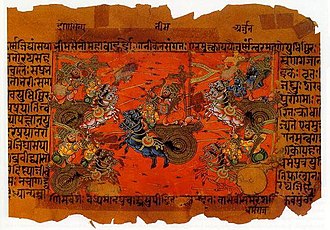
The Mahābhārata
The great epic of India — the war between the Pāṇḍavas and the Kauravas, cousins fighting for a kingdom — and, at about 100,000 couplets, the longest poem ever composed, containing the Bhagavad Gītā and almost the whole of Indian thought on dharma.
Dvaita Vedānta
Madhva’s realist, theistic Vedānta — God (Viṣṇu) alone is independent; souls and matter are real, eternally distinct from God and from each other, and wholly dependent on him. The most uncompromising rejection of Advaita in Indian thought.
Nothing from Nothing
The ancient principle that nothing comes from nothing — the foundation of Greek physics and the target of the Christian doctrine of creation from nothing.
Śūnyatā (Emptiness)
Emptiness — the Mahāyāna teaching that all things lack intrinsic, independent existence (svabhāva), because they arise in dependence on causes, parts and concepts. Not nothingness, but the openness that makes change and freedom possible.