Thinkers & Authors
Philosophers, poets, novelists, sages — the voices in the conversation.
Indian
Vyāsa
The legendary sage who, Hindu tradition holds, divided the Veda into four, composed the Mahābhārata (in which he is also a character and the grandfather of both warring clans), and wrote the Purāṇas — the archetypal author of Indian tradition.
Uddālaka Āruṇi
Upanishadic teacher who instructed his son Śvetaketu with salt in water and the seed of a banyan, ending each lesson — “tat tvam asi”, that thou art.

Yājñavalkya
The boldest sage of the Upanishads, who taught that the Self (ātman) is the unseen seer, describable only as “neti neti” — not this, not this.
Gārgī Vācaknavī
The woman philosopher who challenged Yājñavalkya at King Janaka’s court with questions about what the universe is “woven on” — pressing him until he warned that her head would fall off, then returning with two questions “like arrows”. One of the earliest named women philosophers in history.
Maitreyī
Yājñavalkya’s wife, “a discourser on Brahman”, who asked whether all the wealth in the world could make her immortal — and, refusing her share of his property, received instead his teaching that all love is love of the Self.
Kapila
The legendary founder of Sāṃkhya, revered as the “first knower” (ādividvān) and, in later Hinduism, as an incarnation of Viṣṇu — a sage known almost entirely through myth, to whom India credits the first systematic philosophy of consciousness and nature.

Gautama Buddha
The prince who left his palace to seek an end to suffering, awoke under the Bodhi tree, and taught the Four Noble Truths, the Middle Way and no-self (anattā).
Mahāvīra
The twenty-fourth and last tīrthaṅkara of Jainism — a prince of the eastern Gaṅgā plain who renounced everything at thirty, practised twelve years of extreme austerity, attained omniscience, and taught a path of radical non-violence, truth and non-possession for thirty years.
Vālmīki
The ādikavi — “first poet” — to whom the Rāmāyaṇa is attributed; by legend a highway robber who became a sage, and whose grief at the death of a bird became the first verse.
Pāṇini
The grammarian of ancient Gandhāra whose Aṣṭādhyāyī — 4,000 rules generating the whole of Sanskrit — is the most rigorous description of any language before modern linguistics, and one of the great intellectual achievements of antiquity.
Kauṭilya (Cāṇakya)
The Brahmin strategist who, by tradition, made Candragupta Maurya emperor and wrote the Arthaśāstra — the ancient world’s most comprehensive treatise on statecraft, economics, law, diplomacy, espionage and war. India’s Machiavelli, two thousand years before Machiavelli.
Aśoka
The Mauryan emperor (r. c. 268–232 BCE) who, after the slaughter of his conquest of Kaliṅga, turned to Buddhism and governed by “dhamma” — non-violence, tolerance and welfare — proclaimed in edicts carved on rocks and pillars across India. His lion capital is India’s emblem; his wheel is on its flag.
Jaimini
The sage credited with the Mīmāṃsā Sūtras, the founding text of Vedic hermeneutics — and, in legend, a disciple of Vyāsa who heard the Mahābhārata from his master.
Kaṇāda
The founder of Vaiśeṣika and traditional author of the Vaiśeṣika Sūtras — the sage remembered as India’s first atomist, who taught that everything perceptible is built from eternal, indivisible particles.
Bādarāyaṇa
The author, by tradition, of the Brahma Sūtras — the systematisation of the Upaniṣads that became the root text of every school of Vedānta. Often identified with Vyāsa, compiler of the Vedas and author of the Mahābhārata.
Bharata Muni
The legendary sage credited with the Nāṭyaśāstra — the founding treatise of Indian theatre, dance, music and aesthetics, and the theory of rasa.
Aśvaghoṣa
The 1st–2nd century Buddhist poet and dramatist — author of the Buddhacarita, the first full epic of the Buddha’s life, and the Saundarananda — often called the first great poet of classical Sanskrit, before Kālidāsa.
Gautama Akṣapāda
The founder of the Nyāya school and traditional author of the Nyāya Sūtras — the first systematic Indian treatise on logic, knowledge and debate. Legend gave him eyes in his feet.

Nāgārjuna
Founder of the Madhyamaka (“Middle Way”) school of Buddhism, who argued that all things are empty (śūnya) of independent existence — including emptiness itself.
Patañjali
The compiler of the Yoga Sūtras — 196 terse aphorisms that define yoga as the stilling of the mind — honoured by tradition also as the grammarian of the Great Commentary on Pāṇini and as an incarnation of the serpent Ādiśeṣa.
Kundakunda
The most revered Digambara Jain teacher — author of the Samayasāra, which distinguishes the absolute standpoint, from which the soul is pure consciousness untouched by karma, from the conventional standpoint, from which it is bound.
Tiruvaḷḷuvar
The Tamil poet-sage who wrote the Tirukkuṟaḷ — 1,330 couplets on virtue, wealth and love that form the most revered ethical work in Tamil, translated into more languages than almost any other Indian text.
Asaṅga
Co-founder of Yogācāra Buddhism, who after twelve years of fruitless meditation found the future Buddha Maitreya in a wounded dog — and wrote the great maps of the bodhisattva path and of consciousness.
Vasubandhu
The 4th–5th century Buddhist philosopher who wrote the definitive summary of Abhidharma — and then, converted by his brother Asaṅga, became co-founder of Yogācāra, arguing that the world we experience is “representation only”.
Buddhaghosa
The 5th-century Indian monk who went to Sri Lanka and translated and systematised the Theravāda commentaries — author of the Visuddhimagga, “The Path of Purification”, the definitive map of Theravāda doctrine and meditation.

Kālidāsa
The greatest poet and dramatist of classical Sanskrit — author of Śakuntalā, The Cloud Messenger and the Birth of Kumāra — whose art of love, nature and longing made him “the Shakespeare of India”.
Bhartṛhari
The 5th-century philosopher of language who taught that ultimate reality is the Word (śabda-brahman), that meaning flashes forth as a whole (sphoṭa), and that all knowledge is shot through with language — and, by tradition, the poet of the Three Centuries on love, worldly wisdom and renunciation.
Dignāga
The founder of Buddhist logic and epistemology — only perception and inference give knowledge, perception grasps bare particulars, concepts are constructions, and words mean by excluding (apoha). He revolutionised the logic of every Indian school.
Gauḍapāda
The earliest systematic teacher of Advaita Vedānta, whose verses on the Māṇḍūkya Upaniṣad taught that nothing has ever really been born — the waking world is like a dream, and the one consciousness only seems to become many.
Dharmakīrti
The 7th-century Buddhist logician who perfected Dignāga’s epistemology — proving momentariness, refuting a creator God and the Veda’s authority, and defining knowledge by its reliability — the most formidable philosophical opponent the Hindu schools ever faced.
Kumārila Bhaṭṭa
The 7th-century Mīmāṃsā philosopher who turned Vedic ritual hermeneutics into a full philosophy — defending the authorless Veda, the self-validity of knowledge and a realist world against the Buddhists, and arguing that no creator God is needed.
Śāntideva
The 8th-century Nālandā monk whose Bodhicaryāvatāra (“The Way of the Bodhisattva”) is the most beloved poem of Mahāyāna Buddhism — a guide to compassion, patience and wisdom that the Dalai Lama calls his greatest inspiration.

Ādi Śaṅkara
The great systematizer of Advaita (non-dual) Vedānta — Brahman alone is real, the world is māyā, and the individual self is none other than Brahman.
Āṇṭāḷ
The only woman among the twelve Tamil Āḻvār saints (9th century) — a girl who wore the garland meant for Viṣṇu, refused any human husband, and wrote the Tiruppāvai and Nācciyār Tirumoḻi, poems of longing for God as her bridegroom.
Abhinavagupta
The towering Kashmiri polymath (c. 950–1016) — the great systematiser of non-dual Kashmir Śaivism and the greatest theorist of Indian aesthetics, who taught that in the experience of art (rasa) the self tastes its own blissful consciousness.
Udayana
The great Nyāya philosopher of Mithilā who gave Indian philosophy its classic proofs of God’s existence, defended the reality of the self against the Buddhists, and closed the classical age of Nyāya-Vaiśeṣika.

Rāmānuja
Founder of Viśiṣṭādvaita — “qualified non-dualism” — who argued against Śaṅkara that the world and souls are real, forming the body of a personal God.
Hemacandra
The Jain polymath of 12th-century Gujarat — grammarian, poet, logician, lexicographer, historian and royal adviser — called “the omniscient of the Kali age”, who persuaded a king to ban animal slaughter.
Basavaṇṇa (Basava)
The 12th-century Kannada saint, poet and statesman who founded the Vīraśaiva (Liṅgāyat) movement — rejecting caste, temples, priests and the Vedas, preaching that work is worship and that every devotee carries Śiva on his body.
Jayadeva
The 12th-century Sanskrit poet of Bengal or Odisha whose Gītagovinda — the love, quarrel and reunion of Rādhā and Kṛṣṇa — is the most sensuous devotional poem in Sanskrit, sung in temples and danced in Odissi to this day.
Madhva
The 13th-century philosopher from Udupi who founded Dvaita Vedānta — the uncompromising teaching that God, souls and matter are eternally distinct, and that Viṣṇu alone is independent.
Amīr Khusrau
The 13th–14th century poet, musician and Sufi of Delhi — disciple of Nizāmuddīn Auliyā, master of Persian verse, pioneer of Hindavi (early Hindi-Urdu), and by tradition the inventor of qawwālī, the khayāl and the sitar.
Jñāneśvar
The 13th-century Marathi saint-poet who, at about twenty, wrote the Jñāneśvarī — a 9,000-verse commentary on the Bhagavad Gītā in Marathi that founded Marathi literature and the Vārkarī devotional tradition — and entered living samādhi at twenty-one.
Gaṅgeśa Upādhyāya
The 14th-century logician of Mithilā who founded Navya-Nyāya, the “New Logic”, in his Tattvacintāmaṇi — a technical language of such precision that it became the common idiom of Indian scholarship for five centuries.
Lal Ded (Lalleśvarī)
The 14th-century Kashmiri Śaiva mystic who wandered naked singing short verses (vākhs) of fierce, non-dual devotion — the mother of Kashmiri literature, claimed equally by Hindus and Muslims.
Rāmānanda
The 14th–15th century Vaiṣṇava teacher of Vārāṇasī who, by tradition, opened devotion to Rāma to all castes and both sexes, and whose disciples included Kabīr, Ravidās and Pīpā — the bridge between South Indian theology and North Indian bhakti.
Kabīr
The 15th-century weaver-poet of Vārāṇasī who mocked both Hindu and Muslim orthodoxy, taught devotion to a formless God found within, and left the most quoted couplets (dohās) in the Hindi language.
Guru Nānak
The founder of Sikhism (1469–1539) — a Punjabi mystic and poet who proclaimed “there is no Hindu, there is no Muslim”, taught devotion to the one formless God (Ik Onkār), honest work and sharing, and the equality of all people.
Sūrdās
The 16th-century blind poet of Braj whose songs of Kṛṣṇa’s childhood mischief and the gopīs’ longing — the Sūrsāgar, “Ocean of Sūr” — are the heart of Kṛṣṇa devotion in Hindi.
Caitanya Mahāprabhu
The 15th–16th century Bengali saint who led an ecstatic movement of singing the names of Kṛṣṇa, regarded by his followers as Kṛṣṇa and Rādhā in one body — founder of Gauḍīya Vaiṣṇavism and ancestor of the Hare Kṛṣṇa movement.
Mīrābāī
The 16th-century Rajput princess who declared herself the bride of Kṛṣṇa, defied her royal in-laws, survived (the legends say) cups of poison and a basket with a snake, and left her palace to sing — the most beloved woman poet of North India.
Tulsīdās
The 16th-century poet of Vārāṇasī who retold the Rāmāyaṇa in Avadhī as the Rāmcaritmānas — the most widely read and recited book in North India — and wrote the Hanumān Chālīsā, sung daily by millions.
Tukārām
The 17th-century Marathi saint-poet, a grocer of the Śūdra caste, whose thousands of abhaṅgas to Viṭṭhal of Pandharpur — honest, anguished, joyful, scornful of hypocrisy — are the most loved poems in Marathi.
Raja Rammohun Roy
The Bengali reformer (1772–1833) called the “father of modern India” — translator of the Upaniṣads as rational monotheism, founder of the Brahmo Samāj, campaigner against satī, and champion of modern education and a free press.
Mirza Ghalib
The greatest poet of Urdu (1797–1869) — master of the ghazal, of wit, paradox, grief and doubt — who lived through the fall of the Mughal world in 1857 and wrote its elegy in letters and verse.
Dayānanda Sarasvatī
The Gujarati ascetic (1824–1883) who founded the Ārya Samāj with the cry “Back to the Vedas!” — rejecting idol-worship, caste by birth, and the Purāṇas, and calling for a rational Vedic religion, education for women and the reconversion of those who had left Hinduism.
Ramakrishna Paramahamsa
The 19th-century Bengali mystic of the Dakshineswar Kālī temple who practised Hindu, Muslim and Christian paths and declared “as many faiths, so many paths” — the guru of Vivekananda and the fountainhead of modern Hindu universalism.
Rabindranath Tagore
The Bengali poet, novelist, composer, painter, educator and philosopher — the first non-European Nobel laureate in literature (1913, for Gitanjali) — author of the national anthems of India and Bangladesh, founder of Santiniketan, and a universalist who argued with Gandhi and warned the world against nationalism.
Swami Vivekananda
The Bengali monk, disciple of Ramakrishna, who brought Vedānta and Yoga to the West at the 1893 Parliament of Religions in Chicago (“Sisters and brothers of America!”), preached a “practical Vedānta” of service to humanity as service to God, and awakened modern Hindu self-confidence.
Mahatma Gandhi
The leader of India’s independence movement and the philosopher of satyāgraha — “truth-force”, non-violent resistance — who turned the Jain and Hindu ideal of ahiṃsā into a method of mass politics, and whose ideas of truth, non-violence, self-rule and simplicity changed the twentieth century.
Sri Aurobindo
The revolutionary nationalist turned yogi and philosopher of Pondicherry, whose The Life Divine and Integral Yoga teach that evolution is spirit’s ascent through matter, life and mind toward a “supermind” that will divinise earthly life.
Muhammad Iqbal
The Urdu and Persian poet-philosopher of Lahore who preached “khudī” — the self’s dynamic development — as the heart of a reconstructed Islam, wrote “Sāre jahāṅ se acchā” for India, and later envisioned a Muslim homeland that became Pakistan.
Ramana Maharshi
The silent sage of Arunachala (1879–1950), who at sixteen experienced his own death and the deathless Self, and taught one practice above all — self-inquiry, “Who am I?” — the simplest and most direct path of Advaita.
Premchand
The greatest writer of modern Hindi and Urdu fiction — novelist of the Indian village, of peasants crushed by debt, caste and colonial rule — whose Godān and stories like “The Shroud” founded social realism in Indian literature.
Sarvepalli Radhakrishnan
The philosopher-statesman who presented Indian philosophy to the West as a living tradition — Oxford’s Spalding Professor of Eastern Religions, author of Indian Philosophy, and India’s second President. Teachers’ Day is his birthday.
B. R. Ambedkar
The Dalit jurist, economist, philosopher and statesman who rose from “untouchability” to become the principal architect of India’s Constitution — the fiercest critic of caste and of the Hindu scriptures that sanctified it, and the founder of modern Indian Buddhism.
Jiddu Krishnamurti
The philosopher raised by the Theosophists to be a “World Teacher”, who renounced the role in 1929 — “truth is a pathless land” — and spent sixty years teaching that freedom comes only from seeing the movement of one’s own mind, without authority, method or guru.
Chinese

Laozi
The legendary “Old Master” credited with the Tao Te Ching — the short, paradoxical classic of the Way that cannot be named, of yielding water and effortless action.

Confucius
The teacher of Lu whose sayings on goodness, ritual, learning and right relationships shaped Chinese civilization for two and a half thousand years.
Zhuangzi
The wittiest of Chinese philosophers — the butterfly dreamer, sceptic, and teller of tales — who mocked fixed perspectives and taught the free and easy wandering of a mind attuned to the Dao.
Ancient Greek

Homer
The legendary blind poet of Greece to whom the Iliad and the Odyssey are attributed — the founding works of Western literature, and for the Greeks the “educator of Hellas”.

Heraclitus
The obscure philosopher of Ephesus for whom everything flows, strife is the father of all things, and a hidden logos governs the endless change.

Parmenides
The stern pre-Socratic of Elea who argued that only what-is can be thought, that nothing comes from nothing, and that change and plurality are illusions.

Sophocles
The Athenian tragedian of Oedipus and Antigone — the poet of human blindness, unbending will and the collision of laws — whom Aristotle took as the model of tragedy.
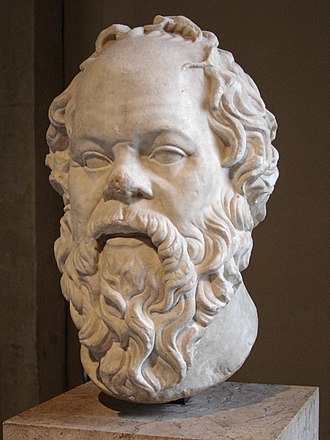
Socrates
The Athenian gadfly who wrote nothing, claimed to know nothing, questioned everyone — and was put to death for it, becoming philosophy’s martyr.

Plato
Socrates’ student and Aristotle’s teacher, author of the dialogues, founder of the Academy, and the philosopher of the Forms — of whom Whitehead said all Western philosophy is a series of footnotes.

Aristotle
Plato’s greatest student and tutor of Alexander the Great, who founded logic, systematized biology, ethics and politics, and brought the Forms down to earth.

Epicurus
The gentle materialist who taught that pleasure — understood as the absence of pain and fear — is the goal of life, and that death is nothing to us.

Epictetus
The former slave who became the greatest teacher of Stoicism — “We are disturbed not by things, but by our judgments about things.”
Roman & Latin

Lucretius
Roman poet whose single masterpiece, On the Nature of Things, set Epicurean atomism to hexameter verse — and, rediscovered in 1417, helped kindle modernity.

Seneca
Roman Stoic, playwright and statesman — tutor and adviser to Nero — whose letters on time, death, anger and friendship are among the most readable works of ancient philosophy.

Marcus Aurelius
Roman emperor and Stoic philosopher whose private notebook, the Meditations, is the most intimate record of a mind trying to be good while ruling the world.
Patristic & Medieval

Tertullian
Fiery early Christian writer from Carthage, father of Latin theology, remembered for setting faith against philosophy — “What has Athens to do with Jerusalem?”

Augustine of Hippo
North African bishop, convert, and the most influential Christian thinker of the Latin West — inventor of the autobiography of the inner self.

Thomas Aquinas
Dominican friar and the greatest of the scholastics, who wove Aristotle’s philosophy and Christian theology into a single vast system — the Summa Theologiae — with five ways to prove God.
Islamic & Arabic

Avicenna (Ibn Sīnā)
Persian polymath — physician, metaphysician, logician — whose Canon of Medicine was taught in Europe for 500 years and whose distinction between essence and existence reshaped philosophy in Islam and the Latin West.

Al-Ghazālī
Theologian, jurist and mystic whose Incoherence of the Philosophers attacked Avicenna’s Aristotelianism, anticipated Hume on causation, and whose spiritual autobiography records a crisis of doubt.

Averroes (Ibn Rushd)
Andalusian judge and philosopher — “the Commentator” on Aristotle — who defended philosophy against al-Ghazālī and argued that reason and revelation cannot contradict each other.
Italian

Dante Alighieri
The Florentine poet of the Divine Comedy — the journey through Hell, Purgatory and Paradise that summed up medieval thought and created the Italian language.

Niccolò Machiavelli
Florentine diplomat and political theorist whose Prince told rulers how power is actually won and kept — separating politics from conventional morality and giving the world the adjective “Machiavellian”.
Spanish
British & Irish

William Shakespeare
The playwright and poet of Stratford whose 37-odd plays and 154 sonnets gave English its richest store of quotation and gave philosophy Hamlet, Lear and Macbeth.
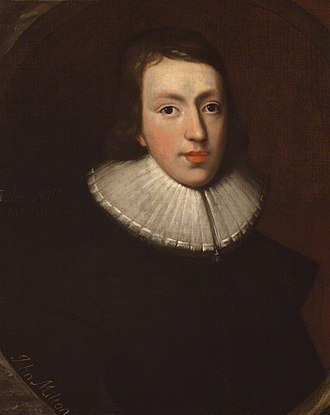
John Milton
English poet, polemicist and revolutionary whose Paradise Lost — written blind, after the defeat of his cause — retells the Fall of Man to “justify the ways of God to men”, and gave literature its most magnificent rebel, Satan.

John Locke
Father of British empiricism and of liberalism — the mind begins as a blank slate, and government rests on the consent of the governed.

David Hume
The great Scottish sceptic who showed that causation, the self, and induction cannot be justified by reason — and that reason is, and ought only to be, the slave of the passions.

Samuel Beckett
Irish playwright, novelist and poet who wrote in English and French, the master of minimalism and the absurd — Waiting for Godot made a play in which “nothing happens, twice” into the defining drama of the twentieth century.
French

Michel de Montaigne
The inventor of the essay, who made himself the subject of his book — sceptical, curious, tolerant, candid — and asked, “Que sais-je?” — What do I know?
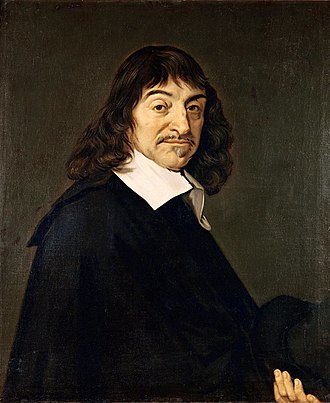
René Descartes
The father of modern philosophy, who doubted everything that could be doubted and found one thing that could not — that he himself was thinking.

Blaise Pascal
Mathematician, physicist, inventor and Christian apologist whose fragmentary Pensées confront the misery and greatness of the human being — the thinking reed — and propose the Wager.

Voltaire
The wittiest man of the Enlightenment — playwright, historian, satirist and campaigner against intolerance — whose Candide demolished Leibnizian optimism and whose cry was “Écrasez l’infâme!”

Jean-Jacques Rousseau
The Genevan philosopher of nature, freedom and feeling — “Man is born free, and everywhere he is in chains” — whose Social Contract inspired revolutionaries and whose Confessions invented modern autobiography.

Jean-Paul Sartre
The face of French existentialism — existence precedes essence, we are condemned to be free, and hell is other people.

Simone de Beauvoir
French existentialist philosopher and novelist whose The Second Sex (1949) — “One is not born, but rather becomes, a woman” — founded modern feminist philosophy, and whose ethics of ambiguity argued that my freedom requires the freedom of others.

Albert Camus
Algerian-born novelist and essayist of the absurd and of revolt — “There is but one truly serious philosophical problem, and that is suicide.”
Dutch

German-language

Gottfried Wilhelm Leibniz
Universal genius — co-inventor of calculus, philosopher of monads and pre-established harmony — who argued that ours is the best of all possible worlds.

Immanuel Kant
The philosopher who tried to end the war between rationalism and empiricism by asking what the mind itself contributes to experience — the “Copernican revolution” in philosophy.

Friedrich Heinrich Jacobi
German critic of the Enlightenment who sparked the Pantheism Controversy and gave philosophy the word “nihilism”.
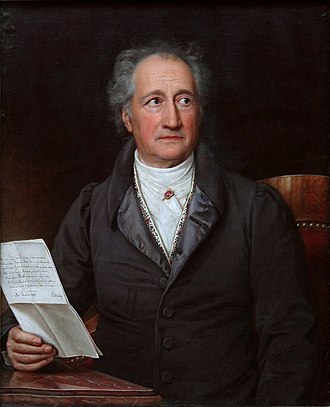
Johann Wolfgang von Goethe
Germany’s greatest writer — poet, novelist, dramatist, scientist and statesman — whose Faust is the modern myth of the striving soul, and whose life was itself treated as a work of art.

Georg Wilhelm Friedrich Hegel
The philosopher of Spirit and dialectic, for whom reality is a rational process working itself out through contradiction in history — “the real is the rational”.

Arthur Schopenhauer
The great pessimist, who said the thing-in-itself is blind, insatiable Will, that life swings like a pendulum between pain and boredom, and that art, compassion and renunciation are our only escape.

Karl Marx
Philosopher, economist and revolutionary who turned Hegel’s dialectic into historical materialism — the history of all hitherto existing society is the history of class struggles.

Friedrich Nietzsche
Philosopher with a hammer who announced the death of God, unmasked the genealogy of morality, and called for new values — the will to power, eternal recurrence, the Übermensch, amor fati.

Franz Kafka
Prague insurance clerk whose parables of guilt, bureaucracy and metamorphosis became the defining images of modern anxiety — and the word “Kafkaesque”.

Martin Heidegger
The philosopher of Being, who argued that the West had forgotten the question of what it means to be, and analysed human existence (Dasein) as thrown, anxious, being-toward-death.
Scandinavian

Russian

Ivan Turgenev
The most Western of the great Russian novelists, whose Fathers and Sons created Bazarov and gave the word “nihilist” to an entire generation.
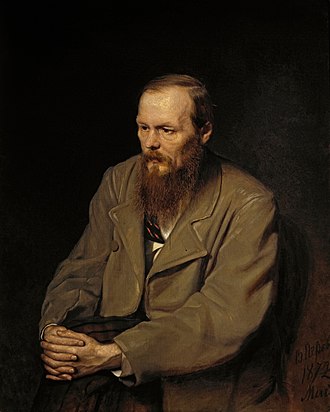
Fyodor Dostoevsky
The Russian novelist of the abyss — crime, faith, freedom, suffering — whose characters argue philosophy with their lives. Nietzsche called him the only psychologist he had anything to learn from.

Leo Tolstoy
The Russian giant of War and Peace and Anna Karenina, who in mid-life fell into a crisis of meaning and reinvented himself as a prophet of non-violence and simple Christian love.

Nikolai Chernyshevsky
Radical critic and author of What Is to Be Done? — the utopian novel of “rational egoism” that inspired Lenin and provoked Dostoevsky’s Underground Man.

Anton Chekhov
Russian doctor, short-story writer and playwright who revolutionised both forms — stories without neat plots or morals, plays where the drama happens beneath ordinary talk — and became the great artist of wasted lives, quiet longing and compassion.
