


Tolstoy in Five Ideas
the essentialsHistory is not made by great men
War and Peace argues that Napoleon is carried by history, not its maker; history is the sum of countless individual wills.
The crisis of meaning
At fifty, rich and famous, Tolstoy asked “what will come of my whole life?” and could find no answer. His Confession records the abyss.
Death reveals life
In The Death of Ivan Ilyich a respectable man discovers, dying, that his correct life was not real life at all.
Non-resistance to evil
The core of the Gospel is the Sermon on the Mount — do not resist evil by force. This inspired Gandhi, with whom Tolstoy corresponded.
Art as infection
In What Is Art? true art transmits feeling from artist to audience — and must be accessible to all.
Count Tolstoy owned a large estate, fought at Sevastopol, wrote two of the greatest novels in any language — and then turned against them. The religious crisis of the late 1870s made him a radical Christian anarchist, excommunicated by the Orthodox Church in 1901. At 82 he fled his home and family secretly at night and died days later at the remote railway station of Astapovo.
Curiosities
did you know?- He corresponded with the young Gandhi about non-violence.
- He died at a remote railway station after secretly fleeing his home at 82.
Questions to Argue About
debate club →- Do great men make history, or does history make great men?
- Should one resist evil by force?
In Their Own Words
4 quotationsAll happy families are alike; each unhappy family is unhappy in its own way.
Все счастливые семьи похожи друг на друга, каждая несчастливая семья несчастлива по-своему.
Context & when to use it
The most famous opening in the Russian novel.
For the variety of failure versus the sameness of success — “the Anna Karenina principle”.
Ivan Ilyich’s life had been most simple and most ordinary and therefore most terrible.
Context & when to use it
The narrator’s verdict on a life lived entirely by convention.
For conformity, the unexamined life, bad faith.
The syllogism he had learnt — “Caius is a man, men are mortal, therefore Caius is mortal” — had always seemed to him correct as applied to Caius, but certainly not as applied to himself.
Context & when to use it
Dying, Ivan Ilyich discovers that logic does not make death believable.
For the gap between knowing and realizing; Heidegger’s “one dies” versus “I die”.
Everyone thinks of changing the world, but no one thinks of changing himself.
Context & when to use it
Tolstoy argued that social reform must begin with inner moral change.
For personal responsibility over activism.
⚠ A popular paraphrase; the wording is not Tolstoy’s own.
Through Their Characters
1What if my whole life has really been wrong?
Context & when to use it
The question that finally opens him to truth.
For mid-life crisis, examined life, regret.
Explore Next
related by shared connectionsGodān
Premchand’s last and greatest novel (1936) — the life and death of Hori, a poor peasant who longs only to own a cow, crushed by debt, caste, landlords and priests — the epic of the Indian village under colonial rule.

Seneca
Roman Stoic, playwright and statesman — tutor and adviser to Nero — whose letters on time, death, anger and friendship are among the most readable works of ancient philosophy.
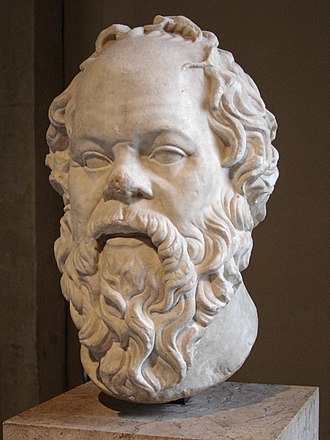
Socrates
The Athenian gadfly who wrote nothing, claimed to know nothing, questioned everyone — and was put to death for it, becoming philosophy’s martyr.
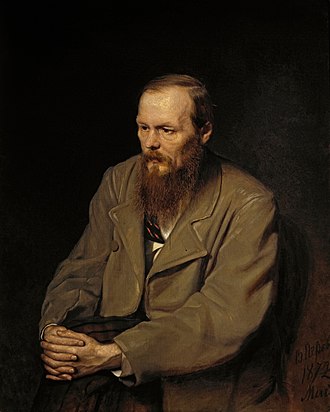
Fyodor Dostoevsky
The Russian novelist of the abyss — crime, faith, freedom, suffering — whose characters argue philosophy with their lives. Nietzsche called him the only psychologist he had anything to learn from.

Friedrich Nietzsche
Philosopher with a hammer who announced the death of God, unmasked the genealogy of morality, and called for new values — the will to power, eternal recurrence, the Übermensch, amor fati.

Gautama Buddha
The prince who left his palace to seek an end to suffering, awoke under the Bodhi tree, and taught the Four Noble Truths, the Middle Way and no-self (anattā).