Every tradition’s answer to the oldest question. Start with The Death of Socrates, Naciketas at the House of Death, Alas, Poor Yorick and The Death of Ivan Ilyich.
Map of Influence
who answered whom, inside this roomThinkers & Authors
36
Yājñavalkya
The boldest sage of the Upanishads, who taught that the Self (ātman) is the unseen seer, describable only as “neti neti” — not this, not this.

Homer
The legendary blind poet of Greece to whom the Iliad and the Odyssey are attributed — the founding works of Western literature, and for the Greeks the “educator of Hellas”.
Maitreyī
Yājñavalkya’s wife, “a discourser on Brahman”, who asked whether all the wealth in the world could make her immortal — and, refusing her share of his property, received instead his teaching that all love is love of the Self.

Gautama Buddha
The prince who left his palace to seek an end to suffering, awoke under the Bodhi tree, and taught the Four Noble Truths, the Middle Way and no-self (anattā).
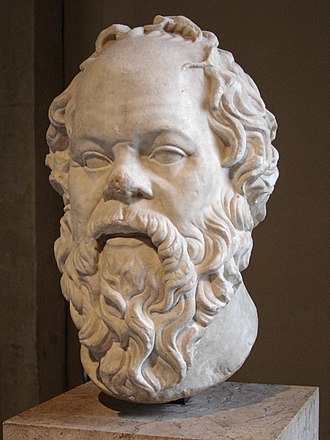
Socrates
The Athenian gadfly who wrote nothing, claimed to know nothing, questioned everyone — and was put to death for it, becoming philosophy’s martyr.

Plato
Socrates’ student and Aristotle’s teacher, author of the dialogues, founder of the Academy, and the philosopher of the Forms — of whom Whitehead said all Western philosophy is a series of footnotes.
Zhuangzi
The wittiest of Chinese philosophers — the butterfly dreamer, sceptic, and teller of tales — who mocked fixed perspectives and taught the free and easy wandering of a mind attuned to the Dao.

Epicurus
The gentle materialist who taught that pleasure — understood as the absence of pain and fear — is the goal of life, and that death is nothing to us.

Lucretius
Roman poet whose single masterpiece, On the Nature of Things, set Epicurean atomism to hexameter verse — and, rediscovered in 1417, helped kindle modernity.

Seneca
Roman Stoic, playwright and statesman — tutor and adviser to Nero — whose letters on time, death, anger and friendship are among the most readable works of ancient philosophy.
Aśvaghoṣa
The 1st–2nd century Buddhist poet and dramatist — author of the Buddhacarita, the first full epic of the Buddha’s life, and the Saundarananda — often called the first great poet of classical Sanskrit, before Kālidāsa.

Marcus Aurelius
Roman emperor and Stoic philosopher whose private notebook, the Meditations, is the most intimate record of a mind trying to be good while ruling the world.

Tertullian
Fiery early Christian writer from Carthage, father of Latin theology, remembered for setting faith against philosophy — “What has Athens to do with Jerusalem?”

Dante Alighieri
The Florentine poet of the Divine Comedy — the journey through Hell, Purgatory and Paradise that summed up medieval thought and created the Italian language.
Kabīr
The 15th-century weaver-poet of Vārāṇasī who mocked both Hindu and Muslim orthodoxy, taught devotion to a formless God found within, and left the most quoted couplets (dohās) in the Hindi language.

Michel de Montaigne
The inventor of the essay, who made himself the subject of his book — sceptical, curious, tolerant, candid — and asked, “Que sais-je?” — What do I know?
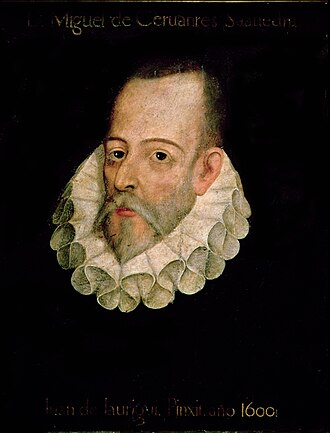
Miguel de Cervantes
Soldier, captive, tax collector and the father of the modern novel — whose Don Quixote made a deluded old knight and his earthy squire the most famous pair in literature.

William Shakespeare
The playwright and poet of Stratford whose 37-odd plays and 154 sonnets gave English its richest store of quotation and gave philosophy Hamlet, Lear and Macbeth.

Blaise Pascal
Mathematician, physicist, inventor and Christian apologist whose fragmentary Pensées confront the misery and greatness of the human being — the thinking reed — and propose the Wager.

Friedrich Heinrich Jacobi
German critic of the Enlightenment who sparked the Pantheism Controversy and gave philosophy the word “nihilism”.

Arthur Schopenhauer
The great pessimist, who said the thing-in-itself is blind, insatiable Will, that life swings like a pendulum between pain and boredom, and that art, compassion and renunciation are our only escape.
Mirza Ghalib
The greatest poet of Urdu (1797–1869) — master of the ghazal, of wit, paradox, grief and doubt — who lived through the fall of the Mughal world in 1857 and wrote its elegy in letters and verse.

Søren Kierkegaard
The melancholy Dane, father of existentialism, who set the passionate individual against Hegel’s System and faith against reason — “truth is subjectivity”.

Ivan Turgenev
The most Western of the great Russian novelists, whose Fathers and Sons created Bazarov and gave the word “nihilist” to an entire generation.
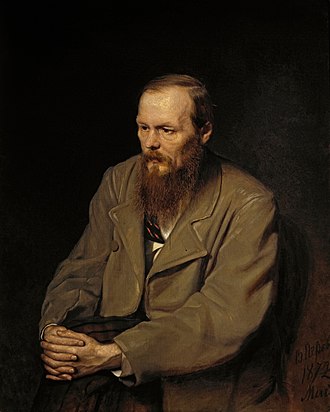
Fyodor Dostoevsky
The Russian novelist of the abyss — crime, faith, freedom, suffering — whose characters argue philosophy with their lives. Nietzsche called him the only psychologist he had anything to learn from.

Leo Tolstoy
The Russian giant of War and Peace and Anna Karenina, who in mid-life fell into a crisis of meaning and reinvented himself as a prophet of non-violence and simple Christian love.

Friedrich Nietzsche
Philosopher with a hammer who announced the death of God, unmasked the genealogy of morality, and called for new values — the will to power, eternal recurrence, the Übermensch, amor fati.

Anton Chekhov
Russian doctor, short-story writer and playwright who revolutionised both forms — stories without neat plots or morals, plays where the drama happens beneath ordinary talk — and became the great artist of wasted lives, quiet longing and compassion.
Rabindranath Tagore
The Bengali poet, novelist, composer, painter, educator and philosopher — the first non-European Nobel laureate in literature (1913, for Gitanjali) — author of the national anthems of India and Bangladesh, founder of Santiniketan, and a universalist who argued with Gandhi and warned the world against nationalism.
Mahatma Gandhi
The leader of India’s independence movement and the philosopher of satyāgraha — “truth-force”, non-violent resistance — who turned the Jain and Hindu ideal of ahiṃsā into a method of mass politics, and whose ideas of truth, non-violence, self-rule and simplicity changed the twentieth century.
Ramana Maharshi
The silent sage of Arunachala (1879–1950), who at sixteen experienced his own death and the deathless Self, and taught one practice above all — self-inquiry, “Who am I?” — the simplest and most direct path of Advaita.

Franz Kafka
Prague insurance clerk whose parables of guilt, bureaucracy and metamorphosis became the defining images of modern anxiety — and the word “Kafkaesque”.

Martin Heidegger
The philosopher of Being, who argued that the West had forgotten the question of what it means to be, and analysed human existence (Dasein) as thrown, anxious, being-toward-death.

Samuel Beckett
Irish playwright, novelist and poet who wrote in English and French, the master of minimalism and the absurd — Waiting for Godot made a play in which “nothing happens, twice” into the defining drama of the twentieth century.

Simone de Beauvoir
French existentialist philosopher and novelist whose The Second Sex (1949) — “One is not born, but rather becomes, a woman” — founded modern feminist philosophy, and whose ethics of ambiguity argued that my freedom requires the freedom of others.

Albert Camus
Algerian-born novelist and essayist of the absurd and of revolt — “There is but one truly serious philosophical problem, and that is suicide.”
Works
36The Upaniṣads
The philosophical dialogues that close the Vedas (c. 800–200 BCE) — forest teachings in which kings, priests, women and a boy at Death’s door ask what the Self is, what Brahman is, and how to be free. The source of Vedānta, and of almost every later Indian idea about the self.

The Iliad
Homer’s epic of the wrath of Achilles in the tenth year of the Trojan War — the founding poem of Western literature, and its greatest poem of war, grief and mortality.

The Odyssey
Homer’s epic of Odysseus’s ten-year journey home from Troy — monsters, witches, the underworld and a household besieged — the archetype of every adventure, every homecoming and every clever hero.

Bṛhadāraṇyaka Upaniṣad
The “Great Forest” Upanishad, oldest and longest, home of Yājñavalkya’s debates, the teaching to Maitreyī, and “neti neti”.

Kaṭha Upaniṣad
The story of the boy Naciketas, who goes to the house of Death and asks what happens after death — receiving the teaching of the immortal Self.

Antigone
Sophocles’ tragedy of the young woman who buries her brother against the king’s decree — the founding drama of conscience against the state, which Hegel read as the collision of two rights.
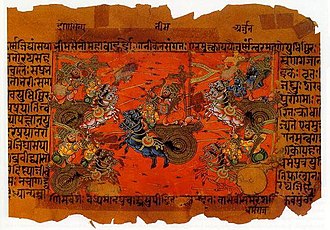
The Mahābhārata
The great epic of India — the war between the Pāṇḍavas and the Kauravas, cousins fighting for a kingdom — and, at about 100,000 couplets, the longest poem ever composed, containing the Bhagavad Gītā and almost the whole of Indian thought on dharma.
The Apology of Socrates
Plato’s account of Socrates’ defence speech at his trial in 399 BCE — a manifesto for the philosophical life.
The Jātakas
547 stories of the Buddha’s previous lives — as a hare, a monkey king, a merchant, a prince — told to illustrate the virtues that lead to awakening. India’s great treasury of folk tales, carved on stūpas and painted in caves.
Saṅgam Poetry
The oldest Tamil literature (c. 300 BCE–300 CE) — 2,381 poems by 473 poets, on love (akam) and war (puṟam), in which each landscape — mountain, forest, field, seashore, desert — carries a mood of love. One of the great classical literatures of the world.
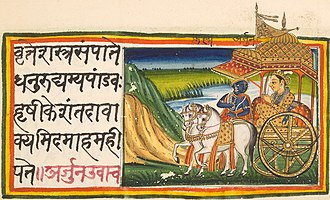
The Bhagavad Gītā
The “Song of the Lord” — Kṛṣṇa’s teaching to the despairing warrior Arjuna on the battlefield of Kurukṣetra, on duty, action without attachment, knowledge and devotion.
The Questions of King Milinda
A dialogue between the Indo-Greek king Menander and the Buddhist monk Nāgasena — the chariot argument for no-self, the flame of rebirth, and a Greek king’s sharp questions answered with Indian wit. A meeting of Greece and India in the 2nd century BCE.

Meditations
The private notebook of the Stoic emperor Marcus Aurelius, written on campaign — the most intimate and enduring work of ancient practical philosophy.
The Bhāgavata Purāṇa
The most beloved of the Purāṇas (c. 9th–10th century) — twelve books of devotion to Viṣṇu, culminating in the tenth book’s life of Kṛṣṇa: the butter-thief child, the cowherd, the lover of the gopīs, the god who dances with every devotee at once.

The Divine Comedy
Dante’s journey through Hell, Purgatory and Paradise — the summa of medieval thought in a hundred cantos, and one of the greatest poems ever written.

Hamlet
Shakespeare’s longest play — a prince ordered by his father’s ghost to avenge a murder thinks, doubts, delays, feigns madness, and dies in the act.

Don Quixote
Cervantes’s comic masterpiece about a country gentleman driven mad by chivalric romances, who sets out as a knight-errant with his squire Sancho Panza — often called the first modern novel and the greatest ever written.

King Lear
An old king divides his kingdom between the daughters who flatter him and banishes the one who loves him — and is stripped of everything on a heath in a storm.

Macbeth
Shakespeare’s shortest tragedy — a brave soldier, prompted by witches and his wife, murders his king and wades so deep in blood that life becomes “a tale told by an idiot”.

Pensées
Pascal’s unfinished defence of Christianity, left as nearly a thousand fragments — on the thinking reed, diversion, the infinite spaces, and the Wager.
The World as Will and Representation
Schopenhauer’s single great work — the world is my representation; in itself it is Will; and the Will is the source of all suffering.
Fear and Trembling
Kierkegaard’s meditation, under the pseudonym Johannes de Silentio, on Abraham’s willingness to sacrifice Isaac — is faith higher than ethics?

Fathers and Sons
Turgenev’s novel of the generation gap — the nihilist Bazarov against the old liberal Kirsanovs — which gave Russia the word “nihilist”.
Crime and Punishment
A poor ex-student in St Petersburg murders an old pawnbroker to prove he is an “extraordinary man” — and is undone not by the police but by his own conscience and by Sonya’s love.

Demons
Dostoevsky’s prophetic political novel — a provincial town possessed by revolutionary nihilists, the murder of one of their own, and the hollow charisma of Stavrogin.
A Confession
Tolstoy’s account of his mid-life crisis — at the height of fame he could not answer “why live?” and nearly killed himself, until he found meaning in the faith of simple people.
The Gay Science
Nietzsche’s most joyful book — where God is first declared dead, the madman runs into the marketplace, and the thought of eternal recurrence first appears.
Thus Spoke Zarathustra
Nietzsche’s prophetic prose-poem — Zarathustra descends from his mountain to teach the Übermensch, the will to power and eternal recurrence.

The Death of Ivan Ilyich
Tolstoy’s novella of a respectable judge who, dying of a trivial injury, realizes that his correct, comfortable life was a lie — and finds, at the last moment, the light.
Gitanjali
Tagore’s 1912 collection of devotional prose-poems, translated by himself from Bengali, which won the 1913 Nobel Prize — intimate songs to a God found in nature, in human labour, in love and in death.

The Trial
Josef K. is arrested one morning without having done anything wrong, and spends a year trying to understand an invisible court — until two men take him to a quarry and kill him “like a dog”.

The Metamorphosis
Gregor Samsa, a travelling salesman, wakes one morning transformed into a monstrous vermin — and his family’s duty slowly curdles into disgust and relief.
Godān
Premchand’s last and greatest novel (1936) — the life and death of Hori, a poor peasant who longs only to own a cow, crushed by debt, caste, landlords and priests — the epic of the Indian village under colonial rule.
The Myth of Sisyphus
Camus’s essay on the absurd — why not suicide? — ending with the image of Sisyphus pushing his rock, happy.
The Stranger
Camus’s first novel — Meursault, who will not pretend to feel what he does not feel, kills an Arab on a beach and is condemned for not weeping at his mother’s funeral.
The Rebel
Camus’s history of revolt — metaphysical and political — arguing that rebellion that kills for history betrays its own origin. It ended his friendship with Sartre.
Ideas
9Mokṣa
Liberation — release from the cycle of rebirth and from all suffering, the highest goal of human life in the Hindu and Jain traditions (and, as nirvāṇa, in Buddhism). Every Indian school defines it differently, and the arguments over what it is, and how it is won, are the backbone of Indian philosophy.
Saṃsāra
“Wandering” — the beginningless cycle of birth, death and rebirth through which beings pass according to their karma, and from which every major Indian religion seeks release.
Nirvāṇa
The Buddhist goal — the “blowing out” of the fires of greed, hatred and delusion, the end of suffering and of rebirth. The Buddha described it as unborn and unconditioned, and refused to say whether the awakened exist after death.
The Leap of Faith
Kierkegaard’s claim that faith cannot be reached by reasoning — it is a passionate decision made in the face of the absurd.
Anxiety
Not fear of something, but dread before freedom and nothingness — for Kierkegaard “the dizziness of freedom”, for Heidegger the mood that reveals the nothing.
The Death of God
Nietzsche’s announcement that belief in God has become unbelievable — and that with Him the foundations of Western morality have gone.
Eternal Recurrence
Nietzsche’s thought-experiment — would you will to live your life again, every moment, infinitely? The supreme test of affirming life.
The Übermensch
Nietzsche’s “overman” — the human being who, after the death of God, creates new values and affirms life wholly.
Dasein
Heidegger’s term for the human being — “being-there” — the entity whose own being is an issue for it.
Schools & Movements
8Cārvāka (Lokāyata)
India’s materialist school — only perception is knowledge, only matter is real, there is no soul, no rebirth, no karma and no God, and the purpose of life is pleasure. Its own books are lost; we know it through the furious refutations of every other school.
Buddhism
The tradition founded by the Buddha — suffering, impermanence, no-self, and the path to nirvāṇa — later dividing into Theravāda, Mahāyāna (Madhyamaka, Yogācāra) and Vajrayāna.
Daoism
The Chinese tradition of the Dao — the nameless Way of nature — teaching spontaneity, simplicity, effortless action and harmony with the flow of things.
Epicureanism
The school of the Garden — a materialist philosophy aiming at tranquillity through friendship, simple pleasures and freedom from the fear of gods and death.
Stoicism
The Hellenistic and Roman philosophy of virtue, reason and acceptance — happiness lies in what is up to us, our judgments and choices, not in external things.
Existentialism
The philosophy of the existing individual — freedom, anxiety, authenticity, the absurd — running from Kierkegaard and Dostoevsky through Nietzsche and Heidegger to Sartre and Camus.
Russian Nihilism
The 1860s movement of young Russian radicals who rejected tradition, religion, art and authority in the name of science, utility and the people.
Absurdism
Camus’s position — the conflict between our longing for meaning and the world’s silence cannot be resolved, only lived with in lucid revolt.
Debates
1Characters
15Yevgeny Bazarov
Turgenev’s young doctor-nihilist who rejects art, love and every authority — and dies of a cut finger, having loved and lost.
Arjuna
The Pāṇḍava archer who lays down his bow on the battlefield of Kurukṣetra rather than kill his kin — and receives the teaching of the Bhagavad Gītā.
Cordelia
Lear’s youngest daughter, who will not flatter, is disinherited, returns to rescue him, forgives him with “No cause, no cause” — and is hanged.
Edmund
Gloucester’s illegitimate son — the brilliant, charming, self-made villain of King Lear, who worships Nature as amoral force and scorns “the plague of custom”.
Gregor Samsa
The travelling salesman who wakes as a giant insect and remains, inside, more human than the family that comes to find him a burden.
Ivan Ilyich Golovin
A successful, decent, utterly conventional judge who learns, dying, that he never really lived.
Hamlet
Prince of Denmark — scholar, wit, mourner, avenger who cannot avenge — the most quoted and most interpreted character in literature.
Ivan Karamazov
The rational, tormented middle brother who “returns his ticket” to God’s world and authors the Grand Inquisitor — and whose idea that “everything is permitted” kills his father.
Josef K.
A bank officer arrested on his thirtieth birthday for an unnamed crime, who spends a year failing to reach the court that has already judged him.
Alexei Kirillov
The engineer in Demons who reasons that if God does not exist, man must become God — and that the supreme act of self-will is suicide.
Meursault
Camus’s “stranger” — a clerk in Algiers who will not say more than he feels, kills a man on a beach, and goes to the guillotine opening himself to “the gentle indifference of the world”.
Rodion Raskolnikov
Impoverished ex-student who murders a pawnbroker to prove he is an “extraordinary man” beyond morality — and is broken and reborn by his conscience.
King Lear
The proud old king who divides his kingdom by a love test, banishes the daughter who loves him, and is stripped of everything until he learns, too late, what love and suffering are.
Nikolai Stavrogin
The magnetic, empty aristocrat at the centre of Demons — everyone’s idol, nobody’s master, strength without belief.
Zarathustra
Nietzsche’s prophet who, after ten years in mountain solitude, descends to teach mankind the Übermensch — and finds no one ready to listen.
Great Scenes
13Abraham on Mount Moriah
Kierkegaard’s obsessive retelling of Genesis 22 — Abraham rising early to sacrifice Isaac — as the test case of faith beyond ethics.
Before the Law
A man from the country asks to be admitted to the Law; the doorkeeper says “not now”; he waits his whole life — and learns as he dies that this door was meant only for him.
The Death of Socrates
In prison, on his last day, Socrates argues for the immortality of the soul, drinks the hemlock calmly, and asks that a cock be offered to Asclepius.
The Death of Cordelia
Lear enters carrying his hanged daughter, howling, searching for her breath with a mirror and a feather — “Never, never, never, never, never.”
The Dover Cliff
Edgar leads his blind father to a “cliff” that isn’t there, lets him leap, and convinces him he has survived by a miracle — curing his despair with a theatrical trick.
The Madman with the Lantern
Nietzsche’s parable of the madman who runs into the marketplace at noon with a lantern crying “I seek God!” — and announces that we have killed him.
Meursault and the Chaplain
On the eve of execution, Meursault explodes at the prison chaplain’s certainty — and finds peace in the “gentle indifference of the world”.
Naciketas at the House of Death
Given away by his angry father, the boy Naciketas waits three days at Death’s door, and refuses all the riches Yama offers until Death tells him what lies beyond.
Sisyphus at the Foot of the Mountain
Condemned to roll his rock eternally uphill, Sisyphus pauses as it falls back — and Camus imagines him, in that moment of consciousness, happy.
To Be, or Not to Be
Hamlet’s soliloquy weighing life against death — the most famous speech in English, and a compressed treatise on suicide, fear and the paralysis of thought.
Tomorrow, and Tomorrow, and Tomorrow
Macbeth, told that his wife is dead, delivers the bleakest speech in Shakespeare — life is a walking shadow, a tale told by an idiot, signifying nothing.
The Universal Form
Arjuna asks to see Kṛṣṇa’s true form — and beholds the whole universe, all beings, all gods, and all the warriors rushing into Time’s blazing mouths.
Alas, Poor Yorick
In the graveyard, Hamlet is handed the skull of the jester who carried him on his back as a child — and sees where all flesh, wit and glory end.
Great Questions
4How Should We Face Death?
Naciketas at Death’s door, Socrates’ hemlock, Epicurus’s argument, the Stoics’ rehearsal, Hamlet’s skull, Ivan Ilyich’s scream, Heidegger’s being-toward-death.
What Is the Meaning of Life?
Liberation, virtue, tranquillity, God, the will, revolt — the great answers to the greatest question.
The Road of Nihilism
How “nothing matters” became an idea, a movement, a diagnosis, and a test — from Jacobi to Camus.
What Is Time?
Flux and permanence, the moving image of eternity, Augustine’s puzzle, Kant’s form of intuition, eternal recurrence, Heidegger’s temporality.
Voices
quotations from this traditionThe unexamined life is not worth living.
ὁ δὲ ἀνεξέταστος βίος οὐ βιωτὸς ἀνθρώπῳ
I am wiser than this man; for neither of us really knows anything fine and good, but this man thinks he knows something when he does not, whereas I, as I do not know anything, do not think I do either.
Now it is time to go away, I to die, and you to live; but which of us goes to the better lot is known to none but God.
Crito, we owe a cock to Asclepius. Pay it and do not neglect it.
They see only their own shadows, or the shadows of one another, which the fire throws on the opposite wall of the cave.
Until philosophers are kings, or the kings and princes of this world have the spirit and power of philosophy… cities will never have rest from their evils.
Death is nothing to us; for that which is dissolved is without sensation, and that which lacks sensation is nothing to us.
Nothing can ever be created by divine power out of nothing.
nullam rem e nilo gigni divinitus umquam
So great the evils that religion could prompt.
tantum religio potuit suadere malorum
God is dead. God remains dead. And we have killed him.
Gott ist tot! Gott bleibt tot! Und wir haben ihn getödtet!
He who fights with monsters should look to it that he himself does not become a monster. And if you gaze long into an abyss, the abyss also gazes into you.
Wer mit Ungeheuern kämpft, mag zusehn, dass er nicht dabei zum Ungeheuer wird. Und wenn du lange in einen Abgrund blickst, blickt der Abgrund auch in dich hinein.
What does not kill me makes me stronger.
Was mich nicht umbringt, macht mich stärker.