Faith beyond reason
Faith is not the conclusion of an argument. Its object is a paradox to the intellect, and it must be embraced by a passionate leap.
Reason as judge
Either reason can prove God (Descartes), or belief must be proportioned to evidence (Hume), or reason sets the limits within which faith may be held (Kant).
The Exchange
who answered whom Tertullian
What has Athens to do with Jerusalem? It is certain because it is impossible.
 Augustine of Hippo
Believe so that you may understand — faith seeks understanding.
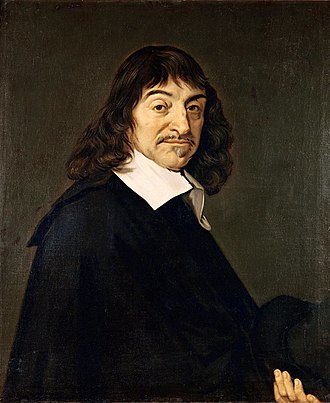 René Descartes
The existence of God can be demonstrated with a certainty equal to geometry.
 David Hume
A wise man proportions his belief to the evidence. No testimony suffices for a miracle.
 Immanuel Kant
I had to deny knowledge to make room for faith.
 Søren Kierkegaard
Faith is the highest passion; it believes by virtue of the absurd.
 Friedrich Nietzsche
Faith means not wanting to know what is true.
 Albert Camus
The leap is philosophical suicide. I want to know whether I can live with what I know and with that alone.
The question never closed. Dostoevsky put it into the mouths of Ivan and Alyosha; in India, the question was framed differently — as the relation of śruti (revealed scripture) to tarka (reasoning) — and Śaṅkara held that reasoning has authority only where it does not contradict scripture.
Sententiae
phrases in the originalCredo ut intelligam
Origin. Anselm of Canterbury, Proslogion ch. 1 (1078), echoing Augustine. Anselm’s motto was “fides quaerens intellectum” — faith seeking understanding.
For faith as the starting point of reason, not its enemy — the opposite of Tertullian’s paradox.
Le cœur a ses raisons que la raison ne connaît point
Origin. Blaise Pascal, Pensées (1670), §277 (Brunschvicg).
⚠ Pascal means the heart’s intuitive knowledge of God and first principles — not romantic love.
For intuition and faith beyond argument.
Explore Next
related by shared connectionsWhat Is the Self?
From ātman to anattā, from the cogito to the bundle, from Kierkegaard’s task of becoming oneself to Sartre’s nothingness.
Does God Exist?
The proofs, the refutations, the wagers and the leaps — the great argument about God from the Upanishads to Nietzsche.
What Are the Limits of the Human Mind?
Can reason know everything — or are there things the mind can never reach? From the Upanishads’ unknowable knower to Kant’s boundary and Wittgenstein’s silence.
What Can We Know?
The relay race of epistemology — from Plato’s Cave to Kant’s categories, via Descartes’ demon and Hume’s billiard balls.
What Is Justice?
From Thrasymachus’s “advantage of the stronger” to Rawls’s veil of ignorance — the question of what we owe each other and who should rule.
Rationalism vs. Empiricism
The great quarrel of early modern philosophy — does knowledge come from reason or from experience? Kant tried to end it.