- 1
 c. 800–700 BCE · Indian
Yājñavalkya
The Self is the unseen seer — “not this, not this” — beyond every description, deathless.
Read the full argument → - 2 UĀc. 800–700 BCE · Indian
Uddālaka Āruṇi
The finest essence of everything, invisible like salt in water — that thou art.
Read the full argument → - 3
 c. 563–483 BCE · Indian
Gautama Buddha
No permanent self — only five ever-changing aggregates. Clinging to “I” is the root of suffering.
Read the full argument → - 4
 c. 428–348 BCE · Ancient Greek
Plato
The soul is immortal, tripartite, akin to the Forms; the body is its prison.
Read the full argument → - 5
 354 – 430 · Patristic & Medieval
Augustine of Hippo
The restless heart turned inward; si fallor, sum — if I am deceived, I exist.
Read the full argument → - 6
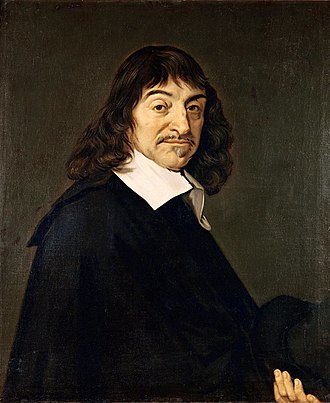 1596 – 1650 · French
René Descartes
I am a thinking thing — the one certainty, distinct from the body.
Read the full argument → - 7
 1711 – 1776 · British & Irish
David Hume
I look inside and find only perceptions — the self is a bundle.
Read the full argument → - 8
 1724 – 1804 · German-language
Immanuel Kant
The “I think” must be able to accompany all my representations — a formal unity, not a known substance.
Read the full argument → - 9
 c. 700 – c. 750 · Indian
Ādi Śaṅkara
The witness-consciousness is Brahman itself; individuality is a superimposition.
Read the full argument → - 10
 1813 – 1855 · Scandinavian
Søren Kierkegaard
The self is a relation that relates itself to itself — despair is failing to be one.
Read the full argument → - 11
 1844 – 1900 · German-language
Friedrich Nietzsche
The “I” is a grammatical fiction — yet become who you are.
Read the full argument → - 12
 1905 – 1980 · French
Jean-Paul Sartre
Consciousness is a nothingness; existence precedes essence; we make ourselves.
Read the full argument →
Literature runs alongside: Hamlet’s divided inwardness; the Underground Man’s self-consciousness as illness; Gregor Samsa, who remains himself inside an insect’s body; Ivan Ilyich, who discovers at death that the self he lived was not his own.
Explore Next
related by shared connectionsDoes God Exist?
The proofs, the refutations, the wagers and the leaps — the great argument about God from the Upanishads to Nietzsche.
Faith vs. Reason
Can God be reached by argument — or does faith begin exactly where reason fails? From Tertullian’s Athens and Jerusalem to Kierkegaard’s leap and Camus’s refusal.
What Are the Limits of the Human Mind?
Can reason know everything — or are there things the mind can never reach? From the Upanishads’ unknowable knower to Kant’s boundary and Wittgenstein’s silence.
What Can We Know?
The relay race of epistemology — from Plato’s Cave to Kant’s categories, via Descartes’ demon and Hume’s billiard balls.
How Is the Mind Related to the Body?
Witness-consciousness and matter, the soul as form, two substances, one substance, Dasein — the mind–body problem across civilizations.
What Is the Meaning of Life?
Liberation, virtue, tranquillity, God, the will, revolt — the great answers to the greatest question.