- 1 UĀc. 800–700 BCE · Indian
Uddālaka Āruṇi
Not a creator above the world, but Being itself — “in the beginning this was Being alone, one without a second” — and that Being is your own Self.
Read the full argument → - 2
 c. 563–483 BCE · Indian
Gautama Buddha
Questions about a creator do not lead to liberation. Leave the arrow’s maker; pull out the arrow of suffering.
Read the full argument → - 3
 341–270 BCE · Ancient Greek
Epicurus
The gods exist, perhaps, but in blissful indifference; they neither punish nor reward. Fear of them is groundless.
Read the full argument → - 4
 384–322 BCE · Ancient Greek
Aristotle
Eternal motion requires an unmoved mover — pure actuality, thought thinking itself, moving the heavens as an object of love.
Read the full argument → - 5
 354 – 430 · Patristic & Medieval
Augustine of Hippo
“You have made us for yourself, and our heart is restless until it rests in you.” God is known first by the longing of the heart.
Read the full argument → - 6
 980 – 1037 · Islamic & Arabic
Avicenna (Ibn Sīnā)
Every contingent being needs a cause; the chain must end in a Necessary Existent whose essence is to exist.
Read the full argument → - 7
 1225 – 1274 · Patristic & Medieval
Thomas Aquinas
Five Ways — from motion, causation, contingency, degrees of perfection, and design — each ending “and this everyone understands to be God”.
Read the full argument → - 8
 c. 700 – c. 750 · Indian
Ādi Śaṅkara
Brahman is not proved by logic but revealed by scripture and realized as one’s own Self; reason only removes doubts.
Read the full argument → - 9
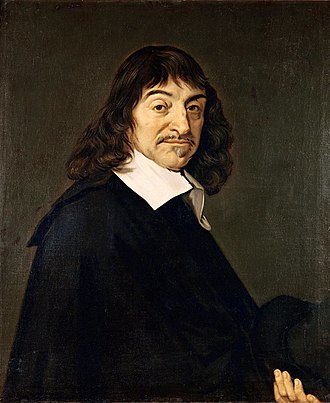 1596 – 1650 · French
René Descartes
The idea of a perfect being could only come from such a being; and existence belongs to perfection as three angles to a triangle.
Read the full argument → - 10
 1623 – 1662 · French
Blaise Pascal
Reason cannot decide — so wager. If God exists and you believe, you gain everything; if not, you lose little.
Read the full argument → - 11
 1632 – 1677 · Dutch
Baruch Spinoza
God is not a person beyond the world but Nature itself — Deus sive Natura — one infinite substance.
Read the full argument → - 12
 1711 – 1776 · British & Irish
David Hume
The design argument is weak, miracles are never credible, and the problem of evil stands — “Epicurus’s old questions are yet unanswered.”
Read the full argument → - 13
 1724 – 1804 · German-language
Immanuel Kant
All three classical proofs fail — existence is not a predicate. But morality requires us to postulate God. “I had to deny knowledge to make room for faith.”
Read the full argument → - 14
 1813 – 1855 · Scandinavian
Søren Kierkegaard
Faith is not the conclusion of an argument but a passionate leap “by virtue of the absurd” — Abraham on Moriah.
Read the full argument → - 15
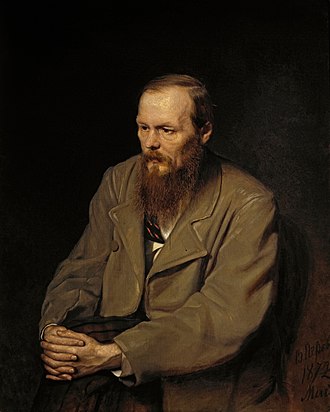 1821 – 1881 · Russian
Fyodor Dostoevsky
Ivan returns his ticket to a world that tortures children; Alyosha answers with a kiss. The argument is lived, not settled.
Read the full argument → - 16
 1844 – 1900 · German-language
Friedrich Nietzsche
“God is dead, and we have killed him.” The question is no longer whether God exists, but how to live now that belief has collapsed.
Read the full argument → - 17
 1905 – 1980 · French
Jean-Paul Sartre
If there is no God, there is no human nature given in advance — we are condemned to be free and to make ourselves.
Read the full argument →
This ladder runs through the Argument Library — the ontological argument, the cosmological argument, the problem of evil, the design critique — and the lenses God & Faith and Doubt. The decisive turns: Aristotle’s first mover and Avicenna’s necessary being give the proofs their form; Hume and Kant give the refutations theirs; Pascal and Kierkegaard move the question from proof to commitment; Dostoevsky and Nietzsche turn it into a question about how to live.
Explore Next
related by shared connectionsWhat Is the Self?
From ātman to anattā, from the cogito to the bundle, from Kierkegaard’s task of becoming oneself to Sartre’s nothingness.
Are We Free?
Fate, karma, determinism, compatibilism, radical freedom — the long argument over whether we choose what we do.
Faith vs. Reason
Can God be reached by argument — or does faith begin exactly where reason fails? From Tertullian’s Athens and Jerusalem to Kierkegaard’s leap and Camus’s refusal.
How Is the Mind Related to the Body?
Witness-consciousness and matter, the soul as form, two substances, one substance, Dasein — the mind–body problem across civilizations.
What Are the Limits of the Human Mind?
Can reason know everything — or are there things the mind can never reach? From the Upanishads’ unknowable knower to Kant’s boundary and Wittgenstein’s silence.
What Can We Know?
The relay race of epistemology — from Plato’s Cave to Kant’s categories, via Descartes’ demon and Hume’s billiard balls.