


Contents · 17 sections · 21 min
Aquinas in Five Ideas
the essentialsFaith and reason in harmony
Reason can prove that God exists; revelation adds truths (the Trinity, the Incarnation) reason cannot reach but never contradicts.
The Five Ways
Five arguments from motion, causation, contingency, degrees of perfection, and the order of nature to a first cause “which all call God”.
Essence and existence
In God, essence and existence are identical — God is “subsistent being itself” (ipsum esse subsistens).
Natural law
The first precept of practical reason — good is to be done and pursued, evil avoided — grounds a natural law knowable by all.
Just war and double effect
Conditions for a just war, and the principle that an action with a bad side effect may be permitted if the bad effect is not intended.
Thomas Aquinas is the greatest of the medieval philosophers and one of the most systematic minds in history. In under twenty years of writing — some eight million words, much of it dictated to several secretaries at once — he built a single, coherent account of God, the world, the human being, knowledge, ethics, law and politics, uniting the newly recovered philosophy of Aristotle with Christian revelation. His Summa Theologiae is a cathedral of argument in which every claim is tested against the strongest objections the author can find. The Catholic Church made him its official philosopher; but his arguments — the Five Ways, natural law, just war, the principle of double effect, the distinction between essence and existence — belong to everyone, and are still argued about in secular philosophy departments.
This page tells his life, explains his project, and reconstructs his main doctrines in detail, with the classic objections — enough that you can argue with him yourself.
A life
Roccasecca and Monte Cassino
Thomas was born around 1225 in the castle of Roccasecca, in the kingdom of Sicily, roughly halfway between Rome and Naples. His father, Landulf, was a knight of a noble family related to the emperor Frederick II; his mother, Theodora, of Norman descent. As the youngest son, Thomas was destined for the Church — and for power within it. At five he was given as an oblate to the great Benedictine abbey of Monte Cassino, where his uncle had been abbot; the family hoped he would one day rule it.
In 1239, after Frederick II’s troops occupied the abbey during his war with the Pope, Thomas was sent to the new university of Naples — founded by the emperor as a rival to papal Bologna. There he encountered two things that would shape his life: the works of Aristotle, recently translated and banned elsewhere but taught freely in imperial Naples, and the Dominicans.
The kidnapping
The Order of Preachers, founded by Dominic de Guzmán in 1216, was something new: friars who owned nothing, begged for their food, and lived in cities, devoted to study and preaching against heresy. To a noble family, it was a disgrace — beggars instead of abbots. When Thomas joined the order in 1244, at about nineteen, his mother sent his brothers to intercept him on the road to Paris. They seized him and held him prisoner for about a year in the family castles of Monte San Giovanni and Roccasecca.
The most famous story of his life comes from this captivity: his brothers sent a beautiful prostitute into his room to tempt him. Thomas seized a burning brand from the fire, drove her out, and burned a cross on the door. Legend adds that angels then girded him with a cord of chastity. Meanwhile he studied — he is said to have memorized much of the Bible and Peter Lombard’s Sentences — and tutored his sisters. Finally his family relented, and he was allowed to rejoin the Dominicans (some stories say he was let down from a window in a basket).
Albert and the dumb ox
The order sent him to Paris and then, in 1248, to Cologne to study under Albert the Great (Albertus Magnus), the most learned man of his age — a theologian, philosopher and natural scientist who was making all of Aristotle available to Latin readers. Thomas was large, slow-moving, and silent in class; his fellow students called him “the dumb Sicilian ox”. One, taking pity, offered to explain the lesson to him — and found Thomas explaining it back with greater clarity. When Albert read Thomas’s notes on a difficult question, he is said to have announced: “You call him a dumb ox; but one day his bellowing will be heard throughout the world.”
Paris, Italy, Paris, Naples
Thomas’s career was spent between Paris and Italy:
| Years | Place | Work |
|---|---|---|
| 1252–1256 | Paris | Bachelor lecturing on the Sentences; On Being and Essence |
| 1256–1259 | Paris | Regent master of theology; Disputed Questions on Truth; begins Summa contra Gentiles |
| 1259–1268 | Naples, Orvieto, Rome, Viterbo | Summa contra Gentiles; begins Summa Theologiae; commentaries on Aristotle; liturgy for Corpus Christi |
| 1268–1272 | Paris (second regency) | Controversies with Averroists and conservative Franciscans; most of the Aristotle commentaries; Summa II |
| 1272–1273 | Naples | Founds a Dominican house of studies; works on Summa III |
He wrote at astonishing speed. Early biographers report that he dictated to three or four secretaries simultaneously on different subjects, and that he could continue dictating in his sleep. Absorbed in thought at a dinner with King Louis IX of France, he suddenly struck the table and exclaimed, “That settles the Manichees!” — and called for his secretary, while the king had a scribe brought to him.
The straw
On 6 December 1273, while celebrating Mass in Naples, Thomas had an experience that changed everything. He stopped writing, leaving the Summa Theologiae unfinished in the middle of the treatise on penance. When his secretary Reginald of Piperno begged him to continue, he replied: “I cannot. Everything I have written seems like straw compared to what I have seen and what has been revealed to me.” Whether it was a mystical vision, a stroke, or a breakdown from overwork, we cannot know.
Summoned by Pope Gregory X to the Second Council of Lyon, he set out in early 1274 but, apparently striking his head on a branch, fell ill and was taken to the Cistercian abbey of Fossanova, where he died on 7 March 1274, aged about forty-nine. Legend says he died commenting on the Song of Songs to the monks.
After death
Three years later, in 1277, the Bishop of Paris condemned 219 propositions, some of which seemed to touch Thomas’s teachings; the Archbishop of Canterbury issued a similar condemnation at Oxford. For a while “Thomism” was controversial even within the Church. But the Dominicans defended him, and he was canonized in 1323. In 1567 he was declared a Doctor of the Church — the “Angelic Doctor”; at the Council of Trent the Summa was placed on the altar beside the Bible; in 1879 Pope Leo XIII’s encyclical Aeterni Patris made his philosophy the foundation of Catholic education.
The project: faith and reason
The crisis Thomas inherited
In Thomas’s youth, Latin Christendom was absorbing a shock: the whole of Aristotle — physics, metaphysics, psychology, ethics — had arrived via translations from Arabic and Greek, along with the great commentaries of Avicenna (Ibn Sīnā) and Averroes (Ibn Rushd). This was the most powerful system of natural knowledge anyone had ever seen. And parts of it seemed to contradict Christian faith: Aristotle taught that the world is eternal; Averroes (as read in Paris) that there is a single intellect for all humanity, implying no personal immortality; Aristotle’s God seemed not to know or care about the world.
There were three possible responses. Conservatives, often Augustinian Franciscans, wanted to keep Aristotle at arm’s length. Radical “Latin Averroists” such as Siger of Brabant followed Aristotle wherever he led, even into conclusions contrary to faith. Thomas chose a third way: to show that Aristotle, rightly understood and where necessary corrected, was the best philosophical servant of Christian truth.
Two sources, one truth
For Thomas there are two sources of knowledge about God:
- Reason — what the human mind can know by its natural light, starting from the senses: that God exists, is one, is good, is the creator; that the soul is immortal; much of morality.
- Revelation — what God has disclosed in Scripture and tradition, received by faith: the Trinity, the Incarnation, the sacraments, the resurrection of the body.
These cannot contradict each other, since both come from God, who is truth. “Grace does not destroy nature, but perfects it.” Where reason seems to contradict faith, the argument must be faulty, and reason itself can find the flaw.
Some truths about God — that God exists, for instance — are knowable by both: reason can prove them, but God also revealed them, because otherwise “the truth about God would be known only by a few, after a long time, and with the admixture of many errors” (Summa I, q. 1, a. 1). These are the preambles of faith. Truths like the Trinity are articles of faith, beyond reason — though reason can show they are not impossible and answer objections.
Theology as a science
The very first question of the Summa asks whether theology is a science. Thomas answers yes, in Aristotle’s sense: it proceeds from principles to conclusions. Its principles are revealed truths, accepted on God’s authority, just as optics accepts principles proved by geometry.
The Summa and the method
See Summa Theologiae. The Summa Theologiae (“summary of theology”) is divided into three parts, 512 questions, and about 2,669 articles. Each article follows the same shape:
- The question — “Whether God exists?”
- Objections — usually three, stating the strongest case against Thomas’s answer. “It seems that God does not exist, because…”
- On the contrary (sed contra) — an authority supporting the other side: “On the contrary, it is said in the person of God: I am Who am (Exodus 3:14).”
- I answer that (respondeo) — Thomas’s own argument.
- Replies to the objections — each answered in turn.
This scholastic method (see Scholasticism) forces the writer to state the opposing view at its strongest before refuting it. G. K. Chesterton remarked that Thomas’s objections are often more persuasive than modern sceptics’ — because he wrote them himself.
The existence of God
Not self-evident to us
Before proving God exists, Thomas asks whether the proposition “God exists” is self-evident (per se nota). His answer is subtle. In itself, yes: God’s essence is his existence, so the subject contains the predicate. But not to us, since we do not know God’s essence. So René Descartes‘s later style of argument — and Anselm’s ontological argument, which infers God’s existence from the concept of “that than which nothing greater can be conceived” — fails: from a concept in the mind we cannot conclude to a reality outside it. Thomas rejected the ontological argument five centuries before Immanuel Kant.
God’s existence must therefore be demonstrated from effects — from what we can observe in the world — by reasoning back to their cause (demonstratio quia).
The Five Ways
The Summa I, q. 2, a. 3 gives five arguments, the Five Ways (quinque viae). Each starts from an observable fact, uses the impossibility of an infinite regress of a certain kind, and concludes to a first being “which all call God”.
The First Way: from motion (change)
Argument.
- Some things are in motion (change) — this is evident to the senses.
- Whatever is in motion is moved by another: change is the actualization of a potential, and nothing can actualize its own potential (fire makes wood, potentially hot, actually hot).
- The mover, if itself moved, must be moved by another, and so on.
- This cannot go on to infinity, for then there would be no first mover, and so no other mover — as the stick does not move unless moved by the hand.
- Therefore there is a first mover, moved by no other — and this all understand to be God.
This is Aristotle‘s argument from the Physics and Metaphysics. Crucially, the series in question is essentially ordered (per se) — like a hand moving a stick moving a stone, all at once — not a temporal series stretching back into the past. Thomas did not think reason could prove the world had a beginning in time; the regress he rejects is a hierarchy of simultaneous dependence.
The Second Way: from efficient causation
- In the world of sense we find an order of efficient causes.
- Nothing is the efficient cause of itself (it would have to exist before itself).
- Efficient causes cannot go on to infinity in an essentially ordered series: take away the first cause and you take away the intermediate and the last.
- Therefore there is a first efficient cause — God.
The Third Way: from possibility and necessity (contingency)
- We find things that are possible to be and not to be — they come into being and pass away.
- What can not-be, at some time is not.
- If everything could not-be, then at some time there was nothing.
- If there was once nothing, there would be nothing now — since nothing comes from nothing.
- But things exist now. So not everything is merely possible; there must be something necessary.
- A necessary being either has its necessity from another or of itself; an infinite series of necessary beings caused by others is impossible.
- Therefore there is a being necessary of itself, causing necessity in others — God.
Step 3 is the most criticized step: even if each thing at some time does not exist, why must there be a time when all things fail to exist together? (This is called the “quantifier-shift” objection.) Defenders read it within Aristotle’s assumption of infinite past time, or reformulate it along the lines of Avicenna (Ibn Sīnā)‘s argument from contingency.
The Fourth Way: from degrees of perfection
- We find in things more and less good, true, noble.
- “More” and “less” are said of things by their resemblance to something that is “most”.
- So there is something truest, best, noblest — and so most fully being.
- The maximum in any genus is the cause of all in that genus (fire, the hottest, causes heat in all hot things).
- Therefore there is something that is the cause of being, goodness and every perfection in all things — God.
This is the most Platonic of the Ways, and the least convincing to modern readers: why must comparatives imply a real maximum? (Is there a “smelliest” thing that causes all smells?) Thomists reply that it concerns “transcendental” perfections like being and goodness, which admit of an infinite degree, not physical qualities.
The Fifth Way: from governance (design)
- Things that lack intelligence, such as natural bodies, act for an end — they act always or nearly always in the same way to obtain the best result.
- Whatever lacks intelligence cannot move toward an end unless directed by something with knowledge and intelligence — as the arrow is directed by the archer.
- Therefore some intelligent being exists by whom all natural things are directed to their end — God.
This is not quite Paley’s later “design argument” from complex biological contrivance; it starts from the regular, goal-directed behaviour of all natural things (heavy bodies falling, seeds becoming oaks). Darwin’s natural selection undermines the biological version; whether it undermines Thomas’s more general version — that natural regularity itself points to intelligence — is still debated.
What the Five Ways prove — and what they don’t
Thomas never thought the Five Ways alone established the God of Christianity. Each concludes to a first something — mover, cause, necessary being, maximum, intelligence. The following questions of the Summa (qq. 3–26) argue that this first cause must be simple, perfect, good, infinite, immutable, eternal, one, knowing and willing. Critics — David Hume in the Dialogues, Immanuel Kant in the first Critique — target both the regress premises and this identification.
See the arguments laid out in the Argument Library and the Great Question Does God Exist?.
God: simplicity, analogy, and the limits of language
Ipsum esse subsistens
Developing Avicenna (Ibn Sīnā), Thomas taught that in every creature essence (what it is) is distinct from existence (that it is) — On Being and Essence (c. 1255). I can understand what a phoenix is without knowing whether one exists; so existence is not part of any creature’s essence. It comes to it from outside — ultimately from God.
In God alone, essence and existence are identical. God is not a being who happens to exist; God is subsistent being itself — ipsum esse subsistens. God’s name in Exodus, “I am who am”, says exactly this. Étienne Gilson called this the heart of Thomas’s metaphysics: an “existential” metaphysics in which the act of existing (esse) is the most fundamental perfection of all.
Divine simplicity
Because God’s essence is God’s existence, God has no parts — not body and soul, not matter and form, not substance and accidents, not even essence and attributes. God’s goodness, wisdom, power and justice are all one with God. This doctrine of divine simplicity shapes everything else — and has been one of the most debated parts of Thomism in recent philosophy of religion.
The negative way and analogy
How can finite language speak of an infinite God? Thomas holds that we can know that God is, and what God is not (the via negativa: not bodily, not changing, not limited), but not what God is in God’s essence. Yet we are not reduced to silence. When we say “God is good”, we use the word neither univocally (in exactly the same sense as of creatures — which would make God a finite thing) nor equivocally (in a totally different sense — which would make the statement empty), but analogically: there is a real proportion between the goodness of creatures and the goodness of their cause, which possesses it in a higher, unlimited way. Duns Scotus later disagreed, arguing that “being” must be said univocally of God and creatures.
Creation
Creation, for Thomas, is not a change (there is nothing to change from) but the total dependence of the world’s being on God, here and now. Could the world have existed eternally and still be created? Thomas argued — controversially, against Bonaventure, who thought an eternal world contradictory — that reason cannot prove the world had a beginning; an eternal world totally dependent on God is conceivable. We know it had a beginning only by revelation (On the Eternity of the World, 1271). Here Thomas sides with Aristotle against his fellow theologians, and with faith against Aristotle.
The human being
Soul as form of the body
Thomas adopts Aristotle‘s hylomorphism: the soul is the substantial form of the body. A human being is not a soul using a body (as Plato and later René Descartes thought) but a single substance, body and soul together. “My soul is not I.”
Yet the human soul is unique among forms: because thinking does not use a bodily organ (it grasps universals, which no material organ could), the intellectual soul has an operation of its own and so can subsist without the body after death. It is incomplete without the body — which is why the resurrection of the body is fitting — but it does not perish. Thomas thus argues for personal immortality using Aristotle’s own principles.
Against the unity of the intellect
In On the Unity of the Intellect against the Averroists (1270), Thomas attacked the reading of Aristotle, associated with Averroes (Ibn Rushd), that there is a single intellect for all humanity. His decisive argument is from experience: “this man thinks” (hic homo intelligit). If I am the one who thinks, the intellect must be a power of my own soul. He also argues, as a reader of Aristotle, that the Averroists have misread him.
Knowledge
All human knowledge begins in the senses. The agent intellect abstracts the intelligible form (“what it is to be a horse”) from sense-images; the possible intellect receives it; the mind thereby becomes, in a sense, the thing known. We have no innate ideas, and no direct intuition of God or of our own souls in this life. This is a thoroughgoing empiricism of origin — though not of content, since abstraction grasps real, universal natures.
Ethics: happiness, virtue and natural law
The last end
The Second Part of the Summa begins, like Aristotle’s Ethics, with the human good. Every agent acts for an end; there must be a last end; that end is happiness (beatitudo). Happiness cannot consist in wealth, honours, fame, power, bodily goods, or pleasure — Thomas examines each (I–II, q. 2) — nor in any created good. Perfect happiness is the vision of God’s essence — the beatific vision — which only grace makes possible after death. In this life we can have only imperfect happiness, Aristotle’s flourishing.
Virtues
Thomas absorbs Aristotle’s account of virtue as a stable disposition and organizes the moral life around:
- The four cardinal virtues: prudence (prudentia, Aristotle’s phronēsis), justice, fortitude (courage), temperance.
- The three theological virtues, infused by grace: faith, hope, and charity (caritas) — “the form of all the virtues”.
The Summa II–II is a vast treatise on each virtue and its opposed vices — the most detailed moral psychology of the Middle Ages, on everything from anger and lying to sloth (acedia), magnanimity, and the sin of curiosity.
Natural law
The most influential part of Thomas’s ethics is the Treatise on Law (I–II, qq. 90–108). Law is “an ordinance of reason for the common good, made by him who has care of the community, and promulgated” (q. 90, a. 4). There are four kinds:
| Law | What it is |
|---|---|
| Eternal law | God’s rational plan for the whole universe |
| Natural law | The rational creature’s participation in eternal law — the moral principles knowable by reason |
| Human law | Particular laws made by communities, derived from natural law |
| Divine law | Revealed law — the Old and New Testaments — directing us to our supernatural end |
The first precept of natural law is self-evident to practical reason: “Good is to be done and pursued, and evil is to be avoided” (q. 94, a. 2). What is good is known through our natural inclinations:
- As substances — to preserve our being (so: protect life).
- As animals — to sexual union and the raising of offspring.
- As rational beings — to know the truth about God and to live in society (so: avoid ignorance, do not offend those among whom one lives).
The primary precepts are the same for all and cannot be blotted out of the human heart; the secondary precepts, derived from them, can be obscured by passion, bad custom or corrupt habits — Thomas mentions that the Germans, according to Julius Caesar, did not consider robbery wrong.
Unjust laws
Human law derives its authority from natural law. Therefore:
Every human law has just so much of the nature of law as is derived from the law of nature. But if in any point it deflects from the law of nature, it is no longer a law but a perversion of law. (I–II, q. 95, a. 2)
The slogan “an unjust law is no law at all” (lex iniusta non est lex), which Thomas takes from Augustine of Hippo, was quoted by Martin Luther King Jr. in his “Letter from Birmingham Jail” (1963): “To put it in the terms of St. Thomas Aquinas: an unjust law is a human law that is not rooted in eternal law and natural law.”
Thomas is cautious, however: unjust laws do not bind in conscience, but one may still obey them “to avoid scandal or disturbance”; only laws contrary to divine commands must never be obeyed.
Politics, war and killing
Government
In On Kingship and the Summa, Thomas argues that political community is natural (following Aristotle’s “political animal”), not merely a consequence of sin (as Augustine had suggested). The best regime is a mixed constitution — a king, an aristocracy of the virtuous, and popular election of rulers — which he finds in the government of Moses. Tyranny may be resisted, though with prudence, lest the cure be worse than the disease.
Just war
In II–II, q. 40, Thomas sets out the conditions of a just war, systematizing Augustine:
- Legitimate authority — war must be declared by the sovereign, not private individuals.
- Just cause — those attacked must deserve it on account of some fault.
- Right intention — to promote good or avoid evil, not out of “cruelty, lust for vengeance, implacable spirit or lust for domination”.
These criteria (later extended by Vitoria, Suárez and Grotius) became the foundation of the modern law of war and are still used to debate military interventions.
Double effect
In discussing self-defence (II–II, q. 64, a. 7), Thomas writes:
Nothing hinders one act from having two effects, only one of which is intended, while the other is beside the intention… Accordingly, the act of self-defence may have two effects: one, the saving of one’s life; the other, the slaying of the aggressor.
This passage is the origin of the principle of double effect: an action with a good effect and a foreseen bad effect may be permissible if (on the later formulation) the act itself is not wrong, the bad effect is not intended, it is not the means to the good effect, and there is proportionate reason. It is central to modern debates on medical ethics (pain relief that may hasten death), war (civilian casualties), and the trolley problem.
Beauty and the transcendentals
Thomas defines beauty as “that which pleases when seen” (id quod visum placet) and names its conditions: integrity (wholeness), proportion (harmony) and clarity (radiance) (I, q. 39, a. 8). James Joyce’s Stephen Dedalus expounds these three — integritas, consonantia, claritas — in A Portrait of the Artist as a Young Man. Being, oneness, truth and goodness are the transcendentals — properties of every being as such.
The poet
Thomas also wrote poetry. At the Pope’s request he composed the liturgy for the new feast of Corpus Christi (1264), including the hymns Pange lingua (ending in Tantum ergo), Adoro te devote, Verbum supernum (ending in O salutaris hostia) and Lauda Sion — still sung in Catholic churches.
Critics
- Franciscan Augustinians (Bonaventure, John Peckham): too much Aristotle, too little Augustine; the eternity of the world is demonstrably false.
- Duns Scotus and William of Ockham: univocity of being; nominalism; God’s will rather than reason as the source of moral law.
- Luther: “Thomas never understood a chapter of the Gospel or Aristotle”; Aristotle is “the destroyer of pious doctrine”.
- David Hume and Immanuel Kant: causal reasoning cannot carry us beyond experience to a first cause.
- Modern science: Aristotelian physics, on which the First Way’s formulation depended, collapsed — though Thomists argue the metaphysics of act and potency survives.
- Bertrand Russell: “There is little of the true philosophic spirit in Aquinas… Before he begins to philosophize, he already knows the truth; it is declared in the Catholic faith.” (Defenders reply that Thomas’s arguments must be judged on their merits, whoever made them.)
Legacy
After Leo XIII’s Aeterni Patris (1879), Neo-Thomism flourished: Jacques Maritain (who helped draft the 1948 Universal Declaration of Human Rights), Étienne Gilson, Joseph Pieper, Bernard Lonergan, Karl Rahner. In the English-speaking world, analytical Thomism — Elizabeth Anscombe, Peter Geach, Anthony Kenny, John Finnis (Natural Law and Natural Rights, 1980), Eleonore Stump, Alasdair MacIntyre (Three Rival Versions of Moral Enquiry, 1990) — brought him into conversation with modern logic and ethics. Natural law theory, just war theory and double effect remain live in law, medicine and international relations.
Dante placed him in the Heaven of the Sun, in a circle of twelve wise spirits, praising St Francis. And Chesterton’s verdict: “St. Thomas was a very great man who reconciled religion with reason, who expanded it towards experimental science, who insisted that the senses were the windows of the soul.”
Thomas on the map
- Built on: Aristotle, Augustine of Hippo, Avicenna (Ibn Sīnā) (essence and existence), Pseudo-Dionysius (the negative way), Boethius, Maimonides.
- Argued against: Averroes (Ibn Rushd) and the Latin Averroists; Anselm’s ontological argument.
- Answered by: Scotus, Ockham, Luther, René Descartes (who kept the proofs but changed their basis), David Hume, Immanuel Kant.
- Parallel in India: the debate between reason and scripture (tarka and śruti) in Vedānta — Ādi Śaṅkara and Rāmānuja also built vast systems on authoritative texts, defended with rigorous argument.
Key terms
- Preambles of faith
- Truths about God that reason can prove (God's existence, unity), which faith presupposes.
- Articles of faith
- Revealed truths beyond reason (Trinity, Incarnation).
- Five Ways
- Five arguments from motion, causation, contingency, degrees, governance to a first being.
- Ipsum esse subsistens
- "Subsistent being itself" — God, whose essence is to exist.
- Essence and existence
- What a thing is, and that it is — distinct in creatures, identical in God.
Using Aquinas in conversation
- On faith and reason: “Grace does not destroy nature but perfects it” — they are allies, not enemies.
- On proofs of God: know the Five Ways — and which step a critic will attack (the regress premises; the identification with God).
- On unjust laws: “An unjust law is no law at all” — via Augustine and Martin Luther King Jr.
- On war: legitimate authority, just cause, right intention.
Thomas Aquinas in two minutes
Dominican friar and the greatest of the scholastics, who wove Aristotle’s philosophy and Christian theology into a single vast system — the Summa Theologiae — with five ways to prove God.
- Faith and reason in harmony. Reason can prove that God exists; revelation adds truths (the Trinity, the Incarnation) reason cannot reach but never contradicts.
- The Five Ways. Five arguments from motion, causation, contingency, degrees of perfection, and the order of nature to a first cause “which all call God”.
- Essence and existence. In God, essence and existence are identical — God is “subsistent being itself” (ipsum esse subsistens).
- Natural law. The first precept of practical reason — good is to be done and pursued, evil avoided — grounds a natural law knowable by all.
- Just war and double effect. Conditions for a just war, and the principle that an action with a bad side effect may be permitted if the bad effect is not intended.
Answering: Aristotle, Augustine of Hippo, Avicenna (Ibn Sīnā), Averroes (Ibn Rushd) · Answered by: Simone de Beauvoir
Curiosities
did you know?- His family kidnapped him and held him prisoner for a year to stop him becoming a Dominican; they even sent a prostitute to tempt him, whom he chased away with a burning brand.
- Fellow students called him ‘the dumb ox’ for his size and silence; his teacher Albert said his bellowing would one day be heard throughout the world.
- After a mystical experience in December 1273 he stopped writing: ‘All that I have written seems to me like straw.’
Questions to Argue About
debate club →- Can reason prove that God exists?
- Is there a natural moral law that all humans can know?
- Can it be right to cause a harm you foresee but do not intend?
Explore Next
related by shared connections
Plato
Socrates’ student and Aristotle’s teacher, author of the dialogues, founder of the Academy, and the philosopher of the Forms — of whom Whitehead said all Western philosophy is a series of footnotes.

Al-Ghazālī
Theologian, jurist and mystic whose Incoherence of the Philosophers attacked Avicenna’s Aristotelianism, anticipated Hume on causation, and whose spiritual autobiography records a crisis of doubt.

Blaise Pascal
Mathematician, physicist, inventor and Christian apologist whose fragmentary Pensées confront the misery and greatness of the human being — the thinking reed — and propose the Wager.
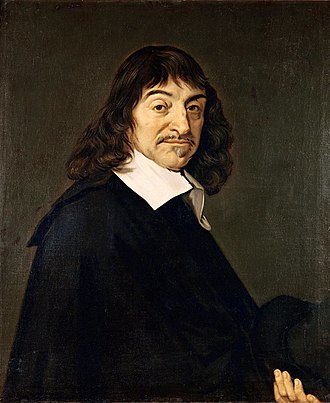
René Descartes
The father of modern philosophy, who doubted everything that could be doubted and found one thing that could not — that he himself was thinking.

David Hume
The great Scottish sceptic who showed that causation, the self, and induction cannot be justified by reason — and that reason is, and ought only to be, the slave of the passions.

Baruch Spinoza
The excommunicated lens-grinder of Amsterdam who identified God with Nature, wrote ethics in the form of geometry, and found freedom in understanding necessity.