Aristotle: virtue and flourishing. David Hume: morality is sentiment, and no “ought” follows from an “is”. Immanuel Kant: duty and the The Categorical Imperative. Friedrich Nietzsche: morality has a history, and “good and evil” was invented by the weak. The The Bhagavad Gītā: act according to your duty (dharma) without attachment to the fruits.
Thinkers & Authors
35Vyāsa
The legendary sage who, Hindu tradition holds, divided the Veda into four, composed the Mahābhārata (in which he is also a character and the grandfather of both warring clans), and wrote the Purāṇas — the archetypal author of Indian tradition.

Gautama Buddha
The prince who left his palace to seek an end to suffering, awoke under the Bodhi tree, and taught the Four Noble Truths, the Middle Way and no-self (anattā).

Confucius
The teacher of Lu whose sayings on goodness, ritual, learning and right relationships shaped Chinese civilization for two and a half thousand years.
Mahāvīra
The twenty-fourth and last tīrthaṅkara of Jainism — a prince of the eastern Gaṅgā plain who renounced everything at thirty, practised twelve years of extreme austerity, attained omniscience, and taught a path of radical non-violence, truth and non-possession for thirty years.
Vālmīki
The ādikavi — “first poet” — to whom the Rāmāyaṇa is attributed; by legend a highway robber who became a sage, and whose grief at the death of a bird became the first verse.

Sophocles
The Athenian tragedian of Oedipus and Antigone — the poet of human blindness, unbending will and the collision of laws — whom Aristotle took as the model of tragedy.
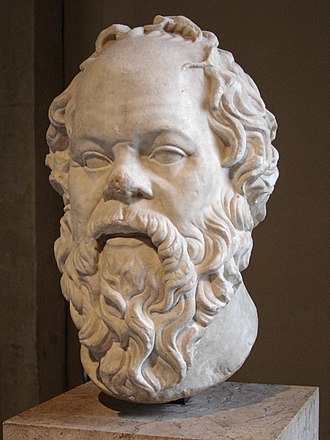
Socrates
The Athenian gadfly who wrote nothing, claimed to know nothing, questioned everyone — and was put to death for it, becoming philosophy’s martyr.

Plato
Socrates’ student and Aristotle’s teacher, author of the dialogues, founder of the Academy, and the philosopher of the Forms — of whom Whitehead said all Western philosophy is a series of footnotes.

Aristotle
Plato’s greatest student and tutor of Alexander the Great, who founded logic, systematized biology, ethics and politics, and brought the Forms down to earth.
Kauṭilya (Cāṇakya)
The Brahmin strategist who, by tradition, made Candragupta Maurya emperor and wrote the Arthaśāstra — the ancient world’s most comprehensive treatise on statecraft, economics, law, diplomacy, espionage and war. India’s Machiavelli, two thousand years before Machiavelli.
Aśoka
The Mauryan emperor (r. c. 268–232 BCE) who, after the slaughter of his conquest of Kaliṅga, turned to Buddhism and governed by “dhamma” — non-violence, tolerance and welfare — proclaimed in edicts carved on rocks and pillars across India. His lion capital is India’s emblem; his wheel is on its flag.
Jaimini
The sage credited with the Mīmāṃsā Sūtras, the founding text of Vedic hermeneutics — and, in legend, a disciple of Vyāsa who heard the Mahābhārata from his master.

Seneca
Roman Stoic, playwright and statesman — tutor and adviser to Nero — whose letters on time, death, anger and friendship are among the most readable works of ancient philosophy.

Marcus Aurelius
Roman emperor and Stoic philosopher whose private notebook, the Meditations, is the most intimate record of a mind trying to be good while ruling the world.
Tiruvaḷḷuvar
The Tamil poet-sage who wrote the Tirukkuṟaḷ — 1,330 couplets on virtue, wealth and love that form the most revered ethical work in Tamil, translated into more languages than almost any other Indian text.
Śāntideva
The 8th-century Nālandā monk whose Bodhicaryāvatāra (“The Way of the Bodhisattva”) is the most beloved poem of Mahāyāna Buddhism — a guide to compassion, patience and wisdom that the Dalai Lama calls his greatest inspiration.
Hemacandra
The Jain polymath of 12th-century Gujarat — grammarian, poet, logician, lexicographer, historian and royal adviser — called “the omniscient of the Kali age”, who persuaded a king to ban animal slaughter.
Basavaṇṇa (Basava)
The 12th-century Kannada saint, poet and statesman who founded the Vīraśaiva (Liṅgāyat) movement — rejecting caste, temples, priests and the Vedas, preaching that work is worship and that every devotee carries Śiva on his body.

Thomas Aquinas
Dominican friar and the greatest of the scholastics, who wove Aristotle’s philosophy and Christian theology into a single vast system — the Summa Theologiae — with five ways to prove God.
Rāmānanda
The 14th–15th century Vaiṣṇava teacher of Vārāṇasī who, by tradition, opened devotion to Rāma to all castes and both sexes, and whose disciples included Kabīr, Ravidās and Pīpā — the bridge between South Indian theology and North Indian bhakti.
Kabīr
The 15th-century weaver-poet of Vārāṇasī who mocked both Hindu and Muslim orthodoxy, taught devotion to a formless God found within, and left the most quoted couplets (dohās) in the Hindi language.
Guru Nānak
The founder of Sikhism (1469–1539) — a Punjabi mystic and poet who proclaimed “there is no Hindu, there is no Muslim”, taught devotion to the one formless God (Ik Onkār), honest work and sharing, and the equality of all people.

Niccolò Machiavelli
Florentine diplomat and political theorist whose Prince told rulers how power is actually won and kept — separating politics from conventional morality and giving the world the adjective “Machiavellian”.
Tulsīdās
The 16th-century poet of Vārāṇasī who retold the Rāmāyaṇa in Avadhī as the Rāmcaritmānas — the most widely read and recited book in North India — and wrote the Hanumān Chālīsā, sung daily by millions.
Tukārām
The 17th-century Marathi saint-poet, a grocer of the Śūdra caste, whose thousands of abhaṅgas to Viṭṭhal of Pandharpur — honest, anguished, joyful, scornful of hypocrisy — are the most loved poems in Marathi.

Jean-Jacques Rousseau
The Genevan philosopher of nature, freedom and feeling — “Man is born free, and everywhere he is in chains” — whose Social Contract inspired revolutionaries and whose Confessions invented modern autobiography.
Raja Rammohun Roy
The Bengali reformer (1772–1833) called the “father of modern India” — translator of the Upaniṣads as rational monotheism, founder of the Brahmo Samāj, campaigner against satī, and champion of modern education and a free press.
Dayānanda Sarasvatī
The Gujarati ascetic (1824–1883) who founded the Ārya Samāj with the cry “Back to the Vedas!” — rejecting idol-worship, caste by birth, and the Purāṇas, and calling for a rational Vedic religion, education for women and the reconversion of those who had left Hinduism.

Leo Tolstoy
The Russian giant of War and Peace and Anna Karenina, who in mid-life fell into a crisis of meaning and reinvented himself as a prophet of non-violence and simple Christian love.

Friedrich Nietzsche
Philosopher with a hammer who announced the death of God, unmasked the genealogy of morality, and called for new values — the will to power, eternal recurrence, the Übermensch, amor fati.
Swami Vivekananda
The Bengali monk, disciple of Ramakrishna, who brought Vedānta and Yoga to the West at the 1893 Parliament of Religions in Chicago (“Sisters and brothers of America!”), preached a “practical Vedānta” of service to humanity as service to God, and awakened modern Hindu self-confidence.
Mahatma Gandhi
The leader of India’s independence movement and the philosopher of satyāgraha — “truth-force”, non-violent resistance — who turned the Jain and Hindu ideal of ahiṃsā into a method of mass politics, and whose ideas of truth, non-violence, self-rule and simplicity changed the twentieth century.
Premchand
The greatest writer of modern Hindi and Urdu fiction — novelist of the Indian village, of peasants crushed by debt, caste and colonial rule — whose Godān and stories like “The Shroud” founded social realism in Indian literature.
B. R. Ambedkar
The Dalit jurist, economist, philosopher and statesman who rose from “untouchability” to become the principal architect of India’s Constitution — the fiercest critic of caste and of the Hindu scriptures that sanctified it, and the founder of modern Indian Buddhism.

Simone de Beauvoir
French existentialist philosopher and novelist whose The Second Sex (1949) — “One is not born, but rather becomes, a woman” — founded modern feminist philosophy, and whose ethics of ambiguity argued that my freedom requires the freedom of others.
Works
36
The Odyssey
Homer’s epic of Odysseus’s ten-year journey home from Troy — monsters, witches, the underworld and a household besieged — the archetype of every adventure, every homecoming and every clever hero.
Taittirīya Upaniṣad
The Upaniṣad of the five sheaths and the graduation address — it defines Brahman as “truth, knowledge, infinity”, peels away the layers of the self from food to bliss, measures the bliss of Brahman, and tells departing students “Treat your mother as a god.”

The Rāmāyaṇa
Vālmīki’s epic of Rāma, the exiled prince who crosses the sea to rescue his wife Sītā from the demon king Rāvaṇa — India’s ādikāvya, the “first poem”, and the model of dharma for two thousand years.

Antigone
Sophocles’ tragedy of the young woman who buries her brother against the king’s decree — the founding drama of conscience against the state, which Hegel read as the collision of two rights.

The Analects
The collected sayings and conversations of Confucius and his disciples — the most influential book in East Asian history.
Īśā Upaniṣad
The shortest of the principal Upaniṣads — eighteen verses that begin “All this is pervaded by the Lord” and reconcile renunciation with action, knowledge with works, and the one with the many.
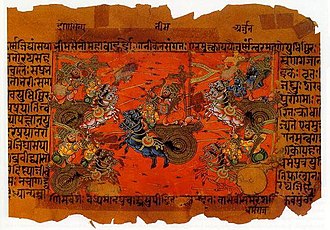
The Mahābhārata
The great epic of India — the war between the Pāṇḍavas and the Kauravas, cousins fighting for a kingdom — and, at about 100,000 couplets, the longest poem ever composed, containing the Bhagavad Gītā and almost the whole of Indian thought on dharma.
The Apology of Socrates
Plato’s account of Socrates’ defence speech at his trial in 399 BCE — a manifesto for the philosophical life.
The Republic
Plato’s great dialogue on justice — in the soul and in the city — containing the philosopher-kings, the Allegory of the Cave, and the banishment of the poets.
The Arthaśāstra
Kauṭilya’s treatise on statecraft — 15 books on kingship, administration, economy, law, espionage, diplomacy and war. Lost for centuries and rediscovered in 1905, it is the most comprehensive ancient manual of government in any civilisation.
The Dhammapada
423 verses of the Buddha’s teaching in 26 chapters — on the mind, the fool and the wise, anger, craving, the path and the true Brahmin. The best-loved Buddhist scripture, and the shortest door into the Buddha’s ethics.
The Jātakas
547 stories of the Buddha’s previous lives — as a hare, a monkey king, a merchant, a prince — told to illustrate the virtues that lead to awakening. India’s great treasury of folk tales, carved on stūpas and painted in caves.
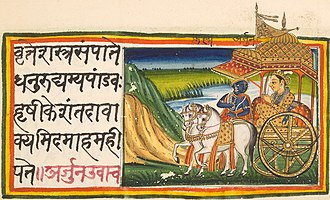
The Bhagavad Gītā
The “Song of the Lord” — Kṛṣṇa’s teaching to the despairing warrior Arjuna on the battlefield of Kurukṣetra, on duty, action without attachment, knowledge and devotion.
The Manusmṛti
The most famous of the Hindu law books — a treatise on dharma covering creation, the four classes, the stages of life, the duties of kings, marriage, inheritance, crime and penance. Revered for two millennia as the code of Hindu society, and condemned in modern times as the charter of caste and of women’s subordination.
The Pañcatantra
The ancient Indian book of animal fables written to teach princes the art of practical wisdom (nīti) — the jackals Karaṭaka and Damanaka, the monkey and the crocodile, the lion and the hare — translated into more languages than almost any book except the Bible.
Tattvārtha Sūtra
Umāsvāti’s “Manual of the Meaning of the Reals” — the first Sanskrit summary of Jain philosophy, 350 sūtras accepted by both Digambaras and Śvetāmbaras, covering knowledge, souls, the universe, karma, ethics and liberation.

Meditations
The private notebook of the Stoic emperor Marcus Aurelius, written on campaign — the most intimate and enduring work of ancient practical philosophy.
The Kāmasūtra
Vātsyāyana’s treatise on kāma — pleasure, love and desire — as one of the three legitimate aims of life. Far more than a sex manual, it is a handbook of urban culture, courtship, marriage, friendship and the arts of living well.
The Little Clay Cart
Śūdraka’s Sanskrit comedy of love, crime and revolution — a poor Brahmin merchant, a generous courtesan, a burglar with a theory of house-breaking, a vicious royal brother-in-law and a popular uprising — the most realistic and modern-feeling play of ancient India.
The Tirukkuṟaḷ
Tiruvaḷḷuvar’s 1,330 couplets in 133 chapters on virtue (aṟam), wealth and statecraft (poruḷ), and love (inbam) — a secular, universal ethic, compact and witty, the “Tamil Veda” and one of the most translated books of India.
Cilappatikāram (The Tale of an Anklet)
The great Tamil epic (c. 5th century) by the prince-monk Iḷaṅkō Aṭikaḷ — Kaṇṇaki’s husband is executed on a false charge of stealing the queen’s anklet; she proves his innocence, tears off her breast and burns the city of Madurai, and becomes a goddess.

Summa Theologiae
Aquinas’s unfinished masterpiece — a systematic theology in some 3,000 articles, each a model of fair argument, synthesizing Aristotle and Christian revelation.

The Divine Comedy
Dante’s journey through Hell, Purgatory and Paradise — the summa of medieval thought in a hundred cantos, and one of the greatest poems ever written.

The Prince
Machiavelli’s short, scandalous handbook on gaining and keeping power — the founding text of political realism.
Rāmcaritmānas
Tulsīdās’s 16th-century retelling of the Rāmāyaṇa in Avadhī Hindi — 12,800 lines of devotional epic that made Rāma the God of North India, recited daily, staged every year as Rāmlīlā, and loved more than any other book in Hindi.
Critique of Practical Reason
Kant’s second Critique — the moral law is a fact of reason, and through it we know we are free.
Fear and Trembling
Kierkegaard’s meditation, under the pseudonym Johannes de Silentio, on Abraham’s willingness to sacrifice Isaac — is faith higher than ethics?

The Brothers Karamazov
Dostoevsky’s last and greatest novel — a murdered father, three brothers (the sensualist, the intellectual, the saint), and the deepest debate about God and evil in literature.
Beyond Good and Evil
Nietzsche’s “prelude to a philosophy of the future” — an attack on the prejudices of philosophers, from Plato to Kant, and a sketch of the free spirit.

The Death of Ivan Ilyich
Tolstoy’s novella of a respectable judge who, dying of a trivial injury, realizes that his correct, comfortable life was a lie — and finds, at the last moment, the light.
On the Genealogy of Morality
Nietzsche’s three essays tracing “good and evil”, guilt, and the ascetic ideal back to their hidden, all-too-human origins.
Hind Swaraj
Gandhi’s 1909 manifesto, written in ten days on a ship — a dialogue in which the “Editor” tells an impatient “Reader” that true home rule is rule over oneself, that modern civilisation is a disease, and that India must win freedom by non-violence and the spinning wheel.
Annihilation of Caste
Ambedkar’s 1936 undelivered speech — the most powerful critique of caste ever written — arguing that caste is a division of labourers, not of labour, that it rests on the authority of the Hindu scriptures, and that it cannot be reformed but only destroyed.
Godān
Premchand’s last and greatest novel (1936) — the life and death of Hori, a poor peasant who longs only to own a cow, crushed by debt, caste, landlords and priests — the epic of the Indian village under colonial rule.
The Stranger
Camus’s first novel — Meursault, who will not pretend to feel what he does not feel, kills an Arab on a beach and is condemned for not weeping at his mother’s funeral.
Existentialism Is a Humanism
Sartre’s 1945 public lecture — the most popular statement of existentialism — existence precedes essence, man is condemned to be free.
Ideas
8Dharma
The central idea of Indian civilisation — the order that holds the world together, and the duty, law, virtue and right way of living that each being owes to it. For Buddhists, the Dhamma is also the Buddha’s teaching and the ultimate constituents of reality.
Karma
“Action” — and the law that every intentional action leaves a trace that ripens, in this life or a future one, as happiness or suffering. Shared by Hindus, Buddhists, Jains and Sikhs, karma explains the inequalities of fortune without a judge, and binds the self to the round of rebirth.
Eudaimonia
Flourishing, living well — Aristotle’s name for the highest human good, activity of the soul in accordance with virtue.
The Categorical Imperative
Kant’s supreme principle of morality — act only on maxims you could will as universal laws; treat humanity always as an end, never merely as a means.
Rational Egoism
Chernyshevsky’s doctrine that people always act from self-interest, and that enlightened self-interest will make everyone good.
The Übermensch
Nietzsche’s “overman” — the human being who, after the death of God, creates new values and affirms life wholly.
Will to Power
Nietzsche’s idea that the basic drive of all life is not survival but growth, mastery, self-overcoming.
Master and Slave Morality
Nietzsche’s genealogy — “good/bad” was the self-affirmation of nobles; “good/evil” was invented by the resentful weak to revenge themselves on the strong.
Schools & Movements
5Jainism
The ancient Indian tradition of the Jinas — radical non-violence toward every living being, a soul weighed down by karmic matter, the “many-sidedness” of truth, and liberation by self-discipline without a creator God. Small in numbers, immense in influence.
Confucianism
The ethical and political tradition founded on Confucius’s teaching — humaneness, ritual, filial piety, learning and government by virtue — the backbone of Chinese, Korean, Japanese and Vietnamese civilization.
Mīmāṃsā
The school of Vedic interpretation — the hermeneutics of ritual and duty that treated the Veda as eternal and authorless, defended the self-validity of knowledge, denied a creator God, and developed theories of language, meaning and law that shaped all of Hindu jurisprudence.
Stoicism
The Hellenistic and Roman philosophy of virtue, reason and acceptance — happiness lies in what is up to us, our judgments and choices, not in external things.
The Bhakti Movement
The great devotional revolution of Indian religion — from the Tamil Āḻvārs and Nāyaṉārs (6th–9th centuries) to Kabīr, Mīrābāī, Tulsīdās and Tukārām — which made passionate, personal love of God, sung in the languages of the people, a path to liberation open to every caste and to women.
Debates
1Characters
6Alyosha Karamazov
The youngest brother, novice of the elder Zosima, “the hero” of the novel — who answers Ivan’s arguments not with refutation but with a kiss.
Arjuna
The Pāṇḍava archer who lays down his bow on the battlefield of Kurukṣetra rather than kill his kin — and receives the teaching of the Bhagavad Gītā.
Cordelia
Lear’s youngest daughter, who will not flatter, is disinherited, returns to rescue him, forgives him with “No cause, no cause” — and is hanged.
Edmund
Gloucester’s illegitimate son — the brilliant, charming, self-made villain of King Lear, who worships Nature as amoral force and scorns “the plague of custom”.
Ivan Karamazov
The rational, tormented middle brother who “returns his ticket” to God’s world and authors the Grand Inquisitor — and whose idea that “everything is permitted” kills his father.
Meursault
Camus’s “stranger” — a clerk in Algiers who will not say more than he feels, kills a man on a beach, and goes to the guillotine opening himself to “the gentle indifference of the world”.
Great Scenes
2Abraham on Mount Moriah
Kierkegaard’s obsessive retelling of Genesis 22 — Abraham rising early to sacrifice Isaac — as the test case of faith beyond ethics.
Lear Wakes: "No Cause, No Cause"
Lear wakes from madness to find Cordelia beside him, thinks he is in hell, begs her forgiveness — and she answers with two words that undo the whole tragedy.
Great Questions
4How Should One Act? — Dharma, Karma and Freedom
The Indian argument about action — from Vedic sacrifice to the Gītā’s action without attachment, the Buddha’s intention, the Jain refusal to harm, Kauṭilya’s realism, Gandhi’s satyāgraha and Ambedkar’s constitutional morality.
Are We Free?
Fate, karma, determinism, compatibilism, radical freedom — the long argument over whether we choose what we do.
What Is the Meaning of Life?
Liberation, virtue, tranquillity, God, the will, revolt — the great answers to the greatest question.
What Is Justice?
From Thrasymachus’s “advantage of the stronger” to Rawls’s veil of ignorance — the question of what we owe each other and who should rule.
Lines to Remember
21 quotationsThe unexamined life is not worth living.
ὁ δὲ ἀνεξέταστος βίος οὐ βιωτὸς ἀνθρώπῳ
Context & when to use it
At his trial, refusing to go into exile and keep quiet — a life without philosophical examination is no life for a human being.
The founding sentence of philosophy. For reflection, self-knowledge, intellectual courage.
One swallow does not make a spring, nor does one fine day; and so too one day, or a short time, does not make a man blessed and happy.
Context & when to use it
For character as a lifelong pattern, not a single act.
He who fights with monsters should look to it that he himself does not become a monster. And if you gaze long into an abyss, the abyss also gazes into you.
Wer mit Ungeheuern kämpft, mag zusehn, dass er nicht dabei zum Ungeheuer wird. Und wenn du lange in einen Abgrund blickst, blickt der Abgrund auch in dich hinein.
Context & when to use it
An aphorism from “Maxims and Interludes”.
For the danger of becoming what you oppose — in war, in politics, in obsession.
Your right is to action alone, never to its fruits. Let not the fruits of action be your motive, nor let your attachment be to inaction.
कर्मण्येवाधिकारस्ते मा फलेषु कदाचन। मा कर्मफलहेतुर्भूर्मा ते सङ्गोऽस्त्वकर्मणि॥
Context & when to use it
The most quoted verse of the Gītā — for duty without attachment, process over outcome, Stoic-like equanimity.
Better is one’s own duty, though imperfectly done, than the duty of another well performed.
श्रेयान्स्वधर्मो विगुणः परधर्मात्स्वनुष्ठितात्
Context & when to use it
For authenticity and vocation — your own path over imitation.
Hatred is never appeased by hatred in this world. By non-hatred alone is hatred appeased. This is an eternal law.
na hi verena verāni sammantīdha kudācanaṃ, averena ca sammanti, esa dhammo sanantano
Context & when to use it
For reconciliation and non-violence.
Reason is, and ought only to be the slave of the passions, and can never pretend to any other office than to serve and obey them.
Context & when to use it
Against the idea that reason alone motivates; for psychology over logic.
I have laboured carefully not to mock, lament, or execrate human actions, but to understand them.
sedulo curavi humanas actiones non ridere, non lugere, neque detestari, sed intelligere
Context & when to use it
For scientific and compassionate understanding of human behaviour.
To will oneself free is also to will others free.
Context & when to use it
Against the charge that existentialist freedom is selfish.
There ought to be behind the door of every happy, contented man someone standing with a hammer, continually reminding him with a knock that there are unhappy people.
Context & when to use it
Against complacency; for the duty to remember others’ suffering.
Non-violence is the highest dharma.
ahiṃsā paramo dharmaḥ
Context & when to use it
For non-violence — and the debate about its limits.
⚠ The epic also says violence in the service of dharma is a duty; the line continues in some versions with “and so is violence in the service of dharma”.
To anyone who comes to me even once and says “I am yours”, I grant safety from all beings. This is my vow.
Context & when to use it
Rāma accepting the defector Vibhīṣaṇa despite his allies’ suspicion.
For refuge, asylum and trust.
If there is no God and no immortality, then everything is permitted.
Context & when to use it
Ivan’s argument that without immortality there is no ground for virtue — first reported by Miusov, later echoed by Dmitri and fatally taken up by Smerdyakov.
The classic statement of moral nihilism; to ask whether ethics needs God.
⚠ The exact sentence “If God does not exist, everything is permitted” is not in the novel. It is a compression of several passages.
Each of us is guilty before all, for all, and I more than the others.
Context & when to use it
The dying youth Markel’s revelation, which shapes Zosima’s whole teaching.
For universal responsibility (Levinas loved this line), against blaming others.
Above all, don’t lie to yourself. The man who lies to himself and listens to his own lie comes to a point that he cannot distinguish the truth within him.
Context & when to use it
Zosima to the buffoon Fyodor Karamazov.
For self-deception — Sartre’s bad faith in Dostoevsky’s words.
What if my whole life has really been wrong?
Context & when to use it
The question that finally opens him to truth.
For mid-life crisis, examined life, regret.
Everyone thinks of changing the world, but no one thinks of changing himself.
Context & when to use it
Tolstoy argued that social reform must begin with inner moral change.
For personal responsibility over activism.
⚠ A popular paraphrase; the wording is not Tolstoy’s own.
There is nothing either good or bad, but thinking makes it so.
Context & when to use it
To Rosencrantz and Guildenstern — Denmark is a prison to Hamlet, though not to them.
For moral relativism, Stoic or Buddhist ideas that suffering lies in judgment, or perspectivism (Nietzsche).
Fair is foul, and foul is fair.
Context & when to use it
The witches’ chant — the moral world turned upside down.
For moral inversion, propaganda, a transvaluation of values.
Nor did I think your decrees so strong that you, a mortal, could override the unwritten and unfailing laws of the gods. They are not of today or yesterday; they live forever.
Context & when to use it
Antigone to Creon, admitting she buried her brother against his decree.
The founding statement of conscience against unjust law.
Through tattered clothes small vices do appear; robes and furred gowns hide all.
Context & when to use it
For injustice, privilege and hypocrisy in the justice system.
Sententiae
phrases in the originalEudaimonia
Origin. Aristotle’s term for the highest human good (Nicomachean Ethics I). — Aristotle
When “happiness” is too thin a word.
Akrasia
Origin. Socrates denied it is possible (no one does wrong knowingly); Aristotle analysed it in Nicomachean Ethics VII. — Aristotle
For procrastination, addiction, knowing better and doing worse — “grant me chastity, but not yet”.
Homo homini lupus
Origin. Plautus, Asinaria 495 (“lupus est homo homini”). Hobbes quotes it in the dedication of De Cive (1642) — beside its opposite, “man is a god to man”.
For human cruelty, the state of nature, political realism.
Summum bonum
Origin. Cicero’s Latin for the Greek ethical question — what is the final end of life? For Kant, the union of virtue and happiness.
For debates about the purpose of life.
Vsyo pozvoleno
Origin. The Brothers Karamazov (1880) — the conclusion attributed to Ivan’s theory if there is no God and no immortality. — Fyodor Dostoevsky, The Brothers Karamazov
⚠ The full sentence “if God does not exist, everything is permitted” does not appear verbatim.
For moral nihilism and its consequences.
Satyam eva jayate
Origin. Muṇḍaka Upaniṣad 3.1.6 — the national motto of India, inscribed beneath the Lion Capital emblem.
For integrity and truth over expediency.
Vasudhaiva kuṭumbakam
Origin. Mahā Upaniṣad 6.71–72 — “’this is mine, that is another’s’ is the reckoning of the narrow-minded; for the noble-hearted, the whole earth is family.” Also in the Hitopadeśa.
For cosmopolitanism and universal kinship.
Karmaṇy evādhikāras te
Origin. Bhagavad Gītā 2.47. — The Bhagavad Gītā
For acting well without anxiety about outcomes.
Explore Next
related by shared connections
Epictetus
The former slave who became the greatest teacher of Stoicism — “We are disturbed not by things, but by our judgments about things.”
What Is Beauty — and What Is Art For?
From Plato’s ladder of love and Aristotle’s catharsis to Kant’s disinterested pleasure, Schopenhauer’s music and Nietzsche’s Apollo and Dionysus.
How Should We Face Death?
Naciketas at Death’s door, Socrates’ hemlock, Epicurus’s argument, the Stoics’ rehearsal, Hamlet’s skull, Ivan Ilyich’s scream, Heidegger’s being-toward-death.
Buddhism
The tradition founded by the Buddha — suffering, impermanence, no-self, and the path to nirvāṇa — later dividing into Theravāda, Mahāyāna (Madhyamaka, Yogācāra) and Vajrayāna.

Augustine of Hippo
North African bishop, convert, and the most influential Christian thinker of the Latin West — inventor of the autobiography of the inner self.

Arthur Schopenhauer
The great pessimist, who said the thing-in-itself is blind, insatiable Will, that life swings like a pendulum between pain and boredom, and that art, compassion and renunciation are our only escape.