Contents · 4 sections · 1 min
The word
“Nihilism” (Nihilismus) enters philosophy through F. H. Jacobi’s open letter to Fichte (1799), where he charges that Kantian and Idealist philosophy, by making the I the source of everything, dissolves reality into nothing.
The movement
In 1862 Ivan Turgenev‘s Fathers and Sons gave Russia Yevgeny Bazarov: “a nihilist is a man who does not bow down before any authority.” Young radicals adopted the name. Nikolai Chernyshevsky answered with a positive programme, What Is to Be Done?; Fyodor Dostoevsky answered with Notes from Underground and, later, Demons. See Russian Nihilism.
The diagnosis
For Friedrich Nietzsche nihilism is “the uncanniest of all guests”: the highest values devaluing themselves. When God dies, Christian morality loses its ground — and Europe faces a long century of meaninglessness unless new values are created (The Übermensch).
The literature
Hamlet’s “to be or not to be”; Ivan Karamazov’s logic that, without God and immortality, everything is permitted; Kirillov’s suicide; Meursault’s indifference — literature gives nihilism faces. Camus’s The Rebel tries to find a way through it without lies.
Thinkers & Authors
5
Friedrich Heinrich Jacobi
German critic of the Enlightenment who sparked the Pantheism Controversy and gave philosophy the word “nihilism”.

Ivan Turgenev
The most Western of the great Russian novelists, whose Fathers and Sons created Bazarov and gave the word “nihilist” to an entire generation.
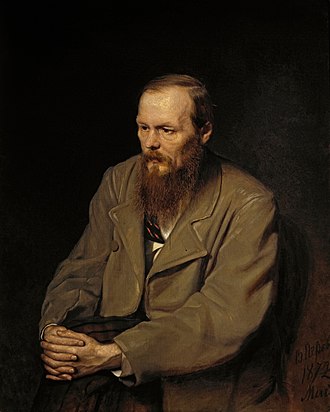
Fyodor Dostoevsky
The Russian novelist of the abyss — crime, faith, freedom, suffering — whose characters argue philosophy with their lives. Nietzsche called him the only psychologist he had anything to learn from.

Friedrich Nietzsche
Philosopher with a hammer who announced the death of God, unmasked the genealogy of morality, and called for new values — the will to power, eternal recurrence, the Übermensch, amor fati.

Albert Camus
Algerian-born novelist and essayist of the absurd and of revolt — “There is but one truly serious philosophical problem, and that is suicide.”
Works
9
Hamlet
Shakespeare’s longest play — a prince ordered by his father’s ghost to avenge a murder thinks, doubts, delays, feigns madness, and dies in the act.

Macbeth
Shakespeare’s shortest tragedy — a brave soldier, prompted by witches and his wife, murders his king and wades so deep in blood that life becomes “a tale told by an idiot”.

Fathers and Sons
Turgenev’s novel of the generation gap — the nihilist Bazarov against the old liberal Kirsanovs — which gave Russia the word “nihilist”.
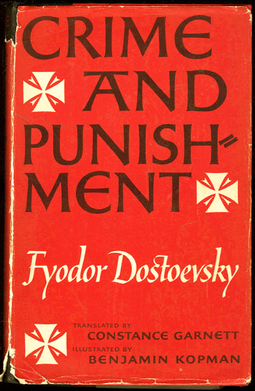
Crime and Punishment
A poor ex-student in St Petersburg murders an old pawnbroker to prove he is an “extraordinary man” — and is undone not by the police but by his own conscience and by Sonya’s love.

Demons
Dostoevsky’s prophetic political novel — a provincial town possessed by revolutionary nihilists, the murder of one of their own, and the hollow charisma of Stavrogin.
A Confession
Tolstoy’s account of his mid-life crisis — at the height of fame he could not answer “why live?” and nearly killed himself, until he found meaning in the faith of simple people.
The Gay Science
Nietzsche’s most joyful book — where God is first declared dead, the madman runs into the marketplace, and the thought of eternal recurrence first appears.
Thus Spoke Zarathustra
Nietzsche’s prophetic prose-poem — Zarathustra descends from his mountain to teach the Übermensch, the will to power and eternal recurrence.
The Rebel
Camus’s history of revolt — metaphysical and political — arguing that rebellion that kills for history betrays its own origin. It ended his friendship with Sartre.
Ideas
3The Death of God
Nietzsche’s announcement that belief in God has become unbelievable — and that with Him the foundations of Western morality have gone.
Eternal Recurrence
Nietzsche’s thought-experiment — would you will to live your life again, every moment, infinitely? The supreme test of affirming life.
The Übermensch
Nietzsche’s “overman” — the human being who, after the death of God, creates new values and affirms life wholly.
Schools & Movements
2Existentialism
The philosophy of the existing individual — freedom, anxiety, authenticity, the absurd — running from Kierkegaard and Dostoevsky through Nietzsche and Heidegger to Sartre and Camus.
Russian Nihilism
The 1860s movement of young Russian radicals who rejected tradition, religion, art and authority in the name of science, utility and the people.
Characters
8Yevgeny Bazarov
Turgenev’s young doctor-nihilist who rejects art, love and every authority — and dies of a cut finger, having loved and lost.
Edmund
Gloucester’s illegitimate son — the brilliant, charming, self-made villain of King Lear, who worships Nature as amoral force and scorns “the plague of custom”.
Hamlet
Prince of Denmark — scholar, wit, mourner, avenger who cannot avenge — the most quoted and most interpreted character in literature.
Ivan Karamazov
The rational, tormented middle brother who “returns his ticket” to God’s world and authors the Grand Inquisitor — and whose idea that “everything is permitted” kills his father.
Alexei Kirillov
The engineer in Demons who reasons that if God does not exist, man must become God — and that the supreme act of self-will is suicide.
Rodion Raskolnikov
Impoverished ex-student who murders a pawnbroker to prove he is an “extraordinary man” beyond morality — and is broken and reborn by his conscience.
Nikolai Stavrogin
The magnetic, empty aristocrat at the centre of Demons — everyone’s idol, nobody’s master, strength without belief.
Zarathustra
Nietzsche’s prophet who, after ten years in mountain solitude, descends to teach mankind the Übermensch — and finds no one ready to listen.
Great Scenes
3The Madman with the Lantern
Nietzsche’s parable of the madman who runs into the marketplace at noon with a lantern crying “I seek God!” — and announces that we have killed him.
To Be, or Not to Be
Hamlet’s soliloquy weighing life against death — the most famous speech in English, and a compressed treatise on suicide, fear and the paralysis of thought.
Tomorrow, and Tomorrow, and Tomorrow
Macbeth, told that his wife is dead, delivers the bleakest speech in Shakespeare — life is a walking shadow, a tale told by an idiot, signifying nothing.
Great Questions
2What Is the Meaning of Life?
Liberation, virtue, tranquillity, God, the will, revolt — the great answers to the greatest question.
The Road of Nihilism
How “nothing matters” became an idea, a movement, a diagnosis, and a test — from Jacobi to Camus.
Lines to Remember
13 quotationsGod is dead. God remains dead. And we have killed him.
Gott ist tot! Gott bleibt tot! Und wir haben ihn getödtet!
Context & when to use it
The madman in the marketplace — not a triumphant atheist, but a horrified witness to a cultural catastrophe.
For secularization and its consequences. Quote the whole — it is a lament, not a boast.
He who has a why to live for can bear almost any how.
Hat man sein warum? des Lebens, so verträgt man sich fast mit jedem wie?
Context & when to use it
Meaning makes suffering bearable. Viktor Frankl made it the motto of Man’s Search for Meaning.
For meaning and endurance.
If there is no God and no immortality, then everything is permitted.
Context & when to use it
Ivan’s argument that without immortality there is no ground for virtue — first reported by Miusov, later echoed by Dmitri and fatally taken up by Smerdyakov.
The classic statement of moral nihilism; to ask whether ethics needs God.
⚠ The exact sentence “If God does not exist, everything is permitted” is not in the novel. It is a compression of several passages.
I wanted to find out then and quickly whether I was a louse like everybody else or a man.
Context & when to use it
Raskolnikov’s confession to Sonya — the murder was a test of whether he dared to “step over”.
For the will to power, the Napoleonic complex, ideas that kill.
If there is no God, then I am God.
Context & when to use it
Kirillov’s logic — if God is dead, the highest point of my self-will is to kill myself.
For the man-god, the Übermensch before Nietzsche, the logical suicide.
A nihilist is a man who does not bow down before any authority, who does not accept any principle on faith, however much that principle may be revered.
Context & when to use it
Arkady explains his friend Bazarov to his father and uncle.
The definition of Russian nihilism — use it when someone calls themselves a free thinker.
A decent chemist is twenty times more useful than any poet.
Context & when to use it
Bazarov’s utilitarian contempt for art.
For science versus the humanities; utility versus beauty.
Nature is not a temple, but a workshop, and man’s the workman in it.
Context & when to use it
Against Romantic reverence for nature.
For instrumental reason, the technological attitude (Heidegger’s “standing-reserve”).
To be, or not to be: that is the question: Whether ‘tis nobler in the mind to suffer The slings and arrows of outrageous fortune, Or to take arms against a sea of troubles, And by opposing end them?
Context & when to use it
Hamlet, alone (he thinks), weighs whether to endure life’s suffering or end it — and why fear of the afterlife stops us.
Any debate about suicide, nihilism, meaning, or choosing between endurance and action. Philosophy, literature and Shakespeare in one line.
There is nothing either good or bad, but thinking makes it so.
Context & when to use it
To Rosencrantz and Guildenstern — Denmark is a prison to Hamlet, though not to them.
For moral relativism, Stoic or Buddhist ideas that suffering lies in judgment, or perspectivism (Nietzsche).
What a piece of work is a man! How noble in reason, how infinite in faculty… the beauty of the world, the paragon of animals; and yet, to me, what is this quintessence of dust?
Context & when to use it
Renaissance humanism’s hymn to man — undercut in the same breath by melancholy.
For humanism versus nihilism; human greatness and insignificance at once.
How weary, stale, flat and unprofitable seem to me all the uses of this world!
Context & when to use it
His first soliloquy — wishing “this too too solid flesh would melt”.
For depression, ennui, Weltschmerz.
Life’s but a walking shadow, a poor player That struts and frets his hour upon the stage And then is heard no more. It is a tale Told by an idiot, full of sound and fury, Signifying nothing.
Context & when to use it
On hearing of his wife’s death, near his own end.
The definitive line for nihilism and meaninglessness — the absurd before Camus.
Sententiae
phrases in the originalVanitas vanitatum, omnia vanitas
Origin. The Vulgate’s rendering of Ecclesiastes 1:2. The Hebrew “hevel” means vapour, breath — what vanishes.
For the futility of ambition; the oldest nihilist sentence in Scripture. Tolstoy quotes it in A Confession.
Gott ist tot
Origin. Nietzsche, The Gay Science §108 and §125 (1882); repeated in Zarathustra. — Friedrich Nietzsche, The Gay Science
⚠ Hegel used a version earlier (Faith and Knowledge, 1802), quoting a Lutheran hymn — “God himself is dead”.
For secularization and the crisis of values.
Übermensch
Origin. Nietzsche, Thus Spoke Zarathustra (1883). — Friedrich Nietzsche
⚠ Not a biological master race — a self-overcoming ideal. Shaw’s “Man and Superman” made “superman” the English word.
For self-overcoming and creating values.
Vsyo pozvoleno
Origin. The Brothers Karamazov (1880) — the conclusion attributed to Ivan’s theory if there is no God and no immortality. — Fyodor Dostoevsky, The Brothers Karamazov
⚠ The full sentence “if God does not exist, everything is permitted” does not appear verbatim.
For moral nihilism and its consequences.
Explore Next
related by shared connections
William Shakespeare
The playwright and poet of Stratford whose 37-odd plays and 154 sonnets gave English its richest store of quotation and gave philosophy Hamlet, Lear and Macbeth.

Nikolai Chernyshevsky
Radical critic and author of What Is to Be Done? — the utopian novel of “rational egoism” that inspired Lenin and provoked Dostoevsky’s Underground Man.
Will to Power
Nietzsche’s idea that the basic drive of all life is not survival but growth, mastery, self-overcoming.

Jean-Paul Sartre
The face of French existentialism — existence precedes essence, we are condemned to be free, and hell is other people.

Søren Kierkegaard
The melancholy Dane, father of existentialism, who set the passionate individual against Hegel’s System and faith against reason — “truth is subjectivity”.
Absurdism
Camus’s position — the conflict between our longing for meaning and the world’s silence cannot be resolved, only lived with in lucid revolt.