
Contents · 8 sections · 11 min
Key Ideas
I am a sick man… I am a spiteful man.
Hyper-consciousness is a disease — it paralyses action.
Twice two makes four is a piece of insolence.
The Crystal Palace — you cannot stick your tongue out at it.
Freedom matters more than happiness — even suffering is preferable to being an organ-stop.
Notes from Underground (1864) is the short novel in which Fyodor Dostoevsky, then a recently released convict and widower, wrote the first great modernist monologue and started his mature work. Its narrator — a bitter, self-lacerating, hyper-conscious former civil servant who calls himself a “sick man”, a “spiteful man”, an “unattractive man” — addresses an imagined audience of “gentlemen” from the cellar in which he lives, to dismantle the optimistic rationalism of his age. In its first part, a feverish philosophical rant, he attacks the idea that human beings are rational, that they naturally pursue their own advantage, and that science and progress will soon create a “Crystal Palace” in which all desires are calculable and satisfied. In the second part, “Apropos of the Wet Snow”, he tells the story of an episode from his twenties — a humiliating dinner with former schoolmates, and a cruel encounter with a prostitute, Liza — which shows what kind of person such a philosophy produces. The work is a founding text of existentialism, a prototype of the unreliable narrator, and an argument — still unanswered — that human freedom cannot be fitted into any system.
Context
Russia in the 1860s
The book is a direct reply to Nikolai Chernyshevsky‘s novel What Is to Be Done? (1863), the bible of Russian radicals, which depicted a future socialist community — symbolised by a crystal palace of glass and aluminium — in which people, rationally understanding their own interests, would cooperate happily. Its doctrine of rational egoism (Rational Egoism) taught that enlightened self-interest and the common good coincide; a person who understood his true interest could do no wrong. The radical critic Dmitri Pisarev and the “nihilists” (Russian Nihilism) pushed utilitarian rationalism further. Dostoevsky, who had been condemned to death in 1849 for membership of the Petrashevsky circle, reprieved on the scaffold, and spent four years in a Siberian prison camp (House of the Dead), had come to believe that this radical rationalism was shallow and dangerous. The narrator of the Notes is a parody — and a refutation — of the “new man” of Chernyshevsky.
Dostoevsky’s life at the time
The Notes was written in 1863–64 in grim circumstances: his wife Maria was dying of tuberculosis, his brother Mikhail’s journal Time had just been shut down by the censors, he was in debt, and he had returned from a trip abroad (1862–63) to Western Europe, where, at the London Crystal Palace, he had seen the display of industrial progress and, in the streets nearby, appalling poverty. The Notes appeared in his brother’s new journal Epoch in 1864; the censors removed some passages on faith and Christ that Dostoevsky said were the key to the book. Its writing coincided with the death of his wife (April 1864) and of his brother (July). See Fyodor Dostoevsky.
Part One: “The Underground”
The voice
I am a sick man… I am a spiteful man. I am an unattractive man. I think my liver is diseased. However, I know nothing at all about my disease, and do not know for certain what ails me.
The narrator — never named — is forty, a former collegiate assessor (a minor civil servant) who, having come into a small inheritance, has retired to a corner of St Petersburg, from which he addresses his readers. He is acutely self-conscious: he cannot act, because he sees all the arguments against acting; he cannot be sincere, because he watches himself being sincere; he takes pleasure in his own humiliation — “the pleasure of despair” — and in his toothache. Heightened awareness, he says, is a disease; a man of the nineteenth century, “must be, and is morally obliged to be, pre-eminently a characterless creature”. The “direct” man of action, the “man of nature”, is stupid but happy; he, the “mouse” of hyper-consciousness, slinks back to his hole, where he cherishes his spite.
Against the laws of nature
“Twice two makes four” is a law of nature, a wall. The rationalists say that when a man understands the laws of nature, he must submit to them: “you can’t escape the wall.” The narrator answers that he does not have to be reconciled to a stone wall merely because it is a stone wall: “Good Lord, what do I care about the laws of nature and arithmetic, when, for some reason, I dislike those laws and the fact that twice two makes four?” He will not accept it, even if he cannot break through. Yet the paradox is that his protests are futile. He is the man who bangs his head against the wall — and takes pleasure in the pain.
The Crystal Palace and free will
The central argument attacks the claim that people always act in their rational self-interest and that, once science has discovered the laws of human behaviour and set them out like a table of logarithms, everything will be calculated, and no more “adventures” will be possible. Then the Crystal Palace will be built, in which no one can stick out a tongue even surreptitiously. The narrator answers:
Who was it that first announced, who was it that first proclaimed, that man only does nasty things because he does not know his own real interests; and that if he were enlightened, if his eyes were opened to his real normal interests, man would at once cease to do nasty things, would at once become good and noble because, being enlightened and understanding his real advantage, he would see his own advantage in the good?
But this is false. Human beings often act against their own advantage, knowingly, simply to assert that they are human beings and not “piano keys” or “organ stops”. Even if one could prove to a person that he was a piano key, “he would purposely do something perverse out of sheer ingratitude, simply to have his own way”, would invent destruction and chaos, would “go mad on purpose”, just to prove that he is a man and not a cog. “One’s own free, unfettered choice, one’s own caprice, however wild it may be, one’s own fancy worked up at times to frenzy — that is the one best and greatest advantage which cannot be fitted into any table or scheme.” What human beings want above all is independent volition — “to live by one’s own foolish will”.
He adds that humanity does not love success — “man loves creating and building roads, that is beyond dispute. But why does he have such a passionate love for destruction and chaos also?” The aim of man is the process, not the end: “man is a frivolous and incongruous creature, and perhaps, like a chess player, is interested in the process of attaining his goal rather than in the goal itself.” Suffering is the sole origin of consciousness, and man will never renounce real suffering.
The reply of the underground
Against the Crystal Palace he proposes — half in jest — a “chicken coop” in which, if the rain pours down, one can hide, and a “palace” in which nothing is forbidden even a tongue stuck out; he is afraid of it precisely because it is crystal and cannot be “stuck out the tongue at”.
The first part ends with the narrator saying that all that he has written is a lie, that he cannot live on what he has described, that “the underground is better” — yet something else, which he craves and cannot find, is better still. He confesses that he does not believe a word of it himself, and cannot say what the better thing is: “I would give anything to find something else!” Dostoevsky said in a letter to his brother that the censors had cut the passage where this “something else” — Christ and faith — was identified: “they let through the passages where I mocked everything and sometimes blasphemed for the sake of appearances, and they struck out where I deduced the necessity of faith and Christ.”
Part Two: “Apropos of the Wet Snow”
The second part is the story of the underground man at twenty-four, in the 1840s: the narrative that shows what the ideas of Part One do in life.
The officer on the pavement
A hypochondriac clerk, he suffers at the hands of an officer who, in a billiard room, without a word, lifts him by the shoulders and moves him aside as one moves a chair. For years he dreams of revenge and composes a satirical story to humiliate the officer; he waits for a chance to meet him on the Nevsky Prospect and not give way. After two years of agonised preparation — borrowing money to buy a good coat with a beaver collar — he finally does not move aside, and finds the officer simply collides with him, and does not even notice. This is the “triumph” of a lifetime.
The farewell dinner
He forces himself on three former schoolmates — Zverkov, Simonov and Trudolyubov — who are holding a farewell dinner for Zverkov, a dashing officer who is leaving for the provinces. He is not welcome, nor expected; he arrives early and humiliates himself, drinks too much, makes a drunken speech, insults them, and demands a duel; they ignore him and go off to a brothel. In a fever of shame he pursues them, takes a sleigh through the wet snow, and arrives at the brothel after they have left.
Liza
There he meets Liza, a young prostitute from Riga. In the dawn he talks to her — playing the role of a sage, full of fine words — and paints a lurid, moving picture of her future: the degradation, the illness, the lonely death, the pauper’s grave. She is moved to tears; he is swept by his own rhetoric, and feels the thrill of power. He gives her his address. Over the following days he is terrified that she will actually come, for he realises that his eloquence was a performance, and that his own life is a squalid mess. When she does come, in the middle of a humiliating quarrel with his servant Apollon, she finds him ragged and shabby and weeping; he bursts into tears and, telling her that it is she who is “the pure one” and he who is the filthy one, he is simultaneously self-pitying and cruel. In a final paroxysm, he explains that he only humiliated her to avenge himself for his own humiliation: “I was only playing… I wanted to be in power, to have my own way”. He then has sex with her — or says “that moment” — and presses a five-rouble note into her hand. She leaves; he runs after her but can’t find her. “The wet snow was falling in almost perpendicular flakes.”
The story shows the underground man’s relation to love: he wants not to love but to dominate, because he cannot bear being the one who is loved on equal terms. It also shows that pure intellect can neither love nor act; and that “man needs only independent volition”, but that this volition, left to itself, produces humiliation and cruelty.
The end
The narrator ends by saying that “we are all stillborn, and for a long time past have been begotten not by living fathers”, and that “we have lost touch so completely that we feel a sort of loathing for real life”. The fictional editor adds: “the notes of this paradoxist do not end here. He could not resist and continued them. But it seems to us that we may stop here.”
Characters
- The Underground Man (The Underground Man) — a hyper-conscious, vain, tormented intellectual; “a man who has been brought up to be a mouse”.
- Liza — a young prostitute, the book’s one person who responds to another human being with real feeling; she leaves him a gift of her sincerity.
- Apollon — the narrator’s servant, who despises him and demands his wages.
- Zverkov, Simonov, Trudolyubov — the schoolmates: confident, conventional, indifferent.
- The officer — the man who moves him aside “as if he were a thing”.
Themes
Freedom and the irrational
The book’s great claim is that human freedom is irrational, and that no system of reason can capture it. This claim has haunted philosophy since: it echoes in Søren Kierkegaard‘s attack on Hegel’s system; in Friedrich Nietzsche‘s “will to power”; in Jean-Paul Sartre‘s “condemned to be freedom”; in Albert Camus‘s absurd revolt; in Freud’s death drive; and in modern behavioural economics, which found that people systematically act against their “rational self-interest”.
Consciousness as illness
The narrator’s “hyperconsciousness” is a modern disease: the intellect that sees too much to act. It anticipates Hamlet’s “thus conscience does make cowards of us all” (Hamlet) and Nietzsche’s “overdose of history”.
Humiliation and spite
The underground man needs to be humiliated and to humiliate. His shame is a form of pleasure; his spite a form of freedom. Dostoevsky offers one of literature’s deepest studies of ressentiment, a word Nietzsche, who read the Notes in French in 1887 and called Dostoevsky “the only psychologist from whom I had something to learn”, would make a central category (Master and Slave Morality).
Reason against life
“Reason is only reason, and satisfies only man’s rational faculty, but desire is the manifestation of the whole life — that is, of the whole human life, including reason and all the itches.” Against the Enlightenment and the radical intelligentsia, Dostoevsky argues that a person is more than a calculating machine.
Reception and legacy
Contemporary reactions were muted; the book was read, in Russia, as a polemic against the radicals. Its reputation grew in the twentieth century, when Friedrich Nietzsche, Gide, Kafka, Camus, Sartre, Beauvoir and the existentialists claimed it. Kafka’s The Metamorphosis and The Trial (The Metamorphosis, The Trial), Camus’s The Fall, Sartre’s Nausea, Beckett, Ralph Ellison’s Invisible Man, Saul Bellow, Philip Roth, and Dostoevsky’s own later novels — Crime and Punishment, Demons, The Brothers Karamazov — all grow from it. “All of us,” Dostoevsky’s reputation says, “come out of Gogol’s Overcoat”; but modern literature came out of the cellar. The Russian philosopher Lev Shestov and the critic Mikhail Bakhtin wrote classic studies. Joseph Frank’s multi-volume biography treats it as the hinge of Dostoevsky’s career.
Notes in conversation
Three moments to remember. On rational self-interest: the person who, shown that two times two is four, sticks out his tongue — freedom as the right to do something perverse. On progress: the Crystal Palace at which one can never “stick out one’s tongue”. On self-knowledge: “I am a sick man… I am a spiteful man” — the opening, which every modern narrator of alienation has imitated.
Notes from Underground in two minutes
Man is not a piano key; he will act against his own advantage just to prove he is free.
A spiteful, hyper-conscious ex-official rants from his “mousehole” against reason, progress and the Crystal Palace — often called the first existentialist novel.
- I am a sick man… I am a spiteful man.
- Hyper-consciousness is a disease — it paralyses action.
- Twice two makes four is a piece of insolence.
- The Crystal Palace — you cannot stick your tongue out at it.
- Freedom matters more than happiness — even suffering is preferable to being an organ-stop.
“I am a sick man… I am a spiteful man. I am an unattractive man.” — Part I, ch. 1 (opening)
Characters
1Lines to Remember
4 quotationsI am a sick man… I am a spiteful man. I am an unattractive man.
Context & when to use it
One of the great opening lines — self-diagnosis as self-display.
For the modern anti-hero, self-loathing, the confessional voice.
Twice two makes four is no longer life, gentlemen, but the beginning of death.
Context & when to use it
Against a world fully explained by reason — he even admits “twice two makes five is sometimes a very charming thing too.”
Against technocracy, determinism, utopias of calculation.
Man… would deliberately desire the most fatal rubbish… simply to prove to himself that men are still men and not the keys of a piano.
Context & when to use it
Against rational egoism — the most advantageous advantage is one’s own free, even foolish, choice.
Against behavioural economics, social engineering, algorithmic prediction of humans.
To be too conscious is an illness — a real thorough-going illness.
Context & when to use it
Hyper-consciousness paralyses action — the Underground Man as a Hamlet in a mousehole.
For overthinking, anxiety, the intellectual’s paralysis.
Explore Next
related by shared connections
Nikolai Chernyshevsky
Radical critic and author of What Is to Be Done? — the utopian novel of “rational egoism” that inspired Lenin and provoked Dostoevsky’s Underground Man.
Crime and Punishment
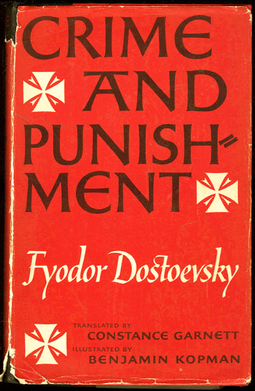
A poor ex-student in St Petersburg murders an old pawnbroker to prove he is an “extraordinary man” — and is undone not by the police but by his own conscience and by Sonya’s love.

Anton Chekhov
Russian doctor, short-story writer and playwright who revolutionised both forms — stories without neat plots or morals, plays where the drama happens beneath ordinary talk — and became the great artist of wasted lives, quiet longing and compassion.
Russian Nihilism
The 1860s movement of young Russian radicals who rejected tradition, religion, art and authority in the name of science, utility and the people.
Miguel de Cervantes
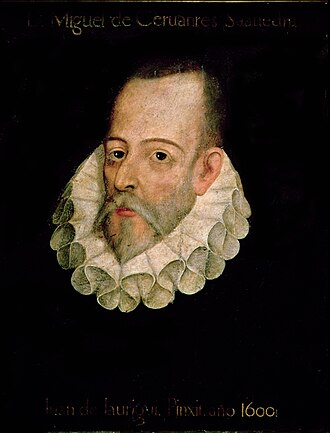
Soldier, captive, tax collector and the father of the modern novel — whose Don Quixote made a deluded old knight and his earthy squire the most famous pair in literature.
Phenomenology of Spirit
Hegel’s first masterpiece — the “voyage of discovery” of consciousness through sense-certainty, self-consciousness, reason, spirit and religion to absolute knowing.