Ivan returns his ticket; the Underground Man rebels against the Crystal Palace of reason; Bazarov rejects every authority; Albert Camus makes revolt the answer to the absurd — “I rebel, therefore we exist.”
Thinkers & Authors
5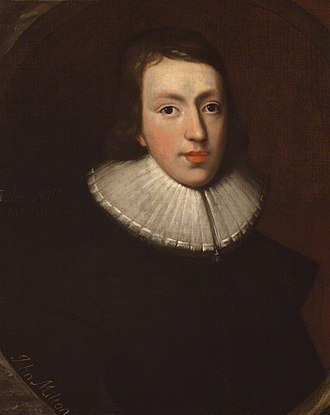
John Milton
English poet, polemicist and revolutionary whose Paradise Lost — written blind, after the defeat of his cause — retells the Fall of Man to “justify the ways of God to men”, and gave literature its most magnificent rebel, Satan.

Ivan Turgenev
The most Western of the great Russian novelists, whose Fathers and Sons created Bazarov and gave the word “nihilist” to an entire generation.
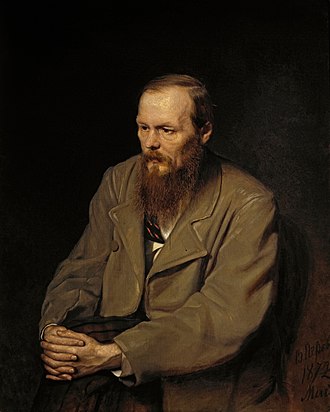
Fyodor Dostoevsky
The Russian novelist of the abyss — crime, faith, freedom, suffering — whose characters argue philosophy with their lives. Nietzsche called him the only psychologist he had anything to learn from.

Nikolai Chernyshevsky
Radical critic and author of What Is to Be Done? — the utopian novel of “rational egoism” that inspired Lenin and provoked Dostoevsky’s Underground Man.

Albert Camus
Algerian-born novelist and essayist of the absurd and of revolt — “There is but one truly serious philosophical problem, and that is suicide.”
Works
7
Fathers and Sons
Turgenev’s novel of the generation gap — the nihilist Bazarov against the old liberal Kirsanovs — which gave Russia the word “nihilist”.
What Is to Be Done?
Chernyshevsky’s prison-written utopian novel of “new people” and rational egoism — badly written, enormously influential, the target of Dostoevsky’s Underground Man.

Notes from Underground
A spiteful, hyper-conscious ex-official rants from his “mousehole” against reason, progress and the Crystal Palace — often called the first existentialist novel.

Demons
Dostoevsky’s prophetic political novel — a provincial town possessed by revolutionary nihilists, the murder of one of their own, and the hollow charisma of Stavrogin.

The Brothers Karamazov
Dostoevsky’s last and greatest novel — a murdered father, three brothers (the sensualist, the intellectual, the saint), and the deepest debate about God and evil in literature.
The Myth of Sisyphus
Camus’s essay on the absurd — why not suicide? — ending with the image of Sisyphus pushing his rock, happy.
The Rebel
Camus’s history of revolt — metaphysical and political — arguing that rebellion that kills for history betrays its own origin. It ended his friendship with Sartre.
Schools & Movements
2Russian Nihilism
The 1860s movement of young Russian radicals who rejected tradition, religion, art and authority in the name of science, utility and the people.
Absurdism
Camus’s position — the conflict between our longing for meaning and the world’s silence cannot be resolved, only lived with in lucid revolt.
Debates
1Characters
3Yevgeny Bazarov
Turgenev’s young doctor-nihilist who rejects art, love and every authority — and dies of a cut finger, having loved and lost.
Ivan Karamazov
The rational, tormented middle brother who “returns his ticket” to God’s world and authors the Grand Inquisitor — and whose idea that “everything is permitted” kills his father.
The Underground Man
Dostoevsky’s nameless, spiteful, hyper-conscious narrator who rebels against reason, progress and his own interests to prove he is free.
Great Scenes
3Rebellion — Returning the Ticket
Ivan tells Alyosha true stories of tortured children and declares that no future harmony could be worth one child’s tear — so he respectfully returns his ticket.
The Grand Inquisitor
Ivan Karamazov’s prose-poem — Christ returns to sixteenth-century Seville, and the aged Cardinal Inquisitor imprisons him, explaining that humanity cannot bear the freedom He offered.
Sisyphus at the Foot of the Mountain
Condemned to roll his rock eternally uphill, Sisyphus pauses as it falls back — and Camus imagines him, in that moment of consciousness, happy.
Great Questions
1Lines to Remember
6 quotationsThe struggle itself toward the heights is enough to fill a man’s heart. One must imagine Sisyphus happy.
La lutte elle-même vers les sommets suffit à remplir un cœur d'homme. Il faut imaginer Sisyphe heureux.
Context & when to use it
The absurd hero, conscious of his fate, is superior to it.
For meaning without metaphysics, perseverance, the dignity of repetitive work.
I rebel — therefore we exist.
Je me révolte, donc nous sommes.
Context & when to use it
Camus’s answer to Descartes — revolt reveals a solidarity among humans.
For solidarity, protest, the ethics of revolt.
Better to reign in Hell, than serve in Heaven.
Context & when to use it
For pride, ambition, refusal to submit.
It’s not God that I don’t accept, Alyosha, only I most respectfully return Him the ticket.
Context & when to use it
After listing the tortures of children, Ivan refuses a harmony bought with their tears.
For the problem of evil, or for rejecting any utopia whose price is innocent suffering.
Twice two makes four is no longer life, gentlemen, but the beginning of death.
Context & when to use it
Against a world fully explained by reason — he even admits “twice two makes five is sometimes a very charming thing too.”
Against technocracy, determinism, utopias of calculation.
A nihilist is a man who does not bow down before any authority, who does not accept any principle on faith, however much that principle may be revered.
Context & when to use it
Arkady explains his friend Bazarov to his father and uncle.
The definition of Russian nihilism — use it when someone calls themselves a free thinker.
Sententiae
phrases in the originalIl faut imaginer Sisyphe heureux
Origin. Camus, last line of The Myth of Sisyphus (1942). — Albert Camus
For meaning in the struggle itself.
Chto delat?
Origin. Title of Chernyshevsky’s 1863 novel, then of Tolstoy’s 1886 treatise and Lenin’s 1902 pamphlet — the great Russian question. — Nikolai Chernyshevsky, What Is to Be Done?
⚠ Its partner question, “Kto vinovat?” (Who is to blame?), is the title of Herzen’s 1846 novel.
For moving from diagnosis to action.
Explore Next
related by shared connectionsRational Egoism
Chernyshevsky’s doctrine that people always act from self-interest, and that enlightened self-interest will make everyone good.
Alyosha Karamazov
The youngest brother, novice of the elder Zosima, “the hero” of the novel — who answers Ivan’s arguments not with refutation but with a kiss.

William Shakespeare
The playwright and poet of Stratford whose 37-odd plays and 154 sonnets gave English its richest store of quotation and gave philosophy Hamlet, Lear and Macbeth.

Anton Chekhov
Russian doctor, short-story writer and playwright who revolutionised both forms — stories without neat plots or morals, plays where the drama happens beneath ordinary talk — and became the great artist of wasted lives, quiet longing and compassion.

Jean-Paul Sartre
The face of French existentialism — existence precedes essence, we are condemned to be free, and hell is other people.
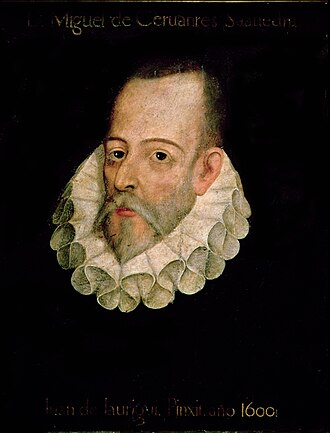
Miguel de Cervantes
Soldier, captive, tax collector and the father of the modern novel — whose Don Quixote made a deluded old knight and his earthy squire the most famous pair in literature.