In a tavern, Ivan tells Alyosha a “poem” he has made up. Christ appears in Seville the day after a hundred heretics have been burned; people recognize him, he raises a dead child. The Grand Inquisitor, ninety years old, has him arrested. That night he visits the prison and speaks — Christ says nothing.
The Inquisitor’s argument: in the wilderness, the devil offered Christ three temptations — turn stones into bread, throw yourself down from the temple, take the kingdoms of the world. Christ refused all three in the name of human freedom. But that was a terrible mistake. Humans are weak; they want bread, miracle, mystery and authority; they will lay their freedom at the feet of whoever feeds them. “We have corrected your deed.” The Church has taken up the devil’s offer out of love for weak humanity, and will rule a happy, unfree flock.
At the end, Christ silently kisses the old man on his bloodless lips. The Inquisitor shudders, opens the door, and says: “Go, and come no more.” The kiss glows in his heart, but he holds to his idea.
Alyosha, hearing it, kisses Ivan — “plagiarism!” Ivan laughs.
Read it for twentieth-century totalitarianism, consumer society, the welfare-for-obedience bargain, AI that knows what we want. Huxley’s Brave New World is a novel-length gloss on it.
Lines to Remember
2 quotationsFeed men, and then ask of them virtue!
Context & when to use it
What the people will inscribe on their banner, according to the Inquisitor — they will choose bread over freedom.
For welfare versus liberty, materialism, the politics of bread and circuses.
Nothing has ever been more insupportable for a man and a human society than freedom.
Context & when to use it
The Inquisitor’s accusation against Christ.
For Erich Fromm’s “escape from freedom”, authoritarianism, consumer comfort.
Explore Next
related by shared connectionsRebellion — Returning the Ticket
Ivan tells Alyosha true stories of tortured children and declares that no future harmony could be worth one child’s tear — so he respectfully returns his ticket.
Ivan Karamazov
The rational, tormented middle brother who “returns his ticket” to God’s world and authors the Grand Inquisitor — and whose idea that “everything is permitted” kills his father.
Sartre vs. Camus
The most famous intellectual break of the twentieth century — two friends of the Resistance fall out in 1952 over revolution, violence, and The Rebel.
Alyosha Karamazov
The youngest brother, novice of the elder Zosima, “the hero” of the novel — who answers Ivan’s arguments not with refutation but with a kiss.
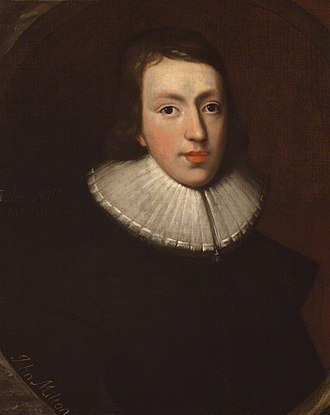
John Milton
English poet, polemicist and revolutionary whose Paradise Lost — written blind, after the defeat of his cause — retells the Fall of Man to “justify the ways of God to men”, and gave literature its most magnificent rebel, Satan.
Muhammad Iqbal
The Urdu and Persian poet-philosopher of Lahore who preached “khudī” — the self’s dynamic development — as the heart of a reconstructed Islam, wrote “Sāre jahāṅ se acchā” for India, and later envisioned a Muslim homeland that became Pakistan.