Raskolnikov’s theory of “extraordinary” people who may transgress; Friedrich Nietzsche‘s Will to Power; the The Grand Inquisitor who rules by miracle, mystery and authority; Macbeth’s vaulting ambition.
Thinkers & Authors
20
Homer
The legendary blind poet of Greece to whom the Iliad and the Odyssey are attributed — the founding works of Western literature, and for the Greeks the “educator of Hellas”.

Laozi
The legendary “Old Master” credited with the Tao Te Ching — the short, paradoxical classic of the Way that cannot be named, of yielding water and effortless action.

Confucius
The teacher of Lu whose sayings on goodness, ritual, learning and right relationships shaped Chinese civilization for two and a half thousand years.
Kauṭilya (Cāṇakya)
The Brahmin strategist who, by tradition, made Candragupta Maurya emperor and wrote the Arthaśāstra — the ancient world’s most comprehensive treatise on statecraft, economics, law, diplomacy, espionage and war. India’s Machiavelli, two thousand years before Machiavelli.
Aśoka
The Mauryan emperor (r. c. 268–232 BCE) who, after the slaughter of his conquest of Kaliṅga, turned to Buddhism and governed by “dhamma” — non-violence, tolerance and welfare — proclaimed in edicts carved on rocks and pillars across India. His lion capital is India’s emblem; his wheel is on its flag.
Tiruvaḷḷuvar
The Tamil poet-sage who wrote the Tirukkuṟaḷ — 1,330 couplets on virtue, wealth and love that form the most revered ethical work in Tamil, translated into more languages than almost any other Indian text.
Basavaṇṇa (Basava)
The 12th-century Kannada saint, poet and statesman who founded the Vīraśaiva (Liṅgāyat) movement — rejecting caste, temples, priests and the Vedas, preaching that work is worship and that every devotee carries Śiva on his body.

Dante Alighieri
The Florentine poet of the Divine Comedy — the journey through Hell, Purgatory and Paradise that summed up medieval thought and created the Italian language.

Niccolò Machiavelli
Florentine diplomat and political theorist whose Prince told rulers how power is actually won and kept — separating politics from conventional morality and giving the world the adjective “Machiavellian”.

William Shakespeare
The playwright and poet of Stratford whose 37-odd plays and 154 sonnets gave English its richest store of quotation and gave philosophy Hamlet, Lear and Macbeth.
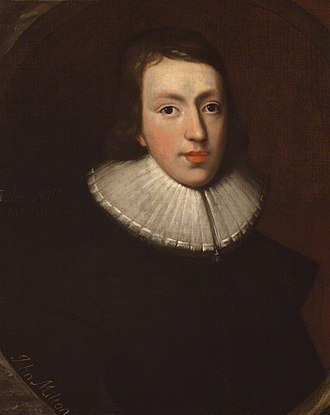
John Milton
English poet, polemicist and revolutionary whose Paradise Lost — written blind, after the defeat of his cause — retells the Fall of Man to “justify the ways of God to men”, and gave literature its most magnificent rebel, Satan.

Jean-Jacques Rousseau
The Genevan philosopher of nature, freedom and feeling — “Man is born free, and everywhere he is in chains” — whose Social Contract inspired revolutionaries and whose Confessions invented modern autobiography.

Karl Marx
Philosopher, economist and revolutionary who turned Hegel’s dialectic into historical materialism — the history of all hitherto existing society is the history of class struggles.

Friedrich Nietzsche
Philosopher with a hammer who announced the death of God, unmasked the genealogy of morality, and called for new values — the will to power, eternal recurrence, the Übermensch, amor fati.
Mahatma Gandhi
The leader of India’s independence movement and the philosopher of satyāgraha — “truth-force”, non-violent resistance — who turned the Jain and Hindu ideal of ahiṃsā into a method of mass politics, and whose ideas of truth, non-violence, self-rule and simplicity changed the twentieth century.
Muhammad Iqbal
The Urdu and Persian poet-philosopher of Lahore who preached “khudī” — the self’s dynamic development — as the heart of a reconstructed Islam, wrote “Sāre jahāṅ se acchā” for India, and later envisioned a Muslim homeland that became Pakistan.
Premchand
The greatest writer of modern Hindi and Urdu fiction — novelist of the Indian village, of peasants crushed by debt, caste and colonial rule — whose Godān and stories like “The Shroud” founded social realism in Indian literature.

Franz Kafka
Prague insurance clerk whose parables of guilt, bureaucracy and metamorphosis became the defining images of modern anxiety — and the word “Kafkaesque”.
B. R. Ambedkar
The Dalit jurist, economist, philosopher and statesman who rose from “untouchability” to become the principal architect of India’s Constitution — the fiercest critic of caste and of the Hindu scriptures that sanctified it, and the founder of modern Indian Buddhism.

Simone de Beauvoir
French existentialist philosopher and novelist whose The Second Sex (1949) — “One is not born, but rather becomes, a woman” — founded modern feminist philosophy, and whose ethics of ambiguity argued that my freedom requires the freedom of others.
Works
27
The Iliad
Homer’s epic of the wrath of Achilles in the tenth year of the Trojan War — the founding poem of Western literature, and its greatest poem of war, grief and mortality.

The Rāmāyaṇa
Vālmīki’s epic of Rāma, the exiled prince who crosses the sea to rescue his wife Sītā from the demon king Rāvaṇa — India’s ādikāvya, the “first poem”, and the model of dharma for two thousand years.

Antigone
Sophocles’ tragedy of the young woman who buries her brother against the king’s decree — the founding drama of conscience against the state, which Hegel read as the collision of two rights.

The Analects
The collected sayings and conversations of Confucius and his disciples — the most influential book in East Asian history.
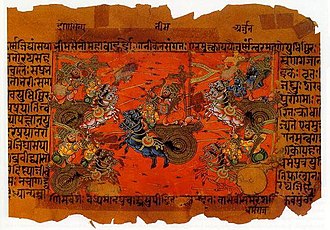
The Mahābhārata
The great epic of India — the war between the Pāṇḍavas and the Kauravas, cousins fighting for a kingdom — and, at about 100,000 couplets, the longest poem ever composed, containing the Bhagavad Gītā and almost the whole of Indian thought on dharma.

Tao Te Ching
The 81 short chapters of the “Classic of the Way and its Power” — the foundational text of Daoism and one of the most translated books ever written.
The Republic
Plato’s great dialogue on justice — in the soul and in the city — containing the philosopher-kings, the Allegory of the Cave, and the banishment of the poets.
The Arthaśāstra
Kauṭilya’s treatise on statecraft — 15 books on kingship, administration, economy, law, espionage, diplomacy and war. Lost for centuries and rediscovered in 1905, it is the most comprehensive ancient manual of government in any civilisation.
The Manusmṛti
The most famous of the Hindu law books — a treatise on dharma covering creation, the four classes, the stages of life, the duties of kings, marriage, inheritance, crime and penance. Revered for two millennia as the code of Hindu society, and condemned in modern times as the charter of caste and of women’s subordination.
The Pañcatantra
The ancient Indian book of animal fables written to teach princes the art of practical wisdom (nīti) — the jackals Karaṭaka and Damanaka, the monkey and the crocodile, the lion and the hare — translated into more languages than almost any book except the Bible.
The Little Clay Cart
Śūdraka’s Sanskrit comedy of love, crime and revolution — a poor Brahmin merchant, a generous courtesan, a burglar with a theory of house-breaking, a vicious royal brother-in-law and a popular uprising — the most realistic and modern-feeling play of ancient India.
The Tirukkuṟaḷ
Tiruvaḷḷuvar’s 1,330 couplets in 133 chapters on virtue (aṟam), wealth and statecraft (poruḷ), and love (inbam) — a secular, universal ethic, compact and witty, the “Tamil Veda” and one of the most translated books of India.
Cilappatikāram (The Tale of an Anklet)
The great Tamil epic (c. 5th century) by the prince-monk Iḷaṅkō Aṭikaḷ — Kaṇṇaki’s husband is executed on a false charge of stealing the queen’s anklet; she proves his innocence, tears off her breast and burns the city of Madurai, and becomes a goddess.

The Divine Comedy
Dante’s journey through Hell, Purgatory and Paradise — the summa of medieval thought in a hundred cantos, and one of the greatest poems ever written.

The Prince
Machiavelli’s short, scandalous handbook on gaining and keeping power — the founding text of political realism.

Macbeth
Shakespeare’s shortest tragedy — a brave soldier, prompted by witches and his wife, murders his king and wades so deep in blood that life becomes “a tale told by an idiot”.

Faust
Goethe’s two-part dramatic poem of the scholar who wagers his soul with Mephistopheles that no moment of pleasure will ever satisfy him — the defining myth of modern restless striving.
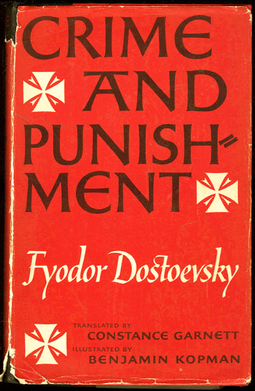
Crime and Punishment
A poor ex-student in St Petersburg murders an old pawnbroker to prove he is an “extraordinary man” — and is undone not by the police but by his own conscience and by Sonya’s love.

Demons
Dostoevsky’s prophetic political novel — a provincial town possessed by revolutionary nihilists, the murder of one of their own, and the hollow charisma of Stavrogin.
Thus Spoke Zarathustra
Nietzsche’s prophetic prose-poem — Zarathustra descends from his mountain to teach the Übermensch, the will to power and eternal recurrence.
Beyond Good and Evil
Nietzsche’s “prelude to a philosophy of the future” — an attack on the prejudices of philosophers, from Plato to Kant, and a sketch of the free spirit.
On the Genealogy of Morality
Nietzsche’s three essays tracing “good and evil”, guilt, and the ascetic ideal back to their hidden, all-too-human origins.
Hind Swaraj
Gandhi’s 1909 manifesto, written in ten days on a ship — a dialogue in which the “Editor” tells an impatient “Reader” that true home rule is rule over oneself, that modern civilisation is a disease, and that India must win freedom by non-violence and the spinning wheel.

The Trial
Josef K. is arrested one morning without having done anything wrong, and spends a year trying to understand an invisible court — until two men take him to a quarry and kill him “like a dog”.
Annihilation of Caste
Ambedkar’s 1936 undelivered speech — the most powerful critique of caste ever written — arguing that caste is a division of labourers, not of labour, that it rests on the authority of the Hindu scriptures, and that it cannot be reformed but only destroyed.
Godān
Premchand’s last and greatest novel (1936) — the life and death of Hori, a poor peasant who longs only to own a cow, crushed by debt, caste, landlords and priests — the epic of the Indian village under colonial rule.
The Rebel
Camus’s history of revolt — metaphysical and political — arguing that rebellion that kills for history betrays its own origin. It ended his friendship with Sartre.
Ideas
3The Übermensch
Nietzsche’s “overman” — the human being who, after the death of God, creates new values and affirms life wholly.
Will to Power
Nietzsche’s idea that the basic drive of all life is not survival but growth, mastery, self-overcoming.
Master and Slave Morality
Nietzsche’s genealogy — “good/bad” was the self-affirmation of nobles; “good/evil” was invented by the resentful weak to revenge themselves on the strong.
Schools & Movements
1Debates
2Gandhi vs. Ambedkar
The great argument of modern India — can caste be reformed from within Hinduism, as Gandhi believed, or must it be annihilated, with the scriptures that sanctify it, as Ambedkar argued?
Sartre vs. Camus
The most famous intellectual break of the twentieth century — two friends of the Resistance fall out in 1952 over revolution, violence, and The Rebel.
Characters
5Edmund
Gloucester’s illegitimate son — the brilliant, charming, self-made villain of King Lear, who worships Nature as amoral force and scorns “the plague of custom”.
Josef K.
A bank officer arrested on his thirtieth birthday for an unnamed crime, who spends a year failing to reach the court that has already judged him.
Rodion Raskolnikov
Impoverished ex-student who murders a pawnbroker to prove he is an “extraordinary man” beyond morality — and is broken and reborn by his conscience.
King Lear
The proud old king who divides his kingdom by a love test, banishes the daughter who loves him, and is stripped of everything until he learns, too late, what love and suffering are.
Zarathustra
Nietzsche’s prophet who, after ten years in mountain solitude, descends to teach mankind the Übermensch — and finds no one ready to listen.
Great Scenes
4Before the Law
A man from the country asks to be admitted to the Law; the doorkeeper says “not now”; he waits his whole life — and learns as he dies that this door was meant only for him.
The Grand Inquisitor
Ivan Karamazov’s prose-poem — Christ returns to sixteenth-century Seville, and the aged Cardinal Inquisitor imprisons him, explaining that humanity cannot bear the freedom He offered.
Lordship and Bondage
Hegel’s parable — two self-consciousnesses fight for recognition to the death; one yields and becomes slave; but the slave, through fear and labour, wins the truer freedom.
The Storm on the Heath
Shut out by his daughters, Lear rages at the storm, prays for the poor, and meets “unaccommodated man” in the naked Poor Tom.
Great Questions
2How Should One Act? — Dharma, Karma and Freedom
The Indian argument about action — from Vedic sacrifice to the Gītā’s action without attachment, the Buddha’s intention, the Jain refusal to harm, Kauṭilya’s realism, Gandhi’s satyāgraha and Ambedkar’s constitutional morality.
What Is Justice?
From Thrasymachus’s “advantage of the stronger” to Rawls’s veil of ignorance — the question of what we owe each other and who should rule.
Lines to Remember
20 quotationsUntil philosophers are kings, or the kings and princes of this world have the spirit and power of philosophy… cities will never have rest from their evils.
Context & when to use it
For the relation of wisdom and power; technocracy debates.
War is the father of all and king of all.
πόλεμος πάντων μὲν πατήρ ἐστι, πάντων δὲ βασιλεύς
Context & when to use it
For conflict as creative force; Hegel’s dialectic; Nietzsche’s agon.
He who fights with monsters should look to it that he himself does not become a monster. And if you gaze long into an abyss, the abyss also gazes into you.
Wer mit Ungeheuern kämpft, mag zusehn, dass er nicht dabei zum Ungeheuer wird. Und wenn du lange in einen Abgrund blickst, blickt der Abgrund auch in dich hinein.
Context & when to use it
An aphorism from “Maxims and Interludes”.
For the danger of becoming what you oppose — in war, in politics, in obsession.
What does not kill me makes me stronger.
Was mich nicht umbringt, macht mich stärker.
Context & when to use it
From “the military school of life”.
For resilience, post-traumatic growth.
Man is a rope, tied between beast and overman — a rope over an abyss.
Context & when to use it
Zarathustra’s first speech in the marketplace, while a tightrope-walker performs.
For human beings as unfinished, a transition rather than a goal.
Someone must have slandered Josef K., for one morning, without having done anything wrong, he was arrested.
Context & when to use it
For arbitrary power, bureaucracy, guilt without crime.
The philosophers have only interpreted the world, in various ways; the point, however, is to change it.
Die Philosophen haben die Welt nur verschieden interpretiert; es kömmt drauf an, sie zu verändern.
Context & when to use it
For praxis over theory; carved on his tomb in Highgate.
He is the Subject, he is the Absolute — she is the Other.
Context & when to use it
For how one group becomes the norm and another the deviation.
Better to reign in Hell, than serve in Heaven.
Context & when to use it
For pride, ambition, refusal to submit.
Feed men, and then ask of them virtue!
Context & when to use it
What the people will inscribe on their banner, according to the Inquisitor — they will choose bread over freedom.
For welfare versus liberty, materialism, the politics of bread and circuses.
Nothing has ever been more insupportable for a man and a human society than freedom.
Context & when to use it
The Inquisitor’s accusation against Christ.
For Erich Fromm’s “escape from freedom”, authoritarianism, consumer comfort.
I wanted to find out then and quickly whether I was a louse like everybody else or a man.
Context & when to use it
Raskolnikov’s confession to Sonya — the murder was a test of whether he dared to “step over”.
For the will to power, the Napoleonic complex, ideas that kill.
Starting from unlimited freedom, I arrive at unlimited despotism.
Context & when to use it
The revolutionary theorist describing his own system.
For how utopian revolutions end in tyranny — prophetic of the twentieth century.
Imperious Caesar, dead and turn’d to clay, Might stop a hole to keep the wind away.
Context & when to use it
Following the dust of great men to its humblest use.
Against pride, empire and power — every conqueror ends as dirt.
Something is rotten in the state of Denmark.
Context & when to use it
Spoken by the officer Marcellus as Hamlet follows the Ghost — corruption at the top of the state.
For institutional corruption, political rot, or anything that “smells wrong”.
⚠ Spoken by Marcellus, not Hamlet. Often misquoted as “something is wrong” or “something’s rotten”.
I have no spur to prick the sides of my intent, but only vaulting ambition, which o’erleaps itself and falls on th’ other.
Context & when to use it
Macbeth admits he has no reason to kill Duncan except ambition.
For overreach, hubris, the will to power without justification.
Nor did I think your decrees so strong that you, a mortal, could override the unwritten and unfailing laws of the gods. They are not of today or yesterday; they live forever.
Context & when to use it
Antigone to Creon, admitting she buried her brother against his decree.
The founding statement of conscience against unjust law.
Many things are wonderful, but nothing is more wonderful than man.
πολλὰ τὰ δεινὰ κοὐδὲν ἀνθρώπου δεινότερον πέλει
Context & when to use it
The “Ode to Man” — deinos means both wonderful and terrible; human ingenuity can lead to good or to evil.
For human greatness and its danger — technology, ambition, power.
Through tattered clothes small vices do appear; robes and furred gowns hide all.
Context & when to use it
For injustice, privilege and hypocrisy in the justice system.
Do you think I am easier to be played on than a pipe?
Context & when to use it
For resisting manipulation.
Sententiae
phrases in the originalHomo homini lupus
Origin. Plautus, Asinaria 495 (“lupus est homo homini”). Hobbes quotes it in the dedication of De Cive (1642) — beside its opposite, “man is a god to man”.
For human cruelty, the state of nature, political realism.
Sic transit gloria mundi
Origin. From the papal coronation ritual (from the 15th century) — flax was burned before the new pope as these words were spoken.
For the fall of the mighty, the end of fame.
Übermensch
Origin. Nietzsche, Thus Spoke Zarathustra (1883). — Friedrich Nietzsche
⚠ Not a biological master race — a self-overcoming ideal. Shaw’s “Man and Superman” made “superman” the English word.
For self-overcoming and creating values.
Explore Next
related by shared connections
Albert Camus
Algerian-born novelist and essayist of the absurd and of revolt — “There is but one truly serious philosophical problem, and that is suicide.”
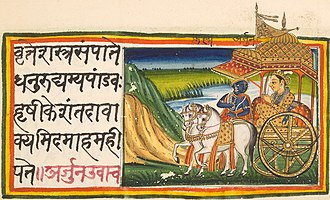
The Bhagavad Gītā
The “Song of the Lord” — Kṛṣṇa’s teaching to the despairing warrior Arjuna on the battlefield of Kurukṣetra, on duty, action without attachment, knowledge and devotion.
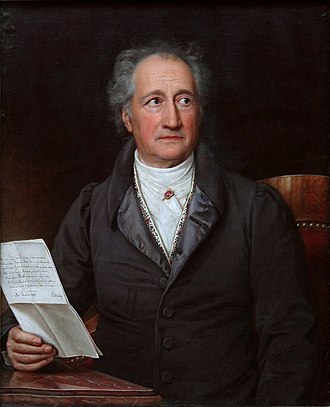
Johann Wolfgang von Goethe
Germany’s greatest writer — poet, novelist, dramatist, scientist and statesman — whose Faust is the modern myth of the striving soul, and whose life was itself treated as a work of art.

King Lear
An old king divides his kingdom between the daughters who flatter him and banishes the one who loves him — and is stripped of everything on a heath in a storm.

Aristotle
Plato’s greatest student and tutor of Alexander the Great, who founded logic, systematized biology, ethics and politics, and brought the Forms down to earth.
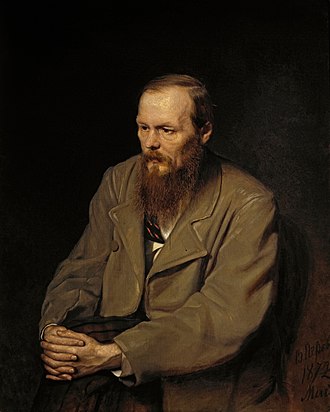
Fyodor Dostoevsky
The Russian novelist of the abyss — crime, faith, freedom, suffering — whose characters argue philosophy with their lives. Nietzsche called him the only psychologist he had anything to learn from.