

Contents · 11 sections · 5 min
Laozi in Six Ideas
the essentialsThe Dao that can be named is not the eternal Dao
The Way (Dào 道) is the source and pattern of all things, prior to heaven and earth, beyond names and concepts.
Wuwei — effortless action
Act without forcing. The sage “does nothing, and nothing is left undone” — like water, which yields and yet wears away stone.
The power of emptiness
Thirty spokes share one hub; it is the empty space that makes the wheel useful. Use comes from what is not there.
The soft overcomes the hard
Nothing is softer than water, yet nothing surpasses it in overcoming the hard. The living are supple; the dead are stiff.
Return to simplicity
Be like the uncarved block (pǔ), like an infant, like a valley — unpretentious, receptive, whole.
Govern lightly
“Govern a large state as you would cook a small fish” — don’t keep poking it. The more laws, the more thieves.
Whether Laozi existed is uncertain. The earliest biography, in Sima Qian’s Records of the Grand Historian (c. 100 BCE), already hedges: it gives three candidates and admits that “no one in the world knows whether this is so.” In the best-known story, Lao Dan was keeper of the archives at the Zhou court; seeing the dynasty decline, he left for the west riding a water buffalo; at the Hangu Pass the gatekeeper Yin Xi begged him to write down his wisdom before leaving the world, and he composed a book in two parts, of some five thousand characters, on the Way (dào) and its Power (dé) — then rode off and was never seen again. The same biography reports a meeting with Confucius, who came to ask about ritual and left saying that Laozi was like a dragon — beyond his understanding.
Modern scholars mostly regard the Tao Te Ching (Dàodéjīng, 道德經) as a compilation of sayings by several hands, reaching something like its present form by the third century BCE. The discovery of bamboo-slip versions at Guodian (1993, c. 300 BCE) and silk manuscripts at Mawangdui (1973, c. 200 BCE) has shown an evolving text. “Laozi” may be best understood as the name of the book’s voice. See Tao Te Ching.
The Dao
The book opens with one of the most famous sentences in world literature:
道可道,非常道。名可名,非常名。 The Dao that can be spoken of is not the constant Dao; the name that can be named is not the constant name. (ch. 1)
Dao (道) literally means “way” or “path”, and also “to speak” — a pun the first line exploits. For Confucians it meant the right way of conduct; for the Tao Te Ching it is the nameless source of all things, “the mother of the ten thousand things”, “something formless yet complete, born before heaven and earth” (ch. 25). It cannot be grasped as an object: “Look, it cannot be seen… listen, it cannot be heard… grasp, it cannot be caught” (ch. 14). It is like an empty vessel that is never filled, like a valley spirit that never dies (ch. 6), like the mysterious female, the gateway of heaven and earth.
The Dao gives birth to things and lets them follow their own nature: “The Dao gave birth to One; One gave birth to Two; Two gave birth to Three; Three gave birth to the ten thousand things” (ch. 42).
Dé: power, virtue
Dé (德), usually translated “virtue”, is the power or potency a thing has when it is in harmony with the Way — not moralistic virtue but efficacy, the charisma of naturalness. “The highest virtue does not act virtuous, and so it has virtue; the lowest virtue never loses its virtuousness, and so it has no virtue” (ch. 38).
Wúwéi
The most famous practical teaching is wúwéi (無為), “non-action” or “effortless action”: not doing nothing, but acting without forcing, striving or contrivance — as water flows, as plants grow. “The Dao never acts, yet nothing is left undone” (ch. 37). The sage “does nothing, and the people transform themselves” (ch. 57).
Water and the soft
The image the book returns to most is water:
The highest good is like water. Water benefits the ten thousand things and does not contend. It settles in places people disdain, and so is close to the Dao. (ch. 8)
Nothing in the world is softer and weaker than water, yet nothing is better at attacking the hard and strong. (ch. 78)
Alongside water: the infant, whose bones are soft but grip is firm (ch. 55); the valley, low and receptive; the female, who overcomes the male by stillness. “The living are soft and supple; the dead are hard and stiff… The hard and strong will fall; the soft and weak will rise” (ch. 76).
The usefulness of emptiness
Thirty spokes share one hub; it is the emptiness at the centre that makes the cart useful. Shape clay into a vessel; it is the emptiness within that makes it useful. Cut doors and windows for a room; it is the emptiness that makes it useful. So what is there gives benefit; what is not there gives use. (ch. 11)
Opposites
Like Heraclitus, the Tao Te Ching sees opposites as mutually generating: “When all in the world know beauty as beauty, ugliness arises… Being and non-being produce each other; difficult and easy complete each other; long and short shape each other” (ch. 2). “Reversal is the movement of the Dao” (ch. 40). This is the root of the yin–yang worldview.
Against the Confucians
The book is sharply critical of moral and ritual striving:
When the great Way is abandoned, there is benevolence and righteousness. When cleverness and knowledge arise, there is great hypocrisy. (ch. 18)
Abandon sageliness, discard wisdom, and the people will benefit a hundredfold. (ch. 19)
Moral rules and rituals are symptoms of a lost naturalness, not cures. Return to the uncarved block (pǔ), to simplicity and few desires.
Politics
The Tao Te Ching is also, surprisingly, a handbook for rulers. The best ruler is barely noticed: “Of the best rulers, the people only know that they exist… When the work is done, the people all say, ‘We did it ourselves’” (ch. 17). “The more prohibitions there are, the poorer the people; the more laws are posted, the more thieves and robbers” (ch. 57). “Governing a large state is like cooking a small fish” (ch. 60). Some passages favour keeping the people simple and without knowledge, which critics have read as anti-intellectual and manipulative. Its warnings against war are memorable: “Weapons are instruments of ill omen… Even when victorious, one should hold a funeral” (ch. 31).
Influence
The Tao Te Ching became the foundational text of philosophical Daoism (with Zhuangzi) and, from the second century CE, of religious Daoism, in which Laozi was deified as Taishang Laojun. It shaped Chinese poetry, painting (the value of empty space), martial arts, and Chan (Zen) Buddhism. In the West it has been translated hundreds of times; it influenced Tolstoy, who translated parts of it, Heidegger, Brecht (whose poem tells the legend of the gatekeeper), Ursula K. Le Guin (who made her own version), and countless popular “Tao of…” books.
Using Laozi in conversation
- On power and gentleness: water wears away stone; the soft overcomes the hard.
- On leadership: the best leaders are those the people barely know exist.
- On over-regulation: the more laws, the more thieves.
- On the ineffable: the Dao that can be named is not the eternal Dao.
Laozi in two minutes
The legendary “Old Master” credited with the Tao Te Ching — the short, paradoxical classic of the Way that cannot be named, of yielding water and effortless action.
- The Dao that can be named is not the eternal Dao. The Way (Dào 道) is the source and pattern of all things, prior to heaven and earth, beyond names and concepts.
- Wuwei — effortless action. Act without forcing. The sage “does nothing, and nothing is left undone” — like water, which yields and yet wears away stone.
- The power of emptiness. Thirty spokes share one hub; it is the empty space that makes the wheel useful. Use comes from what is not there.
- The soft overcomes the hard. Nothing is softer than water, yet nothing surpasses it in overcoming the hard. The living are supple; the dead are stiff.
- Return to simplicity. Be like the uncarved block (pǔ), like an infant, like a valley — unpretentious, receptive, whole.
- Govern lightly. “Govern a large state as you would cook a small fish” — don’t keep poking it. The more laws, the more thieves.
Answering: — · Answered by: Zhuangzi, Martin Heidegger
Curiosities
did you know?- Legend says Laozi was born already old, with white hair — hence ‘Old Child’, another reading of his name.
- The Tao Te Ching is, after the Bible, among the most translated books in the world.
- Bamboo-slip versions found at Guodian in 1993 date from about 300 BCE — the oldest manuscripts known.
Questions to Argue About
debate club →- Is doing less sometimes the wisest form of action?
- Can the most important truths be put into words?
- Should government aim to do as little as possible?
Explore Next
related by shared connections
Nāgārjuna
Founder of the Madhyamaka (“Middle Way”) school of Buddhism, who argued that all things are empty (śūnya) of independent existence — including emptiness itself.

Aristotle
Plato’s greatest student and tutor of Alexander the Great, who founded logic, systematized biology, ethics and politics, and brought the Forms down to earth.

Friedrich Nietzsche
Philosopher with a hammer who announced the death of God, unmasked the genealogy of morality, and called for new values — the will to power, eternal recurrence, the Übermensch, amor fati.

Georg Wilhelm Friedrich Hegel
The philosopher of Spirit and dialectic, for whom reality is a rational process working itself out through contradiction in history — “the real is the rational”.

Parmenides
The stern pre-Socratic of Elea who argued that only what-is can be thought, that nothing comes from nothing, and that change and plurality are illusions.
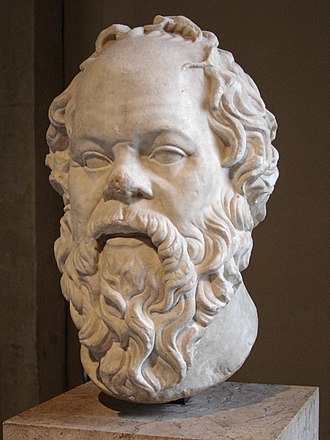
Socrates
The Athenian gadfly who wrote nothing, claimed to know nothing, questioned everyone — and was put to death for it, becoming philosophy’s martyr.