Plato’s Republic and Machiavelli’s Prince, Confucius’s rule by virtue and Laozi’s light touch, Rousseau’s general will, Marx’s revolution, Dostoevsky’s Grand Inquisitor, Camus’s rebel.
Map of Influence
who answered whom, inside this roomThinkers & Authors
50
Homer
The legendary blind poet of Greece to whom the Iliad and the Odyssey are attributed — the founding works of Western literature, and for the Greeks the “educator of Hellas”.
Kapila
The legendary founder of Sāṃkhya, revered as the “first knower” (ādividvān) and, in later Hinduism, as an incarnation of Viṣṇu — a sage known almost entirely through myth, to whom India credits the first systematic philosophy of consciousness and nature.

Laozi
The legendary “Old Master” credited with the Tao Te Ching — the short, paradoxical classic of the Way that cannot be named, of yielding water and effortless action.

Confucius
The teacher of Lu whose sayings on goodness, ritual, learning and right relationships shaped Chinese civilization for two and a half thousand years.
Mahāvīra
The twenty-fourth and last tīrthaṅkara of Jainism — a prince of the eastern Gaṅgā plain who renounced everything at thirty, practised twelve years of extreme austerity, attained omniscience, and taught a path of radical non-violence, truth and non-possession for thirty years.
Kauṭilya (Cāṇakya)
The Brahmin strategist who, by tradition, made Candragupta Maurya emperor and wrote the Arthaśāstra — the ancient world’s most comprehensive treatise on statecraft, economics, law, diplomacy, espionage and war. India’s Machiavelli, two thousand years before Machiavelli.
Zhuangzi
The wittiest of Chinese philosophers — the butterfly dreamer, sceptic, and teller of tales — who mocked fixed perspectives and taught the free and easy wandering of a mind attuned to the Dao.
Aśoka
The Mauryan emperor (r. c. 268–232 BCE) who, after the slaughter of his conquest of Kaliṅga, turned to Buddhism and governed by “dhamma” — non-violence, tolerance and welfare — proclaimed in edicts carved on rocks and pillars across India. His lion capital is India’s emblem; his wheel is on its flag.

Seneca
Roman Stoic, playwright and statesman — tutor and adviser to Nero — whose letters on time, death, anger and friendship are among the most readable works of ancient philosophy.

Epictetus
The former slave who became the greatest teacher of Stoicism — “We are disturbed not by things, but by our judgments about things.”
Patañjali
The compiler of the Yoga Sūtras — 196 terse aphorisms that define yoga as the stilling of the mind — honoured by tradition also as the grammarian of the Great Commentary on Pāṇini and as an incarnation of the serpent Ādiśeṣa.
Kundakunda
The most revered Digambara Jain teacher — author of the Samayasāra, which distinguishes the absolute standpoint, from which the soul is pure consciousness untouched by karma, from the conventional standpoint, from which it is bound.
Tiruvaḷḷuvar
The Tamil poet-sage who wrote the Tirukkuṟaḷ — 1,330 couplets on virtue, wealth and love that form the most revered ethical work in Tamil, translated into more languages than almost any other Indian text.

Augustine of Hippo
North African bishop, convert, and the most influential Christian thinker of the Latin West — inventor of the autobiography of the inner self.
Āṇṭāḷ
The only woman among the twelve Tamil Āḻvār saints (9th century) — a girl who wore the garland meant for Viṣṇu, refused any human husband, and wrote the Tiruppāvai and Nācciyār Tirumoḻi, poems of longing for God as her bridegroom.
Abhinavagupta
The towering Kashmiri polymath (c. 950–1016) — the great systematiser of non-dual Kashmir Śaivism and the greatest theorist of Indian aesthetics, who taught that in the experience of art (rasa) the self tastes its own blissful consciousness.
Basavaṇṇa (Basava)
The 12th-century Kannada saint, poet and statesman who founded the Vīraśaiva (Liṅgāyat) movement — rejecting caste, temples, priests and the Vedas, preaching that work is worship and that every devotee carries Śiva on his body.

Dante Alighieri
The Florentine poet of the Divine Comedy — the journey through Hell, Purgatory and Paradise that summed up medieval thought and created the Italian language.
Lal Ded (Lalleśvarī)
The 14th-century Kashmiri Śaiva mystic who wandered naked singing short verses (vākhs) of fierce, non-dual devotion — the mother of Kashmiri literature, claimed equally by Hindus and Muslims.

Niccolò Machiavelli
Florentine diplomat and political theorist whose Prince told rulers how power is actually won and kept — separating politics from conventional morality and giving the world the adjective “Machiavellian”.
Mīrābāī
The 16th-century Rajput princess who declared herself the bride of Kṛṣṇa, defied her royal in-laws, survived (the legends say) cups of poison and a basket with a snake, and left her palace to sing — the most beloved woman poet of North India.
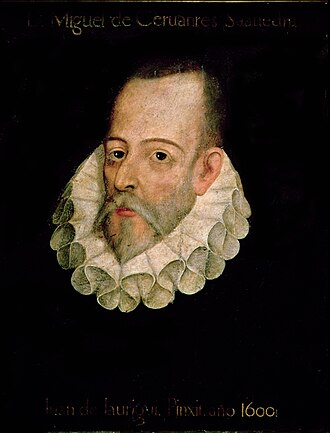
Miguel de Cervantes
Soldier, captive, tax collector and the father of the modern novel — whose Don Quixote made a deluded old knight and his earthy squire the most famous pair in literature.

William Shakespeare
The playwright and poet of Stratford whose 37-odd plays and 154 sonnets gave English its richest store of quotation and gave philosophy Hamlet, Lear and Macbeth.
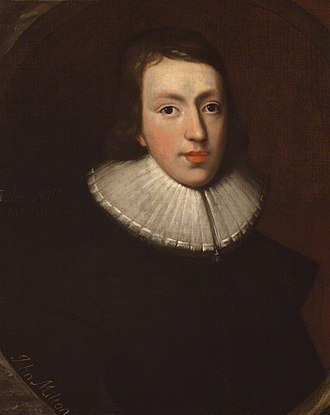
John Milton
English poet, polemicist and revolutionary whose Paradise Lost — written blind, after the defeat of his cause — retells the Fall of Man to “justify the ways of God to men”, and gave literature its most magnificent rebel, Satan.

John Locke
Father of British empiricism and of liberalism — the mind begins as a blank slate, and government rests on the consent of the governed.

Baruch Spinoza
The excommunicated lens-grinder of Amsterdam who identified God with Nature, wrote ethics in the form of geometry, and found freedom in understanding necessity.

Voltaire
The wittiest man of the Enlightenment — playwright, historian, satirist and campaigner against intolerance — whose Candide demolished Leibnizian optimism and whose cry was “Écrasez l’infâme!”

Jean-Jacques Rousseau
The Genevan philosopher of nature, freedom and feeling — “Man is born free, and everywhere he is in chains” — whose Social Contract inspired revolutionaries and whose Confessions invented modern autobiography.

Immanuel Kant
The philosopher who tried to end the war between rationalism and empiricism by asking what the mind itself contributes to experience — the “Copernican revolution” in philosophy.
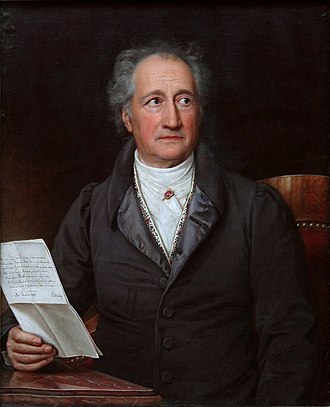
Johann Wolfgang von Goethe
Germany’s greatest writer — poet, novelist, dramatist, scientist and statesman — whose Faust is the modern myth of the striving soul, and whose life was itself treated as a work of art.

Georg Wilhelm Friedrich Hegel
The philosopher of Spirit and dialectic, for whom reality is a rational process working itself out through contradiction in history — “the real is the rational”.

Søren Kierkegaard
The melancholy Dane, father of existentialism, who set the passionate individual against Hegel’s System and faith against reason — “truth is subjectivity”.

Karl Marx
Philosopher, economist and revolutionary who turned Hegel’s dialectic into historical materialism — the history of all hitherto existing society is the history of class struggles.

Ivan Turgenev
The most Western of the great Russian novelists, whose Fathers and Sons created Bazarov and gave the word “nihilist” to an entire generation.
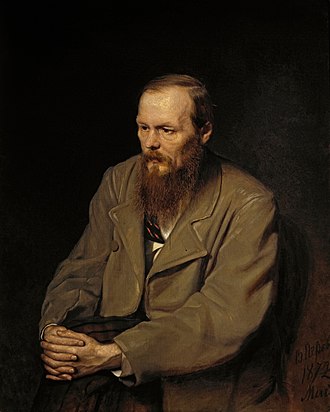
Fyodor Dostoevsky
The Russian novelist of the abyss — crime, faith, freedom, suffering — whose characters argue philosophy with their lives. Nietzsche called him the only psychologist he had anything to learn from.

Nikolai Chernyshevsky
Radical critic and author of What Is to Be Done? — the utopian novel of “rational egoism” that inspired Lenin and provoked Dostoevsky’s Underground Man.

Friedrich Nietzsche
Philosopher with a hammer who announced the death of God, unmasked the genealogy of morality, and called for new values — the will to power, eternal recurrence, the Übermensch, amor fati.

Anton Chekhov
Russian doctor, short-story writer and playwright who revolutionised both forms — stories without neat plots or morals, plays where the drama happens beneath ordinary talk — and became the great artist of wasted lives, quiet longing and compassion.
Rabindranath Tagore
The Bengali poet, novelist, composer, painter, educator and philosopher — the first non-European Nobel laureate in literature (1913, for Gitanjali) — author of the national anthems of India and Bangladesh, founder of Santiniketan, and a universalist who argued with Gandhi and warned the world against nationalism.
Swami Vivekananda
The Bengali monk, disciple of Ramakrishna, who brought Vedānta and Yoga to the West at the 1893 Parliament of Religions in Chicago (“Sisters and brothers of America!”), preached a “practical Vedānta” of service to humanity as service to God, and awakened modern Hindu self-confidence.
Mahatma Gandhi
The leader of India’s independence movement and the philosopher of satyāgraha — “truth-force”, non-violent resistance — who turned the Jain and Hindu ideal of ahiṃsā into a method of mass politics, and whose ideas of truth, non-violence, self-rule and simplicity changed the twentieth century.
Sri Aurobindo
The revolutionary nationalist turned yogi and philosopher of Pondicherry, whose The Life Divine and Integral Yoga teach that evolution is spirit’s ascent through matter, life and mind toward a “supermind” that will divinise earthly life.
Muhammad Iqbal
The Urdu and Persian poet-philosopher of Lahore who preached “khudī” — the self’s dynamic development — as the heart of a reconstructed Islam, wrote “Sāre jahāṅ se acchā” for India, and later envisioned a Muslim homeland that became Pakistan.
Premchand
The greatest writer of modern Hindi and Urdu fiction — novelist of the Indian village, of peasants crushed by debt, caste and colonial rule — whose Godān and stories like “The Shroud” founded social realism in Indian literature.

Franz Kafka
Prague insurance clerk whose parables of guilt, bureaucracy and metamorphosis became the defining images of modern anxiety — and the word “Kafkaesque”.
B. R. Ambedkar
The Dalit jurist, economist, philosopher and statesman who rose from “untouchability” to become the principal architect of India’s Constitution — the fiercest critic of caste and of the Hindu scriptures that sanctified it, and the founder of modern Indian Buddhism.
Jiddu Krishnamurti
The philosopher raised by the Theosophists to be a “World Teacher”, who renounced the role in 1929 — “truth is a pathless land” — and spent sixty years teaching that freedom comes only from seeing the movement of one’s own mind, without authority, method or guru.

Jean-Paul Sartre
The face of French existentialism — existence precedes essence, we are condemned to be free, and hell is other people.

Simone de Beauvoir
French existentialist philosopher and novelist whose The Second Sex (1949) — “One is not born, but rather becomes, a woman” — founded modern feminist philosophy, and whose ethics of ambiguity argued that my freedom requires the freedom of others.

Albert Camus
Algerian-born novelist and essayist of the absurd and of revolt — “There is but one truly serious philosophical problem, and that is suicide.”
Works
43
The Iliad
Homer’s epic of the wrath of Achilles in the tenth year of the Trojan War — the founding poem of Western literature, and its greatest poem of war, grief and mortality.

The Rāmāyaṇa
Vālmīki’s epic of Rāma, the exiled prince who crosses the sea to rescue his wife Sītā from the demon king Rāvaṇa — India’s ādikāvya, the “first poem”, and the model of dharma for two thousand years.

Antigone
Sophocles’ tragedy of the young woman who buries her brother against the king’s decree — the founding drama of conscience against the state, which Hegel read as the collision of two rights.

The Analects
The collected sayings and conversations of Confucius and his disciples — the most influential book in East Asian history.
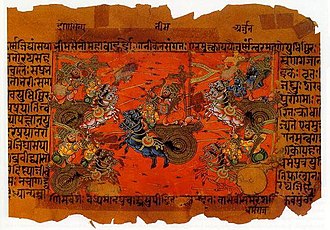
The Mahābhārata
The great epic of India — the war between the Pāṇḍavas and the Kauravas, cousins fighting for a kingdom — and, at about 100,000 couplets, the longest poem ever composed, containing the Bhagavad Gītā and almost the whole of Indian thought on dharma.

Tao Te Ching
The 81 short chapters of the “Classic of the Way and its Power” — the foundational text of Daoism and one of the most translated books ever written.
The Republic
Plato’s great dialogue on justice — in the soul and in the city — containing the philosopher-kings, the Allegory of the Cave, and the banishment of the poets.
The Arthaśāstra
Kauṭilya’s treatise on statecraft — 15 books on kingship, administration, economy, law, espionage, diplomacy and war. Lost for centuries and rediscovered in 1905, it is the most comprehensive ancient manual of government in any civilisation.
The Dhammapada
423 verses of the Buddha’s teaching in 26 chapters — on the mind, the fool and the wise, anger, craving, the path and the true Brahmin. The best-loved Buddhist scripture, and the shortest door into the Buddha’s ethics.
The Manusmṛti
The most famous of the Hindu law books — a treatise on dharma covering creation, the four classes, the stages of life, the duties of kings, marriage, inheritance, crime and penance. Revered for two millennia as the code of Hindu society, and condemned in modern times as the charter of caste and of women’s subordination.
The Pañcatantra
The ancient Indian book of animal fables written to teach princes the art of practical wisdom (nīti) — the jackals Karaṭaka and Damanaka, the monkey and the crocodile, the lion and the hare — translated into more languages than almost any book except the Bible.
Mūlamadhyamakakārikā
Nāgārjuna’s 450 verses in 27 chapters — the founding text of Madhyamaka, which examines causation, motion, the self, time and nirvāṇa, and shows that nothing has intrinsic existence; everything is empty because everything is dependent.
Tattvārtha Sūtra
Umāsvāti’s “Manual of the Meaning of the Reals” — the first Sanskrit summary of Jain philosophy, 350 sūtras accepted by both Digambaras and Śvetāmbaras, covering knowledge, souls, the universe, karma, ethics and liberation.
The Little Clay Cart
Śūdraka’s Sanskrit comedy of love, crime and revolution — a poor Brahmin merchant, a generous courtesan, a burglar with a theory of house-breaking, a vicious royal brother-in-law and a popular uprising — the most realistic and modern-feeling play of ancient India.
The Heart Sūtra
The shortest and most famous Mahāyāna scripture — a single page in which the bodhisattva Avalokiteśvara declares that “form is emptiness, emptiness is form”, negates every Buddhist category, and ends with a mantra: “gone, gone, gone beyond, gone altogether beyond — awakening, hail!”
The Yoga Sūtras
Patañjali’s 196 aphorisms — the root text of classical Yoga — which define yoga as the stilling of the mind’s fluctuations, diagnose the afflictions that cause suffering, set out the eight limbs of practice, and end in the “isolation” of pure consciousness.
Sāṃkhya Kārikā
Īśvarakṛṣṇa’s 72-verse poem that is the classical statement of Sāṃkhya philosophy — from the threefold suffering of life, through the evolution of nature in twenty-five principles, to the liberating vision in which nature, “seen”, stops dancing.
The Tirukkuṟaḷ
Tiruvaḷḷuvar’s 1,330 couplets in 133 chapters on virtue (aṟam), wealth and statecraft (poruḷ), and love (inbam) — a secular, universal ethic, compact and witty, the “Tamil Veda” and one of the most translated books of India.
Cilappatikāram (The Tale of an Anklet)
The great Tamil epic (c. 5th century) by the prince-monk Iḷaṅkō Aṭikaḷ — Kaṇṇaki’s husband is executed on a false charge of stealing the queen’s anklet; she proves his innocence, tears off her breast and burns the city of Madurai, and becomes a goddess.

The Divine Comedy
Dante’s journey through Hell, Purgatory and Paradise — the summa of medieval thought in a hundred cantos, and one of the greatest poems ever written.

The Prince
Machiavelli’s short, scandalous handbook on gaining and keeping power — the founding text of political realism.

Don Quixote
Cervantes’s comic masterpiece about a country gentleman driven mad by chivalric romances, who sets out as a knight-errant with his squire Sancho Panza — often called the first modern novel and the greatest ever written.

Macbeth
Shakespeare’s shortest tragedy — a brave soldier, prompted by witches and his wife, murders his king and wades so deep in blood that life becomes “a tale told by an idiot”.
Critique of Practical Reason
Kant’s second Critique — the moral law is a fact of reason, and through it we know we are free.
Phenomenology of Spirit
Hegel’s first masterpiece — the “voyage of discovery” of consciousness through sense-certainty, self-consciousness, reason, spirit and religion to absolute knowing.

Faust
Goethe’s two-part dramatic poem of the scholar who wagers his soul with Mephistopheles that no moment of pleasure will ever satisfy him — the defining myth of modern restless striving.

Fathers and Sons
Turgenev’s novel of the generation gap — the nihilist Bazarov against the old liberal Kirsanovs — which gave Russia the word “nihilist”.
What Is to Be Done?
Chernyshevsky’s prison-written utopian novel of “new people” and rational egoism — badly written, enormously influential, the target of Dostoevsky’s Underground Man.

Notes from Underground
A spiteful, hyper-conscious ex-official rants from his “mousehole” against reason, progress and the Crystal Palace — often called the first existentialist novel.
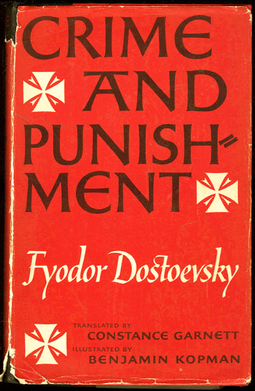
Crime and Punishment
A poor ex-student in St Petersburg murders an old pawnbroker to prove he is an “extraordinary man” — and is undone not by the police but by his own conscience and by Sonya’s love.

Demons
Dostoevsky’s prophetic political novel — a provincial town possessed by revolutionary nihilists, the murder of one of their own, and the hollow charisma of Stavrogin.

The Brothers Karamazov
Dostoevsky’s last and greatest novel — a murdered father, three brothers (the sensualist, the intellectual, the saint), and the deepest debate about God and evil in literature.
Thus Spoke Zarathustra
Nietzsche’s prophetic prose-poem — Zarathustra descends from his mountain to teach the Übermensch, the will to power and eternal recurrence.
Beyond Good and Evil
Nietzsche’s “prelude to a philosophy of the future” — an attack on the prejudices of philosophers, from Plato to Kant, and a sketch of the free spirit.
On the Genealogy of Morality
Nietzsche’s three essays tracing “good and evil”, guilt, and the ascetic ideal back to their hidden, all-too-human origins.
Hind Swaraj
Gandhi’s 1909 manifesto, written in ten days on a ship — a dialogue in which the “Editor” tells an impatient “Reader” that true home rule is rule over oneself, that modern civilisation is a disease, and that India must win freedom by non-violence and the spinning wheel.
Gitanjali
Tagore’s 1912 collection of devotional prose-poems, translated by himself from Bengali, which won the 1913 Nobel Prize — intimate songs to a God found in nature, in human labour, in love and in death.

The Trial
Josef K. is arrested one morning without having done anything wrong, and spends a year trying to understand an invisible court — until two men take him to a quarry and kill him “like a dog”.
Annihilation of Caste
Ambedkar’s 1936 undelivered speech — the most powerful critique of caste ever written — arguing that caste is a division of labourers, not of labour, that it rests on the authority of the Hindu scriptures, and that it cannot be reformed but only destroyed.
Godān
Premchand’s last and greatest novel (1936) — the life and death of Hori, a poor peasant who longs only to own a cow, crushed by debt, caste, landlords and priests — the epic of the Indian village under colonial rule.
The Myth of Sisyphus
Camus’s essay on the absurd — why not suicide? — ending with the image of Sisyphus pushing his rock, happy.
Existentialism Is a Humanism
Sartre’s 1945 public lecture — the most popular statement of existentialism — existence precedes essence, man is condemned to be free.
The Rebel
Camus’s history of revolt — metaphysical and political — arguing that rebellion that kills for history betrays its own origin. It ended his friendship with Sartre.
Ideas
12Karma
“Action” — and the law that every intentional action leaves a trace that ripens, in this life or a future one, as happiness or suffering. Shared by Hindus, Buddhists, Jains and Sikhs, karma explains the inequalities of fortune without a judge, and binds the self to the round of rebirth.
Mokṣa
Liberation — release from the cycle of rebirth and from all suffering, the highest goal of human life in the Hindu and Jain traditions (and, as nirvāṇa, in Buddhism). Every Indian school defines it differently, and the arguments over what it is, and how it is won, are the backbone of Indian philosophy.
Nirvāṇa
The Buddhist goal — the “blowing out” of the fires of greed, hatred and delusion, the end of suffering and of rebirth. The Buddha described it as unborn and unconditioned, and refused to say whether the awakened exist after death.
The Categorical Imperative
Kant’s supreme principle of morality — act only on maxims you could will as universal laws; treat humanity always as an end, never merely as a means.
Geist (Spirit)
Hegel’s name for reality as self-knowing mind unfolding through nature, history, culture and philosophy.
The Leap of Faith
Kierkegaard’s claim that faith cannot be reached by reasoning — it is a passionate decision made in the face of the absurd.
Anxiety
Not fear of something, but dread before freedom and nothingness — for Kierkegaard “the dizziness of freedom”, for Heidegger the mood that reveals the nothing.
The Übermensch
Nietzsche’s “overman” — the human being who, after the death of God, creates new values and affirms life wholly.
Will to Power
Nietzsche’s idea that the basic drive of all life is not survival but growth, mastery, self-overcoming.
Master and Slave Morality
Nietzsche’s genealogy — “good/bad” was the self-affirmation of nobles; “good/evil” was invented by the resentful weak to revenge themselves on the strong.
Bad Faith
Self-deception about one’s own freedom — pretending to be a thing, determined by role or nature, to escape the anguish of choice.
Existence Precedes Essence
Sartre’s formula — humans have no pre-given nature; we exist first and make ourselves through our choices.
Schools & Movements
14Jainism
The ancient Indian tradition of the Jinas — radical non-violence toward every living being, a soul weighed down by karmic matter, the “many-sidedness” of truth, and liberation by self-discipline without a creator God. Small in numbers, immense in influence.
Buddhism
The tradition founded by the Buddha — suffering, impermanence, no-self, and the path to nirvāṇa — later dividing into Theravāda, Mahāyāna (Madhyamaka, Yogācāra) and Vajrayāna.
Confucianism
The ethical and political tradition founded on Confucius’s teaching — humaneness, ritual, filial piety, learning and government by virtue — the backbone of Chinese, Korean, Japanese and Vietnamese civilization.
Sāṃkhya
The oldest of the classical Indian systems — a radical dualism of pure, inactive consciousness (puruṣa) and active, unconscious nature (prakṛti) with its three strands, the guṇas. Liberation is seeing that consciousness was never really entangled in nature.
Daoism
The Chinese tradition of the Dao — the nameless Way of nature — teaching spontaneity, simplicity, effortless action and harmony with the flow of things.
Stoicism
The Hellenistic and Roman philosophy of virtue, reason and acceptance — happiness lies in what is up to us, our judgments and choices, not in external things.
Yoga (darśana)
The classical school of Patañjali — Sāṃkhya’s dualism of consciousness and nature, plus a God and a practical method — defining yoga as “the stilling of the fluctuations of the mind” and mapping the eight limbs from ethics to absorption.
The Bhakti Movement
The great devotional revolution of Indian religion — from the Tamil Āḻvārs and Nāyaṉārs (6th–9th centuries) to Kabīr, Mīrābāī, Tulsīdās and Tukārām — which made passionate, personal love of God, sung in the languages of the people, a path to liberation open to every caste and to women.
Kashmir Śaivism
The non-dual Śaiva philosophy of medieval Kashmir — reality is the free, self-aware consciousness of Śiva, who playfully contracts himself into the many selves and the world, and liberation is the recognition that you are Śiva. The world is not illusion but God’s self-expression.
The Enlightenment
The eighteenth-century movement that put reason, science, tolerance and individual liberty at the centre of human affairs — “Sapere aude!”
German Idealism
The extraordinary philosophical movement after Kant — Fichte, Schelling, Hegel — that tried to complete his revolution by showing reality itself to be the work of mind or Spirit.
Existentialism
The philosophy of the existing individual — freedom, anxiety, authenticity, the absurd — running from Kierkegaard and Dostoevsky through Nietzsche and Heidegger to Sartre and Camus.
Russian Nihilism
The 1860s movement of young Russian radicals who rejected tradition, religion, art and authority in the name of science, utility and the people.
Absurdism
Camus’s position — the conflict between our longing for meaning and the world’s silence cannot be resolved, only lived with in lucid revolt.
Debates
2Gandhi vs. Ambedkar
The great argument of modern India — can caste be reformed from within Hinduism, as Gandhi believed, or must it be annihilated, with the scriptures that sanctify it, as Ambedkar argued?
Sartre vs. Camus
The most famous intellectual break of the twentieth century — two friends of the Resistance fall out in 1952 over revolution, violence, and The Rebel.
Characters
9Yevgeny Bazarov
Turgenev’s young doctor-nihilist who rejects art, love and every authority — and dies of a cut finger, having loved and lost.
Edmund
Gloucester’s illegitimate son — the brilliant, charming, self-made villain of King Lear, who worships Nature as amoral force and scorns “the plague of custom”.
Ivan Karamazov
The rational, tormented middle brother who “returns his ticket” to God’s world and authors the Grand Inquisitor — and whose idea that “everything is permitted” kills his father.
Josef K.
A bank officer arrested on his thirtieth birthday for an unnamed crime, who spends a year failing to reach the court that has already judged him.
Alexei Kirillov
The engineer in Demons who reasons that if God does not exist, man must become God — and that the supreme act of self-will is suicide.
Rodion Raskolnikov
Impoverished ex-student who murders a pawnbroker to prove he is an “extraordinary man” beyond morality — and is broken and reborn by his conscience.
King Lear
The proud old king who divides his kingdom by a love test, banishes the daughter who loves him, and is stripped of everything until he learns, too late, what love and suffering are.
The Underground Man
Dostoevsky’s nameless, spiteful, hyper-conscious narrator who rebels against reason, progress and his own interests to prove he is free.
Zarathustra
Nietzsche’s prophet who, after ten years in mountain solitude, descends to teach mankind the Übermensch — and finds no one ready to listen.
Great Scenes
6Before the Law
A man from the country asks to be admitted to the Law; the doorkeeper says “not now”; he waits his whole life — and learns as he dies that this door was meant only for him.
Rebellion — Returning the Ticket
Ivan tells Alyosha true stories of tortured children and declares that no future harmony could be worth one child’s tear — so he respectfully returns his ticket.
The Grand Inquisitor
Ivan Karamazov’s prose-poem — Christ returns to sixteenth-century Seville, and the aged Cardinal Inquisitor imprisons him, explaining that humanity cannot bear the freedom He offered.
Lordship and Bondage
Hegel’s parable — two self-consciousnesses fight for recognition to the death; one yields and becomes slave; but the slave, through fear and labour, wins the truer freedom.
Sisyphus at the Foot of the Mountain
Condemned to roll his rock eternally uphill, Sisyphus pauses as it falls back — and Camus imagines him, in that moment of consciousness, happy.
The Storm on the Heath
Shut out by his daughters, Lear rages at the storm, prays for the poor, and meets “unaccommodated man” in the naked Poor Tom.
Great Questions
5How Should One Act? — Dharma, Karma and Freedom
The Indian argument about action — from Vedic sacrifice to the Gītā’s action without attachment, the Buddha’s intention, the Jain refusal to harm, Kauṭilya’s realism, Gandhi’s satyāgraha and Ambedkar’s constitutional morality.
Are We Free?
Fate, karma, determinism, compatibilism, radical freedom — the long argument over whether we choose what we do.
The Road of Nihilism
How “nothing matters” became an idea, a movement, a diagnosis, and a test — from Jacobi to Camus.
What Is Justice?
From Thrasymachus’s “advantage of the stronger” to Rawls’s veil of ignorance — the question of what we owe each other and who should rule.
What Is the Self? — The Indian Argument
Three thousand years of Indian argument about the “I” — from the Upaniṣads’ Self that is Brahman, through the Buddha’s no-self, the Jain soul, the Nyāya substance, Sāṃkhya’s witness, to Ramana’s “Who am I?” and Ambedkar’s social self.
Voices
quotations from this traditionThey see only their own shadows, or the shadows of one another, which the fire throws on the opposite wall of the cave.
Until philosophers are kings, or the kings and princes of this world have the spirit and power of philosophy… cities will never have rest from their evils.
You have made us for yourself, and our heart is restless until it rests in you.
fecisti nos ad te et inquietum est cor nostrum donec requiescat in te
What then is time? If no one asks me, I know; if I wish to explain it to one who asks, I know not.
Quid est ergo tempus? Si nemo ex me quaerat, scio; si quaerenti explicare velim, nescio.
Grant me chastity and continence — but not yet.
da mihi castitatem et continentiam, sed noli modo
God is dead. God remains dead. And we have killed him.
Gott ist tot! Gott bleibt tot! Und wir haben ihn getödtet!
He who fights with monsters should look to it that he himself does not become a monster. And if you gaze long into an abyss, the abyss also gazes into you.
Wer mit Ungeheuern kämpft, mag zusehn, dass er nicht dabei zum Ungeheuer wird. Und wenn du lange in einen Abgrund blickst, blickt der Abgrund auch in dich hinein.
What does not kill me makes me stronger.
Was mich nicht umbringt, macht mich stärker.
He who has a why to live for can bear almost any how.
Hat man sein warum? des Lebens, so verträgt man sich fast mit jedem wie?
My formula for greatness in a human being is amor fati — that one wants nothing to be different, not forward, not backward, not in all eternity.
Man is a rope, tied between beast and overman — a rope over an abyss.
One must still have chaos in oneself to be able to give birth to a dancing star.