Contents · 9 sections · 7 min
Karma (Sanskrit karman, Pāli kamma, “action, deed, work”) is the principle, shared by almost all Indian religions, that intentional actions have consequences for the one who performs them — consequences that may ripen not only in this life but in future lives. Good actions lead to happiness and good rebirths; bad actions lead to suffering and bad rebirths. Karma is thus at once a law of moral causation, an explanation of why the world is so unequal, and the engine of Saṃsāra, the cycle of birth and death from which the Indian schools seek liberation (Mokṣa). The idea has been understood very differently by Hindus, Buddhists and Jains — as a ritual mechanism, a psychological process, a physical substance, or an instrument of God’s justice — and it has passed into English as a word for “what goes around comes around”.
Origins
Ritual action
In the The Ṛg Veda and the ritual texts that follow it, karman means above all ritual action: the correct performance of the sacrifice, which produces results — rain, cattle, sons, heaven — automatically, by its own power. The ritual theorists of the brāhmaṇas held that the sacrifice, rightly done, compels the gods; the gods themselves gained their immortality by sacrifice. This idea of action that produces an unseen result later in time would persist in the Mīmāṃsā school’s notion of apūrva, the “unprecedented” potency created by a ritual act that bears fruit later.
The Upaniṣads
The moral and cosmological doctrine of karma appears first in the early Upaniṣads (c. 700–500 BCE), and at first as a secret teaching. In the Bṛhadāraṇyaka Upaniṣad, when Ārtabhāga asks the sage Yājñavalkya what remains of a person after death, when speech goes into fire, breath into wind and the eye into the sun, Yājñavalkya takes him by the hand: “Ārtabhāga, my friend, we cannot talk about this in public. Let us go and discuss it in private.” What they discussed, the text says, was action: “A man becomes good by good action and bad by bad action” (3.2.13). Later in the same Upaniṣad comes the classic statement:
As a man acts, as he behaves, so he becomes. Doing good, he becomes good; doing evil, he becomes evil… A man is made of desire. As his desire is, so is his will; as his will is, so is the action he does; and as the action he does, so he becomes. (4.4.5)
The Chāndogya Upaniṣad adds that “those whose conduct here has been pleasant will quickly enter a pleasant womb — a Brahmin, a Kṣatriya or a Vaiśya; those whose conduct has been foul will enter a foul womb — a dog, a pig or an outcaste” (5.10.7). Here, already, karma explains birth into a social class.
Where did the idea come from? Some scholars think rebirth and karma came from the śramaṇa movements of the eastern Ganges plain — wandering ascetics outside the Vedic fold, including the forerunners of Jainism and Buddhism — or from non-Vedic peoples; others see a development within Vedic ritual thought. What is certain is that by the time of the Buddha (5th century BCE), karma and rebirth were taken for granted across North India.
The mechanism of karma
Seeds and fruits
Indian texts describe karma in agricultural terms. Actions are seeds (bīja) that ripen into fruits (phala) when conditions are right. The traces that actions leave in the mind are called saṃskāras (impressions) or vāsanās (latent tendencies); they shape future character as well as future circumstances. Vedānta distinguishes three kinds of karma: sañcita, the vast store of accumulated karma from past lives; prārabdha, the portion that has begun to bear fruit and has produced this present life, which must be exhausted; and kriyamāṇa or āgāmi, the karma being created now, which will bear fruit in the future. An often-used image: the archer cannot recall the arrow already shot (prārabdha), but he can choose not to shoot the arrows still in his quiver.
What determines a rebirth
Karma determines three things, according to the Yoga Sūtras (2.13): one’s birth (species and station), one’s span of life, and one’s experiences of pleasure and pain. In the classic picture, beings may be reborn as gods, humans, animals, ghosts or hell-beings, depending on their deeds; the human birth is rare and precious, because only humans can act to win liberation.
Is anyone in charge?
How does karma “know” when and how to ripen? Indian philosophers debated this intensely. The Mīmāṃsā and Jain schools held that karma works by its own power, without need of a God. The Nyāya philosophers argued that karma, being unconscious, cannot direct itself to the right person at the right time: there must be an intelligent overseer, Īśvara (God), who dispenses the fruits of karma — this was one of their main arguments for the existence of God. The theistic Vedāntins agreed; Rāmānuja held that karma is the will of God, rewarding and punishing. Ādi Śaṅkara said God gives the fruits of action just as rain makes each seed grow according to its kind: God is not responsible for inequality; karma is.
Karma in Buddhism
The Gautama Buddha transformed karma by locating it in the mind. “It is intention (cetanā), monks, that I call karma,” he said (Aṅguttara Nikāya 6.63). “Having intended, one acts by body, speech and mind.” An unintended act — stepping on an insect unknowingly — carries no karmic weight; a malicious thought, even without action, does. This was a deliberate rejection of both the ritualism of the Brahmins (for whom karma was correct ritual) and the Jains (for whom any act of harm, intended or not, binds karma).
The Buddha also insisted that karma is not fate. Not everything a person experiences is the result of past karma; illness may come from bile, phlegm, the weather, carelessness or violence by others as well as from past deeds. And present intention can always change the future. In the Dhammapada, “Mind precedes all things; mind is their chief; they are mind-made. If one speaks or acts with a corrupt mind, suffering follows, as the wheel follows the foot of the ox.”
The deepest problem for Buddhist karma is how it works without a self. If there is no permanent soul (Anattā (No-Self)), who receives the fruit of an action in a future life? The Buddhist answer is that rebirth is like the lighting of one candle from another: the second flame is neither the same as the first nor different from it, but causally connected. The Questions of King Milinda develops this in dialogue. Later Buddhist philosophers, especially the Yogācāra school, explained the continuity through a “storehouse consciousness” (ālaya-vijñāna) carrying karmic seeds.
Karma in Jainism
For the Jains, karma is literally matter. The universe is filled with fine particles of karmic matter. When the soul acts with passion — anger, pride, deceit, greed — these particles flow in (āsrava) and stick to it, like dust to an oiled body, weighing it down and obscuring its innate omniscience and bliss. Jains classify eight main types of karma: those that obscure knowledge, perception and energy, those that cause deluding passions, and those that determine body, lifespan, status and feelings. Liberation requires both stopping the inflow (saṃvara) by careful, non-violent conduct and burning off existing karma (nirjarā) by austerity. Because any harm to any living being binds karma, the Jain ethic of ahiṃsā is uniquely strict.
Karma in the Bhagavad Gītā
The The Bhagavad Gītā offers the most influential answer to a practical problem: if every action binds, and one cannot stop acting, how can one ever be free? Its answer is karma-yoga, the discipline of action. It is not action that binds, but desire for its fruits. One must act — no one can remain inactive even for a moment — but act without attachment, offering the results to God:
Your right is to action alone, never to its fruits. Let not the fruits of action be your motive, nor let your attachment be to inaction. (2.47)
Selfless action, performed as duty or worship, leaves no binding trace. This teaching made karma a path to liberation rather than only an obstacle, and it shaped the modern activism of Tilak, Gandhi and Vivekananda.
Philosophical problems
Karma has been criticised from within and outside India on several grounds.
Blaming the victim. If suffering is the result of past deeds, the poor, the sick and the oppressed seem to deserve their lot. B. R. Ambedkar argued that the doctrine had been used to make the lower castes accept their degradation as just; the Buddha’s own insistence that not all suffering is karmic was, he said, a liberating corrective. Defenders reply that karma explains suffering but does not justify cruelty: compassion is itself good karma.
Free will. If one’s character and circumstances are the fruit of past karma, is present choice free? Most Indian schools answer that karma shapes tendencies and situations but does not determine choice — “karma is the hand of cards; how you play it is free will”.
Infinite regress. Every life is explained by a previous life, and so on without beginning. Most schools accept that saṃsāra is beginningless (anādi); critics see this as an evasion.
Verifiability. The materialist Cārvāka (Lokāyata) school mocked the whole idea: there is no evidence of past or future lives; “when the body is reduced to ashes, how can it ever return?” The economist and sociologist Max Weber, on the other hand, called karma “the most consistent theodicy ever produced by history” — an explanation of evil that needs no unjust God.
Karma today
Karma remains a living belief for hundreds of millions of Hindus, Buddhists, Jains and Sikhs. In the West, through Theosophy, the counterculture and popular culture, “karma” has become a loose word for moral payback (“instant karma”, “karma will get them”), usually within a single life — a simplification of a doctrine that, in its homeland, was always also about the long chain of lives and the hope of escape from it.
Karma in conversation
Two lines carry most of the doctrine: Yājñavalkya’s “as a man acts, so he becomes” — karma as the shaping of character, not just of fortune — and the Gītā’s “your right is to action alone, never to its fruits”, which turns karma from a chain into a discipline.
हिन्दी संस्करण · 1,803 शब्द ·
कर्म (संस्कृत कर्मन्, पालि कम्म, “क्रिया, कार्य”) वह सिद्धांत है, जो लगभग सभी भारतीय धर्मों में साझा है, कि संकल्पपूर्वक किए गए कर्मों के परिणाम कर्ता को भोगने पड़ते हैं — ऐसे परिणाम जो केवल इस जीवन में ही नहीं, भावी जीवनों में भी फल सकते हैं। शुभ कर्म सुख और अच्छे जन्म की ओर ले जाते हैं; अशुभ कर्म दुःख और बुरे जन्म की ओर। इस प्रकार कर्म एक साथ नैतिक कार्य-कारण का नियम है, संसार की असमानताओं की व्याख्या है, और संसार — जन्म-मृत्यु के उस चक्र — का इंजन है जिससे भारतीय दर्शन मुक्ति (मोक्ष) चाहते हैं। हिंदुओं, बौद्धों और जैनों ने इसे बहुत भिन्न ढंग से समझा है — अनुष्ठानिक यंत्र, मनोवैज्ञानिक प्रक्रिया, भौतिक द्रव्य, या ईश्वरीय न्याय के साधन के रूप में — और यह अंग्रेज़ी में “जैसी करनी वैसी भरनी” के अर्थ में प्रचलित हो गया है।
उद्गम
अनुष्ठानिक कर्म
ऋग्वेद और उसके बाद के कर्मकांडी ग्रंथों में कर्मन् का अर्थ मुख्यतः यज्ञ-कर्म है: यज्ञ का सही अनुष्ठान, जो अपनी ही शक्ति से स्वचालित रूप से फल देता है — वर्षा, गायें, पुत्र, स्वर्ग। ब्राह्मण ग्रंथों के सिद्धांतकार मानते थे कि ठीक से किया गया यज्ञ देवताओं को भी बाध्य करता है; देवताओं ने स्वयं यज्ञ से अमरता पाई। ऐसे कर्म का विचार जो बाद में एक अदृश्य फल देता है, मीमांसा दर्शन की अपूर्व धारणा में बना रहा — यज्ञ-कर्म से उत्पन्न वह “अभूतपूर्व” शक्ति जो कालांतर में फल देती है।
उपनिषद्
कर्म का नैतिक और ब्रह्मांडीय सिद्धांत पहली बार आरंभिक उपनिषदों (लगभग 700–500 ई.पू.) में प्रकट होता है, और पहले एक गुप्त शिक्षा के रूप में। बृहदारण्यक उपनिषद् में जब आर्तभाग ऋषि याज्ञवल्क्य से पूछते हैं कि मृत्यु के बाद, जब वाणी अग्नि में, प्राण वायु में और नेत्र सूर्य में चले जाते हैं, तब मनुष्य का क्या शेष रहता है, तो याज्ञवल्क्य उनका हाथ पकड़ लेते हैं: “आर्तभाग, सौम्य, इस विषय पर हम सबके सामने बात नहीं कर सकते। आओ, एकांत में चर्चा करें।” उन्होंने जिस पर चर्चा की, ग्रंथ कहता है, वह कर्म था: “पुण्यो वै पुण्येन कर्मणा भवति पापः पापेन” — “मनुष्य पुण्य कर्म से पुण्यात्मा और पाप कर्म से पापी होता है” (3.2.13)। उसी उपनिषद् में आगे शास्त्रीय कथन आता है:
यथाकारी यथाचारी तथा भवति। साधुकारी साधुर्भवति, पापकारी पापो भवति… काममय एवायं पुरुष इति। स यथाकामो भवति तत्क्रतुर्भवति, यत्क्रतुर्भवति तत्कर्म कुरुते, यत्कर्म कुरुते तदभिसम्पद्यते॥ (4.4.5)
जैसा मनुष्य करता है, जैसा आचरण करता है, वैसा ही बन जाता है। भला करने वाला भला होता है, पाप करने वाला पापी… मनुष्य कामनामय है। जैसी उसकी कामना होती है, वैसा उसका संकल्प; जैसा संकल्प, वैसा कर्म; और जैसा कर्म, वैसा ही वह बन जाता है।
छांदोग्य उपनिषद् जोड़ता है कि “जिनका आचरण यहाँ रमणीय रहा है, वे शीघ्र ही रमणीय योनि में जाते हैं — ब्राह्मण, क्षत्रिय या वैश्य की; जिनका आचरण कुत्सित रहा है, वे कुत्सित योनि में जाते हैं — कुत्ते, सूअर या चांडाल की” (5.10.7)। यहीं कर्म किसी सामाजिक वर्ग में जन्म की व्याख्या करता है।
यह विचार कहाँ से आया? कुछ विद्वान मानते हैं कि पुनर्जन्म और कर्म पूर्वी गंगा-मैदान के श्रमण आंदोलनों से आए — वैदिक परिधि के बाहर के परिव्राजक तपस्वी, जिनमें जैन और बौद्ध धर्म के पूर्वज भी थे — या अवैदिक जनों से; अन्य इसे वैदिक कर्मकांडी चिंतन के भीतर का विकास मानते हैं। इतना निश्चित है कि बुद्ध के समय (पाँचवीं शताब्दी ई.पू.) तक उत्तर भारत में कर्म और पुनर्जन्म सर्वमान्य हो चुके थे।
कर्म की प्रक्रिया
बीज और फल
भारतीय ग्रंथ कर्म का वर्णन कृषि की भाषा में करते हैं। कर्म बीज हैं जो परिस्थितियाँ अनुकूल होने पर फल बनते हैं। कर्मों द्वारा मन पर छोड़ी गई छापें संस्कार या वासनाएँ कहलाती हैं; वे भावी परिस्थितियों के साथ-साथ भावी स्वभाव को भी गढ़ती हैं। वेदांत तीन प्रकार के कर्म मानता है: संचित — पिछले जन्मों में संचित कर्मों का विशाल भंडार; प्रारब्ध — वह अंश जो फल देने लगा है और जिसने यह वर्तमान जीवन उत्पन्न किया है, जिसे भोगना ही होगा; और क्रियमाण या आगामी — अभी किए जा रहे कर्म, जो भविष्य में फल देंगे। एक प्रचलित उपमा: धनुर्धर छोड़ा हुआ बाण (प्रारब्ध) वापस नहीं ले सकता, पर तरकश में रखे बाणों को न छोड़ने का निर्णय कर सकता है।
पुनर्जन्म किससे निर्धारित होता है
योगसूत्र (2.13) के अनुसार कर्म तीन बातें निर्धारित करता है: जाति (योनि और स्थिति), आयु, और भोग — सुख-दुःख के अनुभव। शास्त्रीय चित्र में प्राणी अपने कर्मों के अनुसार देव, मनुष्य, पशु, प्रेत या नारकीय जीव के रूप में जन्म ले सकते हैं; मानव जन्म दुर्लभ और अमूल्य है, क्योंकि केवल मनुष्य ही मुक्ति के लिए कर्म कर सकता है।
क्या कोई नियंता है?
कर्म “कैसे जानता है” कि कब और कैसे फले? भारतीय दार्शनिकों ने इस पर तीव्र बहस की। मीमांसा और जैन मानते थे कि कर्म अपनी शक्ति से, बिना किसी ईश्वर के, फल देता है। न्याय दार्शनिकों ने तर्क दिया कि कर्म, जड़ होने के कारण, स्वयं को सही व्यक्ति तक सही समय पर नहीं पहुँचा सकता: कोई बुद्धिमान नियंता — ईश्वर — होना चाहिए जो कर्मफल देता है; यह ईश्वर के अस्तित्व के उनके मुख्य तर्कों में था। आस्तिक वेदांती सहमत थे; रामानुज ने कर्म को ईश्वर की इच्छा माना जो पुरस्कार और दंड देती है। शंकराचार्य ने कहा कि ईश्वर कर्मफल वैसे देते हैं जैसे वर्षा हर बीज को उसकी जाति के अनुसार उगाती है: असमानता के लिए ईश्वर नहीं, कर्म उत्तरदायी है।
बौद्ध धर्म में कर्म
बुद्ध ने कर्म को मन में स्थापित करके रूपांतरित कर दिया। “चेतनाहं, भिक्खवे, कम्मं वदामि” — “भिक्षुओ, चेतना (संकल्प) को ही मैं कर्म कहता हूँ,” उन्होंने कहा (अंगुत्तर निकाय 6.63)। “संकल्प करके ही व्यक्ति शरीर, वाणी और मन से कर्म करता है।” अनजाने में किया गया कर्म — अनजाने में किसी कीड़े पर पैर पड़ना — कोई कर्म-भार नहीं रखता; द्वेषपूर्ण विचार, कर्म के बिना भी, रखता है। यह ब्राह्मणों के कर्मकांड (जिनके लिए कर्म सही अनुष्ठान था) और जैनों (जिनके लिए हिंसा का कोई भी कार्य, संकल्पित हो या नहीं, कर्म बाँधता है) — दोनों का सचेत अस्वीकार था।
बुद्ध ने यह भी आग्रह किया कि कर्म भाग्य नहीं है। मनुष्य जो कुछ अनुभव करता है वह सब पूर्व कर्म का फल नहीं; रोग पित्त, कफ, ऋतु, असावधानी या दूसरों की हिंसा से भी आ सकता है। और वर्तमान संकल्प सदा भविष्य बदल सकता है। धम्मपद में: “मनोपुब्बङ्गमा धम्मा मनोसेट्ठा मनोमया। मनसा चे पदुट्ठेन भासति वा करोति वा, ततो नं दुक्खमन्वेति चक्कंव वहतो पदं॥” — “मन सब धर्मों का अगुआ है, मन ही प्रधान है, वे मनोमय हैं। यदि कोई दूषित मन से बोलता या करता है, तो दुःख उसके पीछे वैसे चलता है जैसे पहिया बैल के पैर के पीछे।”
बौद्ध कर्म-सिद्धांत की सबसे गहरी समस्या यह है कि आत्मा के बिना यह कैसे काम करता है। यदि कोई स्थायी आत्मा नहीं (अनत्ता), तो भावी जीवन में कर्म का फल कौन पाता है? बौद्ध उत्तर है कि पुनर्जन्म एक दीपक से दूसरा दीपक जलाने जैसा है: दूसरी लौ न पहली के समान है, न उससे भिन्न, पर कारण-रूप से जुड़ी है। मिलिन्दपञ्ह इसे संवाद में विकसित करता है। बाद के बौद्ध दार्शनिकों, विशेषकर योगाचार संप्रदाय, ने यह निरंतरता कर्म-बीजों को वहन करने वाले “आलय-विज्ञान” से समझाई।
जैन धर्म में कर्म
जैनों के लिए कर्म शाब्दिक अर्थ में पुद्गल (भौतिक द्रव्य) है। विश्व कर्म-पुद्गल के सूक्ष्म कणों से भरा है। जब आत्मा कषायों — क्रोध, मान, माया, लोभ — के साथ कर्म करती है, तो ये कण भीतर बहते हैं (आस्रव) और उससे चिपक जाते हैं, जैसे तेल लगे शरीर पर धूल, उसे भारी बनाते और उसके स्वाभाविक सर्वज्ञान और आनंद को ढक देते हैं। जैन आठ मुख्य कर्म-प्रकार मानते हैं: ज्ञानावरणीय, दर्शनावरणीय, अंतराय, मोहनीय, तथा नाम, आयु, गोत्र और वेदनीय कर्म। मुक्ति के लिए आस्रव रोकना (संवर) — सावधान, अहिंसक आचरण से — और संचित कर्म को तप से जलाना (निर्जरा) दोनों आवश्यक हैं। चूँकि किसी भी जीव को कोई भी हानि कर्म बाँधती है, जैन अहिंसा अद्वितीय रूप से कठोर है।
भगवद्गीता में कर्म
भगवद्गीता एक व्यावहारिक समस्या का सबसे प्रभावशाली उत्तर देती है: यदि हर कर्म बाँधता है, और कोई कर्म करना बंद नहीं कर सकता, तो मुक्ति कैसे संभव है? उसका उत्तर है कर्मयोग। कर्म नहीं बाँधता, उसके फल की कामना बाँधती है। कर्म करना ही होगा — कोई क्षण भर भी अकर्मा नहीं रह सकता — परंतु आसक्ति के बिना, फल ईश्वर को अर्पित करते हुए:
कर्मण्येवाधिकारस्ते मा फलेषु कदाचन। मा कर्मफलहेतुर्भूर्मा ते सङ्गोऽस्त्वकर्मणि॥ (2.47)
तुम्हारा अधिकार केवल कर्म पर है, उसके फलों पर कभी नहीं। कर्मफल तुम्हारा हेतु न हो, और न अकर्म में तुम्हारी आसक्ति हो।
निष्काम कर्म, कर्तव्य या पूजा के रूप में किया गया, कोई बंधनकारी छाप नहीं छोड़ता। इस शिक्षा ने कर्म को केवल बाधा नहीं, मुक्ति का मार्ग बना दिया, और तिलक, गांधी और विवेकानंद की आधुनिक कर्मनिष्ठा को आकार दिया।
दार्शनिक समस्याएँ
कर्म की भारत के भीतर और बाहर कई आधारों पर आलोचना हुई है।
पीड़ित को दोषी ठहराना। यदि दुःख पूर्व कर्मों का फल है, तो दरिद्र, रोगी और उत्पीड़ित अपनी दशा के पात्र लगते हैं। आंबेडकर ने तर्क दिया कि इस सिद्धांत का प्रयोग निचली जातियों से उनके अपमान को न्यायसंगत मानकर स्वीकार कराने में हुआ; बुद्ध का यह आग्रह कि सारा दुःख कर्मजन्य नहीं, एक मुक्तिदायी सुधार था। समर्थक उत्तर देते हैं कि कर्म दुःख की व्याख्या करता है, क्रूरता को उचित नहीं ठहराता: करुणा स्वयं शुभ कर्म है।
स्वतंत्र इच्छा। यदि स्वभाव और परिस्थितियाँ पूर्व कर्म का फल हैं, तो क्या वर्तमान चुनाव स्वतंत्र है? अधिकांश संप्रदाय उत्तर देते हैं कि कर्म प्रवृत्तियों और परिस्थितियों को गढ़ता है, पर चुनाव को निर्धारित नहीं करता — “कर्म हाथ में आए पत्ते हैं; उन्हें कैसे खेलना है, यह स्वतंत्र इच्छा है।”
अनंत पश्चगमन। हर जीवन की व्याख्या पिछले जीवन से होती है, और यह क्रम बिना आरंभ के चलता है। अधिकांश संप्रदाय मानते हैं कि संसार अनादि है; आलोचक इसे टालमटोल मानते हैं।
प्रमाण। भौतिकवादी चार्वाक दर्शन ने पूरे विचार का उपहास किया: पूर्व या भावी जन्मों का कोई प्रमाण नहीं; “भस्मीभूतस्य देहस्य पुनरागमनं कुतः” — “भस्म हो चुके शरीर का पुनरागमन कहाँ से?” दूसरी ओर, समाजशास्त्री मैक्स वेबर ने कर्म को “इतिहास द्वारा उत्पन्न सबसे सुसंगत थियोडिसी” कहा — बुराई की ऐसी व्याख्या जिसे किसी अन्यायी ईश्वर की आवश्यकता नहीं।
आज का कर्म
कर्म करोड़ों हिंदुओं, बौद्धों, जैनों और सिखों का जीवित विश्वास है। पश्चिम में, थियोसोफ़ी, प्रति-संस्कृति और लोकप्रिय संस्कृति के माध्यम से, “कर्मा” नैतिक प्रतिफल का ढीला-ढाला शब्द बन गया है (“इंस्टेंट कर्मा”), प्रायः एक ही जीवन के भीतर — उस सिद्धांत का सरलीकरण जो अपनी जन्मभूमि में हमेशा जन्मों की लंबी शृंखला और उससे छुटकारे की आशा के बारे में भी था।
बातचीत में कर्म
दो पंक्तियाँ अधिकांश सिद्धांत वहन करती हैं: याज्ञवल्क्य का “यथाकारी यथाचारी तथा भवति” — कर्म केवल भाग्य का नहीं, चरित्र का भी निर्माण है — और गीता का “कर्मण्येवाधिकारस्ते मा फलेषु कदाचन”, जो कर्म को बंधन से साधना में बदल देता है।
Karma in two minutes
“Action” — and the law that every intentional action leaves a trace that ripens, in this life or a future one, as happiness or suffering. Shared by Hindus, Buddhists, Jains and Sikhs, karma explains the inequalities of fortune without a judge, and binds the self to the round of rebirth.
Curiosities
did you know?- In the oldest Vedic texts, karman simply meant ritual action — the sacrifice. Its moral sense appears only in the Upaniṣads.
- Yājñavalkya first taught the doctrine of karma in secret: he took his questioner aside, saying ‘This is not for public discussion.’
- Jains think of karma as literal matter — fine particles that stick to the soul like dust to an oiled body.
- The Buddha said that the precise working of karma is one of the four ‘unthinkables’ (acinteyya) — trying to work it out leads to madness.
Questions to Argue About
debate club →- If my present suffering is the result of my past actions, is it my fault?
- Does karma leave room for free will?
- Can karma be a moral law if there is no one to administer it?
Explore Next
related by shared connectionsMahāvīra
The twenty-fourth and last tīrthaṅkara of Jainism — a prince of the eastern Gaṅgā plain who renounced everything at thirty, practised twelve years of extreme austerity, attained omniscience, and taught a path of radical non-violence, truth and non-possession for thirty years.
Basavaṇṇa (Basava)
The 12th-century Kannada saint, poet and statesman who founded the Vīraśaiva (Liṅgāyat) movement — rejecting caste, temples, priests and the Vedas, preaching that work is worship and that every devotee carries Śiva on his body.
Kauṭilya (Cāṇakya)
The Brahmin strategist who, by tradition, made Candragupta Maurya emperor and wrote the Arthaśāstra — the ancient world’s most comprehensive treatise on statecraft, economics, law, diplomacy, espionage and war. India’s Machiavelli, two thousand years before Machiavelli.
The Ṛg Veda
The oldest text of India and one of the oldest in any Indo-European language — 1,028 hymns to the gods of fire, storm, sky and order, composed c. 1500–1000 BCE and preserved orally, syllable for syllable, for over three thousand years. Its final book already asks how the universe began, and whether even its creator knows.
B. R. Ambedkar
The Dalit jurist, economist, philosopher and statesman who rose from “untouchability” to become the principal architect of India’s Constitution — the fiercest critic of caste and of the Hindu scriptures that sanctified it, and the founder of modern Indian Buddhism.
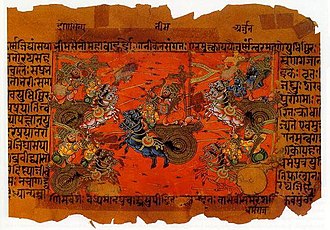
The Mahābhārata
The great epic of India — the war between the Pāṇḍavas and the Kauravas, cousins fighting for a kingdom — and, at about 100,000 couplets, the longest poem ever composed, containing the Bhagavad Gītā and almost the whole of Indian thought on dharma.