Baruch Spinoza: all things follow from God’s nature with geometric necessity. Friedrich Nietzsche: amor fati, love your fate and will its eternal return. The Stoics: some things are up to us, most are not. The Gita: you have a right to action, never to its fruits. Hamlet: “There’s a divinity that shapes our ends, rough-hew them how we will.”
Thinkers & Authors
11Vyāsa
The legendary sage who, Hindu tradition holds, divided the Veda into four, composed the Mahābhārata (in which he is also a character and the grandfather of both warring clans), and wrote the Purāṇas — the archetypal author of Indian tradition.

Homer
The legendary blind poet of Greece to whom the Iliad and the Odyssey are attributed — the founding works of Western literature, and for the Greeks the “educator of Hellas”.

Heraclitus
The obscure philosopher of Ephesus for whom everything flows, strife is the father of all things, and a hidden logos governs the endless change.

Sophocles
The Athenian tragedian of Oedipus and Antigone — the poet of human blindness, unbending will and the collision of laws — whom Aristotle took as the model of tragedy.

Epicurus
The gentle materialist who taught that pleasure — understood as the absence of pain and fear — is the goal of life, and that death is nothing to us.

Epictetus
The former slave who became the greatest teacher of Stoicism — “We are disturbed not by things, but by our judgments about things.”

Marcus Aurelius
Roman emperor and Stoic philosopher whose private notebook, the Meditations, is the most intimate record of a mind trying to be good while ruling the world.

Kālidāsa
The greatest poet and dramatist of classical Sanskrit — author of Śakuntalā, The Cloud Messenger and the Birth of Kumāra — whose art of love, nature and longing made him “the Shakespeare of India”.

William Shakespeare
The playwright and poet of Stratford whose 37-odd plays and 154 sonnets gave English its richest store of quotation and gave philosophy Hamlet, Lear and Macbeth.

Baruch Spinoza
The excommunicated lens-grinder of Amsterdam who identified God with Nature, wrote ethics in the form of geometry, and found freedom in understanding necessity.

Friedrich Nietzsche
Philosopher with a hammer who announced the death of God, unmasked the genealogy of morality, and called for new values — the will to power, eternal recurrence, the Übermensch, amor fati.
Works
18The Ṛg Veda
The oldest text of India and one of the oldest in any Indo-European language — 1,028 hymns to the gods of fire, storm, sky and order, composed c. 1500–1000 BCE and preserved orally, syllable for syllable, for over three thousand years. Its final book already asks how the universe began, and whether even its creator knows.

The Iliad
Homer’s epic of the wrath of Achilles in the tenth year of the Trojan War — the founding poem of Western literature, and its greatest poem of war, grief and mortality.

The Odyssey
Homer’s epic of Odysseus’s ten-year journey home from Troy — monsters, witches, the underworld and a household besieged — the archetype of every adventure, every homecoming and every clever hero.

The Rāmāyaṇa
Vālmīki’s epic of Rāma, the exiled prince who crosses the sea to rescue his wife Sītā from the demon king Rāvaṇa — India’s ādikāvya, the “first poem”, and the model of dharma for two thousand years.

Oedipus the King
Sophocles’ tragedy of the king who hunts down the murderer of his predecessor — and discovers that he himself killed his father and married his mother. Aristotle’s model of the perfect tragedy.
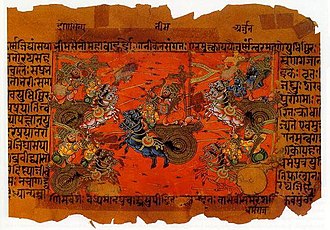
The Mahābhārata
The great epic of India — the war between the Pāṇḍavas and the Kauravas, cousins fighting for a kingdom — and, at about 100,000 couplets, the longest poem ever composed, containing the Bhagavad Gītā and almost the whole of Indian thought on dharma.
Saṅgam Poetry
The oldest Tamil literature (c. 300 BCE–300 CE) — 2,381 poems by 473 poets, on love (akam) and war (puṟam), in which each landscape — mountain, forest, field, seashore, desert — carries a mood of love. One of the great classical literatures of the world.
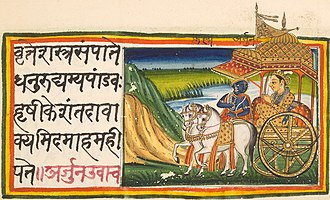
The Bhagavad Gītā
The “Song of the Lord” — Kṛṣṇa’s teaching to the despairing warrior Arjuna on the battlefield of Kurukṣetra, on duty, action without attachment, knowledge and devotion.

Meditations
The private notebook of the Stoic emperor Marcus Aurelius, written on campaign — the most intimate and enduring work of ancient practical philosophy.
The Little Clay Cart
Śūdraka’s Sanskrit comedy of love, crime and revolution — a poor Brahmin merchant, a generous courtesan, a burglar with a theory of house-breaking, a vicious royal brother-in-law and a popular uprising — the most realistic and modern-feeling play of ancient India.
Meghadūta (The Cloud Messenger)
Kālidāsa’s lyric poem of 111 verses in which an exiled yakṣa asks a monsoon cloud to carry a message of love to his wife in the Himālaya — describing, as the cloud flies north, all of India alive with longing.
The Recognition of Śakuntalā
Kālidāsa’s seven-act masterpiece — a king and a hermit girl fall in love in a forest, a curse erases his memory, a lost ring restores it, and the lovers are reunited in heaven. The most celebrated play in Sanskrit, which astonished Goethe and Europe.
Cilappatikāram (The Tale of an Anklet)
The great Tamil epic (c. 5th century) by the prince-monk Iḷaṅkō Aṭikaḷ — Kaṇṇaki’s husband is executed on a false charge of stealing the queen’s anklet; she proves his innocence, tears off her breast and burns the city of Madurai, and becomes a goddess.

Hamlet
Shakespeare’s longest play — a prince ordered by his father’s ghost to avenge a murder thinks, doubts, delays, feigns madness, and dies in the act.

King Lear
An old king divides his kingdom between the daughters who flatter him and banishes the one who loves him — and is stripped of everything on a heath in a storm.

Macbeth
Shakespeare’s shortest tragedy — a brave soldier, prompted by witches and his wife, murders his king and wades so deep in blood that life becomes “a tale told by an idiot”.
The Gay Science
Nietzsche’s most joyful book — where God is first declared dead, the madman runs into the marketplace, and the thought of eternal recurrence first appears.
Thus Spoke Zarathustra
Nietzsche’s prophetic prose-poem — Zarathustra descends from his mountain to teach the Übermensch, the will to power and eternal recurrence.
Ideas
4Dharma
The central idea of Indian civilisation — the order that holds the world together, and the duty, law, virtue and right way of living that each being owes to it. For Buddhists, the Dhamma is also the Buddha’s teaching and the ultimate constituents of reality.
Karma
“Action” — and the law that every intentional action leaves a trace that ripens, in this life or a future one, as happiness or suffering. Shared by Hindus, Buddhists, Jains and Sikhs, karma explains the inequalities of fortune without a judge, and binds the self to the round of rebirth.
Saṃsāra
“Wandering” — the beginningless cycle of birth, death and rebirth through which beings pass according to their karma, and from which every major Indian religion seeks release.
Eternal Recurrence
Nietzsche’s thought-experiment — would you will to live your life again, every moment, infinitely? The supreme test of affirming life.
Schools & Movements
2Stoicism
The Hellenistic and Roman philosophy of virtue, reason and acceptance — happiness lies in what is up to us, our judgments and choices, not in external things.
Dvaita Vedānta
Madhva’s realist, theistic Vedānta — God (Viṣṇu) alone is independent; souls and matter are real, eternally distinct from God and from each other, and wholly dependent on him. The most uncompromising rejection of Advaita in Indian thought.
Characters
2Arjuna
The Pāṇḍava archer who lays down his bow on the battlefield of Kurukṣetra rather than kill his kin — and receives the teaching of the Bhagavad Gītā.
Zarathustra
Nietzsche’s prophet who, after ten years in mountain solitude, descends to teach mankind the Übermensch — and finds no one ready to listen.
Great Scenes
2Sisyphus at the Foot of the Mountain
Condemned to roll his rock eternally uphill, Sisyphus pauses as it falls back — and Camus imagines him, in that moment of consciousness, happy.
The Universal Form
Arjuna asks to see Kṛṣṇa’s true form — and beholds the whole universe, all beings, all gods, and all the warriors rushing into Time’s blazing mouths.
Great Questions
2Are We Free?
Fate, karma, determinism, compatibilism, radical freedom — the long argument over whether we choose what we do.
What Is Time?
Flux and permanence, the moving image of eternity, Augustine’s puzzle, Kant’s form of intuition, eternal recurrence, Heidegger’s temporality.
Lines to Remember
11 quotationsCharacter is destiny.
ἦθος ἀνθρώπῳ δαίμων
Context & when to use it
Literally “a person’s character is his daimon (guiding spirit)”.
For fate versus freedom — fate comes from within.
My formula for greatness in a human being is amor fati — that one wants nothing to be different, not forward, not backward, not in all eternity.
Context & when to use it
Not merely to bear what is necessary, still less conceal it, but to love it.
For radical acceptance and affirmation of life.
Your right is to action alone, never to its fruits. Let not the fruits of action be your motive, nor let your attachment be to inaction.
कर्मण्येवाधिकारस्ते मा फलेषु कदाचन। मा कर्मफलहेतुर्भूर्मा ते सङ्गोऽस्त्वकर्मणि॥
Context & when to use it
The most quoted verse of the Gītā — for duty without attachment, process over outcome, Stoic-like equanimity.
I am Time, the mighty destroyer of worlds, come forth to annihilate the peoples.
कालोऽस्मि लोकक्षयकृत्प्रवृद्धो लोकान्समाहर्तुमिह प्रवृत्तः
Context & when to use it
From the theophany of the universal form.
For the sublime terror of time and death. Oppenheimer’s paraphrase — “Now I am become Death, the destroyer of worlds.”
It seemed as though in a little while the solution would be found, and then a new and splendid life would begin; and it was clear to both of them that the end was still far off, and that the most complicated and difficult part of it was only just beginning.
Context & when to use it
For beginnings disguised as endings.
There is special providence in the fall of a sparrow… the readiness is all.
Context & when to use it
Before the fatal duel, Hamlet has stopped resisting fate.
For acceptance, amor fati, Stoic calm before what must come.
As flies to wanton boys are we to th’ gods; they kill us for their sport.
Context & when to use it
The blinded Gloucester on the cruelty of the cosmos.
For the problem of evil, cosmic indifference, tragic fate.
Men must endure their going hence, even as their coming hither. Ripeness is all.
Context & when to use it
Edgar to his despairing father.
For accepting death in its time; Stoic consolation.
The fault, dear Brutus, is not in our stars, but in ourselves, that we are underlings.
Context & when to use it
Cassius tempting Brutus to conspire against Caesar.
For free will against fate, responsibility, Sartre before Sartre.
As is the generation of leaves, so is that of men. The wind scatters the leaves on the ground, but the forest buds and puts forth more when spring comes round.
οἵη περ φύλλων γενεὴ τοίη δὲ καὶ ἀνδρῶν
Context & when to use it
Asked his lineage on the battlefield by Diomedes, the Trojan ally Glaucus answers that ancestry hardly matters — men come and go like leaves.
For mortality, the passing of generations, the vanity of pedigree.
Count no one happy until he has crossed the boundary of life without suffering pain.
Context & when to use it
The play’s closing words, echoing Solon’s warning to Croesus in Herodotus.
For the fragility of happiness and fortune.
Sententiae
phrases in the originalĒthos anthrōpōi daimōn
Origin. Heraclitus, fragment B119. — Heraclitus
For the idea that fate flows from who we are.
Hamartia
Origin. Aristotle, Poetics 13. Later translated as “tragic flaw”, though Aristotle meant an error of judgment. — Aristotle
⚠ In the New Testament the same word means “sin”.
For Lear’s vanity, Macbeth’s ambition, Hamlet’s delay.
Amor fati
Origin. Nietzsche’s Latin coinage — The Gay Science §276 and Ecce Homo — for loving everything that happens, not merely enduring it. The attitude echoes Stoics like Marcus Aurelius and Epictetus. — Friedrich Nietzsche
For radical acceptance; saying Yes to life including its suffering.
Sub specie aeternitatis
Origin. Spinoza, Ethics V — the highest knowledge sees things not in time but as following necessarily from God’s eternal nature. — Baruch Spinoza
For seeing one’s troubles from the widest possible perspective.
Carpe diem
Origin. Horace, Odes I.11 — “carpe diem, quam minimum credula postero” (pluck the day, trusting as little as possible in tomorrow).
⚠ “Carpe” is a gardening word — pluck the ripe fruit — gentler than “seize”.
For living in the present, with Epicurean rather than reckless meaning.
Karmaṇy evādhikāras te
Origin. Bhagavad Gītā 2.47. — The Bhagavad Gītā
For acting well without anxiety about outcomes.
Explore Next
related by shared connections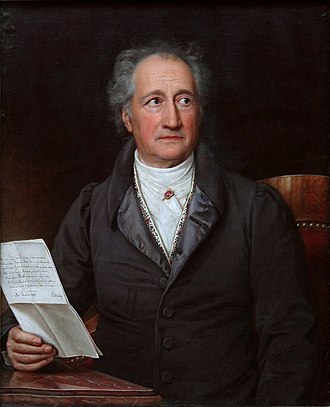
Johann Wolfgang von Goethe
Germany’s greatest writer — poet, novelist, dramatist, scientist and statesman — whose Faust is the modern myth of the striving soul, and whose life was itself treated as a work of art.
How Should One Act? — Dharma, Karma and Freedom
The Indian argument about action — from Vedic sacrifice to the Gītā’s action without attachment, the Buddha’s intention, the Jain refusal to harm, Kauṭilya’s realism, Gandhi’s satyāgraha and Ambedkar’s constitutional morality.

Seneca
Roman Stoic, playwright and statesman — tutor and adviser to Nero — whose letters on time, death, anger and friendship are among the most readable works of ancient philosophy.
What Is the Meaning of Life?
Liberation, virtue, tranquillity, God, the will, revolt — the great answers to the greatest question.

Georg Wilhelm Friedrich Hegel
The philosopher of Spirit and dialectic, for whom reality is a rational process working itself out through contradiction in history — “the real is the rational”.
How Should We Face Death?
Naciketas at Death’s door, Socrates’ hemlock, Epicurus’s argument, the Stoics’ rehearsal, Hamlet’s skull, Ivan Ilyich’s scream, Heidegger’s being-toward-death.