
Contents · 10 sections · 6 min
Kālidāsa in Five Ideas
the essentialsŚṛṅgāra rasa
The aesthetic of love — in union and in separation — refined to its highest point; separation (vipralambha) is love’s deepest form.
Nature as feeling
Clouds, rivers, creepers, deer and seasons share human emotions; the world is a sympathetic presence.
Memory and recognition
In Śakuntalā a curse erases memory, and a ring restores it — love must be lost and recognised again to be true.
The simile master
Upamā Kālidāsasya — “for simile, Kālidāsa” — the proverbial verdict of Indian critics.
Desire transformed
In the Birth of Kumāra, love-god Kāma is burned to ash by Śiva’s glance; only Pārvatī’s austerity wins Śiva — passion purified.
Kālidāsa is the supreme poet of classical Sanskrit literature and one of the great writers of world literature. Little is known of his life — he probably flourished in the late fourth and early fifth centuries CE, perhaps at the court of the Gupta emperor Candragupta II at Ujjayinī — but his seven surviving works define the classical style: three plays, Abhijñānaśākuntalam (The Recognition of Śakuntalā), Vikramorvaśīyam and Mālavikāgnimitram; two court epics (mahākāvya), Kumārasambhavam (The Birth of Kumāra) and Raghuvaṃśam (The Dynasty of Raghu); and two lyric poems, Meghadūtam (The Cloud Messenger) and Ṛtusaṃhāram (The Gathering of the Seasons). His subject is love — in union and, above all, in separation — set in a natural world that seems to feel with human beings. When Śakuntalā was translated into English in 1789, it astonished Europe; Goethe and Herder hailed it, and it opened the West to Indian literature.
Life and legend
Kālidāsa never speaks of himself, and his dates have been placed anywhere from the 2nd century BCE to the 6th century CE. Most scholars now place him in the Gupta period, around 380–450 CE: his works echo Gupta court culture, and a Sanskrit inscription of 634 CE at Aihole already praises him. His loving descriptions of Ujjayinī (Ujjain) and the Malwa region in the Cloud Messenger suggest he lived there. Tradition makes him one of the “nine gems” at the court of a legendary King Vikramāditya.
A famous legend says he was a beautiful but stupid young man, found sawing off the branch he was sitting on, and chosen by scheming courtiers as a husband for the arrogant scholar-princess Vidyottamā, who had humiliated them in debate. On their wedding night, she discovered his ignorance and drove him out. He prayed to the goddess Kālī, who granted him eloquence; he returned and knocked on her door. She asked, “Asti kaścid vāgviśeṣaḥ?” — “Is there anything special in your speech?” — and he composed three great works, each beginning with one of her words: Asti (the Kumārasambhava), Kaścit (the Meghadūta), Vāk (the Raghuvaṃśa).
The Recognition of Śakuntalā
The play
Abhijñānaśākuntalam, in seven acts of prose and verse, develops a story from the The Mahābhārata (Ādi Parva), transforming it with a curse and a ring.
King Duṣyanta, hunting a deer, enters the hermitage of the sage Kaṇva, who is away on a pilgrimage. There he sees Śakuntalā, Kaṇva’s foster daughter — the child of the sage Viśvāmitra and the nymph Menakā, abandoned at birth and protected by birds (śakunta). She is watering the trees with her two friends. A bee buzzes around her face; Duṣyanta steps forward to “rescue” her. They fall in love and marry by the gāndharva rite — mutual consent, without ceremony. He gives her his signet ring and returns to his capital, promising to send for her.
Lost in thought of him, Śakuntalā fails to greet the irascible sage Durvāsas at the hermitage. He curses her: the one she is thinking of will forget her — unless he sees a token of recognition. Her friends obtain this mitigation but do not tell her.
Kaṇva returns, learns of the marriage, blesses it, and sends the pregnant Śakuntalā to her husband. Act IV, her farewell to the hermitage, is the most celebrated in Sanskrit drama: the trees offer her garments and ornaments, the peahens stop dancing, the creepers shed their leaves like tears, a fawn she raised tugs at her hem; Kaṇva, an ascetic, is overcome by a father’s grief.
At court, Duṣyanta, under the curse, does not recognise her. She reaches for the ring — but it is gone, lost when she bathed at a holy pond. He rejects her as an impostor. Humiliated, she is carried off by a shining form of light, her mother Menakā.
Later, a fisherman is arrested for possessing the royal ring, found in a fish’s belly. When Duṣyanta sees it, his memory returns, and he is consumed by remorse. He paints her portrait and pines.
In the final act, Duṣyanta, returning from fighting demons in heaven for Indra, stops at the hermitage of the sage Mārīca, where he sees a bold little boy playing with a lion cub. The boy is his son, Bharata — the future emperor after whom India (Bhārata) is named. Śakuntalā appears, worn by grief; the lovers are reunited.
Meaning
The play explores love passing from desire to maturity through suffering. The curse lets Kālidāsa preserve Duṣyanta’s honour (in the Mahābhārata he simply lies) while exploring memory, forgetting and recognition. Nature is a participant: the hermitage’s plants and animals respond to Śakuntalā’s emotions.
The Cloud Messenger
Meghadūtam is a lyric poem of about 111 verses in the slow, stately mandākrāntā metre. A yakṣa (a demigod attendant of the god of wealth, Kubera), exiled for a year for neglecting his duty, pines in the Rāmagiri hills in central India for his wife in the Himālayan city of Alakā. At the start of the monsoon, seeing a great cloud, he asks it to carry a message to her.
He describes the route the cloud will take northward — over rivers, mountains and cities, including Ujjayinī with its palaces and the temple of Mahākāla — in a sensuous travelogue of India, each place animated with love. Then he describes his wife, wasting away with longing, and gives the message: he imagines her in everything, he endures, the curse will end. The poem founded a genre, the sandeśa-kāvya (messenger poem), imitated for centuries.
The Birth of Kumāra
Kumārasambhavam tells how the god Śiva, an ascetic absorbed in meditation in the Himālaya, came to marry Pārvatī, daughter of the mountain, so that their son Kumāra (Skanda) could defeat a demon. The gods send Kāma, god of desire, to strike Śiva with his flower-arrows. Śiva opens his third eye and burns Kāma to ash. Pārvatī, realising beauty alone cannot win him, undertakes severe austerities. Śiva, disguised as a young ascetic, tests her by mocking Śiva; she defends him passionately; he reveals himself. The eighth canto, describing their lovemaking in explicit detail, was condemned by some critics as improper for the parents of the universe.
The Dynasty of Raghu
Raghuvaṃśam, in 19 cantos, traces the solar dynasty from Dilīpa through Raghu, Aja, Daśaratha and Rāma (retelling the The Rāmāyaṇa in compressed form) to the decadent Agnivarṇa, who dies of debauchery — a meditation on kingship and its decline.
Style
- Simile (upamā): Indian critics said upamā Kālidāsasya. In the Raghuvaṃśa, the princess Indumatī passes the suitors at her svayaṃvara like a lamp carried along a royal road at night, lighting each mansion in turn and leaving it dark.
- Suggestion (dhvani): meaning conveyed by implication — the theory of the critic Ānandavardhana, who drew examples from Kālidāsa.
- Rasa: the evocation of aesthetic emotion — above all śṛṅgāra, the erotic, in union and in separation.
- Vaidarbhī style: clarity, sweetness, balance.
Reception
Sir William Jones’s translation of Śakuntalā (1789) was translated into German by Georg Forster (1791). Goethe wrote a famous epigram, and modelled the “Prelude in the Theatre” of Faust on its prologue. Herder, Schiller and the Schlegels admired it. Rabindranath Tagore, Arthur W. Ryder, and many others translated or celebrated Kālidāsa. Indian painting, dance and film have drawn on Śakuntalā.
Key terms
- Kāvya
- Ornate classical Sanskrit poetry.
- Mahākāvya
- The court epic.
- Rasa
- Aesthetic emotion evoked in the audience.
- Śṛṅgāra
- The erotic rasa — love in union and separation (vipralambha).
- Gāndharva marriage
- Marriage by mutual consent.
Using Kālidāsa in conversation
- On love: separation, not union, is love’s deepest form.
- On style: upamā Kālidāsasya — for simile, Kālidāsa.
- On parting: Śakuntalā’s farewell to the hermitage, where even the trees weep.
- On desire: Kāma burned by Śiva’s eye — passion must be transformed, not merely indulged.
Kālidāsa in two minutes
The greatest poet and dramatist of classical Sanskrit — author of Śakuntalā, The Cloud Messenger and the Birth of Kumāra — whose art of love, nature and longing made him “the Shakespeare of India”.
- Śṛṅgāra rasa. The aesthetic of love — in union and in separation — refined to its highest point; separation (vipralambha) is love’s deepest form.
- Nature as feeling. Clouds, rivers, creepers, deer and seasons share human emotions; the world is a sympathetic presence.
- Memory and recognition. In Śakuntalā a curse erases memory, and a ring restores it — love must be lost and recognised again to be true.
- The simile master. Upamā Kālidāsasya — “for simile, Kālidāsa” — the proverbial verdict of Indian critics.
- Desire transformed. In the Birth of Kumāra, love-god Kāma is burned to ash by Śiva’s glance; only Pārvatī’s austerity wins Śiva — passion purified.
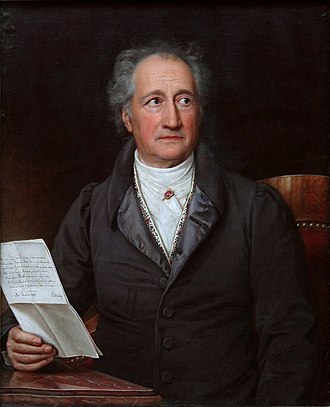
Answering: Aśvaghoṣa · Answered by: Johann Wolfgang von Goethe
Curiosities
did you know?- Legend says he was a handsome dunce tricked into marrying a learned princess, who mocked him; he prayed to the goddess Kālī and became a poet — hence his name, ‘servant of Kālī’.
- Sir William Jones’s English translation of Śakuntalā (1789) caused a sensation in Europe.
- Goethe wrote: ‘Wouldst thou the young year’s blossoms and the fruits of its decline… I name thee, O Śakuntalā, and all at once is said.’
- A legend has him at the court of King Vikramāditya as one of the ‘nine gems’ (navaratna).
- A crater on Mercury is named after him.
Questions to Argue About
debate club →- Is separation more essential to love than union?
- Why does Duṣyanta forget — is it the curse or his own carelessness?
- Can a poet’s imagination of nature be a philosophy?
Explore Next
related by shared connectionsRāmcaritmānas
Tulsīdās’s 16th-century retelling of the Rāmāyaṇa in Avadhī Hindi — 12,800 lines of devotional epic that made Rāma the God of North India, recited daily, staged every year as Rāmlīlā, and loved more than any other book in Hindi.
Muhammad Iqbal
The Urdu and Persian poet-philosopher of Lahore who preached “khudī” — the self’s dynamic development — as the heart of a reconstructed Islam, wrote “Sāre jahāṅ se acchā” for India, and later envisioned a Muslim homeland that became Pakistan.
Tulsīdās
The 16th-century poet of Vārāṇasī who retold the Rāmāyaṇa in Avadhī as the Rāmcaritmānas — the most widely read and recited book in North India — and wrote the Hanumān Chālīsā, sung daily by millions.

Faust
Goethe’s two-part dramatic poem of the scholar who wagers his soul with Mephistopheles that no moment of pleasure will ever satisfy him — the defining myth of modern restless striving.
Vālmīki
The ādikavi — “first poet” — to whom the Rāmāyaṇa is attributed; by legend a highway robber who became a sage, and whose grief at the death of a bird became the first verse.
Vyāsa
The legendary sage who, Hindu tradition holds, divided the Veda into four, composed the Mahābhārata (in which he is also a character and the grandfather of both warring clans), and wrote the Purāṇas — the archetypal author of Indian tradition.