The Gautama Buddha begins with it: all conditioned existence is dukkha. Arthur Schopenhauer agrees and calls this the worst of all possible worlds. Gottfried Wilhelm Leibniz had argued this is the best possible world — which Voltaire mocked in Candide. Dostoevsky gives the case against God its most powerful voice in Rebellion — Returning the Ticket; Sonya and Alyosha answer not with arguments but with love.
Thinkers & Authors
25
Gautama Buddha
The prince who left his palace to seek an end to suffering, awoke under the Bodhi tree, and taught the Four Noble Truths, the Middle Way and no-self (anattā).
Mahāvīra
The twenty-fourth and last tīrthaṅkara of Jainism — a prince of the eastern Gaṅgā plain who renounced everything at thirty, practised twelve years of extreme austerity, attained omniscience, and taught a path of radical non-violence, truth and non-possession for thirty years.
Vālmīki
The ādikavi — “first poet” — to whom the Rāmāyaṇa is attributed; by legend a highway robber who became a sage, and whose grief at the death of a bird became the first verse.

Sophocles
The Athenian tragedian of Oedipus and Antigone — the poet of human blindness, unbending will and the collision of laws — whom Aristotle took as the model of tragedy.
Aśoka
The Mauryan emperor (r. c. 268–232 BCE) who, after the slaughter of his conquest of Kaliṅga, turned to Buddhism and governed by “dhamma” — non-violence, tolerance and welfare — proclaimed in edicts carved on rocks and pillars across India. His lion capital is India’s emblem; his wheel is on its flag.

Seneca
Roman Stoic, playwright and statesman — tutor and adviser to Nero — whose letters on time, death, anger and friendship are among the most readable works of ancient philosophy.

Epictetus
The former slave who became the greatest teacher of Stoicism — “We are disturbed not by things, but by our judgments about things.”
Aśvaghoṣa
The 1st–2nd century Buddhist poet and dramatist — author of the Buddhacarita, the first full epic of the Buddha’s life, and the Saundarananda — often called the first great poet of classical Sanskrit, before Kālidāsa.
Asaṅga
Co-founder of Yogācāra Buddhism, who after twelve years of fruitless meditation found the future Buddha Maitreya in a wounded dog — and wrote the great maps of the bodhisattva path and of consciousness.
Buddhaghosa
The 5th-century Indian monk who went to Sri Lanka and translated and systematised the Theravāda commentaries — author of the Visuddhimagga, “The Path of Purification”, the definitive map of Theravāda doctrine and meditation.

Kālidāsa
The greatest poet and dramatist of classical Sanskrit — author of Śakuntalā, The Cloud Messenger and the Birth of Kumāra — whose art of love, nature and longing made him “the Shakespeare of India”.
Śāntideva
The 8th-century Nālandā monk whose Bodhicaryāvatāra (“The Way of the Bodhisattva”) is the most beloved poem of Mahāyāna Buddhism — a guide to compassion, patience and wisdom that the Dalai Lama calls his greatest inspiration.
Mīrābāī
The 16th-century Rajput princess who declared herself the bride of Kṛṣṇa, defied her royal in-laws, survived (the legends say) cups of poison and a basket with a snake, and left her palace to sing — the most beloved woman poet of North India.
Tulsīdās
The 16th-century poet of Vārāṇasī who retold the Rāmāyaṇa in Avadhī as the Rāmcaritmānas — the most widely read and recited book in North India — and wrote the Hanumān Chālīsā, sung daily by millions.
Tukārām
The 17th-century Marathi saint-poet, a grocer of the Śūdra caste, whose thousands of abhaṅgas to Viṭṭhal of Pandharpur — honest, anguished, joyful, scornful of hypocrisy — are the most loved poems in Marathi.

Gottfried Wilhelm Leibniz
Universal genius — co-inventor of calculus, philosopher of monads and pre-established harmony — who argued that ours is the best of all possible worlds.

Voltaire
The wittiest man of the Enlightenment — playwright, historian, satirist and campaigner against intolerance — whose Candide demolished Leibnizian optimism and whose cry was “Écrasez l’infâme!”

Arthur Schopenhauer
The great pessimist, who said the thing-in-itself is blind, insatiable Will, that life swings like a pendulum between pain and boredom, and that art, compassion and renunciation are our only escape.
Mirza Ghalib
The greatest poet of Urdu (1797–1869) — master of the ghazal, of wit, paradox, grief and doubt — who lived through the fall of the Mughal world in 1857 and wrote its elegy in letters and verse.
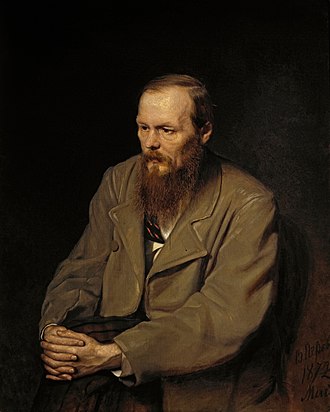
Fyodor Dostoevsky
The Russian novelist of the abyss — crime, faith, freedom, suffering — whose characters argue philosophy with their lives. Nietzsche called him the only psychologist he had anything to learn from.

Leo Tolstoy
The Russian giant of War and Peace and Anna Karenina, who in mid-life fell into a crisis of meaning and reinvented himself as a prophet of non-violence and simple Christian love.

Anton Chekhov
Russian doctor, short-story writer and playwright who revolutionised both forms — stories without neat plots or morals, plays where the drama happens beneath ordinary talk — and became the great artist of wasted lives, quiet longing and compassion.
Premchand
The greatest writer of modern Hindi and Urdu fiction — novelist of the Indian village, of peasants crushed by debt, caste and colonial rule — whose Godān and stories like “The Shroud” founded social realism in Indian literature.

Samuel Beckett
Irish playwright, novelist and poet who wrote in English and French, the master of minimalism and the absurd — Waiting for Godot made a play in which “nothing happens, twice” into the defining drama of the twentieth century.

Albert Camus
Algerian-born novelist and essayist of the absurd and of revolt — “There is but one truly serious philosophical problem, and that is suicide.”
Works
22
The Iliad
Homer’s epic of the wrath of Achilles in the tenth year of the Trojan War — the founding poem of Western literature, and its greatest poem of war, grief and mortality.

The Rāmāyaṇa
Vālmīki’s epic of Rāma, the exiled prince who crosses the sea to rescue his wife Sītā from the demon king Rāvaṇa — India’s ādikāvya, the “first poem”, and the model of dharma for two thousand years.

Oedipus the King
Sophocles’ tragedy of the king who hunts down the murderer of his predecessor — and discovers that he himself killed his father and married his mother. Aristotle’s model of the perfect tragedy.
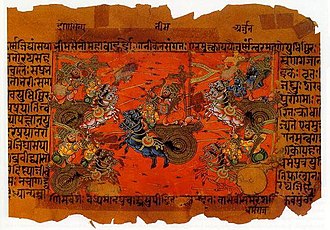
The Mahābhārata
The great epic of India — the war between the Pāṇḍavas and the Kauravas, cousins fighting for a kingdom — and, at about 100,000 couplets, the longest poem ever composed, containing the Bhagavad Gītā and almost the whole of Indian thought on dharma.
The Dhammapada
423 verses of the Buddha’s teaching in 26 chapters — on the mind, the fool and the wise, anger, craving, the path and the true Brahmin. The best-loved Buddhist scripture, and the shortest door into the Buddha’s ethics.
The Jātakas
547 stories of the Buddha’s previous lives — as a hare, a monkey king, a merchant, a prince — told to illustrate the virtues that lead to awakening. India’s great treasury of folk tales, carved on stūpas and painted in caves.
Saṅgam Poetry
The oldest Tamil literature (c. 300 BCE–300 CE) — 2,381 poems by 473 poets, on love (akam) and war (puṟam), in which each landscape — mountain, forest, field, seashore, desert — carries a mood of love. One of the great classical literatures of the world.
The Heart Sūtra
The shortest and most famous Mahāyāna scripture — a single page in which the bodhisattva Avalokiteśvara declares that “form is emptiness, emptiness is form”, negates every Buddhist category, and ends with a mantra: “gone, gone, gone beyond, gone altogether beyond — awakening, hail!”
The Yoga Sūtras
Patañjali’s 196 aphorisms — the root text of classical Yoga — which define yoga as the stilling of the mind’s fluctuations, diagnose the afflictions that cause suffering, set out the eight limbs of practice, and end in the “isolation” of pure consciousness.
Sāṃkhya Kārikā
Īśvarakṛṣṇa’s 72-verse poem that is the classical statement of Sāṃkhya philosophy — from the threefold suffering of life, through the evolution of nature in twenty-five principles, to the liberating vision in which nature, “seen”, stops dancing.
Meghadūta (The Cloud Messenger)
Kālidāsa’s lyric poem of 111 verses in which an exiled yakṣa asks a monsoon cloud to carry a message of love to his wife in the Himālaya — describing, as the cloud flies north, all of India alive with longing.
The Recognition of Śakuntalā
Kālidāsa’s seven-act masterpiece — a king and a hermit girl fall in love in a forest, a curse erases his memory, a lost ring restores it, and the lovers are reunited in heaven. The most celebrated play in Sanskrit, which astonished Goethe and Europe.
Cilappatikāram (The Tale of an Anklet)
The great Tamil epic (c. 5th century) by the prince-monk Iḷaṅkō Aṭikaḷ — Kaṇṇaki’s husband is executed on a false charge of stealing the queen’s anklet; she proves his innocence, tears off her breast and burns the city of Madurai, and becomes a goddess.
Rāmcaritmānas
Tulsīdās’s 16th-century retelling of the Rāmāyaṇa in Avadhī Hindi — 12,800 lines of devotional epic that made Rāma the God of North India, recited daily, staged every year as Rāmlīlā, and loved more than any other book in Hindi.

King Lear
An old king divides his kingdom between the daughters who flatter him and banishes the one who loves him — and is stripped of everything on a heath in a storm.

Candide
Voltaire’s comic philosophical tale, in which a naïve young man and his optimist tutor suffer every disaster the eighteenth century could offer — ending with “we must cultivate our garden”.
The World as Will and Representation
Schopenhauer’s single great work — the world is my representation; in itself it is Will; and the Will is the source of all suffering.
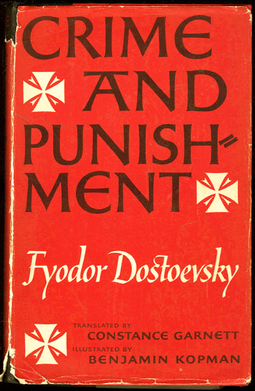
Crime and Punishment
A poor ex-student in St Petersburg murders an old pawnbroker to prove he is an “extraordinary man” — and is undone not by the police but by his own conscience and by Sonya’s love.

The Brothers Karamazov
Dostoevsky’s last and greatest novel — a murdered father, three brothers (the sensualist, the intellectual, the saint), and the deepest debate about God and evil in literature.
A Confession
Tolstoy’s account of his mid-life crisis — at the height of fame he could not answer “why live?” and nearly killed himself, until he found meaning in the faith of simple people.

The Metamorphosis
Gregor Samsa, a travelling salesman, wakes one morning transformed into a monstrous vermin — and his family’s duty slowly curdles into disgust and relief.
Godān
Premchand’s last and greatest novel (1936) — the life and death of Hori, a poor peasant who longs only to own a cow, crushed by debt, caste, landlords and priests — the epic of the Indian village under colonial rule.
Ideas
5Saṃsāra
“Wandering” — the beginningless cycle of birth, death and rebirth through which beings pass according to their karma, and from which every major Indian religion seeks release.
Anattā (No-Self)
The Buddha’s teaching that there is no permanent, unchanging self — only a flowing stream of physical and mental processes.
Nirvāṇa
The Buddhist goal — the “blowing out” of the fires of greed, hatred and delusion, the end of suffering and of rebirth. The Buddha described it as unborn and unconditioned, and refused to say whether the awakened exist after death.
Pratītyasamutpāda (Dependent Origination)
The Buddha’s central insight — “when this exists, that comes to be; when this ceases, that ceases.” Nothing exists independently; everything arises from conditions. Applied to suffering, it becomes the twelve-linked chain from ignorance to death.
The Will
Schopenhauer’s name for the thing-in-itself — a blind, aimless, insatiable striving that expresses itself in everything, from gravity to human desire.
Schools & Movements
6Jainism
The ancient Indian tradition of the Jinas — radical non-violence toward every living being, a soul weighed down by karmic matter, the “many-sidedness” of truth, and liberation by self-discipline without a creator God. Small in numbers, immense in influence.
Buddhism
The tradition founded by the Buddha — suffering, impermanence, no-self, and the path to nirvāṇa — later dividing into Theravāda, Mahāyāna (Madhyamaka, Yogācāra) and Vajrayāna.
Sāṃkhya
The oldest of the classical Indian systems — a radical dualism of pure, inactive consciousness (puruṣa) and active, unconscious nature (prakṛti) with its three strands, the guṇas. Liberation is seeing that consciousness was never really entangled in nature.
Stoicism
The Hellenistic and Roman philosophy of virtue, reason and acceptance — happiness lies in what is up to us, our judgments and choices, not in external things.
Theravāda and the Abhidharma
The oldest surviving school of Buddhism — the Pāli Canon, the arhat ideal, and the Abhidhamma analysis of experience into momentary ultimate realities — living today in Sri Lanka, Myanmar, Thailand, Laos and Cambodia.
Yoga (darśana)
The classical school of Patañjali — Sāṃkhya’s dualism of consciousness and nature, plus a God and a practical method — defining yoga as “the stilling of the fluctuations of the mind” and mapping the eight limbs from ethics to absorption.
Characters
6Alyosha Karamazov
The youngest brother, novice of the elder Zosima, “the hero” of the novel — who answers Ivan’s arguments not with refutation but with a kiss.
Cordelia
Lear’s youngest daughter, who will not flatter, is disinherited, returns to rescue him, forgives him with “No cause, no cause” — and is hanged.
Gregor Samsa
The travelling salesman who wakes as a giant insect and remains, inside, more human than the family that comes to find him a burden.
Ivan Karamazov
The rational, tormented middle brother who “returns his ticket” to God’s world and authors the Grand Inquisitor — and whose idea that “everything is permitted” kills his father.
King Lear
The proud old king who divides his kingdom by a love test, banishes the daughter who loves him, and is stripped of everything until he learns, too late, what love and suffering are.
Sonya Marmeladova
The meek young prostitute who reads Raskolnikov the raising of Lazarus and follows him to Siberia — Dostoevsky’s image of redemptive love.
Great Scenes
7The Blinding of Gloucester
Betrayed by Edmund, Gloucester is tied to a chair and blinded by Cornwall while Regan watches — and learns in the same instant that Edgar was innocent.
The Death of Cordelia
Lear enters carrying his hanged daughter, howling, searching for her breath with a mirror and a feather — “Never, never, never, never, never.”
Rebellion — Returning the Ticket
Ivan tells Alyosha true stories of tortured children and declares that no future harmony could be worth one child’s tear — so he respectfully returns his ticket.
The Dover Cliff
Edgar leads his blind father to a “cliff” that isn’t there, lets him leap, and convinces him he has survived by a miracle — curing his despair with a theatrical trick.
Lear Wakes: "No Cause, No Cause"
Lear wakes from madness to find Cordelia beside him, thinks he is in hell, begs her forgiveness — and she answers with two words that undo the whole tragedy.
Sonya Reads Lazarus
In her bare room, by a candle-end, the prostitute Sonya reads the murderer Raskolnikov the Gospel story of the raising of Lazarus.
The Storm on the Heath
Shut out by his daughters, Lear rages at the storm, prays for the poor, and meets “unaccommodated man” in the naked Poor Tom.
Great Questions
1Lines to Remember
35 quotationsWhat does not kill me makes me stronger.
Was mich nicht umbringt, macht mich stärker.
Context & when to use it
From “the military school of life”.
For resilience, post-traumatic growth.
He who has a why to live for can bear almost any how.
Hat man sein warum? des Lebens, so verträgt man sich fast mit jedem wie?
Context & when to use it
Meaning makes suffering bearable. Viktor Frankl made it the motto of Man’s Search for Meaning.
For meaning and endurance.
Without music, life would be a mistake.
Ohne Musik wäre das Leben ein Irrtum.
Context & when to use it
For art as justification of existence.
In the midst of winter, I found there was, within me, an invincible summer.
Au milieu de l'hiver, j'ai découvert en moi un invincible été.
Context & when to use it
Revisiting the Roman ruins of his youth after years of war and darkness.
For resilience and inner light.
⚠ Often embellished into a longer motivational passage that Camus never wrote.
A book must be the axe for the frozen sea within us.
Ein Buch muss die Axt sein für das gefrorene Meer in uns.
Context & when to use it
We need books that affect us like a disaster, that grieve us deeply.
For why literature matters; against comfortable reading.
All conditioned things are subject to decay. Strive on with diligence.
vayadhammā saṅkhārā, appamādena sampādetha
Context & when to use it
For impermanence and urgency.
Hatred is never appeased by hatred in this world. By non-hatred alone is hatred appeased. This is an eternal law.
na hi verena verāni sammantīdha kudācanaṃ, averena ca sammanti, esa dhammo sanantano
Context & when to use it
For reconciliation and non-violence.
This is the best of all possible worlds.
Context & when to use it
God, perfectly good and wise, chose the best possible world, evils included.
For optimism and theodicy — usually with Voltaire’s irony.
⚠ The exact phrase is Voltaire’s mocking formula in Candide; Leibniz argues the thesis.
Life swings like a pendulum backward and forward between pain and boredom.
Context & when to use it
For hedonic treadmill, pessimism, the restlessness of desire.
There ought to be behind the door of every happy, contented man someone standing with a hammer, continually reminding him with a knock that there are unhappy people.
Context & when to use it
Against complacency; for the duty to remember others’ suffering.
What matters is not fame, not glory, not what I dreamed of, but the capacity to endure. Learn to bear your cross and have faith.
Context & when to use it
For perseverance after failure.
Ever tried. Ever failed. No matter. Try again. Fail again. Fail better.
Context & when to use it
For persistence — honestly understood.
⚠ Beckett’s context is bleak, not motivational — it is about the impossibility of art succeeding.
You must go on. I can’t go on. I’ll go on.
Context & when to use it
For endurance without hope.
Nothing is funnier than unhappiness.
Context & when to use it
For dark comedy.
They also serve who only stand and wait.
Context & when to use it
Milton, gone blind, wonders how he can serve God.
For patience, disability, and unseen contributions.
May you, hunter, find no rest for endless years, since you killed one of a pair of cranes, lost in love.
mā niṣāda pratiṣṭhāṃ tvam agamaḥ śāśvatīḥ samāḥ
Context & when to use it
The first śloka — grief becoming verse.
For the origin of poetry in compassion.
Beauty will save the world.
Мир спасёт красота.
Context & when to use it
Ippolit mockingly reports that the Prince once said this. Myshkin never says it on stage; the line is asked about, not affirmed.
For the redemptive power of beauty and art. Solzhenitsyn built his Nobel lecture around it.
⚠ Often quoted as Dostoevsky’s own creed. In the novel it is reported second-hand, with irony.
It’s not God that I don’t accept, Alyosha, only I most respectfully return Him the ticket.
Context & when to use it
After listing the tortures of children, Ivan refuses a harmony bought with their tears.
For the problem of evil, or for rejecting any utopia whose price is innocent suffering.
The whole world of knowledge is not worth that child’s prayer to “dear, kind God”!
Context & when to use it
On the little girl locked in the freezing privy by her parents.
When abstractions are used to justify concrete cruelty.
What is hell? I maintain that it is the suffering of being unable to love.
Context & when to use it
From Zosima’s discourses, recorded by Alyosha.
For a non-literal hell; love as the meaning of life.
Pain and suffering are always inevitable for a large intelligence and a deep heart.
Context & when to use it
In conversation with Porfiry about his article on extraordinary men.
For the price of depth and sensitivity.
All happy families are alike; each unhappy family is unhappy in its own way.
Все счастливые семьи похожи друг на друга, каждая несчастливая семья несчастлива по-своему.
Context & when to use it
The most famous opening in the Russian novel.
For the variety of failure versus the sameness of success — “the Anna Karenina principle”.
How weary, stale, flat and unprofitable seem to me all the uses of this world!
Context & when to use it
His first soliloquy — wishing “this too too solid flesh would melt”.
For depression, ennui, Weltschmerz.
As flies to wanton boys are we to th’ gods; they kill us for their sport.
Context & when to use it
The blinded Gloucester on the cruelty of the cosmos.
For the problem of evil, cosmic indifference, tragic fate.
Unaccommodated man is no more but such a poor, bare, forked animal as thou art.
Context & when to use it
In the storm, Lear looks at the half-naked “Poor Tom” and tears off his own clothes.
For what humans are without culture, property and status — the existential condition laid bare.
Thou’lt come no more, never, never, never, never, never.
Context & when to use it
Lear holding the dead Cordelia. A line of pure trochees — the heartbeat of grief.
For irreversible loss.
I have endured what no one on earth has ever done before — I put to my lips the hands of the man who killed my son.
Context & when to use it
The old king of Troy kneels before Achilles to ransom Hector’s body.
For reconciliation with an enemy, the humility of grief, shared humanity.
Come, friend, you too must die. Why weep about it? Patroclus died, who was far better than you.
Context & when to use it
Achilles, in his rage after Patroclus’s death, refuses mercy to the young Lycaon.
For the terrible equality of death, and grief turned to cruelty.
Bear up, my heart; you have endured worse than this.
Context & when to use it
Disguised as a beggar in his own house, Odysseus restrains his fury at the maids’ betrayal.
For patience, self-command, endurance. Plato quotes it in the Republic and Phaedo.
How terrible it is to know, when knowledge brings no profit to the knower.
Context & when to use it
For unwelcome truths and the burden of knowledge.
Count no one happy until he has crossed the boundary of life without suffering pain.
Context & when to use it
The play’s closing words, echoing Solon’s warning to Croesus in Herodotus.
For the fragility of happiness and fortune.
Abandon all hope, you who enter here.
Lasciate ogne speranza, voi ch'intrate.
Context & when to use it
The last line of the inscription over the gate of Hell.
For hopeless places — usually with dark humour.
⚠ Often misquoted as “Abandon hope all ye who enter here”.
You shall learn how salt is the taste of another’s bread, and how hard a road it is to go down and up another’s stairs.
Context & when to use it
Dante’s ancestor prophesies his exile.
For exile, dependence, homesickness.
How sharper than a serpent’s tooth it is to have a thankless child!
Context & when to use it
For ingratitude, especially of children.
O, reason not the need! Our basest beggars are in the poorest thing superfluous.
Context & when to use it
Lear’s daughters strip him of his retinue, asking why he needs any knights at all.
For human dignity beyond bare necessity.
Sententiae
phrases in the originalAtaraxia
Origin. The goal of Epicureans and Sceptics alike — freedom from mental disturbance. — Epicurus
For calm, equanimity, the opposite of anxiety.
Katharsis
Origin. Aristotle, Poetics 6 — tragedy through pity and fear accomplishes the catharsis of such emotions. — Aristotle
For why we watch tragedies like Hamlet and Lear.
Dum spiro, spero
Origin. A proverbial motto with echoes in Cicero (Letters to Atticus IX.10 — “while the sick man has breath, there is hope”) and Theocritus.
Against despair.
Weltschmerz
Origin. Coined by Jean Paul in Selina (1827); the mood of Byron, Heine, Lermontov.
For romantic melancholy, existential sadness.
Mir spasyot krasota
Origin. Dostoevsky, The Idiot (1869), Part III — attributed to Prince Myshkin by Ippolit. — Fyodor Dostoevsky
⚠ Reported, not asserted, in the novel — and asked with irony.
For the redemptive power of beauty.
Lasciate ogne speranza, voi ch'intrate
Origin. Dante, Inferno III.9 — the inscription over the gate of Hell.
⚠ Often misquoted as “Abandon hope all ye who enter here”.
For hopeless situations — with dark humour.
Oṃ śāntiḥ śāntiḥ śāntiḥ
Origin. The closing invocation of Upanishadic recitation; the threefold peace is for the three kinds of disturbance — from within, from other beings, from the gods/nature.
⚠ T. S. Eliot ended The Waste Land with it, glossing it as “the Peace which passeth understanding”.
To close.
Anicca, dukkha, anattā
Origin. The three marks of existence in the Pāli Buddhist canon. — Gautama Buddha
For the Buddhist diagnosis of existence in three words.
Explore Next
related by shared connections
Franz Kafka
Prague insurance clerk whose parables of guilt, bureaucracy and metamorphosis became the defining images of modern anxiety — and the word “Kafkaesque”.
Madhyamaka
Nāgārjuna’s school of emptiness — nothing has intrinsic existence (svabhāva), all things are empty because they arise in dependence, and even emptiness is empty. Its dialectic dismantles every view, and it became the summit of Tibetan Buddhist philosophy.
Kapila
The legendary founder of Sāṃkhya, revered as the “first knower” (ādividvān) and, in later Hinduism, as an incarnation of Viṣṇu — a sage known almost entirely through myth, to whom India credits the first systematic philosophy of consciousness and nature.
Patañjali
The compiler of the Yoga Sūtras — 196 terse aphorisms that define yoga as the stilling of the mind — honoured by tradition also as the grammarian of the Great Commentary on Pāṇini and as an incarnation of the serpent Ādiśeṣa.
How Should We Face Death?
Naciketas at Death’s door, Socrates’ hemlock, Epicurus’s argument, the Stoics’ rehearsal, Hamlet’s skull, Ivan Ilyich’s scream, Heidegger’s being-toward-death.

William Shakespeare
The playwright and poet of Stratford whose 37-odd plays and 154 sonnets gave English its richest store of quotation and gave philosophy Hamlet, Lear and Macbeth.