Raskolnikov comes to Sonya and torments her: what will happen to her little brothers and sisters? Does God really help her? Then he sees the New Testament — a gift from Lizaveta, the woman he killed — and demands she read the Lazarus story. Trembling, she reads, her voice ringing out at “I am the resurrection and the life” and “Lazarus, come forth!”
Lazarus has lain four days in the tomb; Raskolnikov’s resurrection will take seven years of Siberia. The scene is the novel’s spiritual centre.
Explore Next
related by shared connectionsSonya Marmeladova
The meek young prostitute who reads Raskolnikov the raising of Lazarus and follows him to Siberia — Dostoevsky’s image of redemptive love.
Rodion Raskolnikov
Impoverished ex-student who murders a pawnbroker to prove he is an “extraordinary man” beyond morality — and is broken and reborn by his conscience.
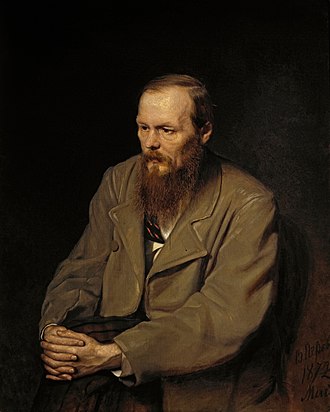
Fyodor Dostoevsky
The Russian novelist of the abyss — crime, faith, freedom, suffering — whose characters argue philosophy with their lives. Nietzsche called him the only psychologist he had anything to learn from.

Candide
Voltaire’s comic philosophical tale, in which a naïve young man and his optimist tutor suffer every disaster the eighteenth century could offer — ending with “we must cultivate our garden”.
The Blinding of Gloucester
Betrayed by Edmund, Gloucester is tied to a chair and blinded by Cornwall while Regan watches — and learns in the same instant that Edgar was innocent.
Lear Wakes: "No Cause, No Cause"
Lear wakes from madness to find Cordelia beside him, thinks he is in hell, begs her forgiveness — and she answers with two words that undo the whole tragedy.