

Contents · 17 sections · 28 min
Dostoevsky in Six Ideas
the essentialsFreedom is a terrible gift
Humanity longs for bread, miracle and authority more than freedom — the argument of the Grand Inquisitor.
Against the Crystal Palace
Human beings are not piano keys. Man would sooner go mad than be a rational, predictable organ-stop; twice two makes four is the beginning of death.
If there is no God…
Ivan Karamazov’s logic — without God and immortality, there is no virtue, and “everything is lawful”. The novel tests it on the murder of a father.
The theory that kills
Raskolnikov’s “extraordinary man” theory shows what happens when an abstract idea is allowed to license murder.
Suffering and redemption
Suffering accepted can purify; the guilty are saved not by argument but by love — Sonya, Alyosha, Zosima.
Polyphony
In Bakhtin’s famous reading, Dostoevsky’s novels contain many fully valid voices, none silenced by the author’s.
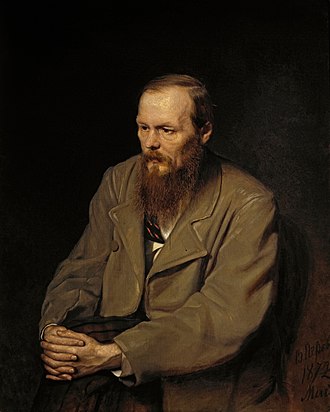
Fyodor Mikhailovich Dostoevsky wrote novels the way other people have convulsions. His books are crowded, feverish, full of scandals, confessions, murders, epileptic fits, sudden kisses and endless conversations in cramped rooms at three in the morning. And in them, more powerfully than in any treatise, the great questions of modern philosophy — whether God exists, whether everything is permitted if he does not, whether human beings are rational, whether freedom is a gift or a curse, whether suffering can be redeemed — are not argued about but lived, by characters who stake their lives on ideas and are destroyed or saved by them.
Friedrich Nietzsche called him “the only psychologist from whom I had anything to learn”. Freud called The Brothers Karamazov “the most magnificent novel ever written”. Einstein said Dostoevsky gave him more than any scientist. Existentialists from Shestov and Berdyaev to Albert Camus and Jean-Paul Sartre claimed him; so did Christian thinkers, Russian nationalists, and theorists of the novel. This essay tells his extraordinary life, reads the five great novels, sets out the philosophical questions they raise, and traces his influence.
A life like a novel
Childhood in a hospital for the poor
Dostoevsky was born on 11 November (30 October Old Style) 1821 in Moscow, in a wing of the Mariinsky Hospital for the Poor, where his father, Mikhail Andreevich, was a staff doctor. The family lived in cramped rooms on the hospital grounds; the children could see the destitute patients walking in the garden. His father was a stern, suspicious, miserly man who drank; his mother, Maria Fyodorovna, was gentle and pious, and taught the children to read from a book of Bible stories. She died of tuberculosis in 1837, when Fyodor was fifteen.
In 1828 the father was ennobled, and he bought a small estate with two villages, Darovoe and Cheremoshnya. In 1839 he died there — according to the family story, murdered by his own serfs, whom he had treated brutally. (Modern research suggests he may have died of a stroke, and that the murder story was a rumour; but Dostoevsky believed it.) A father murdered, perhaps with the secret wish of his sons — the theme would return forty years later in The Brothers Karamazov.
The engineer who wanted to write
Fyodor was sent to the Main Engineering Academy in St Petersburg, which he hated, though he graduated in 1843. He read voraciously — Pushkin, Gogol, Schiller, Balzac (he translated Eugénie Grandet), Hugo, George Sand, Dickens — and resigned his commission in 1844 to write.
His first novel, Poor Folk (1846), an epistolary story of a poor copying-clerk and a young woman, became a sensation overnight. The poet Nekrasov and the critic Grigorovich read the manuscript aloud all night and woke Dostoevsky at four in the morning to embrace him; the great critic Vissarion Belinsky hailed “a new Gogol”. Dostoevsky was intoxicated by fame — and then deflated by the cool reception of his next works, The Double (1846), a nightmare of a clerk haunted by his doppelgänger, and The Landlady. Belinsky turned against him.
The Petrashevsky circle and the mock execution
In 1847 Dostoevsky began to attend the Friday gatherings of Mikhail Petrashevsky, a civil servant who held discussions of French utopian socialism (Fourier), the abolition of serfdom, and censorship. Within it, Dostoevsky joined a smaller, more radical group around Nikolai Speshnev that discussed setting up a secret printing press. On 23 April 1849, after Dostoevsky had read aloud Belinsky’s banned Letter to Gogol — a furious attack on the Church and serfdom — he and the others were arrested.
After eight months in the Peter and Paul Fortress, on 22 December 1849, the prisoners were taken to Semyonovsky Square, read a sentence of death by firing squad, dressed in white shrouds, and offered the cross to kiss. The first three were tied to stakes; hoods were pulled over their eyes; the soldiers raised their rifles. Dostoevsky was in the second group, and calculated he had about five minutes to live. Then a drum roll sounded the retreat: a messenger galloped up with the Tsar’s “pardon” — the commutation of the sentences, planned in advance by Nicholas I as part of the punishment. One prisoner went mad.
Dostoevsky wrote to his brother Mikhail that evening: “Life is a gift, life is happiness, each minute could be an eternity of happiness.” Twenty years later, in The Idiot, Prince Myshkin describes a condemned man’s last minutes: “What if I didn’t have to die! What if I could return to life — what an eternity!… I would turn every minute into an age.”
Siberia
His sentence: four years of hard labour (katorga) in the prison fortress of Omsk in western Siberia, then service as a common soldier. On the way, in Tobolsk, the wives of the Decembrists — exiles of a failed 1825 revolt — gave each prisoner a New Testament with ten roubles hidden in its binding. It was the only book Dostoevsky was allowed in prison, and he kept it for the rest of his life.
In Omsk he lived in fetters among murderers, thieves and peasants, in a filthy barrack, never alone. He suffered his first unmistakable epileptic seizures. He discovered, to his horror and fascination, the inner lives of criminals — their pride, their capacity for both bestial cruelty and sudden tenderness — and the depth of the Russian peasants’ faith. He recorded it in the semi-fictional Notes from the House of the Dead (1860–62), which Tolstoy considered his finest book.
He emerged with what he called “the regeneration of convictions”. The utopian socialism of his youth gave way to faith in Christ and in the Russian people. In a famous letter of 1854 to Natalya Fonvizina, one of the Decembrist wives, he wrote:
If someone proved to me that Christ is outside the truth, and that in reality the truth were outside Christ, then I should prefer to remain with Christ rather than with the truth.
Marriage, debts, gambling
As a soldier in Semipalatinsk (in present-day Kazakhstan), he fell in love with Maria Dmitrievna Isaeva, a consumptive, hysterical widow; they married in 1857. The marriage was unhappy; she died in 1864. That same year his beloved brother Mikhail died, leaving him the debts of their failed magazines Time and Epoch.
In the 1860s he travelled in Europe with the young writer Apollinaria Suslova, a proud, cruel, emancipated woman who became the model for several of his “infernal women” (Polina in The Gambler, Nastasya Filippovna in The Idiot). And he discovered roulette, which became a mania. In Wiesbaden and Baden-Baden he lost everything again and again, pawned his wife’s wedding ring and his own coat, and wrote begging letters to friends.
Anna
In 1866, crushed by debt, he signed a monstrous contract with the publisher Stellovsky: if he did not deliver a new novel by 1 November, Stellovsky would acquire the rights to all his works for nine years without payment. With a month left, and Crime and Punishment still being serialized, he hired a twenty-year-old stenographer, Anna Grigorievna Snitkina, and dictated The Gambler in twenty-six days. He delivered it on time (Stellovsky had left town to avoid receiving it; Dostoevsky lodged it at a police station).
Then he proposed to Anna by telling her the plot of an imaginary novel about an old, sick, indebted artist who loves a young girl, and asking what she would answer if she were the girl. “I would answer that I love you and will love you all my life.” They married in 1867 and fled abroad from his creditors for four years — Dresden, Geneva, Florence, Vevey — in poverty. Their first daughter, Sofia, died at three months in Geneva; their son Alyosha died of epilepsy at three in 1878. Anna became the manager of his life: she took his dictation, paid off his debts, published his works herself, and cured him (eventually) of gambling. Without her, the great novels would not exist.
The prophet
Returning to Russia in 1871, Dostoevsky became a famous and controversial figure: editor of the conservative weekly The Citizen, author of a monthly one-man journal, A Writer’s Diary (1873–81), in which he wrote about everything — court cases, child abuse, suicides, the Eastern Question, Russia’s messianic destiny, the Jews (with ugly prejudice), spiritualism, and short stories like “The Meek One” and “The Dream of a Ridiculous Man”.
In June 1880 he gave the Pushkin Speech at the unveiling of the Pushkin monument in Moscow — a vision of the Russian soul’s “universal responsiveness”, its capacity to reconcile Europe and Russia. The audience wept, fainted, and rushed the stage; Westernizers and Slavophiles embraced. The mood lasted a few days.
He finished The Brothers Karamazov in November 1880. On 28 January (9 February) 1881 he died in St Petersburg of a pulmonary haemorrhage, at fifty-nine. Before dying he asked Anna to open the New Testament from Tobolsk at random; it fell at Matthew 3:15 — “suffer it to be so now”. He said, “You hear — ‘suffer it to be so’ — that means I shall die.” Some thirty thousand people followed his coffin.
Epilepsy
Dostoevsky’s epilepsy shaped his fiction. Several characters — Myshkin, Kirillov, Smerdyakov — are epileptics; and he described the “aura” before a seizure as a moment of supreme harmony and ecstasy: “for that moment one might give one’s whole life… I have touched God.” Neurologists have identified his condition as temporal lobe (“ecstatic”) epilepsy. Freud’s essay “Dostoevsky and Parricide” (1928) controversially read the seizures as hysterical and connected them to his father’s death.
The novelist’s method
Polyphony
The most influential theory of Dostoevsky’s art is Mikhail Bakhtin’s Problems of Dostoevsky’s Poetics (1929; revised 1963). Bakhtin argued that Dostoevsky invented the polyphonic novel: “a plurality of independent and unmerged voices and consciousnesses, a genuine polyphony of fully valid voices”. The author does not stand above his characters, judging and summing them up; each speaks with full weight, and the ideas are not resolved by the plot. Ivan Karamazov’s argument against God is not refuted by the author; it is answered — if at all — by other voices and other lives. This is why atheists and believers alike find their strongest case in Dostoevsky.
The idea-hero
Dostoevsky’s protagonists are “people of the idea”: possessed by a theory that becomes the passion of their lives — Raskolnikov’s extraordinary man, Kirillov’s man-god, Ivan’s rebellion, the Underground Man’s freedom. The novel tests the idea by letting it live to its end, in a human being.
Scandal and the threshold
His plots move from crisis to crisis: scandal scenes in which everyone gathers in a drawing room and everything explodes; confessions at thresholds, on staircases, in doorways; sudden reversals. Critics speak of his “fantastic realism” — Dostoevsky himself said: “I have my own view of reality in art, and what the majority call almost fantastic and exceptional is sometimes for me the very essence of the real.”
Doubles
Again and again he pairs a character with a “double” who embodies a suppressed side: Raskolnikov and Svidrigailov, Myshkin and Rogozhin, Stavrogin and his disciples, Ivan and Smerdyakov — and Ivan and his Devil.
The five great novels
1. Notes from Underground (1864)
See Notes from Underground and The Underground Man.
A nameless, spiteful forty-year-old retired official addresses imaginary “gentlemen” from his “underground”. Part I is a philosophical monologue; Part II, “Apropos of the Wet Snow”, recounts humiliations from his twenties.
Its target is the rationalist utopianism of Nikolai Chernyshevsky‘s What Is to Be Done? (1863): the theory of Rational Egoism — that people always act from self-interest, and that once they understand their true interest, enlightened science will build a perfect society, the Crystal Palace (an image drawn from London’s 1851 Great Exhibition building).
The Underground Man replies:
- Hyper-consciousness is a disease. The man of acute consciousness cannot act; he sees too many reasons, and spite and inertia are all that remain.
- Man does not want his advantage. “What man wants is simply independent choice, whatever that independence may cost and wherever it may lead.” He will act against his interest just to prove he is not a piano key or an organ stop.
- Two times two. “Twice two makes four is no longer life, gentlemen, but the beginning of death.” And: “Twice two makes five is sometimes a very charming thing too.”
- The love of suffering and destruction. “Man loves creating and making roads… but why does he also love destruction and chaos to the point of passion?” Perhaps “he is afraid of attaining his goal and completing the edifice”.
- The Crystal Palace. You cannot stick out your tongue at it, or make a rude gesture in your pocket — and “I would be afraid of this edifice because it is crystal and forever indestructible.”
Part II shows the theory’s human cost: his cruelty to the prostitute Liza, who offers him love, which he answers by pressing money into her hand. The book ends: “We are stillborn, and for a long time we have not been born of living fathers… Soon we shall contrive to be born somehow of an idea.”
Walter Kaufmann called Part I “the best overture for existentialism ever written”.
2. Crime and Punishment (1866)
See Crime and Punishment, Rodion Raskolnikov, Sonya Marmeladova, Sonya Reads Lazarus.
Rodion Raskolnikov, an impoverished former law student, murders an old pawnbroker with an axe — and, unplanned, her gentle half-sister Lizaveta. He has a theory, published in an article: humanity divides into “ordinary” people, who must live in obedience, and “extraordinary” people — Lycurgus, Solon, Mohammed, Napoleon — who have the right, even the duty, to “step over” (perestupit’) moral law, even over blood, if their idea requires it. The murder is to prove to himself which kind he is.
He also has a utilitarian rationale, overheard in a tavern conversation: kill one worthless, harmful old woman, use her money to save a hundred young lives — “one death and a hundred lives in exchange — it’s simple arithmetic!”
The novel is a “psychological account of a crime”, as Dostoevsky called it, and its real action is internal: fever, delirium, the cat-and-mouse interrogations of the magistrate Porfiry Petrovich (Columbo’s ancestor), the encounters with the drunk Marmeladov and his consumptive wife Katerina Ivanovna, and with his dark double Svidrigailov, a debauchee who has truly stepped over all limits and finds only boredom, ghosts, and a vision of eternity as “a country bathhouse, black and grimy, with spiders in every corner”. Svidrigailov shoots himself; Raskolnikov confesses.
The theory fails not in argument — no one refutes it — but in Raskolnikov’s body and conscience. “Did I murder the old woman? I murdered myself, not her!” He discovers he is not a Napoleon; he is a “louse” too, since a Napoleon would not have suffered. His salvation comes through Sonya, the meek young woman who prostitutes herself to feed her family, who reads him the raising of Lazarus, tells him to kiss the earth at the crossroads and confess, and follows him to Siberia.
In the epilogue, in prison, Raskolnikov has a dream of a plague of “trichinae” — microscopic spirits endowed with intelligence and will — that infect people with the certainty that they alone possess the truth; whole nations go mad, kill each other, and the world perishes. Only then, by the river on a spring morning, does love break through.
3. The Idiot (1869)
Dostoevsky’s attempt to portray “a positively beautiful man” — Christ-like goodness in the modern world — and his most painful novel. Prince Lev Nikolaevich Myshkin, an epileptic returning from a Swiss sanatorium, innocent, compassionate, truthful, enters the greedy, scheming world of St Petersburg society. He is drawn between two women: Nastasya Filippovna, beautiful, proud, a “fallen woman” kept since girlhood by her guardian, who longs for and flees from redemption, and the young Aglaya Yepanchina. His rival is the passionate merchant Rogozhin.
Myshkin’s goodness helps no one. In the famous scene, Nastasya throws a hundred thousand roubles into the fire. Rogozhin, Myshkin’s dark “brother” (they exchange crosses), finally kills Nastasya; the last chapter shows the two men keeping vigil over her body through the night, side by side — and Myshkin relapses into idiocy.
The novel contains Myshkin’s meditation on capital punishment and the mock execution, Ippolit’s “Necessary Explanation” (a dying young man’s confession and failed suicide), and the description of Holbein’s painting The Body of the Dead Christ in the Tomb (1521–22), which Dostoevsky saw in Basel in 1867 and which so shocked him that Anna feared a seizure. “A man could lose his faith from that painting!” says Myshkin. And the phrase “beauty will save the world” — reported, with irony, as the prince’s saying.
4. Demons (1871–72)
See Demons, Alexei Kirillov, Nikolai Stavrogin.
Dostoevsky’s “anti-nihilist” political novel, inspired by the Nechaev affair of 1869, in which the revolutionary Sergei Nechaev and his cell murdered a student, Ivan Ivanov, in Moscow to bind themselves together by shared guilt. The epigraphs are Pushkin’s poem “Devils” and Luke 8:32–36 — the demons cast out of a possessed man into a herd of swine, which rush down a cliff into the lake.
In a provincial town, a revolutionary cell is organized by Pyotr Verkhovensky, the son of an old idealistic liberal, Stepan Trofimovich — the generation of the 1840s that “begot” the nihilists of the 1860s (a direct reply to Fathers and Sons). At the centre stands Nikolai Stavrogin, aristocratic, handsome, magnetic, utterly empty — the source of every ideology in the book, who believes in none of them.
The novel’s philosophical figures are unforgettable:
- Kirillov, the engineer who reasons that “if there is no God, then I am God”, and that the highest assertion of self-will is suicide — to free humanity from the fear of death. He plays with a child’s ball, drinks tea all night, and believes that everything is good. His death scene is among the most terrifying in literature.
- Shatov, the former radical who now believes in Russia as the “God-bearing people” — and is murdered by the cell.
- Shigalyov, the theorist whose system concludes: “Starting from unlimited freedom, I arrive at unlimited despotism.” One tenth of humanity will rule the other nine tenths, reduced to a herd.
The chapter “At Tikhon’s”, in which Stavrogin confesses to the monk Tikhon that he raped a young girl who then hanged herself, was suppressed by the editor and published only in 1922.
Camus, who adapted the novel for the stage (Les Possédés, 1959), considered it one of the four or five greatest works ever written; to twentieth-century readers it seemed a prophecy of revolutionary terror.
5. The Brothers Karamazov (1879–80)
See The Brothers Karamazov, Ivan Karamazov, Alyosha Karamazov, The Grand Inquisitor, Rebellion — Returning the Ticket.
Dostoevsky’s last and greatest novel is a murder mystery, a family drama, a theological debate and a portrait of Russia. Fyodor Pavlovich Karamazov, a buffoon and voluptuary, is murdered. His three sons embody three human possibilities: Dmitri, passionate, sensual, honourable, reckless; Ivan, the cold rational intellectual; Alyosha, the novice monk, loving and serene. A fourth, probably illegitimate son, the servant Smerdyakov, epileptic and resentful, completes the family.
Book V, “Pro and Contra”, is the philosophical heart. In “Rebellion”, Ivan recounts real atrocities against children and declares that no future harmony could justify one child’s tears: he returns his ticket. In “The Grand Inquisitor”, he tells Alyosha his prose-poem about Christ’s return to sixteenth-century Seville, where the Inquisitor imprisons him and explains that humanity cannot bear freedom: people want miracle, mystery and authority, and bread. The Church has “corrected” Christ’s work. Christ answers with a silent kiss.
Book VI, “The Russian Monk”, is Dostoevsky’s answer: the life and teachings of the elder Zosima — that “each of us is guilty before all, for all”; that hell is “the suffering of being unable to love”; that one should love all God’s creation, every leaf, every ray of light.
The murder is committed by Smerdyakov, who tells Ivan he acted on Ivan’s own principle — “everything is permitted” — and with Ivan’s tacit consent. Smerdyakov hangs himself; Ivan collapses into brain fever, in which a shabby, gentlemanly Devil visits him and taunts him with his own ideas. Dmitri, innocent of the murder but guilty in desire, is convicted and accepts his suffering. The novel ends at the funeral of a little boy, Ilyusha, with Alyosha’s speech to the children by the stone: “Let us never forget how good it was here once, when we were all together, united by a good and kind feeling.”
The other works
The five great novels tower over everything, but much of Dostoevsky’s best writing lies elsewhere.
Poor Folk (1846)
His debut is a novel in letters between Makar Devushkin, an elderly, impoverished copying-clerk, and Varvara Dobroselova, a young orphan he secretly loves and helps with money he does not have. It belongs to the “Natural School” of Gogol’s followers, depicting the “little man” of Petersburg; but Dostoevsky turns Gogol’s comic pathos inward. Makar reads Gogol’s The Overcoat and is wounded by it — he feels exposed, mocked. Dostoevsky’s poor people have pride, self-consciousness and dignity: they are not objects of pity but subjects who resent pity. Varvara finally marries a brutal landowner to escape poverty; the last letter is Makar’s broken cry.
The Double (1846)
Mr Golyadkin, a timid government clerk, meets a man who is his exact double — same name, same appearance — but bold, charming and successful, who usurps his position and his life. Belinsky disliked it; later readers saw in it the birth of Dostoevsky’s great theme of the divided self. Dostoevsky himself said he never “put forward a more serious idea” — though he admitted he had botched the form. It anticipates Ivan’s Devil, and the psychology of the doppelgänger from Freud to Nabokov’s Despair.
White Nights (1848)
A “sentimental novel” of four nights and a morning: a lonely young “dreamer” in Petersburg during the white nights of summer meets a girl, Nastenka, on a canal embankment; for four nights they talk; he falls in love; she returns to her absent fiancé. “My God, a whole moment of bliss! Is that too little for the whole of a man’s life?” The dreamer — who lives in imagination rather than reality — is an early sketch of the Underground Man. Visconti (1957) and Bresson (Four Nights of a Dreamer, 1971) filmed it.
Notes from the House of the Dead (1860–62)
Presented as the memoir of a nobleman, Goryanchikov, sentenced for killing his wife, the book is really Dostoevsky’s account of Omsk. It is the first great work of prison literature in Russian — the ancestor of Chekhov’s Sakhalin Island and Solzhenitsyn’s Gulag Archipelago. Its portraits of convicts — the gentle Dagestani youth Aley whom the narrator teaches to read, the murderer Gazin who enjoys cutting children’s throats, the sly Isai Fomich — and its set pieces — the bath-house scene like a vision of hell, the Christmas theatricals, the eagle released from captivity — are unforgettable. Its insights: that the deprivation of freedom is the essence of punishment (“money is coined freedom”); that forced, pointless labour would crush any man; that among the worst criminals are deep wells of humanity. Tolstoy said he knew no better book in all modern literature, Pushkin included.
The Gambler (1866)
Dictated in twenty-six days to Anna, the novella is set in “Roulettenburg”, a German spa. Alexei Ivanovich, a tutor, is in love with the proud Polina and becomes addicted to roulette; around them circle a ruined Russian general, a French adventuress, and the magnificent “Granny”, an old Moscow matriarch who arrives in a wheelchair expected to die and leave her fortune, and instead gambles it away in two days. It is Dostoevsky’s most autobiographical work, and his analysis of the gambler’s psychology — the desire not for money but for the risk itself, the “feeling of challenging fate” — remains unsurpassed.
The Eternal Husband (1870)
A brilliant, almost comic novella: Velchaninov, a man of the world, is haunted by Pavel Pavlovich Trusotsky, the husband of a former mistress, now dead — the “eternal husband”, the man born to be a cuckold. Trusotsky’s love and hatred for his wife’s lover, culminating in an attempt to murder him with a razor while nursing him through an illness, make it a masterpiece of ambivalence.
The Adolescent (1875)
Also translated A Raw Youth. Arkady Dolgoruky, the illegitimate son of the nobleman Versilov, has an “idea”: to become as rich as Rothschild, not for luxury, but for the sense of power and independence it would bring. The novel is the least read of the major works, but contains Versilov’s dream of a Golden Age — humanity, having lost faith in God, loving one another more intensely as orphans in a world without immortality — one of Dostoevsky’s most moving visions.
Stories from A Writer’s Diary
- “Bobok” (1873): a writer lying in a cemetery overhears the corpses gossiping — in the short time before their consciousness fully fades, they decide to “strip naked” and tell the whole truth, with no shame. A grotesque Menippean satire.
- “The Meek One” (1876): a pawnbroker sits by the body of his young wife, who has jumped from a window clutching an icon, and tries to understand what happened. Written as the “stenographic record” of a mind in shock; Dostoevsky called it “a fantastic story”. Bresson filmed it as Une femme douce (1969).
- “The Dream of a Ridiculous Man” (1877): a man who has decided to shoot himself because “nothing matters” dreams that he is transported to a planet where people live in innocent paradise — and that he corrupts them, teaching them lies, then cruelty, then science and law. He awakes, abandons suicide, and goes out to preach love. “The main thing is to love others as yourself, that is the main thing, and that is everything.”
Petersburg
Dostoevsky is the poet of St Petersburg — “the most abstract and intentional city in the whole world”, as the Underground Man says, built by Peter the Great’s will on a swamp. His Petersburg is not the imperial city of palaces but the city of the Haymarket, of courtyards and stairwells, of cheap rooms rented “in a corner” behind a curtain, of yellow walls, canals, heat, dust, drunkards and prostitutes, and the unbearable stench of summer. Raskolnikov’s garret, “more like a cupboard than a room”, is “seven hundred and thirty paces” from the pawnbroker’s flat. Readers still walk the routes: the “Dostoevsky Petersburg” around Sennaya Square is a pilgrimage site.
The city is a state of mind — rational, artificial, cut off from the “soil” of Russia — and the dreams and fevers of its inhabitants grow out of its fog and white nights. Andrei Bely’s Petersburg (1913) and the whole tradition of the urban psychological novel descend from him.
Dostoevsky and Tolstoy
The two giants of the Russian novel never met. Both attended a lecture by Vladimir Solovyov in 1878; neither approached the other, and later both regretted it. Dostoevsky admired Anna Karenina deeply — he wrote in A Writer’s Diary that it was “a perfect work of art” which showed that Russia could say something new to Europe — but criticized its treatment of the Eastern Question. On hearing of Dostoevsky’s death, Tolstoy wrote to the critic Strakhov: “I never saw the man and never had any direct relations with him, and suddenly when he died I realized that he was the very closest, dearest and most necessary man for me… I wept and am weeping now.” In his last days Tolstoy was reading The Brothers Karamazov.
George Steiner’s Tolstoy or Dostoevsky (1959) set them against each other as the epic and the dramatic, the Homeric and the Shakespearean, the pagan and the Christian, the rationalist and the mystic. The Russian critic Merezhkovsky had already contrasted them as “seer of the flesh” and “seer of the spirit”. Most readers are drawn to one more than the other; the luckiest love both. See Leo Tolstoy.
Dostoevsky’s Christianity
Dostoevsky’s faith was never comfortable. “I am a child of this age, a child of unbelief and doubt, up till now and even (I know it) until the coffin is closed,” he wrote in 1854. “What terrible torments this thirst to believe has cost me.” His notebooks say that his “hosanna” passed “through a great furnace of doubt”. He gave his strongest arguments to unbelievers; his believers — Sonya, Myshkin, Zosima, Alyosha — answer with presence and love, not proof.
His Christianity is Russian Orthodox in its emphasis on kenosis (Christ’s self-emptying humility), on the resurrection (the Easter joy of Zosima’s teaching, the risen Lazarus), on the starets (spiritual elder — modelled on Father Amvrosy of the Optina Monastery, whom Dostoevsky visited with Solovyov in 1878 after his son’s death), on the sanctity of the earth (Alyosha kissing the ground), and on universal responsibility and forgiveness. It is hostile to Roman Catholicism, which he associated with the Inquisitor’s will to power, and to Protestant individualism.
Holbein’s dead Christ — a corpse already decaying, with no hint of resurrection — haunted him: it posed the question whether nature, “a vast, merciless, dumb beast”, had swallowed even Christ. His novels live on the edge of that question.
Capital punishment
Having stood before a firing squad, Dostoevsky wrote about the death penalty with an authority no one else had. In The Idiot, Prince Myshkin, just arrived in Petersburg, tells a footman about an execution by guillotine he saw in Lyon: the worst thing is not the pain but the certainty — “to kill for murder is a punishment incomparably worse than the crime itself. Murder by sentence is far more dreadful than murder by brigands.” The man murdered by robbers still hopes until the last second; the condemned man knows for certain. “Who can say that human nature is capable of bearing this without madness?” Victor Hugo’s The Last Day of a Condemned Man (1829), which Dostoevsky admired, had made a similar case; Camus’s “Reflections on the Guillotine” (1957) quotes this passage.
Translations
For English readers, which Dostoevsky? Constance Garnett (1861–1946) translated all the novels between 1912 and 1920, working at astonishing speed; her versions introduced Dostoevsky to the English-speaking world and are in the public domain. Nabokov and Joseph Brodsky complained that she smoothed Dostoevsky into a uniform Victorian English — “the reason English-speaking readers can barely tell the difference between Tolstoy and Dostoevsky is that they aren’t reading the prose of either one. They’re reading Constance Garnett” (Brodsky, as reported by David Remnick). Richard Pevear and Larissa Volokhonsky (from 1990) aimed to restore Dostoevsky’s roughness, repetitions and comic oddities; they became the standard, and have their own critics (Gary Saul Morson among them) who find them stilted. Other admired versions: David McDuff (Penguin), Michael Katz, Oliver Ready, Ignat Avsey. Comparing two translations of the same chapter is one of the best ways to see what Dostoevsky is doing.
Adaptations and echoes
Dostoevsky has been adapted endlessly: Akira Kurosawa’s The Idiot (1951), set in snowbound Hokkaido; Robert Bresson’s Pickpocket (1959), a transposition of Crime and Punishment; Lev Kulidzhanov’s Soviet Crime and Punishment (1970); Woody Allen’s Crimes and Misdemeanors (1989) and Match Point (2005), which rework Raskolnikov without the punishment; Andrzej Wajda’s Demons (1988); Ivan Pyryev’s Soviet Brothers Karamazov (1969); and the American 1958 Brothers Karamazov with Yul Brynner. Martin Scorsese’s Taxi Driver (1976) was written by Paul Schrader with Notes from Underground in mind. Ingmar Bergman, Andrei Tarkovsky and Krzysztof Kieślowski all acknowledged him.
How to read Dostoevsky
- Begin with Crime and Punishment — the most gripping and tightly constructed.
- Then Notes from Underground — short, abrasive, the key to the philosophy.
- Then The Brothers Karamazov — slowly; read “Rebellion” and “The Grand Inquisitor” twice.
- Then Demons and The Idiot, the darkest and the most painful.
- For shorter pleasures: “White Nights”, “The Meek One”, “The Dream of a Ridiculous Man”, The Gambler.
Keep a list of characters with their name-forms: Rodion Romanovich Raskolnikov is also Rodya, Rodka, and Rodion Romanych. Be patient with the long conversations; the ideas are in them. And don’t look for the author’s verdict — Dostoevsky leaves the argument open, and the reader must close it.
The philosophical questions
God and the problem of evil
Dostoevsky’s greatest gift to philosophy is Ivan’s rebellion — the problem of evil made concrete and personal. Ivan does not argue that God does not exist; he argues that even if God exists and even if all will be harmonized in the end, the price is too high, and he refuses to accept it. This “protest atheism” — against theodicy, from Gottfried Wilhelm Leibniz to Hegel — influenced Albert Camus (The Rebel), Albert Camus’s Dr Rieux in The Plague, and theologians from Karl Barth to Jürgen Moltmann. See Suffering & Evil.
Dostoevsky’s own answer is not an argument but a life: Zosima, Alyosha, Sonya — active love, humility, forgiveness, the acceptance of universal responsibility. Whether this answer “works” is the question every reader must decide.
Freedom
For Dostoevsky, freedom is the essence of humanity and also its terror. The Underground Man prefers freedom to happiness; the Grand Inquisitor argues that humans cannot bear freedom and will gladly exchange it for bread and authority; Kirillov’s freedom ends in suicide; Stavrogin’s freedom is emptiness. The Christ of the Legend respects freedom so much that he will not compel belief by miracle. Berdyaev called Dostoevsky’s whole work “a dialectic of freedom”.
“Everything is permitted”
If there is no God and no immortality, is there any ground for morality? Ivan’s formula — see Nihilism and Morality — is tested by Smerdyakov’s crime. Dostoevsky’s thesis is not simply that atheists must be immoral (Ivan himself is not a murderer) but that ideas have consequences, and that a society which loses its sense of the sacred will find intellectual justifications for anything. The thesis has been criticized as unfair to secular ethics; it has also been read as prophetic of twentieth-century totalitarianism.
Reason and its limits
From the Underground Man to Ivan, Dostoevsky attacks the Enlightenment faith that reason can design human happiness: rational egoism, utilitarian calculation, socialist utopias, positivist science. Human beings are irrational, contradictory, passionate; they need freedom, mystery and meaning more than comfort. This critique made him a hero to existentialists — and a precursor of twentieth-century critiques of technocracy.
Suffering and redemption
“Suffering is the sole origin of consciousness,” says the Underground Man. For Dostoevsky, voluntarily accepted suffering can purify: Raskolnikov must “accept suffering”, Dmitri chooses to suffer for a crime he did not commit, Sonya and Zosima embrace it. This is perhaps his most troubling idea for modern readers — critics from Turgenev to Nabokov found it morbid — but it is central to his Christianity of the cross.
The double and the divided self
Dostoevsky’s characters are split: proud and humble, cruel and tender, believing and unbelieving at once. “Man is broad, too broad; I would narrow him,” says Dmitri. “The devil is fighting with God, and the battlefield is the human heart.” This vision of the self influenced Freud, Nietzsche’s psychology of ressentiment, and twentieth-century fiction.
Russia and Europe
Dostoevsky believed in a messianic destiny for Russia as the bearer of true, Orthodox Christianity, and held that Europe was dying of materialism and Catholicism (which he saw as the Grand Inquisitor’s church) and socialism (its secular offspring). A Writer’s Diary also contains anti-Semitic and chauvinist passages that his admirers must face. The Pushkin Speech’s vision of “universal responsiveness” shows the generous side of the same nationalism.
Dostoevsky and the philosophers
- Søren Kierkegaard: neither read the other, but both set the existing individual against systems, faith against reason, and paradox against comfort.
- Friedrich Nietzsche: read him in 1887 with “extraordinary joy”; the parallels are uncanny (see Nietzsche’s page). Shestov’s Dostoevsky and Nietzsche: The Philosophy of Tragedy (1903) is the classic study.
- Nikolai Chernyshevsky and Russian Nihilism: his explicit target.
- Georg Wilhelm Friedrich Hegel: the Underground Man’s attack on the “laws of nature” and history; Ivan’s refusal of a harmony bought with suffering.
- Vladimir Solovyov: the young philosopher, Dostoevsky’s friend and companion on a pilgrimage to the Optina Monastery in 1878 after his son’s death; a model for Alyosha (and some say Ivan).
- Jean-Paul Sartre: “Dostoevsky wrote ‘If God did not exist, everything would be permitted’; and that, for existentialism, is the starting point” (Existentialism Is a Humanism).
- Albert Camus: The Myth of Sisyphus on Kirillov; The Rebel on Ivan; the stage adaptation of Demons.
- Freud: “Dostoevsky and Parricide” (1928).
- Bakhtin: polyphony.
- Levinas: Zosima’s “each of us is guilty before all” was a touchstone of his ethics of responsibility.
Influence on literature
Kafka read him as a “blood relative”. Gide wrote a book on him. Virginia Woolf, Joyce, Hesse, Faulkner, Mann, Camus, Bernanos, Mauriac, Greene, Bellow, Murdoch, J. M. Coetzee (The Master of Petersburg), Orhan Pamuk and countless others learned from him. Nabokov despised him (“a cheap sensationalist, clumsy and vulgar”) — the exception that proves his power. The detective novel, the psychological thriller and the novel of ideas all bear his marks.
Key terms
- Polyphony
- Bakhtin's term for the multiplicity of independent, fully valid voices in Dostoevsky's novels.
- Underground
- The condition of hyper-conscious, spiteful, isolated modern man.
- The extraordinary man
- Raskolnikov's theory that great men may "step over" moral law.
- Crystal Palace
- The symbol of rationalist utopia that the Underground Man refuses.
- Man-god / God-man
- Kirillov's ideal of man who becomes God by self-will, versus Christ, God who became man.
Using Dostoevsky in conversation
- On ideas that kill: Raskolnikov — any theory that licenses cruelty “for the greater good”.
- On technocracy and nudging: the Underground Man — people will act against their interest just to prove they are not piano keys.
- On freedom vs. security: the Grand Inquisitor — miracle, mystery, authority, and bread.
- On the problem of evil: Ivan’s ticket — no harmony is worth a child’s tear.
Fyodor Dostoevsky in two minutes
The Russian novelist of the abyss — crime, faith, freedom, suffering — whose characters argue philosophy with their lives. Nietzsche called him the only psychologist he had anything to learn from.
- Freedom is a terrible gift. Humanity longs for bread, miracle and authority more than freedom — the argument of the Grand Inquisitor.
- Against the Crystal Palace. Human beings are not piano keys. Man would sooner go mad than be a rational, predictable organ-stop; twice two makes four is the beginning of death.
- If there is no God…. Ivan Karamazov’s logic — without God and immortality, there is no virtue, and “everything is lawful”. The novel tests it on the murder of a father.
- The theory that kills. Raskolnikov’s “extraordinary man” theory shows what happens when an abstract idea is allowed to license murder.
- Suffering and redemption. Suffering accepted can purify; the guilty are saved not by argument but by love — Sonya, Alyosha, Zosima.
- Polyphony. In Bakhtin’s famous reading, Dostoevsky’s novels contain many fully valid voices, none silenced by the author’s.
“Beauty will save the world.” — The Idiot, Part III ch. 5
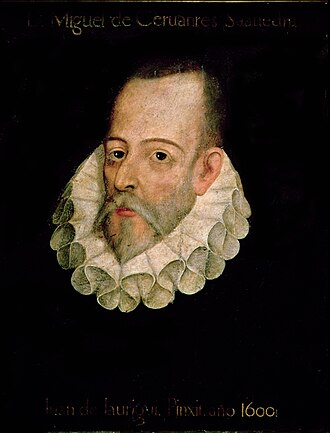
Answering: Miguel de Cervantes, William Shakespeare · Answered by: Nikolai Chernyshevsky, Friedrich Nietzsche, Anton Chekhov, Franz Kafka, Jean-Paul Sartre, Albert Camus
Curiosities
did you know?- He faced a firing squad that turned out to be a staged mock execution.
- He dictated The Gambler in 26 days to escape a ruinous contract — and married the stenographer.
- He kept the New Testament he was given on the way to Siberia for the rest of his life.
Questions to Argue About
debate club →- If God does not exist, is everything permitted?
- Would you accept universal happiness bought with one child’s suffering?
- Do people really want freedom — or bread and authority?
Arguments
argument library →Returning the Ticket
Ivan Karamazov’s rebellion — no future harmony can justify the suffering of innocent children.
- Innocent children suffer horribly in this world.
- A future harmony in which all is explained and forgiven might be promised.
- But no one has the right to forgive the torturer on behalf of the tortured child.
- A harmony built on unatoned innocent suffering is not worth its price.
∴ Even if God exists and harmony comes, I respectfully return my ticket.
2 objections
- Alyosha / Zosima: There is one who can forgive everything, because he gave his innocent blood for all — Christ. The answer is active love, not argument.
- Theodicists: Ivan judges God by a finite moral sense that cannot see the whole.
Less an argument against God’s existence than a moral refusal of every theodicy — the strongest form of the problem of evil in literature.
The Grand Inquisitor's Argument
Human beings cannot bear the freedom Christ offered; they want bread, miracle, mystery and authority — so the Church has rightly taken freedom away.
- Christ refused the devil’s three temptations — bread, miracle, power — to leave humanity free.
- Most human beings are weak and cannot bear free choice of good and evil.
- Freedom therefore makes most people miserable.
- Love for humanity means giving them what they can bear — bread and authority.
∴ “We have corrected your deed” — rulers who relieve people of freedom serve them better than Christ did.
2 objections
- Christ's silent kiss: The Inquisitor’s love is contempt in disguise; to deny human freedom is to deny human dignity.
- Liberal theory: Paternalism assumes the rulers are wiser and better than the ruled — the premise every tyranny claims.
In Their Own Words
7 quotationsBeauty will save the world.
Мир спасёт красота.
Context & when to use it
Ippolit mockingly reports that the Prince once said this. Myshkin never says it on stage; the line is asked about, not affirmed.
For the redemptive power of beauty and art. Solzhenitsyn built his Nobel lecture around it.
⚠ Often quoted as Dostoevsky’s own creed. In the novel it is reported second-hand, with irony.
Feed men, and then ask of them virtue!
Context & when to use it
What the people will inscribe on their banner, according to the Inquisitor — they will choose bread over freedom.
For welfare versus liberty, materialism, the politics of bread and circuses.
Nothing has ever been more insupportable for a man and a human society than freedom.
Context & when to use it
The Inquisitor’s accusation against Christ.
For Erich Fromm’s “escape from freedom”, authoritarianism, consumer comfort.
Each of us is guilty before all, for all, and I more than the others.
Context & when to use it
The dying youth Markel’s revelation, which shapes Zosima’s whole teaching.
For universal responsibility (Levinas loved this line), against blaming others.
What is hell? I maintain that it is the suffering of being unable to love.
Context & when to use it
From Zosima’s discourses, recorded by Alyosha.
For a non-literal hell; love as the meaning of life.
Above all, don’t lie to yourself. The man who lies to himself and listens to his own lie comes to a point that he cannot distinguish the truth within him.
Context & when to use it
Zosima to the buffoon Fyodor Karamazov.
For self-deception — Sartre’s bad faith in Dostoevsky’s words.
Starting from unlimited freedom, I arrive at unlimited despotism.
Context & when to use it
The revolutionary theorist describing his own system.
For how utopian revolutions end in tyranny — prophetic of the twentieth century.
Through Their Characters
11If there is no God and no immortality, then everything is permitted.
Context & when to use it
Ivan’s argument that without immortality there is no ground for virtue — first reported by Miusov, later echoed by Dmitri and fatally taken up by Smerdyakov.
The classic statement of moral nihilism; to ask whether ethics needs God.
⚠ The exact sentence “If God does not exist, everything is permitted” is not in the novel. It is a compression of several passages.
It’s not God that I don’t accept, Alyosha, only I most respectfully return Him the ticket.
Context & when to use it
After listing the tortures of children, Ivan refuses a harmony bought with their tears.
For the problem of evil, or for rejecting any utopia whose price is innocent suffering.
The whole world of knowledge is not worth that child’s prayer to “dear, kind God”!
Context & when to use it
On the little girl locked in the freezing privy by her parents.
When abstractions are used to justify concrete cruelty.
I am a sick man… I am a spiteful man. I am an unattractive man.
Context & when to use it
One of the great opening lines — self-diagnosis as self-display.
For the modern anti-hero, self-loathing, the confessional voice.
Twice two makes four is no longer life, gentlemen, but the beginning of death.
Context & when to use it
Against a world fully explained by reason — he even admits “twice two makes five is sometimes a very charming thing too.”
Against technocracy, determinism, utopias of calculation.
Man… would deliberately desire the most fatal rubbish… simply to prove to himself that men are still men and not the keys of a piano.
Context & when to use it
Against rational egoism — the most advantageous advantage is one’s own free, even foolish, choice.
Against behavioural economics, social engineering, algorithmic prediction of humans.
To be too conscious is an illness — a real thorough-going illness.
Context & when to use it
Hyper-consciousness paralyses action — the Underground Man as a Hamlet in a mousehole.
For overthinking, anxiety, the intellectual’s paralysis.
I wanted to find out then and quickly whether I was a louse like everybody else or a man.
Context & when to use it
Raskolnikov’s confession to Sonya — the murder was a test of whether he dared to “step over”.
For the will to power, the Napoleonic complex, ideas that kill.
Did I murder the old woman? I murdered myself, not her! I crushed myself once for all, for ever.
Context & when to use it
To Sonya. The crime destroyed the criminal.
For how evil acts deform the doer; guilt as self-destruction.
Pain and suffering are always inevitable for a large intelligence and a deep heart.
Context & when to use it
In conversation with Porfiry about his article on extraordinary men.
For the price of depth and sensitivity.
If there is no God, then I am God.
Context & when to use it
Kirillov’s logic — if God is dead, the highest point of my self-will is to kill myself.
For the man-god, the Übermensch before Nietzsche, the logical suicide.
Sententiae
phrases in the originalMir spasyot krasota
Origin. Dostoevsky, The Idiot (1869), Part III — attributed to Prince Myshkin by Ippolit. — Fyodor Dostoevsky
⚠ Reported, not asserted, in the novel — and asked with irony.
For the redemptive power of beauty.
Vsyo pozvoleno
Origin. The Brothers Karamazov (1880) — the conclusion attributed to Ivan’s theory if there is no God and no immortality. — Fyodor Dostoevsky, The Brothers Karamazov
⚠ The full sentence “if God does not exist, everything is permitted” does not appear verbatim.
For moral nihilism and its consequences.
Explore Next
related by shared connections
Ivan Turgenev
The most Western of the great Russian novelists, whose Fathers and Sons created Bazarov and gave the word “nihilist” to an entire generation.
What Is to Be Done?
Chernyshevsky’s prison-written utopian novel of “new people” and rational egoism — badly written, enormously influential, the target of Dostoevsky’s Underground Man.

Augustine of Hippo
North African bishop, convert, and the most influential Christian thinker of the Latin West — inventor of the autobiography of the inner self.

Friedrich Heinrich Jacobi
German critic of the Enlightenment who sparked the Pantheism Controversy and gave philosophy the word “nihilism”.
Rational Egoism
Chernyshevsky’s doctrine that people always act from self-interest, and that enlightened self-interest will make everyone good.
Sartre vs. Camus
The most famous intellectual break of the twentieth century — two friends of the Resistance fall out in 1952 over revolution, violence, and The Rebel.