









Contents · 28 sections · 32 min
Nietzsche in Eight Ideas
the essentialsGod is dead
Not a metaphysical claim but a cultural diagnosis — belief in the Christian God has become unbelievable, and with it the foundation of European values collapses.
Nihilism
The highest values devalue themselves. The coming centuries will face the abyss of meaninglessness unless new values are created.
Master and slave morality
“Good and bad” was the noble’s self-affirmation; “good and evil” is the slave’s revenge, born of ressentiment.
Will to power
Life is not mere self-preservation but the drive to grow, expand, overcome — including self-overcoming.
Eternal recurrence
What if you had to live this life again, innumerable times, exactly the same? Could you will it? The ultimate test of affirmation.
The Übermensch
Man is a rope stretched between animal and Übermensch — a rope over an abyss. The overman creates his own values.
Amor fati
Not merely to bear what is necessary, still less to conceal it — but to love it.
Perspectivism
There are no facts, only interpretations. There is no “view from nowhere”.
“I am not a man, I am dynamite.” Friedrich Nietzsche wrote this of himself in Ecce Homo, a few months before his mind collapsed, and history proved him right. Almost unread in his lifetime, he became within a generation the most influential and most misused philosopher of the modern age. Existentialists, postmodernists, psychoanalysts, anarchists, Zionists, feminists, fascists, novelists, composers and self-help gurus have all claimed him. He announced the death of God, diagnosed the coming of nihilism, unmasked the origins of morality, attacked Plato, Christianity, Kant, democracy, nationalism and anti-Semitism, and proposed in their place a philosophy of affirmation — the will to power, the eternal recurrence, amor fati, the Übermensch.
He was also one of the great stylists of the German language: aphorist, polemicist, poet, prophet, comedian. To read him is to be argued with, flattered, insulted, provoked. This essay sets out his life, the phases of his work, his central ideas in their own terms, the major interpretive controversies, the misuses of his name, and his vast legacy.
Life
The pastor’s son
Friedrich Wilhelm Nietzsche was born on 15 October 1844 in Röcken, a village near Leipzig in Prussian Saxony — on the birthday of King Frederick William IV, after whom he was named. His father, Carl Ludwig, a Lutheran pastor, died in 1849 of what was then called “softening of the brain”, when Friedrich was four; his younger brother Joseph died months later. The family moved to Naumburg, where Friedrich grew up in a household of women — his mother Franziska, his sister Elisabeth, his grandmother and two aunts. A serious, pious boy, he was nicknamed “the little pastor”.
From 1858 to 1864 he attended Schulpforta, the most famous boarding school in Germany, with a rigorous classical curriculum. He studied theology and philology at Bonn, abandoned theology (and, privately, Christianity), and followed his teacher Friedrich Ritschl to Leipzig.
Schopenhauer and Wagner
Two encounters in Leipzig defined his youth. In 1865 he found Arthur Schopenhauer‘s The World as Will and Representation in a second-hand bookshop and read it in a fortnight of feverish absorption — “here every line cried out renunciation, denial, resignation”. In 1868 he met Richard Wagner, whose music he already worshipped, and who shared his passion for Schopenhauer. Wagner, thirty-one years older, became a father-figure; Nietzsche became a regular guest at Tribschen, Wagner’s villa on Lake Lucerne, and devoted to Cosima, Wagner’s wife.
Professor at twenty-four
In 1869, on Ritschl’s extraordinary recommendation — “he will be able to do anything he wants” — Nietzsche was appointed associate professor of classical philology at Basel, at twenty-four, before completing his doctorate (Leipzig awarded it without examination). He renounced Prussian citizenship and remained stateless for the rest of his life. In 1870 he served as a medical orderly in the Franco-Prussian War, contracting dysentery and diphtheria; his health was never good again.
The Birth of Tragedy and its scandal
His first book, The Birth of Tragedy from the Spirit of Music (1872), was a manifesto for Wagner disguised as classical scholarship. The philologist Ulrich von Wilamowitz-Moellendorff savaged it in a pamphlet titled Zukunftsphilologie! (“Philology of the Future!”), and Nietzsche’s academic reputation never recovered; students stayed away from his lectures.
Breaks and wanderings
Nietzsche’s relationship with Wagner soured. At the first Bayreuth Festival in 1876 he was repelled by the nationalist, anti-Semitic, bourgeois spectacle, and Parsifal, with its Christian renunciation, completed the break. Human, All Too Human (1878), dedicated to Voltaire, announced a new “free spirit” — sceptical, scientific, aphoristic.
In 1879 illness forced him to resign his chair, on a modest pension. For the next ten years he wandered — Sils-Maria in the Swiss Engadine in summer, Genoa, Nice, Rapallo, Venice and Turin in winter — living in cheap boarding houses, half-blind, suffering migraines and vomiting for days at a time, writing a book a year that almost no one bought. Thus Spoke Zarathustra Part IV was printed in an edition of forty copies at his own expense; he could find only seven people to send it to.
Lou Salomé
In 1882 he fell in love with Lou Andreas-Salomé, a brilliant twenty-one-year-old Russian, in a triangle with his friend Paul Rée. A famous photograph shows Lou in a cart holding a whip, with Nietzsche and Rée harnessed in front. Nietzsche proposed (twice, it is said); she refused. The collapse of the friendship, inflamed by his sister Elisabeth’s jealous meddling, left him desolate. Lou went on to become a novelist, a confidante of Rilke, and a psychoanalyst trained by Freud.
Collapse
1888 was a year of astonishing productivity: The Case of Wagner, Twilight of the Idols, The Antichrist, Ecce Homo, Nietzsche contra Wagner, and the Dionysian Dithyrambs. Its last weeks show signs of euphoria and grandiosity — chapter titles in Ecce Homo include “Why I Am So Wise”, “Why I Am So Clever”, “Why I Write Such Good Books”.
On 3 January 1889, in Turin, he collapsed in the Piazza Carlo Alberto. The story that he threw his arms around a horse being flogged by a coachman is told by early biographers and may be legend. In the following days he sent short letters — the Wahnzettel, “madness notes” — signed “Dionysus” or “The Crucified”, one to Jacob Burckhardt saying he would rather be a Basel professor than God. His friend Franz Overbeck brought him back to Basel.
The long darkness
He lived eleven more years in mental and physical incapacity, cared for by his mother and then by Elisabeth in Weimar. The cause is still debated — tertiary syphilis was long the standard diagnosis; recent proposals include CADASIL (a hereditary vascular disease), a brain tumour or frontotemporal dementia. He died on 25 August 1900. Fame had arrived just as he became unable to know it.
Elisabeth and the “Nietzsche Archive”
Elisabeth Förster-Nietzsche had married Bernhard Förster, a prominent anti-Semite, and helped him found “Nueva Germania”, a colony of “pure” Germans in Paraguay, which failed; Förster killed himself in 1889. Returning, she took control of her brother’s literary estate, founded the Nietzsche Archive, wrote a hagiographic biography, suppressed and forged letters, and compiled from his notebooks a book called The Will to Power (1901; enlarged 1906), presented as his systematic masterpiece. Later she embraced Mussolini and Hitler, who visited the Archive and attended her funeral in 1935. The critical edition by Giorgio Colli and Mazzino Montinari (from 1967) finally restored the texts.
The shape of the work
Nietzsche’s writing is usually divided into three periods:
| Period | Works | Character |
|---|---|---|
| Early (1872–76) | The Birth of Tragedy; Untimely Meditations (4) | Wagnerian, Schopenhauerian, cultural critique |
| Middle (1878–82) | Human, All Too Human; Daybreak; The Gay Science (Books I–IV) | “Free spirit”, positivist-leaning, aphoristic, psychological |
| Late (1883–88) | Zarathustra; Beyond Good and Evil; Genealogy; GS Book V; Twilight; Antichrist; Ecce Homo | Will to power, eternal recurrence, revaluation of values |
He wrote in aphorisms, essays, parables, songs and dithyrambs, never in a system — “I mistrust all systematizers and avoid them. The will to a system is a lack of integrity” (TI “Maxims” 26). His style is part of his philosophy: perspectives, masks, provocations designed to unsettle the reader into thinking.
The Birth of Tragedy: Apollo and Dionysus
Nietzsche’s first book asks how Greek tragedy arose and why it died. Greek art, he argues, grew from the tension between two drives, named after two gods:
- The Apollonian — the principle of form, measure, individuality, dream, clarity, the beautiful illusion. Its arts are sculpture and epic. It corresponds to Schopenhauer’s principium individuationis, the “veil of Māyā”.
- The Dionysian — the principle of intoxication, ecstasy, the dissolution of the individual into the primordial unity of nature, the suffering and creative will beneath appearances. Its art is music.
The Greeks were not serene and cheerful, as Winckelmann had claimed; they knew “the terror and horror of existence”. He tells the legend of King Midas, who captured Silenus, companion of Dionysus, and asked what is best for man. Silenus laughed: “Wretched ephemeral race… the very best is utterly beyond your reach: not to be born, not to be, to be nothing. But the second best for you is — to die soon” (BT 3). Greek art was the Greeks’ way of making life bearable: Apollonian beauty veiled the Dionysian abyss.
Attic tragedy — Aeschylus and Sophocles — was the supreme union of the two: the Dionysian chorus, out of whose music the Apollonian vision of the hero is born. In tragedy, the spectator, through the hero’s destruction, feels the indestructible joy of life beneath the flux of individuals. “It is only as an aesthetic phenomenon that existence and the world are eternally justified” (BT 5).
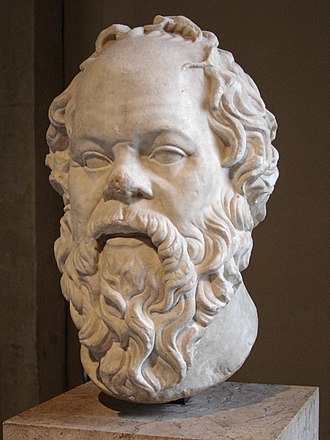
Tragedy died, Nietzsche argues, at the hands of Euripides, who brought rational, everyday people onto the stage — and behind Euripides stood Socrates, the “theoretical man” who believed that reason could understand and even correct being. “Aesthetic Socratism” — “to be beautiful everything must be intelligible” — killed tragic wisdom. The book ends by hailing Wagner’s music drama as the rebirth of tragedy in Germany.
He compared Hamlet to the Dionysian man: both “have once looked truly into the essence of things, they have gained knowledge, and nausea inhibits action” (BT 7) — knowledge kills action, not excess of reflection.
In a preface added in 1886, “Attempt at a Self-Criticism”, Nietzsche mocked the book’s Wagnerism and Schopenhauerian pessimism — but kept its central question: what is the meaning of the Greeks’ “pessimism of strength”?
The Untimely Meditations
Four essays (1873–76) attacked contemporary German culture:
- David Strauss, the Confessor and the Writer — against the complacent “cultural philistine”.
- On the Uses and Disadvantages of History for Life — the most important. Too much history paralyses; a people needs the power to forget. He distinguishes monumental history (great examples to inspire), antiquarian history (reverent preservation), and critical history (judging and condemning the past to free ourselves). Each serves life only in the right measure.
- Schopenhauer as Educator — the philosopher as exemplar of a life lived truthfully. “Be yourself! All you are now doing, thinking, desiring, is not you yourself.”
- Richard Wagner in Bayreuth — the last homage before the break.
The free spirit: psychology and suspicion
In the middle period, Nietzsche practises a psychology of unmasking. He traces “higher” things to “lower” origins: altruism to vanity, justice to the balance of power, asceticism to a refined will to dominate, the love of truth to fear. “Human, all too human.” He admires the French moralists — La Rochefoucauld, Chamfort, Stendhal — and their art of the psychological aphorism. “The thought of suicide is a great consolation: by means of it one gets through many a dark night” (BGE 157).
Daybreak (1881) begins his “campaign against morality”. The Gay Science (1882) celebrates the joy of knowledge — “the gay science”, after the troubadours’ gaya scienza — and contains three of his most important ideas: the death of God (§§108, 125), amor fati (§276), and the eternal recurrence (§341).
Paul Ricœur later grouped Nietzsche with Marx and Freud as the three “masters of suspicion” — thinkers who taught us to read consciousness as a mask for hidden forces.
The death of God
The madman
The most famous passage in Nietzsche is GS §125, “The Madman” — see The Madman with the Lantern and The Death of God. A madman lights a lantern in the bright morning, runs into the marketplace, and cries: “I seek God! I seek God!” The bystanders, who do not believe in God, laugh. Has he got lost? Is he hiding? Has he emigrated?
“Whither is God?” he cried. “I will tell you. We have killed him — you and I. All of us are his murderers. But how did we do this? How could we drink up the sea? Who gave us the sponge to wipe away the entire horizon? What were we doing when we unchained this earth from its sun? Whither is it moving now?… Are we not straying as through an infinite nothing?… God is dead. God remains dead. And we have killed him.”
The madman falls silent. “I have come too early. My time is not yet. This tremendous event is still on its way.”
What it means
“God is dead” is not a metaphysical argument for atheism; Nietzsche assumes that. It is a cultural diagnosis: in modern Europe, belief in the Christian God has become unbelievable — killed by science, historical scholarship, and above all by Christianity’s own demand for truthfulness, which turned against its foundations. “What, in all strictness, has really conquered the Christian God? … Christian morality itself, the concept of truthfulness taken ever more strictly” (GS 357; GM III 27).
The point of the parable is that the atheists in the marketplace have not grasped the consequences. If God is dead, then everything built on him — Christian morality, the meaning of suffering, the value of truth, the idea of a “true world” beyond this one — has lost its foundation. Europe is living on borrowed capital, like light from a star that has already died.
Nihilism
The consequence of God’s death is nihilism — see Nihilism. In his notebooks of 1885–88 Nietzsche calls it “the uncanniest of all guests”, standing at the door. Nihilism means that “the highest values devalue themselves” — the values that gave meaning (God, truth, morality, a purpose of history) turn out to be fictions, and there seems to be nothing to replace them.
He distinguishes:
- Passive nihilism — exhaustion, weariness, a “Buddhism of Europe”: the will to nothingness.
- Active nihilism — a sign of strength: destroying the old values in order to clear the ground for new ones.
The “Last Man” of Zarathustra is the face of passive nihilism: the contented creature who has invented happiness, wants no danger, no greatness, no suffering, only comfort — “‘We have invented happiness,’ say the last men, and they blink” (Z Prologue 5).
Nietzsche’s whole late philosophy is an attempt to overcome nihilism — not by returning to the old values, but by a “revaluation of all values”.
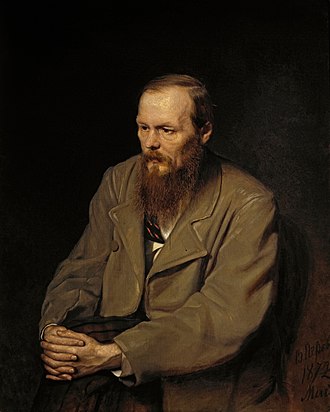
He was fascinated by Russian nihilism and by Dostoevsky, whom he discovered in 1887: “Dostoevsky, the only psychologist from whom I had anything to learn” (TI “Skirmishes” 45). See Russian Nihilism.
Thus Spoke Zarathustra
The book
Thus Spoke Zarathustra: A Book for All and None (four parts, 1883–85) is Nietzsche’s most famous and strangest book — a prophetic prose-poem in the style of Luther’s Bible, full of parables, speeches, songs and visions. See Thus Spoke Zarathustra. He called it “the greatest gift that has ever been made to mankind”.
Zarathustra — named after the Persian prophet Zoroaster, who first made morality a cosmic war between good and evil, and so must be the first to recognize his error (EH “Destiny” 3) — comes down from ten years of solitude in the mountains, overflowing with wisdom like a cup that wants to overflow, and goes to teach humanity.
The Übermensch
In the marketplace, before a crowd waiting for a tightrope walker, he proclaims:
I teach you the overman. Man is something that shall be overcome. What have you done to overcome him? … Man is a rope, tied between beast and overman — a rope over an abyss. (Z Prologue 3–4)
The Übermensch (“overman”, “superman”) is the meaning of the earth after God’s death: the human being who creates new values, affirms life wholly, and transforms himself — see The Übermensch. The crowd laughs and asks for the Last Man instead. The tightrope walker falls to his death, startled by a buffoon who leaps over him; Zarathustra carries his corpse away. “You have made danger your vocation; there is nothing contemptible in that.”
The three metamorphoses
The first speech, “On the Three Metamorphoses”, traces the spirit’s development:
- The camel — the reverent spirit that kneels to take on heavy burdens: “thou shalt”.
- The lion — which seizes freedom and says a sacred “No” to the dragon “Thou shalt”, whose every scale glitters with “values thousands of years old”.
- The child — “innocence and forgetting, a new beginning, a game, a self-propelled wheel, a first movement, a sacred Yes.” Only the child can create new values.
Memorable speeches
- “On the Despisers of the Body”: the body is a “great reason”; behind your thoughts stands “a mighty ruler, an unknown sage — whose name is self. In your body he dwells; he is your body.”
- “On the New Idol”: “State is the name of the coldest of all cold monsters.”
- “On the Flies of the Marketplace”: flee into solitude from the poisonous flies of the crowd.
- “On the Tarantulas”: the preachers of equality are tarantulas whose secret is revenge.
- “On Self-Overcoming”: “Where I found the living, there I found will to power.”
- “On Redemption”: the will cannot will backwards — “‘It was’ — that is the name of the will’s gnashing of teeth.” Redemption is to transform every “it was” into “thus I willed it”.
- “The Drunken Song”: “All joy wants eternity — wants deep, deep eternity.”
Will to power
The doctrine
“This world is the will to power — and nothing besides! And you yourselves are also this will to power — and nothing besides!” (notebook 1885, Nachlass 38[12]). The phrase appears in the published works first in Zarathustra — see Will to Power.
Against Schopenhauer’s will-to-live and Darwin’s struggle for existence, Nietzsche argues that living things do not primarily seek to preserve themselves but to discharge their strength, to grow, expand, overcome resistance: “a living thing seeks above all to discharge its strength — life itself is will to power; self-preservation is only one of the indirect and most frequent results” (BGE 13).
What it is not
- Not mere domination of others. The highest expressions of will to power are self-overcoming, creation, interpretation, art, philosophy. The ascetic priest — who turns his will against himself — is a master of the will to power.
- Not necessarily a metaphysics. Scholars dispute whether Nietzsche held the will to power as a cosmological thesis about all reality (as some notebooks suggest), a psychological hypothesis about human motivation, a biological claim about organisms, or a perspective he offered experimentally. Many note that the cosmological version appears mainly in unpublished notes, and that The Will to Power as a book is Elisabeth’s construction.
Interpretation
Knowledge itself is an expression of will to power: to know is to impose form, to interpret. “Against positivism, which halts at phenomena — ‘There are only facts’ — I would say: No, facts is precisely what there is not, only interpretations” (Nachlass 7[60], 1886–87).
Perspectivism and truth
“There is only a perspective seeing, only a perspective ‘knowing’; and the more affects we allow to speak about one thing, the more eyes, different eyes, we can use to observe one thing, the more complete will our ‘concept’ of this thing, our ‘objectivity’, be” (GM III 12).
This perspectivism does not say that all views are equally good — Nietzsche ranks perspectives ruthlessly — but that there is no “view from nowhere”, no “pure, will-less, painless, timeless knowing subject” of the kind Kant and Schopenhauer imagined.
He also questions the value of truth. Why truth rather than untruth? “The falseness of a judgment is for us not necessarily an objection to a judgment… The question is to what extent it is life-promoting” (BGE 4). We need simplifications, fictions, logical forms, the belief in enduring things — “truths are illusions which we have forgotten are illusions” (On Truth and Lies in a Nonmoral Sense, 1873). Yet Nietzsche also prizes intellectual honesty (Redlichkeit) above almost everything; it is the virtue that killed God. The tension between his critique of truth and his own passionate truthfulness is one of the deepest in his thought.
How the “true world” became a fable
Twilight of the Idols compresses the history of Western metaphysics into six stages under the title “How the ‘True World’ Finally Became a Fable”:
- The true world is attainable for the wise, the pious, the virtuous — Plato.
- Unattainable now, but promised for the sinner who repents — Christianity.
- Unattainable, unprovable, but a consolation and an imperative — Kant (“Königsbergian”).
- Unattainable, therefore unknown, therefore not binding — positivism (cockcrow).
- An idea no longer good for anything — let us abolish it (bright day; Plato’s embarrassed blush).
- “We have abolished the true world: what world has remained? the apparent one perhaps? … But no! With the true world we have also abolished the apparent one” (noon; INCIPIT ZARATHUSTRA).
Beyond Good and Evil
Beyond Good and Evil: Prelude to a Philosophy of the Future (1886) is the most concentrated statement of his mature thought. See Beyond Good and Evil.
- The prejudices of philosophers. “Supposing truth is a woman — what then?” Dogmatic philosophers have been clumsy suitors. Every great philosophy is “the personal confession of its author and a kind of involuntary and unconscious memoir” (BGE 6).
- Against Kant. §11’s mockery of the synthetic a priori explained “by means of a faculty” — the virtus dormitiva of opium.
- Against Descartes. “I think” presupposes that there is an “I” that thinks, that thinking is an activity caused by a subject — “a thought comes when ‘it’ wants, and not when ‘I’ want” (BGE 17).
- The free spirits and the “philosophers of the future”, who will be “commanders and legislators” of values.
- Master and slave morality (BGE 260), developed fully in the Genealogy.
- What is noble? — reverence, distance, the “pathos of distance” between ranks.
- §146: “Whoever fights monsters should see to it that in the process he does not become a monster. And if you gaze long enough into an abyss, the abyss will gaze back into you.”
The Genealogy of Morality
On the Genealogy of Morality: A Polemic (1887) is Nietzsche’s most sustained argument — three essays tracing moral concepts to their origins. See On the Genealogy of Morality.
First essay: “good and evil” vs. “good and bad”
Originally, Nietzsche claims, “good” was the self-designation of the noble, powerful, happy — “we the good, the beautiful, the happy” — and “bad” (schlecht) simply meant the common, the plain, the low. This is master morality: it begins with a triumphant Yes to itself.
Slave morality begins with a No. The oppressed, unable to take revenge in deeds, take “imaginary revenge” in values: they call the strong “evil” (böse) and themselves, by contrast, “good” — the meek, the humble, the patient. “The slave revolt in morality begins when ressentiment itself becomes creative and gives birth to values” (GM I 10). See Master and Slave Morality.
Nietzsche identifies this revolt with the priestly Jewish people and with Christianity, its heir (“Rome against Judea, Judea against Rome”). His image: lambs resent birds of prey and conclude that birds of prey are evil — but “it would be absurd to ask strength not to express itself as strength.” The fiction of a “subject” behind every deed, free to choose whether to be strong or weak, lets the weak blame the strong for their strength.
(Nietzsche’s language about Jews in the Genealogy has been read as anti-Semitic; elsewhere he praised Jews extravagantly and despised anti-Semites — “I will have all anti-Semites shot”, reads one of the madness notes. The debate is complex: his target is the priestly revaluation, and he attributes it to Christianity above all.)
Second essay: guilt and bad conscience
Morality’s central concept of guilt (Schuld), Nietzsche notes, comes from the material concept of debt (Schulden). Punishment originated in the creditor’s right to inflict cruelty on a defaulting debtor as compensation — the “festival” of making suffer. “Without cruelty there is no festival.”
Bad conscience arose when humans were enclosed in society and the state: the instincts that could no longer discharge outward turned inward — “all instincts which do not discharge themselves outwardly turn inwards… this is what I call the internalization of man” (GM II 16). Religion then made this guilt infinite: a debt to God that can never be repaid — until God himself pays it, sacrificing himself for man’s debt, “that stroke of genius on the part of Christianity”.
“Only that which has no history is definable” (GM II 13): punishment has had many meanings, layered over time — the essence of the genealogical method.
Third essay: the ascetic ideal
Why have philosophers, artists, priests and saints so often embraced asceticism — poverty, chastity, humility, self-denial? Because the ascetic ideal gave suffering a meaning. “Man, the bravest of animals and the one most accustomed to suffering, does not repudiate suffering as such; he desires it, he even seeks it out, provided he is shown a meaning for it.” The ascetic priest redirects ressentiment inward: “Someone must be to blame for my suffering” — “Yes, my sheep, someone must be to blame: but you yourself are this someone” (GM III 15).
Even modern science, with its unconditional will to truth, is a form of the ascetic ideal. The book ends: “man would rather will nothingness than not will” (GM III 28).
Eternal recurrence
The greatest weight
See Eternal Recurrence.
What if some day or night a demon were to steal after you into your loneliest loneliness and say to you: “This life as you now live it and have lived it, you will have to live once more and innumerable times more; and there will be nothing new in it, but every pain and every joy and every thought and sigh … will have to return to you, all in the same succession and sequence — even this spider and this moonlight between the trees, and even this moment and I myself.” … Would you not throw yourself down and gnash your teeth and curse the demon who spoke thus? Or have you once experienced a tremendous moment when you would have answered him: “You are a god and never have I heard anything more divine.” (GS 341)
Nietzsche dated the thought to August 1881, by a pyramidal boulder near Surlej on Lake Silvaplana, “6000 feet beyond man and time”.
Cosmology or test?
Is eternal recurrence a cosmological claim — that, given finite matter and infinite time, every configuration must repeat — which Nietzsche explored in his notebooks? Or an ethical thought-experiment — a test of whether one affirms one’s life completely? Most interpreters today emphasize the second: the question is not whether recurrence is true, but how one would respond if it were. To will the eternal return is the highest formula of affirmation — and the hardest, since it means willing every suffering, every humiliation, every “it was”, again.
In Zarathustra, the thought is so terrible that Zarathustra faints when he first confronts it; in “On the Vision and the Riddle”, a young shepherd is choking on a black snake that has crawled into his throat — the nausea of eternal recurrence of the small man — and, at Zarathustra’s cry, bites its head off and rises, laughing, “no longer human — one transformed, radiant, laughing!”
Amor fati
I want to learn more and more to see as beautiful what is necessary in things; then I shall be one of those who make things beautiful. Amor fati: let that be my love henceforth! … And all in all and on the whole: some day I wish to be only a Yes-sayer. (GS 276)
My formula for greatness in a human being is amor fati: that one wants nothing to be different, not forward, not backward, not in all eternity. Not merely bear what is necessary, still less conceal it … but love it. (EH “Clever” 10)
Amor fati is the emotional form of eternal recurrence, and Nietzsche’s alternative to both Christian redemption and Schopenhauerian resignation.
Against Christianity
The Antichrist (written 1888, published 1895) is Nietzsche’s most violent book. Christianity is a religion of pity, which multiplies suffering and preserves what is failing; of hostility to the body, the senses, nature and this world; of ressentiment; of the “holy lie”. “I call Christianity the one great curse, the one great innermost corruption.”
But Nietzsche distinguishes Christianity from Jesus, whom he portrays with something like tenderness: a “holy anarchist”, a free spirit of inner blessedness, who resisted no one and whose “glad tidings” were a way of living, not a doctrine. “In truth, there was only one Christian, and he died on the cross.” The Church — and above all Paul, “the dysangelist” — turned his practice into a theology of sin, guilt, judgment and the afterlife.
Twilight and Ecce Homo
Twilight of the Idols, or How to Philosophize with a Hammer (1888) is the best short introduction to late Nietzsche. The “hammer” is a tuning fork as much as a sledgehammer — he “sounds out” idols to hear that they are hollow. “The Problem of Socrates”: Socrates was ugly, plebeian, decadent; his equation “reason = virtue = happiness” was a cure for instincts in anarchy. “The Four Great Errors”: confusing cause and effect, false causality, imaginary causes, free will. It contains many of his best aphorisms: “What does not kill me makes me stronger”; “Without music, life would be an error”; “If we possess our why of life we can put up with almost any how.”
Ecce Homo (“Behold the man”, Pilate’s words about Jesus) is his autobiography — brilliant, funny, and increasingly unsettling. Its last section, “Why I Am a Destiny”, declares: “I am not a man, I am dynamite… One day my name will be associated with the memory of something tremendous — a crisis without equal on earth.” The book ends: “Have I been understood? — Dionysus versus the Crucified.”
The middle works in detail
Human, All Too Human
Human, All Too Human: A Book for Free Spirits (1878; with two sequels, Assorted Opinions and Maxims and The Wanderer and His Shadow) is Nietzsche’s break with his past. Dedicated to Voltaire on the centenary of his death, it adopts the cool tone of the French Enlightenment and of the natural sciences. Its programme is historical philosophy: there are no eternal facts and no absolute truths; everything — including our “higher” feelings — has come to be, and can be explained by “a chemistry of the moral, religious and aesthetic conceptions and sensations”.
So it dissects, one by one, the sentiments that metaphysics had declared sacred: the “metaphysical need” (the longing for a world beyond), religious ecstasy (a product of nervous exhaustion and self-contempt), artistic genius (a myth that protects our vanity — we call it “miracle” so we don’t have to compete with it), moral praise and blame (which presuppose a free will that does not exist). Nietzsche’s ideal here is the free spirit, who has detached himself from the opinions of his time, class and nation, and observes “like a wanderer” — not hostile to life, but curious.
The book alienated Wagner, who saw in it a betrayal, and lost Nietzsche many friends. It also shows his debt to his friend Paul Rée, whose Origin of the Moral Sensations (1877) attempted a Darwinian genealogy of morals — the book that, Nietzsche later said, provoked him to write a better one.
Daybreak
Daybreak: Thoughts on the Prejudices of Morality (1881) — the title is from the Rig Veda: “There are so many days that have not yet broken” — opens Nietzsche’s “campaign against morality”. Its method is psychological: morality is “the herd instinct in the individual”; the “morality of custom” (Sittlichkeit der Sitte) that ruled humanity for millennia punished deviation as dangerous to the community and so bred a creature that obeys. Moral feelings are inherited from ancestors who acted on beliefs we now know to be false. Pity is often secretly a pleasure in our own superiority, or a way of avoiding our own suffering.
But Daybreak is also gentle, patient, exploratory. In its preface (added in 1886), Nietzsche describes himself as “a subterranean man at work, one who tunnels and mines and undermines”, and asks to be read “slowly, deeply, looking cautiously before and aft, with reservations, with doors left open, with delicate eyes and fingers”. He called himself “a teacher of slow reading”.
The case of Wagner
Nietzsche’s relationship with Wagner was the great love and the great wound of his life. In The Birth of Tragedy Wagner was the saviour of German culture; in Richard Wagner in Bayreuth (1876) still a hero. But the first Bayreuth Festival repelled him: the crowds of rich patrons, the German nationalism, the Christianizing of Parsifal, Wagner’s anti-Semitism. The last time the two met, at Sorrento in late 1876, Wagner spoke enthusiastically about the Christian themes of Parsifal; Nietzsche was silent, and never saw him again. There were also humiliations: Wagner wrote to Nietzsche’s doctor suggesting that his illness came from excessive masturbation, and Nietzsche learned of it.
The Case of Wagner (1888) is the late reckoning — brilliant, cruel, comic. Wagner is the great decadent: his music is sick, theatrical, manipulative, an “art of lying”, nervous, exhausted, Christian, German; it seduces through “the infinite melody” that drowns the listener. Against Wagner he sets Bizet’s Carmen: Mediterranean, light, cruel, precise — “I heard Bizet’s masterpiece yesterday, for the twentieth time.” Nietzsche contra Wagner, his last book, assembled passages on Wagner from his earlier work to show he had been consistent all along.
Yet his debt was permanent. Even in 1888 he wrote: “I think I know better than anyone what tremendous things Wagner was capable of… and as things stand, I was the only one who loved him” (EH “Clever” 6). Cosima was the “Ariadne” of his madness notes: “Ariadne, I love you. Dionysus.”
Nietzsche and Dostoevsky
In early 1887, in a Nice bookshop, Nietzsche found a French translation of Dostoevsky (L’Esprit souterrain, combining Notes from Underground with a story) and wrote to his friend Overbeck: “the instinct of affinity (or what should I call it?) spoke up immediately; my joy was extraordinary.” Later he read The House of the Dead and The Insulted and Injured, and probably Demons in French. In Twilight he called Dostoevsky “the only psychologist, incidentally, from whom I had anything to learn: he ranks among the most beautiful strokes of fortune in my life”.
The parallels are uncanny, though neither influenced the other’s central ideas — Dostoevsky died in 1881, before Nietzsche’s major works, and Nietzsche read Dostoevsky only after Zarathustra:
| Nietzsche | Dostoevsky |
|---|---|
| The death of God and its consequences for morality | Ivan Karamazov: “everything is permitted” |
| The Übermensch who creates values | Raskolnikov’s “extraordinary man”; Kirillov’s “man-god” |
| Ressentiment as the engine of morality | The Underground Man’s spite and wounded pride |
| Critique of rationalist utopias | The Crystal Palace in Notes from Underground |
| Christianity distinguished from Jesus | The Grand Inquisitor “correcting” Christ |
| Psychology of guilt and bad conscience | Crime and Punishment |
The crucial difference: Dostoevsky took the death of God as a catastrophe answerable only by Christ; Nietzsche as an opportunity to be answered by Dionysus. Lev Shestov’s Dostoevsky and Nietzsche: The Philosophy of Tragedy (1903) and Albert Camus’s The Rebel are the classic studies of the pair. See Fyodor Dostoevsky.
Nietzsche and Buddhism
Nietzsche read about Buddhism through Schopenhauer, Hermann Oldenberg’s Buddha (1881) and his friend Paul Deussen, the great Indologist and translator of the Upanishads. His attitude was double. He considered Buddhism “a hundred times more realistic than Christianity” (A 20): it has no God, no sin, no resentment; it fights not sin but suffering; it is “beyond good and evil”; it prescribes a hygiene of the soul — mild climate, gentle habits, no anger. But it is a religion for the exhausted — “the instinct of a weary civilization” — and its goal, the extinction of desire, is the will to nothingness: a “European Buddhism” is one form of the passive nihilism he feared.
Scholars have nonetheless noted deep affinities: the critique of the substantial self (Nietzsche’s “the doer is merely a fiction added to the deed”, GM I 13, recalls Anattā (No-Self)), the emphasis on impermanence, the psychological analysis of craving. The Japanese philosopher Keiji Nishitani, of the Kyoto school, in The Self-Overcoming of Nihilism (1949), read Nietzsche alongside Zen as a path through nihilism to emptiness (śūnyatā).
Style and masks
Nietzsche is impossible to understand without attending to how he writes.
- The aphorism. “It is my ambition to say in ten sentences what everyone else says in a book — what everyone else does not say in a book” (TI “Skirmishes” 51). An aphorism must be “deciphered”; the third essay of the Genealogy is presented as an exegesis of a single aphorism.
- Masks. “Everything profound loves masks” (BGE 40). Nietzsche speaks through Zarathustra, through the madman, through “we free spirits”, and constantly invites the reader to ask who is speaking.
- Hyperbole and provocation. He exaggerates on purpose — to wound complacency, to make readers feel rather than merely assent.
- Music. He composed music in his youth and judged prose by its rhythm. “One should not write a single word that does not dance.”
- Experiment. He calls his philosophers of the future “attempters” (Versucher): thought as a series of trials. Many of his claims are hypotheses offered to see what they would do to us.
This is why simply extracting “doctrines” from Nietzsche misleads: the same sentence may be a joke, a test, a wound, or a confession.
Nietzsche and politics: the great misuse
Nazism
Because of Elisabeth’s editing, selective quotation of phrases like “blond beast”, “will to power” and “Übermensch”, and Nazi ideologues such as Alfred Baeumler, Nietzsche was presented in the 1930s as a prophet of National Socialism. Copies of Zarathustra were issued to German soldiers in the First World War.
But Nietzsche despised German nationalism (“Deutschland, Deutschland über alles — I fear that was the end of German philosophy”, TI “Germans” 1), called anti-Semites people who “do not look me in the eye”, broke with Wagner partly over anti-Semitism, wrote that he wished he could have all anti-Semites shot, and called for “good Europeans” rather than nations. The “blond beast” of the Genealogy (GM I 11) refers to noble races in general — Roman, Arab, Germanic, Homeric, Japanese — as a lion, not a racial type. Walter Kaufmann’s Nietzsche: Philosopher, Psychologist, Antichrist (1950) did much to rescue him in the English-speaking world.
The aristocratic radical
Still, Nietzsche was no liberal. He called himself an “aristocratic radical” (Georg Brandes’s phrase, which he accepted), despised democracy and socialism as the political form of slave morality, defended the “pathos of distance” and the necessity of rank, wrote that “every enhancement of the type ‘man’ has so far been the work of an aristocratic society” (BGE 257), and made disturbing remarks about slavery and “breeding”. Whether his politics can be separated from his philosophy is an open question; some (Bruce Detwiler, Fredrick Appel) say no; others (Kaufmann, the postmodernists, liberal Nietzscheans like Richard Rorty) read his elitism as about individual self-creation rather than political order.
Women
Nietzsche’s remarks on women are notorious: “You are going to women? Do not forget the whip!” (Z I “On Little Old and Young Women”) — spoken, it should be noted, by an old woman to Zarathustra. Yet he admired and befriended intellectual women (Lou Salomé, Malwida von Meysenbug, Meta von Salis), and feminist philosophers from Luce Irigaray to Kelly Oliver have both attacked and appropriated him.
Major interpretive debates
- Is Nietzsche a metaphysician? Heidegger argued that the will to power and eternal recurrence complete Western metaphysics — Nietzsche is “the last metaphysician”. Others read him as an anti-metaphysical naturalist (Brian Leiter, Nietzsche on Morality, 2002), a perspectivist pragmatist, or a philosopher of style and self-creation (Alexander Nehamas, Nietzsche: Life as Literature, 1985).
- Naturalism. Is his genealogy a quasi-scientific (if speculative) explanation of moral psychology, or a rhetorical device to loosen our attachment to our values?
- Truth. Does Nietzsche deny that there is truth, or only that there is a metaphysical, perspective-free truth? Maudemarie Clark’s Nietzsche on Truth and Philosophy (1990) traced a development from early falsification theses to mature acceptance of ordinary truth.
- The Will to Power as a book. Should the unpublished notebooks be used as evidence of his views? The “Nachlass” debate continues.
- Ethics. Is Nietzsche an ethical theorist at all — a virtue ethicist of excellence, a perfectionist, an immoralist, or an advocate of individual self-legislation?
Legacy
Philosophy
- Existentialism: Martin Heidegger‘s two-volume Nietzsche (1961); Jaspers; Jean-Paul Sartre and Albert Camus — “Nietzsche is the only artist to have derived the extreme consequences of an aesthetics of the absurd” (Camus, The Myth of Sisyphus); see Existentialism.
- French thought: Georges Bataille, Gilles Deleuze (Nietzsche and Philosophy, 1962), Michel Foucault (whose “genealogy” of prisons, madness and sexuality is explicitly Nietzschean), Jacques Derrida.
- Psychoanalysis: Freud said Nietzsche’s intuitions “agree in the most astonishing way with the laborious findings of psychoanalysis” — and avoided reading him for that reason. The id, sublimation, repression and the internalization of aggression are all prefigured.
- Analytic philosophy: after decades of neglect, Bernard Williams (Truth and Truthfulness, 2002), Brian Leiter, Maudemarie Clark and others made him central to moral philosophy and metaethics.
Literature and the arts
Thomas Mann (Doctor Faustus, Death in Venice), Hermann Hesse (Steppenwolf), Rilke, Stefan George, Gottfried Benn, André Gide, W. B. Yeats, D. H. Lawrence, George Bernard Shaw (Man and Superman), Jack London, H. L. Mencken, Kazantzakis (Zorba the Greek), Muhammad Iqbal (whose Asrar-i-Khudi engages the Übermensch in an Islamic key), Strauss’s tone poem, Mahler’s Third Symphony (which sets Zarathustra’s “Midnight Song”), Delius’s A Mass of Life.
Popular culture
“What doesn’t kill you makes you stronger”, “God is dead”, the abyss that gazes back, and “Superman” (the Siegel–Shuster comic’s name is a distant echo) have made Nietzsche the most quoted philosopher in popular culture.
Nietzsche on the map
- Overcame: Arthur Schopenhauer (from denial to affirmation of the will), Wagner.
- Attacked: Socrates, Plato, Immanuel Kant, Christianity, utilitarianism, democracy, nationalism, anti-Semitism.
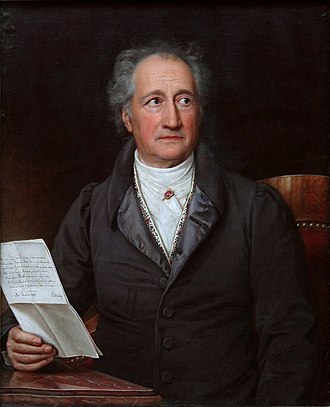
- Admired: Heraclitus, Baruch Spinoza (“I have a precursor, and what a precursor!”), Goethe, Stendhal, Emerson, Fyodor Dostoevsky.
- Paralleled: Fyodor Dostoevsky (the death of God and its consequences — Kirillov’s man-god, Ivan’s “everything is permitted”, Raskolnikov’s extraordinary man); Søren Kierkegaard (the individual against the herd; neither read the other); the Gautama Buddha (whom Nietzsche respected as more honest than Christianity, but rejected as “passive nihilism”).
- Answered by: Martin Heidegger, Albert Camus, Jean-Paul Sartre, Foucault.
Key terms
- Apollonian / Dionysian
- The drives of form and individuation vs. intoxication and unity, whose union produced Greek tragedy.
- Death of God
- The collapse of belief in the Christian God and of everything built on it.
- Nihilism
- The devaluation of the highest values; the sense that nothing has meaning.
- Last Man
- The comfortable, mediocre human who wants only security and "happiness".
- Übermensch
- The "overman" who creates values and affirms life after God's death.
Using Nietzsche in conversation
- Secularization: “God is dead — and we have killed him.” Then add the madman’s point: the atheists haven’t understood what follows.
- Resentment politics: ressentiment — how the powerless may revenge themselves by turning their weakness into virtue.
- Fighting injustice: “Whoever fights monsters should see to it that he does not become one.”
- Resilience: “If we possess our why of life, we can put up with almost any how.”
Friedrich Nietzsche in two minutes
Philosopher with a hammer who announced the death of God, unmasked the genealogy of morality, and called for new values — the will to power, eternal recurrence, the Übermensch, amor fati.
- God is dead. Not a metaphysical claim but a cultural diagnosis — belief in the Christian God has become unbelievable, and with it the foundation of European values collapses.
- Nihilism. The highest values devalue themselves. The coming centuries will face the abyss of meaninglessness unless new values are created.
- Master and slave morality. “Good and bad” was the noble’s self-affirmation; “good and evil” is the slave’s revenge, born of ressentiment.
- Will to power. Life is not mere self-preservation but the drive to grow, expand, overcome — including self-overcoming.
- Eternal recurrence. What if you had to live this life again, innumerable times, exactly the same? Could you will it? The ultimate test of affirmation.
- The Übermensch. Man is a rope stretched between animal and Übermensch — a rope over an abyss. The overman creates his own values.
- Amor fati. Not merely to bear what is necessary, still less to conceal it — but to love it.
- Perspectivism. There are no facts, only interpretations. There is no “view from nowhere”.
“God is dead. God remains dead. And we have killed him.” — §125
Answering: Heraclitus, Sophocles, Socrates, Plato, William Shakespeare, Baruch Spinoza, Immanuel Kant, Johann Wolfgang von Goethe, Arthur Schopenhauer, Fyodor Dostoevsky · Answered by: Martin Heidegger, Jean-Paul Sartre, Albert Camus
Curiosities
did you know?- He became a professor at 24, before finishing his doctorate.
- He printed Zarathustra Part IV in forty copies and could find only seven people to send it to.
- His sister edited, cut and partly forged his posthumous work.
Questions to Argue About
debate club →- Could you will your life to repeat forever, exactly the same?
- Is morality the revenge of the weak?
- If God is dead, where do values come from?
Arguments
argument library →The Slave Revolt in Morality
“Good and evil” is the creation of the resentful weak, who invented values to take imaginary revenge on the strong.
- Originally “good” meant the noble and powerful, and “bad” meant the common and low.
- The oppressed, unable to take revenge in deeds, took it in values — calling the strong “evil”.
- They then called themselves “good” — the meek, the humble, the patient.
- This revaluation triumphed in Christianity.
∴ Our morality of “good and evil” is born of ressentiment — and its value must be questioned.
3 objections
- Historians: The genealogy is speculative history with little evidence.
- The genetic fallacy: Even if a value had disreputable origins, that does not show it is invalid.
- Nietzsche's defenders: The point is not refutation but loosening — showing that values have a history makes us ask what they are worth.
In Their Own Words
8 quotationsGod is dead. God remains dead. And we have killed him.
Gott ist tot! Gott bleibt tot! Und wir haben ihn getödtet!
Context & when to use it
The madman in the marketplace — not a triumphant atheist, but a horrified witness to a cultural catastrophe.
For secularization and its consequences. Quote the whole — it is a lament, not a boast.
He who fights with monsters should look to it that he himself does not become a monster. And if you gaze long into an abyss, the abyss also gazes into you.
Wer mit Ungeheuern kämpft, mag zusehn, dass er nicht dabei zum Ungeheuer wird. Und wenn du lange in einen Abgrund blickst, blickt der Abgrund auch in dich hinein.
Context & when to use it
An aphorism from “Maxims and Interludes”.
For the danger of becoming what you oppose — in war, in politics, in obsession.
What does not kill me makes me stronger.
Was mich nicht umbringt, macht mich stärker.
Context & when to use it
From “the military school of life”.
For resilience, post-traumatic growth.
He who has a why to live for can bear almost any how.
Hat man sein warum? des Lebens, so verträgt man sich fast mit jedem wie?
Context & when to use it
Meaning makes suffering bearable. Viktor Frankl made it the motto of Man’s Search for Meaning.
For meaning and endurance.
My formula for greatness in a human being is amor fati — that one wants nothing to be different, not forward, not backward, not in all eternity.
Context & when to use it
Not merely to bear what is necessary, still less conceal it, but to love it.
For radical acceptance and affirmation of life.
There are no facts, only interpretations.
Context & when to use it
Against positivism — “facts is precisely what there is not, only interpretations.”
For perspectivism; careful — Nietzsche is not saying anything goes.
⚠ From an unpublished notebook, not a book he finished.
Become who you are.
Werde, der du bist.
Context & when to use it
Borrowed from Pindar (Pythian 2.72) — “become such as you are, having learned what that is.”
For self-realization and authenticity.
Without music, life would be a mistake.
Ohne Musik wäre das Leben ein Irrtum.
Context & when to use it
For art as justification of existence.
Through Their Characters
2Man is a rope, tied between beast and overman — a rope over an abyss.
Context & when to use it
Zarathustra’s first speech in the marketplace, while a tightrope-walker performs.
For human beings as unfinished, a transition rather than a goal.
One must still have chaos in oneself to be able to give birth to a dancing star.
Context & when to use it
Warning against the Last Man, who has no chaos left.
For creativity out of inner turmoil.
Sententiae
phrases in the originalAmor fati
Origin. Nietzsche’s Latin coinage — The Gay Science §276 and Ecce Homo — for loving everything that happens, not merely enduring it. The attitude echoes Stoics like Marcus Aurelius and Epictetus. — Friedrich Nietzsche
For radical acceptance; saying Yes to life including its suffering.
Gott ist tot
Origin. Nietzsche, The Gay Science §108 and §125 (1882); repeated in Zarathustra. — Friedrich Nietzsche, The Gay Science
⚠ Hegel used a version earlier (Faith and Knowledge, 1802), quoting a Lutheran hymn — “God himself is dead”.
For secularization and the crisis of values.
Übermensch
Origin. Nietzsche, Thus Spoke Zarathustra (1883). — Friedrich Nietzsche
⚠ Not a biological master race — a self-overcoming ideal. Shaw’s “Man and Superman” made “superman” the English word.
For self-overcoming and creating values.
Werde, der du bist
Origin. Nietzsche’s rendering of Pindar, Pythian 2.72 — “γένοι’ οἷος ἐσσὶ μαθών” (become such as you are, having learned what that is). — Friedrich Nietzsche
For self-realization.
Explore Next
related by shared connections
Søren Kierkegaard
The melancholy Dane, father of existentialism, who set the passionate individual against Hegel’s System and faith against reason — “truth is subjectivity”.

Georg Wilhelm Friedrich Hegel
The philosopher of Spirit and dialectic, for whom reality is a rational process working itself out through contradiction in history — “the real is the rational”.

Aristotle
Plato’s greatest student and tutor of Alexander the Great, who founded logic, systematized biology, ethics and politics, and brought the Forms down to earth.

Augustine of Hippo
North African bishop, convert, and the most influential Christian thinker of the Latin West — inventor of the autobiography of the inner self.

David Hume
The great Scottish sceptic who showed that causation, the self, and induction cannot be justified by reason — and that reason is, and ought only to be, the slave of the passions.
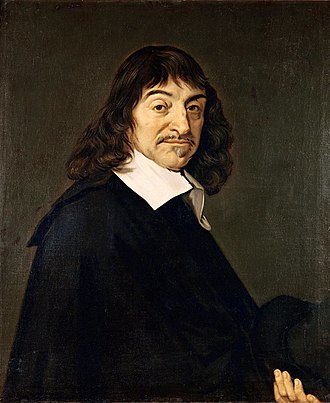
René Descartes
The father of modern philosophy, who doubted everything that could be doubted and found one thing that could not — that he himself was thinking.