- 1
 c. 515–450 BCE · Ancient Greek
Parmenides
Reason against the senses — thinking shows that change, which we see everywhere, is impossible.
Read the full argument → - 2
 c. 428–348 BCE · Ancient Greek
Plato
The senses give opinion about shadows; true knowledge is of the eternal Forms, reached by reason — the Cave.
Read the full argument → - 3
 384–322 BCE · Ancient Greek
Aristotle
Knowledge begins in perception; form is in things, abstracted by the mind.
Read the full argument → - 4
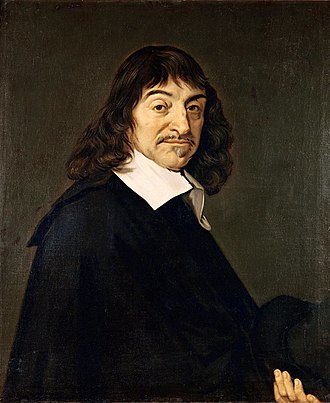 1596 – 1650 · French
René Descartes
Doubt everything; the cogito survives; rebuild knowledge on clear and distinct ideas guaranteed by God.
Read the full argument → - 5
 1632 – 1704 · British & Irish
John Locke
No innate ideas — all knowledge comes from experience.
Read the full argument → - 6
 1711 – 1776 · British & Irish
David Hume
Follow experience all the way — causation is habit, induction unjustified, the self a bundle.
Read the full argument → - 7
 1724 – 1804 · German-language
Immanuel Kant
The mind supplies the forms of all experience. We know appearances with necessity — but never things in themselves.
Read the full argument → - 8
 1770 – 1831 · German-language
Georg Wilhelm Friedrich Hegel
Drop the thing-in-itself. Reason is not trapped behind appearances — truth is the whole, the self-knowing of Spirit.
Read the full argument → - 9
 1844 – 1900 · German-language
Friedrich Nietzsche
There are no facts, only interpretations. The will to truth itself must be questioned.
Read the full argument →
Meanwhile in India, a parallel relay: the Upanishads seek the knowledge that liberates; the Buddhists deny a knower behind knowing; the Nyāya logicians build a theory of valid means of knowledge (pramāṇa) — perception, inference, comparison, testimony; Nāgārjuna turns the pramāṇas against themselves; and Ādi Śaṅkara makes knowledge (jñāna) the only path to liberation.
Explore Next
related by shared connectionsWhat Is Beauty — and What Is Art For?
From Plato’s ladder of love and Aristotle’s catharsis to Kant’s disinterested pleasure, Schopenhauer’s music and Nietzsche’s Apollo and Dionysus.
What Are the Limits of the Human Mind?
Can reason know everything — or are there things the mind can never reach? From the Upanishads’ unknowable knower to Kant’s boundary and Wittgenstein’s silence.
Rationalism vs. Empiricism
The great quarrel of early modern philosophy — does knowledge come from reason or from experience? Kant tried to end it.
What Is Time?
Flux and permanence, the moving image of eternity, Augustine’s puzzle, Kant’s form of intuition, eternal recurrence, Heidegger’s temporality.
Being vs. Becoming
The first great quarrel in Western philosophy — is reality one and changeless (Parmenides) or everlasting flux (Heraclitus)?
British Empiricism
The view that all knowledge comes from experience — the mind begins as a blank slate on which the senses write.