


Contents · 21 sections · 41 min
Hume in Eight Ideas
the essentialsImpressions and ideas
Every idea is a faint copy of some earlier impression. To test a philosophical term, ask “from what impression is that supposed idea derived?” If none, it is meaningless.
Hume's Fork
All objects of inquiry are either relations of ideas (certain, but about nothing in the world) or matters of fact (about the world, but never certain). Metaphysics fits neither — “commit it then to the flames.”
Causation is habit
We never perceive a necessary connection between cause and effect — only constant conjunction. The feeling of necessity is the mind’s habit of expectation projected onto the world.
The problem of induction
No argument can show that the future will resemble the past without assuming it. That the sun will rise tomorrow is not demonstrable; we believe it by custom, not reason.
The bundle theory of self
Look inward and you never catch a “self” — only a particular perception, heat or cold, love or hatred. The self is “nothing but a bundle or collection of different perceptions.”
Is and ought
You cannot derive an “ought” from an “is”. Moral claims are not conclusions of reason but expressions of sentiment.
Reason is the slave of the passions
Reason alone never moves us to act; it only tells us how to get what our desires already want.
Against miracles and design
A wise man proportions belief to evidence; testimony for a miracle can never outweigh the uniform experience of natural law. The Dialogues dismantle the argument from design.
David Hume is the philosopher philosophers are most afraid of. Not because he was fierce — his friends in Paris called him le bon David, and he was famously the most good-natured man in any room — but because his arguments, once understood, do not go away. He showed that the most ordinary things we believe — that fire will burn tomorrow as it burned today, that one billiard ball makes another move, that there is a single continuing “I” who woke up this morning — cannot be justified by reason. And then, instead of despairing, he asked a better question: if reason does not produce these beliefs, what does? His answer — custom, imagination, feeling, human nature — makes him the founder of a naturalistic philosophy that runs through Kant, Darwinian psychology, logical positivism, modern ethics and cognitive science.
This essay tells the story of his life, reconstructs his main arguments step by step, sets out the objections and the scholarly debates, and ends with his legacy and how to use him in conversation.
Why Hume matters
There are three reasons Hume belongs among the half-dozen greatest philosophers who ever wrote in English — and many would put him first.
He asked the questions that could not be un-asked. Before Hume, philosophers argued about causation, induction and the self. After him, they had to argue about whether those notions could be defended at all. The “problem of induction” is still, nearly three centuries on, called Hume’s problem. His “fork” became the founding principle of logical positivism. His observation that you cannot derive an “ought” from an “is” is still called Hume’s law.
He turned philosophy into a science of human nature. The subtitle of the Treatise is “an attempt to introduce the experimental method of reasoning into moral subjects”. Hume wanted to be the Newton of the mind: to find the few principles — association, custom, sympathy — that explain how human beings actually come to believe, feel and value what they do. This is why psychologists, economists and evolutionary theorists still read him as a colleague.
He wrote like an angel. Few philosophers are a pleasure to read. Hume is. His sentences are lucid, ironic, measured, and he has a novelist’s eye for a telling example — the billiard balls, the missing shade of blue, the man who prefers the destruction of the world to scratching his finger, the sensible knave, the dinner and the game of backgammon.
A life
Edinburgh and Ninewells
David Hume (he was born David Home; he changed the spelling to match the pronunciation) was born in Edinburgh on 26 April 1711 by the old calendar — 7 May by the new. His father, Joseph Home, was a minor laird of Ninewells, a modest estate near Chirnside in the Scottish Borders; he died when David was two. His mother, Katherine Falconer, raised three children alone and is reported to have said of her younger son that he was “a fine good-natured crater, but uncommon wake-minded” — weak-minded, meaning not ambitious for the law or the kirk. (The story may be apocryphal; it was certainly beloved by those who later found it funny.)
He entered the University of Edinburgh at about ten or eleven — normal at the time — and left without a degree around 1725. His family intended him for the law. He found it “nauseous”: “while they fancied I was poring upon Voet and Vinnius, Cicero and Virgil were the authors which I was secretly devouring.”
The crisis of 1729–34
At eighteen, Hume believed he had glimpsed “a new scene of thought” — the project that would become the Treatise. He threw himself into it with such intensity that he broke down. For several years he suffered what physicians called “the disease of the learned”: listlessness, palpitations, an inability to fix his mind, and a curious physical symptom — scurvy spots on his fingers. In 1734 he wrote a long, extraordinarily frank letter (probably never sent) to a London physician, often thought to be George Cheyne, describing his symptoms and his fear that he would never complete his project. It is one of the earliest documents of a philosophical mind in crisis.
His cure was action. He went to Bristol as a clerk for a sugar merchant — a job he lasted at for a few months — and then to France.
La Flèche and the Treatise
From 1735 to 1737 Hume lived cheaply at La Flèche in Anjou, the town whose Jesuit college had educated René Descartes. There, aged twenty-three to twenty-six, he wrote most of A Treatise of Human Nature. Books I (“Of the Understanding”) and II (“Of the Passions”) appeared anonymously in London in January 1739; Book III (“Of Morals”) followed in 1740. He also published an anonymous Abstract — a short review of his own book, hoping to explain it to a public that had ignored it.
It is the most famous failure in the history of philosophy. A few reviews were puzzled or hostile. Hume blamed, as he later said, the manner rather than the matter — he had gone to press too early. He spent the rest of his career recasting its ideas in shorter, more elegant forms.
Essays, rejections, adventures
His Essays, Moral and Political (1741–42) were a success — elegant pieces on politics, taste, superstition and enthusiasm, in the manner of Addison. But his reputation for scepticism and irreligion cost him academic posts twice: the chair of Ethics and Pneumatical Philosophy at Edinburgh in 1745, and the chair of Logic at Glasgow in 1751. A pamphlet circulated against him accused him of “universal scepticism”, atheism, and denying the immateriality of the soul.
Meanwhile he lived an unlikely life: a year as tutor to the young Marquess of Annandale, who turned out to be insane; then secretary to General James St Clair on a farcical military expedition against the French port of Lorient in 1746, and on embassies to Vienna and Turin in 1748. A contemporary who met him in Turin in uniform described him as looking more like “a grocer of the trained bands” than a philosopher.
The Enquiries and the History
In 1748 he published Philosophical Essays concerning Human Understanding, later retitled An Enquiry concerning Human Understanding — the re-cast Book I of the Treatise, now with a sharpened essay “Of Miracles”. In 1751 came An Enquiry concerning the Principles of Morals, which he considered “of all my writings, historical, philosophical, or literary, incomparably the best.”
In 1752 he became Keeper of the Advocates’ Library in Edinburgh, giving him access to some 30,000 volumes. There he wrote his six-volume History of England (1754–62), which made him famous and rich. For a century the British Museum catalogued him as “Hume, David, the historian”. In 1757 came Four Dissertations, including the Natural History of Religion — a naturalistic account of how religions arise from human hopes and fears.
Paris, Rousseau, and le bon David
In 1763 he went to Paris as secretary to the British ambassador, Lord Hertford. The French adored him. He was received at every salon; ladies competed for his company; the philosophes (Diderot, d’Alembert, d’Holbach) treated him as a hero. A famous anecdote, from a dinner at Baron d’Holbach’s, has Hume remarking that he had never seen an atheist; d’Holbach replied that he was at that moment dining with seventeen.
In 1766 he brought Jean-Jacques Rousseau, persecuted on the Continent, to England, and found him a refuge. Rousseau, increasingly paranoid, decided Hume was part of a plot to dishonour him. The resulting public quarrel was one of the sensations of the age, and saddened Hume deeply.
Last years and a calm death
After a spell as Under-Secretary of State in London (1767–68), Hume returned to Edinburgh and built a house in the New Town. His street was jokingly chalked “St David Street” — the name stuck. He spent his final years revising his works and his Dialogues concerning Natural Religion, which friends had urged him not to publish.
In 1775 he developed what was probably cancer of the bowel. He wrote a short autobiography, My Own Life, dated 18 April 1776: “I am, or rather was (for that is the style I must now use in speaking of myself), a man of mild dispositions, of command of temper, of an open, social, and cheerful humour.”
In July 1776 James Boswell visited him, hoping to see the famous infidel crack before death. He found Hume calm and cheerful, and declaring that he had never entertained any belief in religion since he began to read Locke and Clarke, and that the thought of annihilation troubled him no more than the thought of not having existed before birth. Boswell was badly shaken.
Hume joked to Adam Smith that he had been reading Lucian’s Dialogues of the Dead and inventing excuses to give Charon, the ferryman of the dead, for delay — he might say he was correcting his works for a new edition, or that he hoped to see the downfall of some prevailing superstitions — but Charon would answer, “You loitering rogue, that will not happen these many hundred years.”
He died on 25 August 1776. Smith’s public letter on his death ended: “Upon the whole, I have always considered him, both in his lifetime and since his death, as approaching as nearly to the idea of a perfectly wise and virtuous man, as perhaps the nature of human frailty will permit.” Smith later said that this letter brought upon him “ten times more abuse than the very violent attack I had made upon the whole commercial system of Great Britain.”
The Dialogues were published by his nephew in 1779.
The project: a science of man
The Treatise opens with an ambitious claim. All the sciences, says Hume — even mathematics and natural philosophy — depend on the science of man, since they are all judged by human faculties. So instead of taking “now and then a castle or village on the frontier”, we should “march up directly to the capital or center of these sciences, to human nature itself” (T Intro. 6). “The science of man is the only solid foundation for the other sciences” (T Intro. 7).
And that science must be built “on experience and observation”. Hume is explicit that he is applying Newton’s method to the mind. Just as Newton explained the motions of the planets by a few general laws without pretending to know the hidden essence of gravity, Hume will explain belief, passion and moral approval by a few principles of the mind without pretending to know the mind’s ultimate nature. Explanation stops at principles “original” to human nature: “the essence of the mind being equally unknown to us with that of external bodies” (T Intro. 8).
This ambition is the key to reading Hume. His famous sceptical arguments are not the destination. They are the clearing of ground: they show that reason cannot be what produces our core beliefs — so that he can then show what does.
The building blocks: impressions and ideas
Two kinds of perception
Hume’s word for any content of the mind is perception. Perceptions come in two kinds:
- Impressions — sensations, passions and emotions “as they make their first appearance in the soul”: the redness you see, the pain you feel, the anger that rises.
- Ideas — “the faint images of these in thinking and reasoning”: your memory of the red, your imagining of the pain, your thought about anger.
The difference, says Hume, is one of “force and liveliness” (in the Enquiry, “force and vivacity”). Everyone feels the difference between feeling and thinking: “the most lively thought is still inferior to the dullest sensation” (EHU 2.1).
Perceptions are also simple (a particular shade of red) or complex (an apple: red, round, sweet). I can imagine a golden mountain or a winged horse without ever having seen one, but only by combining simple ideas I have had.
The Copy Principle
From this Hume extracts his first principle:
All our simple ideas in their first appearance are deriv’d from simple impressions, which are correspondent to them, and which they exactly represent. (T 1.1.1.7)
His evidence is twofold. First, by examination: try to find a simple idea not copied from an impression. Second, by defect: a man born blind has no idea of colour; a man who has never tasted pineapple has no idea of its taste.
Meaning as a test
The Copy Principle becomes a weapon. When philosophers use a term “without any meaning or idea (as is but too frequent)”, we need only ask: from what impression is that supposed idea derived? If no impression can be found, “this will serve to confirm our suspicion” that the term is empty (EHU 2.9). This is the ancestor of the twentieth-century verification principle — and Hume will turn it, with devastating results, on substance, the self, and necessary connection.
The association of ideas
Ideas are not random in the mind. They are linked by a “gentle force, which commonly prevails” (T 1.1.4.1). There are three principles of association:
- Resemblance — a portrait leads our thoughts to its original.
- Contiguity in time or place — mention of one room in a house leads to talk of the others.
- Cause and effect — think of a wound and you can scarcely avoid thinking of the pain.
This, says Hume in the Abstract, is the discovery that most entitles him to “so glorious a name as that of an inventor”. Association plays in the mind the role that gravitation plays in nature: “a kind of attraction, which in the mental world will be found to have as extraordinary effects as in the natural” (T 1.1.4.6).
Hume’s Fork
The first Enquiry states the division that would make Hume famous among twentieth-century empiricists:
All the objects of human reason or enquiry may naturally be divided into two kinds, to wit, Relations of Ideas, and Matters of Fact. (EHU 4.1)
Relations of ideas include geometry, algebra and arithmetic — “every affirmation which is either intuitively or demonstratively certain”. That three times five equals half of thirty is discoverable “by the mere operation of thought, without dependence on what is anywhere existent in the universe”. Their denial is a contradiction.
Matters of fact are different. “The contrary of every matter of fact is still possible; because it can never imply a contradiction.” That the sun will not rise tomorrow “is no less intelligible a proposition, and implies no more contradiction, than the affirmation, that it will rise” (EHU 4.2).
This dichotomy has a sting in its tail, delivered at the very end of the Enquiry:
If we take in our hand any volume; of divinity or school metaphysics, for instance; let us ask, Does it contain any abstract reasoning concerning quantity or number? No. Does it contain any experimental reasoning concerning matter of fact and existence? No. Commit it then to the flames: For it can contain nothing but sophistry and illusion. (EHU 12.34)
See Hume's Fork. Immanuel Kant would later insist there is a third category Hume missed — the Synthetic a priori.
Causation: the heart of the matter
Why causation is everything
All reasoning about matters of fact beyond our present senses and memory — that my friend is in France because I have a letter from him, that the bread will nourish me, that the planet will appear at a certain point — depends on the relation of cause and effect. “By means of that relation alone we can go beyond the evidence of our memory and senses” (EHU 4.4). So if we understand causation, we understand the foundations of all empirical knowledge. If causation turns out to rest on something other than reason, so does all of science.
Not a priori
First, Hume argues, causal knowledge is never a priori. Put a rational being in front of an object he has never seen, and no amount of reasoning about its sensible qualities will tell him its effects:
Adam, though his rational faculties be supposed, at the very first, entirely perfect, could not have inferred from the fluidity and transparency of water that it would suffocate him, or from the light and warmth of fire that it would consume him. (EHU 4.6)
Every effect is a distinct event from its cause. The idea of the one does not contain the idea of the other. When I see a billiard ball rolling toward another, I could conceive the second ball remaining still, or the first ball bouncing straight back, or jumping off at an angle — none of these involves a contradiction. “All these suppositions are consistent and conceivable.” So the knowledge that the second ball will move “is not, in any instance, attained by reasonings a priori; but arises entirely from experience” (EHU 4.6–10).
The idea of necessary connection
Then Hume asks the crucial question. When we call one thing the cause of another, we mean more than that the second follows the first. We mean that the first makes the second happen, that there is a necessary connection — a power, force, or energy — between them. Very well: by the Copy Principle, from what impression is this idea of necessary connection derived?
Hume searches everywhere (T 1.3.14; EHU 7):
- In external objects? Look at the billiard balls as hard as you like. You see the first ball move, touch the second, and the second ball move. You perceive contiguity (they touch), priority (the cause comes first), and — after many cases — constant conjunction (it always happens this way). You never perceive the power. “All events seem entirely loose and separate. One event follows another; but we never can observe any tie between them. They seem conjoined, but never connected” (EHU 7.26).
- In the mind’s control over the body? When I will to move my arm, I do not perceive how the will produces the motion. If we did, we would understand why we can move our arm but not our liver, and why a paralysed person cannot.
- In the mind’s command over its own ideas? Equally mysterious — we don’t know why we can summon some ideas at will and not others, or why this power varies with health and fatigue.
- In God? To say that God is the true cause of everything (as Malebranche and the occasionalists held) only moves the problem: we have no impression of God’s power either, and it “carries us quite beyond the reach of our faculties” (EHU 7.24).
The solution: the impression comes from within
The breakthrough comes from noticing what changes after repeated experience. A single instance shows us nothing more than a sequence. A thousand instances show us nothing more in the objects — each is exactly like the first. But something changes in us: after many repetitions, on seeing the first event, “the mind is carried by habit, upon the appearance of one event, to expect its usual attendant, and to believe that it will exist” (EHU 7.28).
That felt determination of the mind — the smooth, inevitable transition of thought from cause to effect — is the impression from which the idea of necessary connection is copied. “This connexion, therefore, which we feel in the mind, this customary transition of the imagination from one object to its usual attendant, is the sentiment or impression from which we form the idea of power or necessary connexion” (EHU 7.28).
We then project that inner feeling onto the world, as if necessity were a property of the objects themselves:
‘Tis a common observation, that the mind has a great propensity to spread itself on external objects… (T 1.3.14.25)
The two definitions of cause
Hume ends with two definitions (EHU 7.29; cf. T 1.3.14.31):
- Philosophical: a cause is “an object, followed by another, and where all the objects similar to the first are followed by objects similar to the second.” (He immediately adds: “Or in other words where, if the first object had not been, the second never had existed” — a counterfactual formulation that is not equivalent, and which David Lewis would develop in the 1970s into the counterfactual theory of causation.)
- Psychological: a cause is “an object followed by another, and whose appearance always conveys the thought to that other.”
The first describes regularity in the world; the second describes the mind’s habit. How the two definitions fit together is one of the great puzzles of Hume scholarship.
Argument (reconstructed).
- Every idea is copied from an impression.
- We have an idea of necessary connection.
- No impression of necessary connection comes from observing objects (single or repeated).
- Repetition produces a new impression in the mind: the felt determination to pass from cause to effect.
- Therefore the idea of necessary connection is copied from this internal impression — and “necessity is something that exists in the mind, not in objects” (T 1.3.14.22).
The problem of induction
The question
Grant that all our causal knowledge comes from experience. Now ask a further question. Experience tells us only about the past: about the bread that has nourished us, the fires that have burned. Why should that tell us anything about the bread in front of us now, or the fire we will meet tomorrow? “What is the foundation of all conclusions from experience?” (EHU 4.14).
The dilemma
All such inferences, Hume says, rest on a principle: that the future will resemble the past — that nature is uniform. (In the Treatise: “that instances, of which we have had no experience, must resemble those, of which we have had experience, and that the course of nature continues always uniformly the same” — T 1.3.6.4.) Can this principle be justified by reason?
- Not demonstratively. “It implies no contradiction that the course of nature may change.” We can clearly conceive snow that tastes like salt or feels like fire. Whatever is conceivable is possible, and cannot be disproved a priori.
- Not probably, from experience. Any argument from experience would itself assume that the future resembles the past. “To endeavour, therefore, the proof of this last supposition by probable arguments, or arguments regarding existence, must be evidently going in a circle, and taking that for granted, which is the very point in question” (EHU 4.19).
So inductive inference is not founded on reasoning of any kind. See The Problem of Induction.
The sceptical solution: custom
Hume’s own answer is in a section pointedly titled “Sceptical Solution of these Doubts” (EHU 5). If reason does not lead us from past to future, something else must: custom or habit. “All inferences from experience, therefore, are effects of custom, not of reasoning” (EHU 5.5).
Custom, then, is the great guide of human life. It is that principle alone which renders our experience useful to us, and makes us expect, for the future, a similar train of events with those which have appeared in the past. (EHU 5.6)
And this is not a weakness. Nature has not left something so essential “to the fallacious deductions of our reason, which is slow in its operations… and is extremely liable to error and mistake.” Instead it has secured it “by some instinct or mechanical tendency, which may be infallible in its operations” (EHU 5.22). In the Treatise Hume even says that “reason is nothing but a wonderful and unintelligible instinct in our souls” (T 1.3.16.9) — and he gives animals a whole section, observing that dogs and horses learn from experience just as we do, without philosophical arguments.
What belief is
If belief is not the conclusion of an argument, what is it? Hume’s answer is novel and bold: the difference between believing something and merely imagining it is not a difference in content (the idea is the same) but in feeling. Belief is “a more vivid, lively, forcible, firm, steady conception of an object, than what the imagination alone is ever able to attain” (EHU 5.12). It is “something felt by the mind, which distinguishes the ideas of the judgment from the fictions of the imagination.”
When an impression is present (smoke) and custom links it to an idea (fire), the vivacity of the impression flows into the idea. That borrowed liveliness is belief.
Probability and the “rules”
Hume does not leave us with mere habit. In T 1.3.11–13 he analyses probability, and in T 1.3.15 he gives “Rules by which to judge of causes and effects” — an early version of what Mill later systematized as the methods of experimental inquiry. And in “Of Miracles” he says that “a wise man… proportions his belief to the evidence” (EHU 10.4). So Hume’s naturalism includes norms: we can correct hasty habits by more general habits, distinguish wise from foolish believers, and reflect on the reliability of our sources. This is why many scholars (Don Garrett, Louis Loeb) argue that Hume has a genuine normative epistemology — not just a psychology.
Interpreting Hume on causation: the great debate
What exactly does Hume think causation is? Three main readings compete.
1. The regularity theory (the “Old Hume”). For most of the twentieth century, Hume was read as holding that causation in the world is nothing but constant conjunction — regular succession of event types. Necessity is just the mind’s projection. This reading inspired the “Humean” theories of laws (laws as regularities) of the logical empiricists and of David Lewis’s “Humean supervenience”.
2. Projectivism. Philosophers such as Simon Blackburn read Hume as a projectivist: causal talk expresses our inferential habits; there is no fact of necessity “out there”, but our practice of talking about causes is perfectly in order. This parallels Hume’s account of morality — and Blackburn’s “quasi-realism” develops both.
3. Sceptical realism (the “New Hume”). In the 1980s, John P. Wright (The Sceptical Realism of David Hume, 1983) and Galen Strawson (The Secret Connexion, 1989) argued that Hume believed there are real powers in nature — “secret powers”, “ultimate springs and principles” — but held that we can never know them or form a positive idea of them. On this reading, Hume’s point is epistemological (we cannot know necessity), not metaphysical (there is none). Hume’s frequent references to “the secret powers of bodies” support this. Critics such as Kenneth Winkler (“The New Hume”, 1991) replied that by Hume’s own Copy Principle, we cannot meaningfully believe in something of which we have no idea.
The debate is not settled. A sensible conclusion is that Hume’s official theory concerns what our idea of causation contains, while he shows a recurring willingness to talk of unknown causes in nature — which the reader may treat as a hint of realism or a façon de parler.
The external world
In T 1.4.2, “Of scepticism with regard to the senses”, Hume asks not whether bodies exist — “that is a point, which we must take for granted in all our reasonings” — but why we believe in them: in objects with a continued existence when unperceived, and a distinct existence from our minds.
Not the senses (they can’t report what’s unperceived), and not reason (most people never reason about it, and philosophers’ reasons fail). It must be the imagination. When we see the same-looking fire on returning to a room, the constancy and coherence of our impressions lead the imagination to “feign” a continued existence that smooths the gaps.
The philosophers’ version — the “double existence” of perceptions in the mind and objects causing them (Locke’s view) — is worse, says Hume: a “monstrous offspring of two principles”, which has all the difficulties of the vulgar view plus some of its own. We can never compare perceptions with objects, so we can never have reason to believe objects resemble them.
His conclusion is one of the most remarkable sentences in philosophy:
Carelessness and in-attention alone can afford us any remedy. For this reason I rely entirely upon them; and take it for granted, whatever may be the reader’s opinion at this present moment, that an hour hence he will be persuaded there is both an external and internal world. (T 1.4.2.57)
Personal identity: the bundle
Descartes had made the self the one certainty. Many philosophers held that we are intimately conscious of a simple, continuing self. Hume applies his test: from what impression is the idea of self derived? It would have to be an impression that remains invariably the same throughout our lives. But there is no such impression.
For my part, when I enter most intimately into what I call myself, I always stumble on some particular perception or other, of heat or cold, light or shade, love or hatred, pain or pleasure. I never can catch myself at any time without a perception, and never can observe any thing but the perception. (T 1.4.6.3)
The self, then, is “nothing but a bundle or collection of different perceptions, which succeed each other with an inconceivable rapidity, and are in a perpetual flux and movement” (T 1.4.6.4). Or again:
The mind is a kind of theatre, where several perceptions successively make their appearance; pass, re-pass, glide away, and mingle in an infinite variety of postures and situations. (T 1.4.6.4)
He immediately warns against taking the metaphor too far: “They are the successive perceptions only, that constitute the mind; nor have we the most distant notion of the place, where these scenes are represented.”
Why then do we believe in a single self? Because resemblance and causation among our perceptions lead the imagination to glide easily along them — as it does along the changing parts of a ship rebuilt plank by plank, or a church rebuilt in a new style — and we “feign” an identity. Memory especially discovers personal identity by revealing these causal links. Identity of the self, like identity of plants and ships, is “fictitious”.
Hume’s second thoughts
In the Appendix to the Treatise (1740), Hume made a confession unique in the history of philosophy:
Upon a more strict review of the section concerning personal identity, I find myself involv’d in such a labyrinth, that, I must confess, I neither know how to correct my former opinions, nor how to render them consistent. (T App. 10)
What troubled him is disputed — perhaps that his principles cannot explain what binds these perceptions into one bundle rather than another, since all perceptions are distinct existences and the mind never perceives any real connection among them. The Enquiry omits the topic entirely.
The Buddhist parallel
Hume’s bundle is strikingly close to the Gautama Buddha‘s teaching of no-self (Anattā (No-Self)): the person as five aggregates in constant flux, the “self” as a convenient designation, like Nāgasena’s chariot. Is the resemblance a coincidence? The cognitive scientist Alison Gopnik (“Could David Hume Have Known about Buddhism?”, Hume Studies, 2009) pointed out that while Hume was at La Flèche, the Jesuit college there housed Charles François Dolu, a missionary who had lived in Siam and had contact with the Jesuit Ippolito Desideri, who had studied Tibetan Buddhism in depth. It remains speculation — but a tantalizing one.
The despair and the backgammon
Book I of the Treatise ends with a section (“Conclusion of this book”, T 1.4.7) that reads more like a confession than a treatise. Hume surveys the wreckage: reason undermines itself; the imagination produces our beliefs by “trivial” and “seemingly so inconsiderable” qualities; if we follow it, we fall into contradictions; if we refuse it, we fall into total scepticism. He feels himself “like a man, who having struck on many shoals, and having narrowly escap’d ship-wreck in passing a small frith, has yet the temerity to put out to sea in the same leaky weather-beaten vessel”.
I am first affrighted and confounded with that forelorn solitude, in which I am plac’d in my philosophy, and fancy myself some strange uncouth monster… (T 1.4.7.2)
And then the turn:
Most fortunately it happens, that since reason is incapable of dispelling these clouds, nature herself suffices to that purpose, and cures me of this philosophical melancholy and delirium… I dine, I play a game of back-gammon, I converse, and am merry with my friends; and when after three or four hours’ amusement, I wou’d return to these speculations, they appear so cold, and strain’d, and ridiculous, that I cannot find in my heart to enter into them any farther. (T 1.4.7.9)
But Hume does not end in mere distraction. He returns to philosophy because he is curious — because “I feel an ambition to arise in me of contributing to the instruction of mankind”. And he concludes that philosophy, done in a “careless” spirit, is safer and more agreeable than superstition: “Generally speaking, the errors in religion are dangerous; those in philosophy only ridiculous” (T 1.4.7.13).
Mitigated scepticism
In the first Enquiry (12.21–25) Hume distinguishes:
- Excessive (Pyrrhonian) scepticism, which cannot be lived: “a Pyrrhonian cannot expect, that his philosophy will have any constant influence on the mind”. If it were universally adopted, “all discourse, all action would immediately cease”.
- Mitigated (academic) scepticism, which is “both durable and useful”: a modesty and caution in all our judgments, and a limitation of inquiry to “such subjects as are best adapted to the narrow capacity of human understanding” — common life and its methodized correction.
The passions
Book II of the Treatise is the least read and, many now think, one of the most original. Hume constructs a detailed psychology of the emotions.
Direct passions — desire and aversion, joy and grief, hope and fear — arise immediately from pleasure and pain.
Indirect passions — pride and humility, love and hatred — arise through a “double association” of impressions and ideas. Pride has the self as its object, but some quality or possession (a fine house, a beautiful face, a witty remark) as its cause. The pleasure caused by the house resembles the pleasure of pride; the house is related to me; the two associations combine to produce pride.
Sympathy is Hume’s master-principle of social psychology: the mechanism by which the passions of others are “communicated” to us. When I see the signs of someone’s emotion, I form an idea of it; because the idea concerns another human, closely related to me by resemblance, the vivacity of my impression of self flows into it and converts it into the very passion. “The minds of men are mirrors to one another” (T 2.2.5.21). Modern psychologists studying emotional contagion and mirror neurons often cite this.
Reason, the slave of the passions
Then comes the most famous claim of Book II (T 2.3.3). Philosophers since Plato had spoken of the “combat of passion and reason”, urging reason to rule. Hume replies that reason alone can never be a motive to any action, and can never oppose passion in directing the will:
Reason is, and ought only to be the slave of the passions, and can never pretend to any other office than to serve and obey them. (T 2.3.3.4)
The argument: reason either demonstrates relations of ideas or infers matters of fact. Neither by itself moves us. Mathematics helps a merchant calculate his debts — but only because he wants to pay them. Causal reasoning tells us what will produce what — but we care only if we already care about the effect. A passion is “an original existence” — it does not represent anything, so it cannot be true or false, reasonable or unreasonable:
‘Tis not contrary to reason to prefer the destruction of the whole world to the scratching of my finger. (T 2.3.3.6)
A passion can be called unreasonable only in a derivative sense — when it is founded on a false belief (I fear a ghost that doesn’t exist) or when I choose insufficient means to my end. What we call “reason” in the struggle with passion is really the “calm passions” — settled, quiet desires like benevolence or the general appetite for good — which we mistake for reason because they make no stir.
This is the founding text of the “Humean theory of motivation” — belief plus desire — which dominates modern philosophy of action and decision theory.
Liberty and necessity
On free will, Hume is a compatibilist — and his treatment (T 2.3.1–2; EHU 8) is one of the classic statements of the position.
First, human actions are as necessary as natural events — in the only sense of necessity we have, constant conjunction and inference. We predict human behaviour all the time: “a prisoner, who has neither money nor interest, discovers the impossibility of his escape, as well when he considers the obstinacy of the gaoler, as the walls and bars with which he is surrounded” (EHU 8.19). Historians, politicians and merchants all assume that character produces conduct regularly.
Second, liberty properly understood is not the absence of causes but:
a power of acting or not acting, according to the determinations of the will; that is, if we choose to remain at rest, we may; if we choose to move, we also may. (EHU 8.23)
This “hypothetical liberty” belongs to everyone who is not a prisoner in chains. Liberty opposed to necessity would be mere chance — and that would make morality impossible, since we hold people responsible only for actions that flow from their durable character. “Actions are, by their very nature, temporary and perishing; and where they proceed not from some cause in the character and disposition of the person who performed them, they can neither redound to his honour, if good; nor infamy, if evil” (EHU 8.29).
Hume calls the dispute largely “verbal” — a “reconciling project”. Kant would call this a “wretched subterfuge”, insisting that moral freedom requires more. The debate continues.
Morals: sentiment, not reason
Morality is not derived from reason
Book III of the Treatise opens with a brisk argument (T 3.1.1):
Morals excite passions, and produce or prevent actions. Reason of itself is utterly impotent in this particular. The rules of morality, therefore, are not conclusions of our reason. (T 3.1.1.6)
And a thought experiment:
Take any action allow’d to be vicious: Wilful murder, for instance. Examine it in all lights, and see if you can find that matter of fact, or real existence, which you call vice… The vice entirely escapes you, as long as you consider the object. You never can find it, till you turn your reflexion into your own breast, and find a sentiment of disapprobation, which arises in you, towards this action. (T 3.1.1.26)
Vice and virtue, then, are like sounds, colours, heat and cold — “not qualities in objects, but perceptions in the mind”. To call an action vicious is to say that “from the constitution of your nature you have a feeling or sentiment of blame from the contemplation of it.”
Is and ought
At the end of that section comes a paragraph that has generated a library:
In every system of morality, which I have hitherto met with, I have always remark’d, that the author proceeds for some time in the ordinary way of reasoning… when of a sudden I am surpriz’d to find, that instead of the usual copulations of propositions, is, and is not, I meet with no proposition that is not connected with an ought, or an ought not. This change is imperceptible; but is however, of the last consequence. For as this ought, or ought not, expresses some new relation or affirmation, ‘tis necessary that it shou’d be observ’d and explain’d; and at the same time that a reason should be given, for what seems altogether inconceivable, how this new relation can be a deduction from others, which are entirely different from it. (T 3.1.1.27)
This is “Hume’s Law” or the “is–ought gap”: no set of purely factual premises entails a moral conclusion. G. E. Moore’s “naturalistic fallacy” (1903) is a cousin. Some scholars (Alasdair MacIntyre, for one) have argued that Hume meant something milder — that one must explain the transition, not that it is impossible. Either way, the paragraph has become the standard starting point for metaethics.
The moral sense and sympathy
If morality is founded on sentiment, which sentiment? Hume’s answer is a special kind of approval we feel when we survey a character from a “general point of view” — not from our own interests, but considering its effects on the person and those around them. Sympathy lets us feel the pleasure and pain a trait brings to others; the general point of view corrects for the partiality of sympathy, which is stronger for those near us.
The traits we approve fall into four classes (EPM 9.1): qualities useful to others (benevolence, justice), useful to oneself (prudence, industry, frugality), immediately agreeable to others (wit, good manners, modesty), and immediately agreeable to oneself (cheerfulness, tranquillity, greatness of mind).
Notice what is missing. The “monkish virtues” — “celibacy, fasting, penance, mortification, self-denial, humility, silence, solitude” — are rejected “by men of sense”, because they serve no purpose: they “stupify the understanding and harden the heart, obscure the fancy and sour the temper” (EPM 9.3).
Natural and artificial virtues
Hume divides the virtues:
- Natural virtues — benevolence, generosity, clemency — are approved because each act directly does good.
- Artificial virtues — chiefly justice (respect for property), fidelity to promises, allegiance to government — are approved only because of a scheme or convention. A single just act may do harm (returning a fortune to a miser who will waste it); justice is valuable as a general system.
His account of how justice arises is one of the great pieces of political theory. Humans have limited generosity and live in conditions of moderate scarcity; goods can easily be taken. If either condition changed — if we were perfectly benevolent, or if goods were abundant like air and water — justice would be useless and would never arise. Instead, people gradually come to a convention — not a promise (promises themselves are conventions), but a sense of common interest, “like two men who pull the oars of a boat… by an agreement or convention, tho’ they have never given promises to each other” (T 3.2.2.10). This anticipates modern game theory and the analysis of conventions by David Lewis (1969).
The sensible knave
Hume closes the second Enquiry with a challenge he admits he cannot fully answer. Honesty is the best policy as a general rule — but there may be exceptions, and a “sensible knave” might follow the rule but take advantage of every exception where he can cheat safely. What can we say to him? Hume’s reply is not an argument but a portrait: “If his heart rebel not against such pernicious maxims”, the knave is beyond reasoning; but “inward peace of mind, consciousness of integrity, a satisfactory review of our own conduct” are worth far more than his gains, and the knave, in the end, is the dupe of his own cleverness (EPM 9.22–25).
Religion
Hume was perhaps the most formidable critic of religion of his century — and he wrote with an irony so delicate that readers still argue about what he believed.
Of miracles
Section 10 of the first Enquiry argues that it is never reasonable to believe testimony for a miracle as the foundation of a religion.
A miracle is a violation of the laws of nature; and as a firm and unalterable experience has established these laws, the proof against a miracle, from the very nature of the fact, is as entire as any argument from experience can possibly be imagined. (EHU 10.12)
The maxim: “no testimony is sufficient to establish a miracle, unless the testimony be of such a kind, that its falsehood would be more miraculous, than the fact, which it endeavours to establish” (EHU 10.13).
Then Hume adds four empirical observations: no miracle has ever been attested by enough educated people of unquestioned integrity, in a public enough place; humans love surprise and wonder, and religious zeal makes this worse; miracle reports abound chiefly among “ignorant and barbarous nations”; and rival religions’ miracles cancel each other out.
He ends with a famous ironic flourish: the Christian religion “not only was at first attended with miracles, but even at this day cannot be believed by any reasonable person without one” — the miracle of faith in the believer’s own person (EHU 10.41).
The Dialogues concerning Natural Religion
Hume’s masterpiece on religion, published posthumously in 1779, is a dialogue in the manner of Cicero’s On the Nature of the Gods. Three characters:
- Cleanthes, who defends the argument from design: the universe is like a great machine, its parts adjusted with a precision exceeding human contrivance; like effects have like causes; therefore its author resembles a human mind, but vastly greater.
- Demea, an orthodox rationalist who defends a priori proofs and the incomprehensibility of God.
- Philo, the sceptic, who demolishes Cleanthes’ argument with relentless wit.
Philo’s objections include:
- The analogy is weak. The universe is unique; we have no experience of the origins of worlds. Why compare it to a machine rather than to an animal or a vegetable, which generate their own order?
- Why stop at a designer? If order needs a mind to explain it, the order in the divine mind needs explaining too. “How shall we satisfy ourselves concerning the cause of that Being, whom you suppose the Author of Nature?” (DNR 4).
- The design argument proves too little. For all it shows, the world might be “the first rude essay of some infant deity, who afterwards abandoned it, ashamed of his lame performance”; or the work of a committee of gods; or of a deity now dead (DNR 5).
- Epicurean chance. Matter in random motion over infinite time might stumble into stable configurations that persist — a remarkable anticipation of Darwinian thinking, nearly a century before The Origin of Species.
- The problem of evil. Philo restates the ancient argument:
Epicurus’s old questions are yet unanswered. Is he willing to prevent evil, but not able? then is he impotent. Is he able, but not willing? then is he malevolent. Is he both able and willing? whence then is evil? (DNR 10)
Philo argues that the mixture of good and evil we see is exactly what we would expect from a cause indifferent to both: “The whole presents nothing but the idea of a blind Nature, impregnated by a great vivifying principle, and pouring forth from her lap, without discernment or parental care, her maimed and abortive children” (DNR 11).
And yet, in Part 12, Philo surprises everyone by conceding that “a purpose, an intention, or design strikes everywhere the most careless, the most stupid thinker” — and reduces natural theology to the thin proposition “that the cause or causes of order in the universe probably bear some remote analogy to human intelligence”. Which character speaks for Hume? Most readers say Philo; the narrator, Pamphilus, says Cleanthes. The irony is Hume’s.
The Natural History of Religion
Here Hume asks not whether religion is true but where it comes from. Its origin, he argues, lies not in contemplation of nature’s order but in “the incessant hopes and fears, which actuate the human mind” — anxiety about health, harvests, war, death — which people personify as invisible powers. Polytheism came first; monotheism arose through flattery of a favoured deity until it was raised to infinity. Hume notes that polytheism tends to be tolerant and monotheism intolerant, and that “the corruption of the best things gives rise to the worst”. This is the founding text of the naturalistic study of religion, from Feuerbach to modern cognitive science of religion.
Suicide and immortality
Two essays, suppressed in his lifetime, argued that suicide is not a crime against God, neighbour or self (“I believe that no man ever threw away life, while it was worth keeping”), and that arguments for the immortality of the soul are weak. They circulated in pirated editions after his death.
Taste, politics, history
Of the Standard of Taste (1757)
If beauty is in the eye of the beholder, how can some judgments of taste be better than others? Hume’s answer: although beauty is a sentiment, some critics are better placed to feel it accurately. The true judge has “strong sense, united to delicate sentiment, improved by practice, perfected by comparison, and cleared of all prejudice”; and “the joint verdict of such, wherever they are to be found, is the true standard of taste and beauty.”
He illustrates with a story from Don Quixote: two of Sancho Panza’s kinsmen taste a hogshead of wine. One says it tastes of leather, the other of iron. They are mocked — until the cask is emptied and a key on a leather thong is found at the bottom. Delicacy of taste is real. And the works that survive the test of time — Homer pleased at Athens and Rome two thousand years ago and is still admired at Paris and London — tell us what human nature finds beautiful.
Politics
Hume’s political essays are cool, empirical, anti-utopian. In “Of the Original Contract” he argues against Locke that actual governments almost never rest on consent; they rest on usurpation or conquest, then on habit and opinion. “Of the First Principles of Government” begins with the observation that “nothing appears more surprizing… than the easiness with which the many are governed by the few”, since force is always on the side of the governed — so “it is therefore, on opinion only that government is founded.” He wrote on commerce, money, the balance of trade (his “price–specie flow” mechanism is a classic of economics), luxury and the jealousy of trade — and deeply influenced his friend Adam Smith.
The History of England
Hume’s History — written backwards, from the Stuarts to Julius Caesar — was attacked by Whigs as Tory, and is now valued for its scepticism about myths of “the ancient constitution” and for its portrait of the role of chance, opinion and fanaticism in politics.
Hume’s shadow: the reception
Reid and Common Sense
The first major reply came from Hume’s countryman Thomas Reid, whose Inquiry into the Human Mind on the Principles of Common Sense (1764) argued that Hume’s sceptical conclusions followed validly from a premise shared by Descartes, Locke and Berkeley — the “theory of ideas”, the view that we perceive only our own perceptions. Reject that, and common sense is restored. Hume read Reid’s manuscript and replied politely.
Kant
Immanuel Kant‘s debt is the most famous in philosophy. The Prolegomena (1783) says that “the remembrance of David Hume… first interrupted my dogmatic slumber”. Kant accepted that necessary connection cannot be found in experience and cannot be derived from analysis of concepts. His response — that causality is a category the understanding imposes on all possible experience — is the Critique of Pure Reason. Whether Kant answered Hume or conceded his deepest point is still debated.
The nineteenth century
John Stuart Mill built his System of Logic (1843) on Humean foundations, trying to justify induction by the uniformity of nature. T. H. Huxley wrote a book on Hume (1879) and coined “agnostic”. The British idealists (T. H. Green) attacked him as the reductio of empiricism.
Science and positivism
Albert Einstein wrote in a 1915 letter to Moritz Schlick that Hume’s critique of causation and of concepts not grounded in experience had helped him toward relativity — Hume and Mach had taught him to question the absolute concept of simultaneity. The Vienna Circle’s verification principle is Hume’s Fork with modern logic. Bertrand Russell gave the problem of induction its famous chicken: fed every day, it confidently expects breakfast — until the day the farmer wrings its neck.
Karl Popper claimed to have solved Hume’s problem by giving up induction entirely: science proceeds by conjecture and refutation, not by justified generalization. Nelson Goodman’s “new riddle of induction” (the “grue” paradox, 1955) showed that the problem is even worse than Hume thought: not just whether to project regularities but which ones. W. V. O. Quine, naturalizing epistemology, wrote that “the Humean predicament is the human predicament” (1969).
Ethics
Hume’s sentimentalism is the ancestor of emotivism (A. J. Ayer, C. L. Stevenson), expressivism (Allan Gibbard), Simon Blackburn’s quasi-realism, and much empirical moral psychology. Jonathan Haidt’s slogan that reason is the “press secretary” of the intuitions is avowedly Humean. Annette Baier, in A Progress of Sentiments (1991), read Hume as a moral philosopher of trust and relationship, close to care ethics.
Hume and literature
Hume’s influence on letters runs through Adam Smith’s Theory of Moral Sentiments, through the psychological novel (sympathy and the circulation of passions in Sterne and Austen), and through every essayist who writes in the urbane, ironical, enlightened style he helped perfect. James Boswell’s account of Hume’s death haunted him for the rest of his life — a scene worth setting beside The Death of Socrates: two philosophers dying calmly, one in hope of immortality, the other without.
Hume and his neighbours on the map
- Against René Descartes: no inner self to be certain of; no clear and distinct idea guarantees matters of fact; no rational proof of God.
- After John Locke: Locke’s empiricism pushed to its conclusions — substance, self, and power fall.
- Before Immanuel Kant: the challenge that produced the Critical philosophy.
- Beside Baruch Spinoza: both naturalists, both determinists, both accused of atheism; but Spinoza a rationalist who thought reason can know the necessary order of things, Hume an empiricist who thought it cannot.
- Echoed by Friedrich Nietzsche: the self as a grammatical fiction, morality as the expression of drives; the genealogical method.
- Parallel to Gautama Buddha: the self as a bundle of perceptions — see above.
Key terms
- Impression
- A lively perception — sensation, passion, emotion — as it first appears in the mind.
- Idea
- A fainter copy of an impression, used in thinking and memory.
- Copy Principle
- Every simple idea is copied from a preceding simple impression.
- Association of ideas
- The "gentle force" by which ideas are linked — resemblance, contiguity, cause and effect.
- Relations of ideas / matters of fact
- Hume's Fork — demonstrable truths whose denial is contradictory vs. contingent truths known by experience.
Using Hume in conversation
- When someone says “science proves that…”: Hume reminds us that every scientific law rests on induction, and induction cannot be proved without circularity. (Then add, with Hume, that this is no reason to stop trusting science — only to hold it modestly.)
- When someone derives a moral conclusion from a fact (“it’s natural, so it’s good”): that is Hume’s is–ought gap.
- When someone reports a miracle, a ghost, or an incredible coincidence: “a wise man proportions his belief to the evidence” — and ask which would be more miraculous, the event or the testimony being false.
- When reasoning is used to override feeling, or feeling dressed up as reasoning: “reason is, and ought only to be, the slave of the passions.”
David Hume in two minutes
The great Scottish sceptic who showed that causation, the self, and induction cannot be justified by reason — and that reason is, and ought only to be, the slave of the passions.
- Impressions and ideas. Every idea is a faint copy of some earlier impression. To test a philosophical term, ask “from what impression is that supposed idea derived?” If none, it is meaningless.
- Hume's Fork. All objects of inquiry are either relations of ideas (certain, but about nothing in the world) or matters of fact (about the world, but never certain). Metaphysics fits neither — “commit it then to the flames.”
- Causation is habit. We never perceive a necessary connection between cause and effect — only constant conjunction. The feeling of necessity is the mind’s habit of expectation projected onto the world.
- The problem of induction. No argument can show that the future will resemble the past without assuming it. That the sun will rise tomorrow is not demonstrable; we believe it by custom, not reason.
- The bundle theory of self. Look inward and you never catch a “self” — only a particular perception, heat or cold, love or hatred. The self is “nothing but a bundle or collection of different perceptions.”
- Is and ought. You cannot derive an “ought” from an “is”. Moral claims are not conclusions of reason but expressions of sentiment.
- Reason is the slave of the passions. Reason alone never moves us to act; it only tells us how to get what our desires already want.
- Against miracles and design. A wise man proportions belief to evidence; testimony for a miracle can never outweigh the uniform experience of natural law. The Dialogues dismantle the argument from design.
“Reason is, and ought only to be the slave of the passions, and can never pretend to any other office than to serve and obey them.” — Treatise of Human Nature 2.3.3
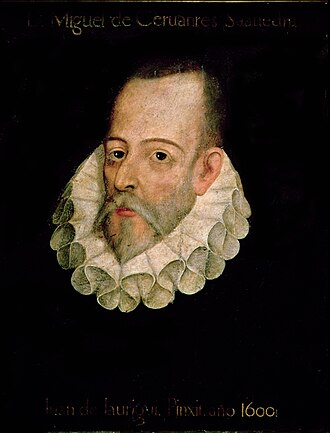
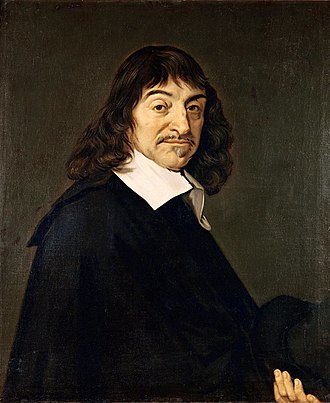
Answering: Miguel de Cervantes, René Descartes, John Locke · Answered by: Immanuel Kant
Curiosities
did you know?- Hume’s Treatise, his masterpiece, ‘fell dead-born from the press’ — almost nobody noticed it.
- He was turned down for professorships at both Edinburgh and Glasgow because of his scepticism.
- For a century the British Museum catalogued him as ‘Hume, David, the historian’.
- His Edinburgh street was jokingly chalked ‘St David Street’ — and the name stuck.
- He faced death so cheerfully that James Boswell, who came to watch him waver, was badly shaken instead.
Questions to Argue About
debate club →- Is it rational to believe the sun will rise tomorrow?
- Can you derive an ‘ought’ from an ‘is’?
- Is there a self behind your perceptions?
- Should anyone ever believe a report of a miracle?
Arguments
argument library →The Problem of Induction
No argument can justify the inference from past to future without assuming the very thing to be proved.
- All inferences from experience assume that the future will resemble the past.
- This assumption cannot be proved demonstratively — its denial is not contradictory.
- It cannot be proved by experience without circularity — that would use induction to justify induction.
∴ Inductive inference is not founded on reason; we rely on it by custom or habit.
3 objections
- Kant: Causality is a category the mind imposes on all possible experience — necessity is supplied a priori.
- Popper: Science does not need induction; it proceeds by bold conjecture and attempted refutation.
- Strawson: Asking for a justification of induction is like asking whether the law is legal — induction is part of what “reasonable” means.
Of Miracles
A miracle violates a law of nature, established by uniform experience; testimony can never outweigh that experience.
- A wise person proportions belief to the evidence.
- A miracle is a violation of a law of nature, and the laws of nature rest on uniform, unalterable experience.
- Testimony for a miracle is evidence of a much weaker kind — and people love wonder, and religious zeal corrupts honesty.
- It is always more probable that testimony is false than that a law of nature was violated.
∴ No testimony is sufficient to establish a miracle, unless its falsehood would be more miraculous than the fact it claims.
2 objections
- Richard Price and later Bayesians: Improbable events happen and are rightly believed on good testimony (a lottery result); Hume’s argument would forbid believing in any sufficiently unusual event.
- C. S. Lewis: Hume assumes experience against miracles is uniform — which is just what is in question.
Hume's Law — No Ought from an Is
From premises that only say what is the case, nothing follows about what ought to be.
- Valid deductive conclusions contain nothing not already in the premises.
- Purely factual premises contain only “is” and “is not”.
- An “ought” expresses a new relation not contained in any “is”.
∴ No set of purely factual premises can entail a moral conclusion.
2 objections
- John Searle ("How to Derive 'Ought' from 'Is'", 1964): Institutional facts carry obligations: “Jones promised to pay” entails “Jones ought to pay”.
- Aristotelian naturalists (Philippa Foot): Facts about what living things need to flourish are already evaluative; a wolf that doesn’t hunt with the pack is defective.
Epicurus's Old Questions (Problem of Evil)
If God is all-powerful and all-good, why is there evil? Philo restates the ancient argument.
- If God is willing but not able to prevent evil, he is impotent.
- If God is able but not willing, he is malevolent.
- If God is both able and willing, there would be no evil.
- There is evil.
∴ God is not both all-powerful and all-good.
3 objections
- Free will defence (Augustine, Plantinga): A world with free creatures who can choose evil is better than one of automata; moral evil is the price of freedom.
- Soul-making theodicy (John Hick): Suffering is necessary for the growth of virtue — courage, compassion, patience.
- Ivan Karamazov: Even if a harmony is reached, it is not worth one tortured child — “I return the ticket.”
Philo against the Design Argument
The analogy between the world and a machine is too weak to establish an intelligent, perfect, single designer.
- The design argument reasons from the order of the universe to a designer, by analogy with human artifacts.
- Analogies are only as strong as the similarity of the cases, and we have no experience of the making of worlds.
- The world is as much like an animal or vegetable, which generate order themselves, as like a machine.
- Even granting a designer, nothing shows it is one, perfect, infinite or still alive.
∴ The design argument establishes at most that the cause of order bears “some remote analogy to human intelligence”.
2 objections
- William Paley (1802): A watch found on a heath proves a watchmaker; the eye is far more intricate than any watch.
- Fine-tuning advocates: The physical constants fall in a narrow life-permitting range — a new form of the argument Hume did not consider.
Darwin’s natural selection (1859) supplied the naturalistic explanation of biological order that Philo could only gesture at.
In Their Own Words
5 quotationsReason is, and ought only to be the slave of the passions, and can never pretend to any other office than to serve and obey them.
Context & when to use it
Against the idea that reason alone motivates; for psychology over logic.
Commit it then to the flames, for it can contain nothing but sophistry and illusion.
Context & when to use it
The famous end of the Enquiry — any book that contains neither mathematical reasoning nor experimental reasoning about facts.
Against empty metaphysics, jargon, unfalsifiable claims.
A wise man proportions his belief to the evidence.
Context & when to use it
For rational belief, scepticism about extraordinary claims.
When I enter most intimately into what I call myself, I always stumble on some particular perception or other… I never can catch myself at any time without a perception.
Context & when to use it
For the bundle theory of self — pair with the Buddha’s anattā.
I dine, I play a game of back-gammon, I converse, and am merry with my friends; and when after three or four hours’ amusement, I would return to these speculations, they appear so cold, and strained, and ridiculous.
Context & when to use it
Hume’s cure for sceptical despair — nature and company.
When philosophy has gone too far; for common sense and conviviality.
Explore Next
related by shared connections
Gottfried Wilhelm Leibniz
Universal genius — co-inventor of calculus, philosopher of monads and pre-established harmony — who argued that ours is the best of all possible worlds.
Continental Rationalism
The seventeenth-century conviction that reason alone, unaided by the senses, can reach certain knowledge of the deepest truths.
Synthetic a priori
Judgments that are informative about the world yet knowable independently of experience. Kant’s master question was how they are possible.

Augustine of Hippo
North African bishop, convert, and the most influential Christian thinker of the Latin West — inventor of the autobiography of the inner self.

Friedrich Nietzsche
Philosopher with a hammer who announced the death of God, unmasked the genealogy of morality, and called for new values — the will to power, eternal recurrence, the Übermensch, amor fati.

Baruch Spinoza
The excommunicated lens-grinder of Amsterdam who identified God with Nature, wrote ethics in the form of geometry, and found freedom in understanding necessity.