If we take in our hand any volume; of divinity or school metaphysics, for instance; let us ask, Does it contain any abstract reasoning concerning quantity or number? No. Does it contain any experimental reasoning concerning matter of fact and existence? No. Commit it then to the flames: for it can contain nothing but sophistry and illusion. — David Hume, Enquiry, §12
The fork has two prongs:
- Relations of ideas — mathematics, logic. Certain, knowable by thought alone, but they tell us nothing about what exists.
- Matters of fact — that fire burns, that the sun will rise. About the world, but known only through experience and therefore never certain.
Immanuel Kant answered with a third category: the Synthetic a priori. The twentieth-century logical positivists revived the fork almost unchanged as their “verification principle.”
Explore Next
related by shared connectionsThe Problem of Induction
No non-circular argument shows that the future will resemble the past — yet all science and daily life depend on it.
The Copernican Revolution
Kant’s reversal — instead of the mind conforming to objects, objects must conform to the mind’s forms of knowing.
British Empiricism
The view that all knowledge comes from experience — the mind begins as a blank slate on which the senses write.
Rationalism vs. Empiricism
The great quarrel of early modern philosophy — does knowledge come from reason or from experience? Kant tried to end it.

Al-Ghazālī
Theologian, jurist and mystic whose Incoherence of the Philosophers attacked Avicenna’s Aristotelianism, anticipated Hume on causation, and whose spiritual autobiography records a crisis of doubt.
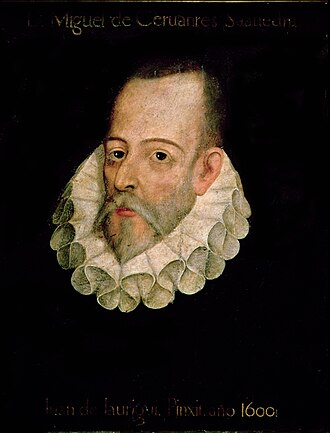
Miguel de Cervantes
Soldier, captive, tax collector and the father of the modern novel — whose Don Quixote made a deluded old knight and his earthy squire the most famous pair in literature.