In the preface to the second edition of the Critique of Pure Reason (B xvi), Immanuel Kant compares himself to Copernicus, who, failing to explain the heavens by assuming the stars revolve around the observer, tried making the observer revolve instead. Kant’s analogue: assume that objects conform to our cognition, and a priori knowledge becomes explicable.
The irony often noted: Copernicus displaced humanity from the centre; Kant’s “Copernican” turn puts the knowing subject back at the centre.
Explore Next
related by shared connectionsHume's Fork
Every meaningful claim is either a relation of ideas (certain but empty) or a matter of fact (informative but uncertain) — metaphysics is neither.
The Problem of Induction
No non-circular argument shows that the future will resemble the past — yet all science and daily life depend on it.
British Empiricism
The view that all knowledge comes from experience — the mind begins as a blank slate on which the senses write.
Rationalism vs. Empiricism
The great quarrel of early modern philosophy — does knowledge come from reason or from experience? Kant tried to end it.

Al-Ghazālī
Theologian, jurist and mystic whose Incoherence of the Philosophers attacked Avicenna’s Aristotelianism, anticipated Hume on causation, and whose spiritual autobiography records a crisis of doubt.
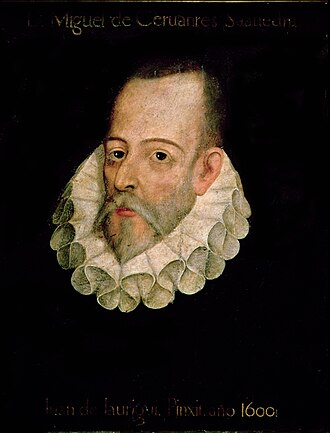
Miguel de Cervantes
Soldier, captive, tax collector and the father of the modern novel — whose Don Quixote made a deluded old knight and his earthy squire the most famous pair in literature.