Rationalism
Reason alone can know necessary truths. There are innate ideas. The senses are confused; the intellect is clear.
Empiricism
All ideas come from experience. The mind begins blank. Reason without experience tells us nothing about the world.
The Exchange
who answered whom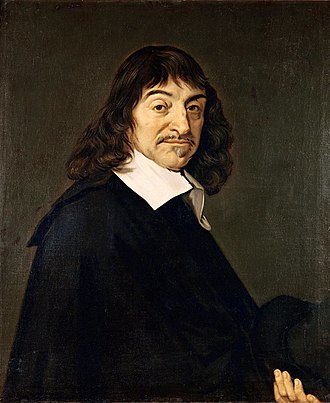 René Descartes
The senses deceive. Only what I perceive clearly and distinctly by reason is certain — and the ideas of God and self are innate.
 John Locke
There are no innate ideas. Children and idiots have no idea of God. The mind is white paper; experience writes on it.
 Gottfried Wilhelm Leibniz
Nothing is in the intellect that was not first in the senses — except the intellect itself. The mind is veined marble, not blank paper.
 David Hume
Then follow experience to the end — and you find no impression of necessary connection, substance, or self. Causation is habit; induction is unjustified.
 Immanuel Kant
Both are half right. Thoughts without content are empty; intuitions without concepts are blind. All knowledge begins with experience, but it does not all arise out of experience.
The debate shaped the whole curriculum of modern philosophy, though the labels are partly a later invention: Kant himself drew the two camps sharply, and nineteenth-century historians made the “three rationalists” and “three empiricists” (adding Berkeley) a textbook scheme.
Who won? Immanuel Kant claimed a synthesis. The logical positivists of the 1920s sided with empiricism. Noam Chomsky’s arguments for innate grammar revived rationalism. Cognitive science still argues about “nativism”.
Explore Next
related by shared connectionsContinental Rationalism
The seventeenth-century conviction that reason alone, unaided by the senses, can reach certain knowledge of the deepest truths.
What Can We Know?
The relay race of epistemology — from Plato’s Cave to Kant’s categories, via Descartes’ demon and Hume’s billiard balls.
British Empiricism
The view that all knowledge comes from experience — the mind begins as a blank slate on which the senses write.
The Enlightenment
The eighteenth-century movement that put reason, science, tolerance and individual liberty at the centre of human affairs — “Sapere aude!”
How Is the Mind Related to the Body?
Witness-consciousness and matter, the soul as form, two substances, one substance, Dasein — the mind–body problem across civilizations.
The Categorical Imperative
Kant’s supreme principle of morality — act only on maxims you could will as universal laws; treat humanity always as an end, never merely as a means.