Advaita (non-dualism)
Brahman alone is real — without attributes, without parts. The world is māyā; individuality is superimposed by ignorance. Liberation is the knowledge that you are Brahman.
Viśiṣṭādvaita (qualified non-dualism)
Brahman is real and personal, with infinite good qualities. Souls and world are real, inseparable modes of Brahman — his body. Liberation is loving union through devotion and grace.
The Exchange
who answered whom Ādi Śaṅkara
Tat tvam asi means strict identity. “That” (Brahman) and “thou” (the self) are one once the limiting adjuncts are removed — as the space in a pot is the same as space itself.
 Rāmānuja
Grammar refutes you — in “that thou art”, both words refer to one Brahman qualified in two ways, as cause and as the inner self of the soul. Identity in difference.
- Rāmānuja
Where does avidyā (ignorance) reside? Not in Brahman — Brahman is pure knowledge. Not in the soul — the soul is itself the product of avidyā. Your māyā is untenable.
- Ādi Śaṅkara
Ignorance is beginningless and indescribable — neither real nor unreal. To ask its origin is to ask from within the dream when the dream began.
- Rāmānuja
Then scripture is false when it praises a God of infinite auspicious qualities, and devotion is to an illusion. That cannot be.
Note: Śaṅkara (8th century) and Rāmānuja (11th–12th century) never met; the “rounds” give Rāmānuja’s critique (the “seven untenabilities” in the Śrī Bhāṣya) and the Advaitin responses developed by Śaṅkara and his school. Madhva’s dualism (Dvaita) later attacked both.
Explore Next
related by shared connectionsBrahma Sūtras
Bādarāyaṇa’s 555 terse aphorisms systematizing the Upanishads — so condensed they are unreadable without the commentaries that founded the schools of Vedānta.
Viśiṣṭādvaita
Qualified non-dualism — Brahman is one, but includes real souls and matter as its body; liberation is through devotion and grace.
Madhva
The 13th-century philosopher from Udupi who founded Dvaita Vedānta — the uncompromising teaching that God, souls and matter are eternally distinct, and that Viṣṇu alone is independent.
What Is the Self? — The Indian Argument
Three thousand years of Indian argument about the “I” — from the Upaniṣads’ Self that is Brahman, through the Buddha’s no-self, the Jain soul, the Nyāya substance, Sāṃkhya’s witness, to Ramana’s “Who am I?” and Ambedkar’s social self.

Bṛhadāraṇyaka Upaniṣad
The “Great Forest” Upanishad, oldest and longest, home of Yājñavalkya’s debates, the teaching to Maitreyī, and “neti neti”.
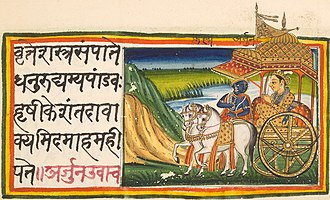
The Bhagavad Gītā
The “Song of the Lord” — Kṛṣṇa’s teaching to the despairing warrior Arjuna on the battlefield of Kurukṣetra, on duty, action without attachment, knowledge and devotion.