The arguments: René Descartes proves God from the idea of perfection; David Hume dismantles design and miracles; Immanuel Kant denies knowledge “to make room for faith”; Søren Kierkegaard says faith is a leap precisely because it cannot be proven; Friedrich Nietzsche announces that God is dead — and that we have killed him.
The novels: Ivan Karamazov hands back his ticket to a world that tortures children; Alyosha Karamazov answers with a kiss. In India, the question is less “does God exist?” than “is the Self other than Brahman?”
Thinkers & Authors
59
Epicurus
The gentle materialist who taught that pleasure — understood as the absence of pain and fear — is the goal of life, and that death is nothing to us.
Aśoka
The Mauryan emperor (r. c. 268–232 BCE) who, after the slaughter of his conquest of Kaliṅga, turned to Buddhism and governed by “dhamma” — non-violence, tolerance and welfare — proclaimed in edicts carved on rocks and pillars across India. His lion capital is India’s emblem; his wheel is on its flag.
Bādarāyaṇa
The author, by tradition, of the Brahma Sūtras — the systematisation of the Upaniṣads that became the root text of every school of Vedānta. Often identified with Vyāsa, compiler of the Vedas and author of the Mahābhārata.

Lucretius
Roman poet whose single masterpiece, On the Nature of Things, set Epicurean atomism to hexameter verse — and, rediscovered in 1417, helped kindle modernity.

Tertullian
Fiery early Christian writer from Carthage, father of Latin theology, remembered for setting faith against philosophy — “What has Athens to do with Jerusalem?”

Augustine of Hippo
North African bishop, convert, and the most influential Christian thinker of the Latin West — inventor of the autobiography of the inner self.

Kālidāsa
The greatest poet and dramatist of classical Sanskrit — author of Śakuntalā, The Cloud Messenger and the Birth of Kumāra — whose art of love, nature and longing made him “the Shakespeare of India”.
Dharmakīrti
The 7th-century Buddhist logician who perfected Dignāga’s epistemology — proving momentariness, refuting a creator God and the Veda’s authority, and defining knowledge by its reliability — the most formidable philosophical opponent the Hindu schools ever faced.
Kumārila Bhaṭṭa
The 7th-century Mīmāṃsā philosopher who turned Vedic ritual hermeneutics into a full philosophy — defending the authorless Veda, the self-validity of knowledge and a realist world against the Buddhists, and arguing that no creator God is needed.
Āṇṭāḷ
The only woman among the twelve Tamil Āḻvār saints (9th century) — a girl who wore the garland meant for Viṣṇu, refused any human husband, and wrote the Tiruppāvai and Nācciyār Tirumoḻi, poems of longing for God as her bridegroom.
Abhinavagupta
The towering Kashmiri polymath (c. 950–1016) — the great systematiser of non-dual Kashmir Śaivism and the greatest theorist of Indian aesthetics, who taught that in the experience of art (rasa) the self tastes its own blissful consciousness.
Udayana
The great Nyāya philosopher of Mithilā who gave Indian philosophy its classic proofs of God’s existence, defended the reality of the self against the Buddhists, and closed the classical age of Nyāya-Vaiśeṣika.

Avicenna (Ibn Sīnā)
Persian polymath — physician, metaphysician, logician — whose Canon of Medicine was taught in Europe for 500 years and whose distinction between essence and existence reshaped philosophy in Islam and the Latin West.

Rāmānuja
Founder of Viśiṣṭādvaita — “qualified non-dualism” — who argued against Śaṅkara that the world and souls are real, forming the body of a personal God.

Al-Ghazālī
Theologian, jurist and mystic whose Incoherence of the Philosophers attacked Avicenna’s Aristotelianism, anticipated Hume on causation, and whose spiritual autobiography records a crisis of doubt.

Averroes (Ibn Rushd)
Andalusian judge and philosopher — “the Commentator” on Aristotle — who defended philosophy against al-Ghazālī and argued that reason and revelation cannot contradict each other.
Basavaṇṇa (Basava)
The 12th-century Kannada saint, poet and statesman who founded the Vīraśaiva (Liṅgāyat) movement — rejecting caste, temples, priests and the Vedas, preaching that work is worship and that every devotee carries Śiva on his body.
Jayadeva
The 12th-century Sanskrit poet of Bengal or Odisha whose Gītagovinda — the love, quarrel and reunion of Rādhā and Kṛṣṇa — is the most sensuous devotional poem in Sanskrit, sung in temples and danced in Odissi to this day.

Thomas Aquinas
Dominican friar and the greatest of the scholastics, who wove Aristotle’s philosophy and Christian theology into a single vast system — the Summa Theologiae — with five ways to prove God.
Madhva
The 13th-century philosopher from Udupi who founded Dvaita Vedānta — the uncompromising teaching that God, souls and matter are eternally distinct, and that Viṣṇu alone is independent.
Amīr Khusrau
The 13th–14th century poet, musician and Sufi of Delhi — disciple of Nizāmuddīn Auliyā, master of Persian verse, pioneer of Hindavi (early Hindi-Urdu), and by tradition the inventor of qawwālī, the khayāl and the sitar.

Dante Alighieri
The Florentine poet of the Divine Comedy — the journey through Hell, Purgatory and Paradise that summed up medieval thought and created the Italian language.
Jñāneśvar
The 13th-century Marathi saint-poet who, at about twenty, wrote the Jñāneśvarī — a 9,000-verse commentary on the Bhagavad Gītā in Marathi that founded Marathi literature and the Vārkarī devotional tradition — and entered living samādhi at twenty-one.
Lal Ded (Lalleśvarī)
The 14th-century Kashmiri Śaiva mystic who wandered naked singing short verses (vākhs) of fierce, non-dual devotion — the mother of Kashmiri literature, claimed equally by Hindus and Muslims.
Rāmānanda
The 14th–15th century Vaiṣṇava teacher of Vārāṇasī who, by tradition, opened devotion to Rāma to all castes and both sexes, and whose disciples included Kabīr, Ravidās and Pīpā — the bridge between South Indian theology and North Indian bhakti.
Kabīr
The 15th-century weaver-poet of Vārāṇasī who mocked both Hindu and Muslim orthodoxy, taught devotion to a formless God found within, and left the most quoted couplets (dohās) in the Hindi language.
Guru Nānak
The founder of Sikhism (1469–1539) — a Punjabi mystic and poet who proclaimed “there is no Hindu, there is no Muslim”, taught devotion to the one formless God (Ik Onkār), honest work and sharing, and the equality of all people.
Sūrdās
The 16th-century blind poet of Braj whose songs of Kṛṣṇa’s childhood mischief and the gopīs’ longing — the Sūrsāgar, “Ocean of Sūr” — are the heart of Kṛṣṇa devotion in Hindi.
Caitanya Mahāprabhu
The 15th–16th century Bengali saint who led an ecstatic movement of singing the names of Kṛṣṇa, regarded by his followers as Kṛṣṇa and Rādhā in one body — founder of Gauḍīya Vaiṣṇavism and ancestor of the Hare Kṛṣṇa movement.
Mīrābāī
The 16th-century Rajput princess who declared herself the bride of Kṛṣṇa, defied her royal in-laws, survived (the legends say) cups of poison and a basket with a snake, and left her palace to sing — the most beloved woman poet of North India.
Tulsīdās
The 16th-century poet of Vārāṇasī who retold the Rāmāyaṇa in Avadhī as the Rāmcaritmānas — the most widely read and recited book in North India — and wrote the Hanumān Chālīsā, sung daily by millions.
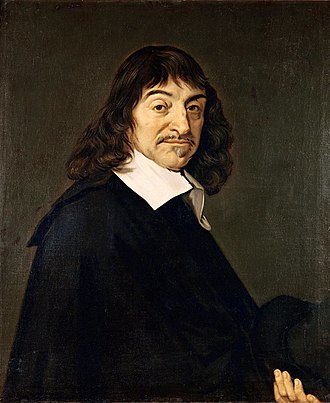
René Descartes
The father of modern philosophy, who doubted everything that could be doubted and found one thing that could not — that he himself was thinking.
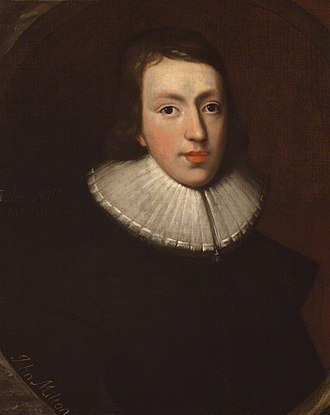
John Milton
English poet, polemicist and revolutionary whose Paradise Lost — written blind, after the defeat of his cause — retells the Fall of Man to “justify the ways of God to men”, and gave literature its most magnificent rebel, Satan.
Tukārām
The 17th-century Marathi saint-poet, a grocer of the Śūdra caste, whose thousands of abhaṅgas to Viṭṭhal of Pandharpur — honest, anguished, joyful, scornful of hypocrisy — are the most loved poems in Marathi.

Blaise Pascal
Mathematician, physicist, inventor and Christian apologist whose fragmentary Pensées confront the misery and greatness of the human being — the thinking reed — and propose the Wager.

Baruch Spinoza
The excommunicated lens-grinder of Amsterdam who identified God with Nature, wrote ethics in the form of geometry, and found freedom in understanding necessity.

Gottfried Wilhelm Leibniz
Universal genius — co-inventor of calculus, philosopher of monads and pre-established harmony — who argued that ours is the best of all possible worlds.

Voltaire
The wittiest man of the Enlightenment — playwright, historian, satirist and campaigner against intolerance — whose Candide demolished Leibnizian optimism and whose cry was “Écrasez l’infâme!”

David Hume
The great Scottish sceptic who showed that causation, the self, and induction cannot be justified by reason — and that reason is, and ought only to be, the slave of the passions.

Immanuel Kant
The philosopher who tried to end the war between rationalism and empiricism by asking what the mind itself contributes to experience — the “Copernican revolution” in philosophy.

Friedrich Heinrich Jacobi
German critic of the Enlightenment who sparked the Pantheism Controversy and gave philosophy the word “nihilism”.
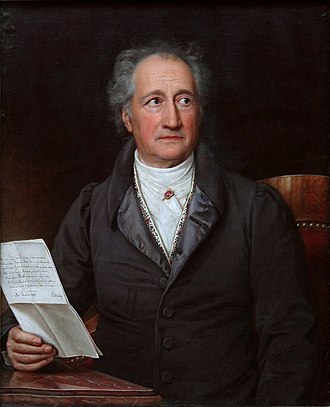
Johann Wolfgang von Goethe
Germany’s greatest writer — poet, novelist, dramatist, scientist and statesman — whose Faust is the modern myth of the striving soul, and whose life was itself treated as a work of art.
Raja Rammohun Roy
The Bengali reformer (1772–1833) called the “father of modern India” — translator of the Upaniṣads as rational monotheism, founder of the Brahmo Samāj, campaigner against satī, and champion of modern education and a free press.
Mirza Ghalib
The greatest poet of Urdu (1797–1869) — master of the ghazal, of wit, paradox, grief and doubt — who lived through the fall of the Mughal world in 1857 and wrote its elegy in letters and verse.

Søren Kierkegaard
The melancholy Dane, father of existentialism, who set the passionate individual against Hegel’s System and faith against reason — “truth is subjectivity”.
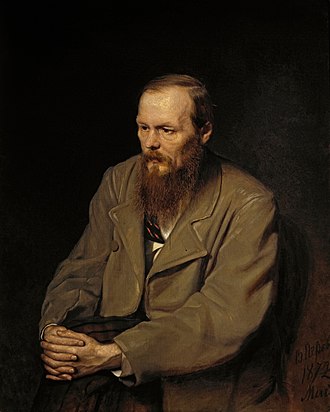
Fyodor Dostoevsky
The Russian novelist of the abyss — crime, faith, freedom, suffering — whose characters argue philosophy with their lives. Nietzsche called him the only psychologist he had anything to learn from.
Dayānanda Sarasvatī
The Gujarati ascetic (1824–1883) who founded the Ārya Samāj with the cry “Back to the Vedas!” — rejecting idol-worship, caste by birth, and the Purāṇas, and calling for a rational Vedic religion, education for women and the reconversion of those who had left Hinduism.

Leo Tolstoy
The Russian giant of War and Peace and Anna Karenina, who in mid-life fell into a crisis of meaning and reinvented himself as a prophet of non-violence and simple Christian love.
Ramakrishna Paramahamsa
The 19th-century Bengali mystic of the Dakshineswar Kālī temple who practised Hindu, Muslim and Christian paths and declared “as many faiths, so many paths” — the guru of Vivekananda and the fountainhead of modern Hindu universalism.

Friedrich Nietzsche
Philosopher with a hammer who announced the death of God, unmasked the genealogy of morality, and called for new values — the will to power, eternal recurrence, the Übermensch, amor fati.
Rabindranath Tagore
The Bengali poet, novelist, composer, painter, educator and philosopher — the first non-European Nobel laureate in literature (1913, for Gitanjali) — author of the national anthems of India and Bangladesh, founder of Santiniketan, and a universalist who argued with Gandhi and warned the world against nationalism.
Swami Vivekananda
The Bengali monk, disciple of Ramakrishna, who brought Vedānta and Yoga to the West at the 1893 Parliament of Religions in Chicago (“Sisters and brothers of America!”), preached a “practical Vedānta” of service to humanity as service to God, and awakened modern Hindu self-confidence.
Mahatma Gandhi
The leader of India’s independence movement and the philosopher of satyāgraha — “truth-force”, non-violent resistance — who turned the Jain and Hindu ideal of ahiṃsā into a method of mass politics, and whose ideas of truth, non-violence, self-rule and simplicity changed the twentieth century.
Sri Aurobindo
The revolutionary nationalist turned yogi and philosopher of Pondicherry, whose The Life Divine and Integral Yoga teach that evolution is spirit’s ascent through matter, life and mind toward a “supermind” that will divinise earthly life.
Muhammad Iqbal
The Urdu and Persian poet-philosopher of Lahore who preached “khudī” — the self’s dynamic development — as the heart of a reconstructed Islam, wrote “Sāre jahāṅ se acchā” for India, and later envisioned a Muslim homeland that became Pakistan.
Sarvepalli Radhakrishnan
The philosopher-statesman who presented Indian philosophy to the West as a living tradition — Oxford’s Spalding Professor of Eastern Religions, author of Indian Philosophy, and India’s second President. Teachers’ Day is his birthday.

Ludwig Wittgenstein
The Viennese-Cambridge philosopher who twice transformed philosophy — first by mapping the limits of what language can say (Tractatus), then by showing that meaning is use in the countless “language games” of ordinary life (Philosophical Investigations).
B. R. Ambedkar
The Dalit jurist, economist, philosopher and statesman who rose from “untouchability” to become the principal architect of India’s Constitution — the fiercest critic of caste and of the Hindu scriptures that sanctified it, and the founder of modern Indian Buddhism.

Jean-Paul Sartre
The face of French existentialism — existence precedes essence, we are condemned to be free, and hell is other people.
Works
29The Ṛg Veda
The oldest text of India and one of the oldest in any Indo-European language — 1,028 hymns to the gods of fire, storm, sky and order, composed c. 1500–1000 BCE and preserved orally, syllable for syllable, for over three thousand years. Its final book already asks how the universe began, and whether even its creator knows.
The Upaniṣads
The philosophical dialogues that close the Vedas (c. 800–200 BCE) — forest teachings in which kings, priests, women and a boy at Death’s door ask what the Self is, what Brahman is, and how to be free. The source of Vedānta, and of almost every later Indian idea about the self.
Kena Upaniṣad
The “By whom?” Upaniṣad — by whom is the mind sent forth, the breath set going, speech uttered? Its answer is the paradox that Brahman is known only by those who know they do not know it — and a story of the gods humbled by a blade of grass.

The Rāmāyaṇa
Vālmīki’s epic of Rāma, the exiled prince who crosses the sea to rescue his wife Sītā from the demon king Rāvaṇa — India’s ādikāvya, the “first poem”, and the model of dharma for two thousand years.
Īśā Upaniṣad
The shortest of the principal Upaniṣads — eighteen verses that begin “All this is pervaded by the Lord” and reconcile renunciation with action, knowledge with works, and the one with the many.
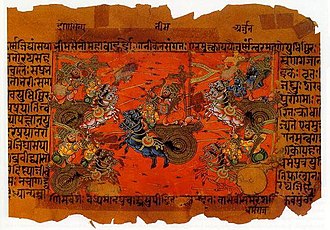
The Mahābhārata
The great epic of India — the war between the Pāṇḍavas and the Kauravas, cousins fighting for a kingdom — and, at about 100,000 couplets, the longest poem ever composed, containing the Bhagavad Gītā and almost the whole of Indian thought on dharma.
Muṇḍaka Upaniṣad
The Upaniṣad of the “shaven head” — it distinguishes the “lower knowledge” of the Vedas and sciences from the “higher knowledge” of the imperishable, compares ritual to leaky boats, gives the image of two birds on one tree, and India its national motto, “Truth alone triumphs”.
Śvetāśvatara Upaniṣad
The most theistic of the principal Upaniṣads — it identifies Brahman with Rudra-Śiva, a personal Lord to be loved, blends Vedānta with early Sāṃkhya and Yoga, and first uses the words māyā and bhakti in their later senses.
Brahma Sūtras
Bādarāyaṇa’s 555 terse aphorisms systematizing the Upanishads — so condensed they are unreadable without the commentaries that founded the schools of Vedānta.
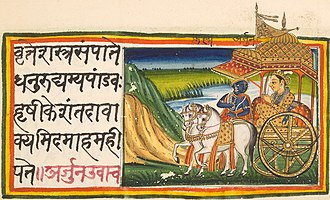
The Bhagavad Gītā
The “Song of the Lord” — Kṛṣṇa’s teaching to the despairing warrior Arjuna on the battlefield of Kurukṣetra, on duty, action without attachment, knowledge and devotion.
The Bhāgavata Purāṇa
The most beloved of the Purāṇas (c. 9th–10th century) — twelve books of devotion to Viṣṇu, culminating in the tenth book’s life of Kṛṣṇa: the butter-thief child, the cowherd, the lover of the gopīs, the god who dances with every devotee at once.
Gītagovinda
Jayadeva’s 12th-century Sanskrit song-cycle on the love of Rādhā and Kṛṣṇa — jealousy, separation, longing and reunion — the most musical and sensuous poem in Sanskrit, read as an allegory of the soul’s love for God.

Summa Theologiae
Aquinas’s unfinished masterpiece — a systematic theology in some 3,000 articles, each a model of fair argument, synthesizing Aristotle and Christian revelation.

The Divine Comedy
Dante’s journey through Hell, Purgatory and Paradise — the summa of medieval thought in a hundred cantos, and one of the greatest poems ever written.
Rāmcaritmānas
Tulsīdās’s 16th-century retelling of the Rāmāyaṇa in Avadhī Hindi — 12,800 lines of devotional epic that made Rāma the God of North India, recited daily, staged every year as Rāmlīlā, and loved more than any other book in Hindi.

Pensées
Pascal’s unfinished defence of Christianity, left as nearly a thousand fragments — on the thinking reed, diversion, the infinite spaces, and the Wager.

Candide
Voltaire’s comic philosophical tale, in which a naïve young man and his optimist tutor suffer every disaster the eighteenth century could offer — ending with “we must cultivate our garden”.

Critique of Pure Reason
Kant’s masterwork, asking what reason can know without experience — and answering that it can know the forms of all possible experience, but nothing beyond.
Critique of Practical Reason
Kant’s second Critique — the moral law is a fact of reason, and through it we know we are free.

Faust
Goethe’s two-part dramatic poem of the scholar who wagers his soul with Mephistopheles that no moment of pleasure will ever satisfy him — the defining myth of modern restless striving.
Fear and Trembling
Kierkegaard’s meditation, under the pseudonym Johannes de Silentio, on Abraham’s willingness to sacrifice Isaac — is faith higher than ethics?
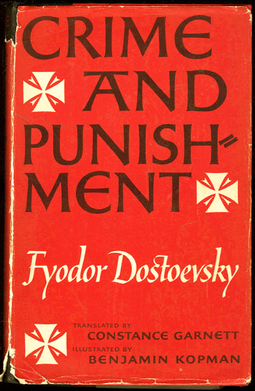
Crime and Punishment
A poor ex-student in St Petersburg murders an old pawnbroker to prove he is an “extraordinary man” — and is undone not by the police but by his own conscience and by Sonya’s love.

Demons
Dostoevsky’s prophetic political novel — a provincial town possessed by revolutionary nihilists, the murder of one of their own, and the hollow charisma of Stavrogin.

The Brothers Karamazov
Dostoevsky’s last and greatest novel — a murdered father, three brothers (the sensualist, the intellectual, the saint), and the deepest debate about God and evil in literature.
A Confession
Tolstoy’s account of his mid-life crisis — at the height of fame he could not answer “why live?” and nearly killed himself, until he found meaning in the faith of simple people.
The Gay Science
Nietzsche’s most joyful book — where God is first declared dead, the madman runs into the marketplace, and the thought of eternal recurrence first appears.
Thus Spoke Zarathustra
Nietzsche’s prophetic prose-poem — Zarathustra descends from his mountain to teach the Übermensch, the will to power and eternal recurrence.
Gitanjali
Tagore’s 1912 collection of devotional prose-poems, translated by himself from Bengali, which won the 1913 Nobel Prize — intimate songs to a God found in nature, in human labour, in love and in death.
Existentialism Is a Humanism
Sartre’s 1945 public lecture — the most popular statement of existentialism — existence precedes essence, man is condemned to be free.
Ideas
6Dharma
The central idea of Indian civilisation — the order that holds the world together, and the duty, law, virtue and right way of living that each being owes to it. For Buddhists, the Dhamma is also the Buddha’s teaching and the ultimate constituents of reality.
Ātman is Brahman
The central Upanishadic insight — the innermost Self of each being is identical with the ultimate reality of the universe.
Mokṣa
Liberation — release from the cycle of rebirth and from all suffering, the highest goal of human life in the Hindu and Jain traditions (and, as nirvāṇa, in Buddhism). Every Indian school defines it differently, and the arguments over what it is, and how it is won, are the backbone of Indian philosophy.
The Leap of Faith
Kierkegaard’s claim that faith cannot be reached by reasoning — it is a passionate decision made in the face of the absurd.
The Death of God
Nietzsche’s announcement that belief in God has become unbelievable — and that with Him the foundations of Western morality have gone.
Existence Precedes Essence
Sartre’s formula — humans have no pre-given nature; we exist first and make ourselves through our choices.
Schools & Movements
11Vedānta
“The end of the Veda” — the schools that interpret the Upanishads, Bhagavad Gītā and Brahma Sūtras to understand Brahman, the Self, and liberation.
Cārvāka (Lokāyata)
India’s materialist school — only perception is knowledge, only matter is real, there is no soul, no rebirth, no karma and no God, and the purpose of life is pleasure. Its own books are lost; we know it through the furious refutations of every other school.
Platonism
The tradition descending from Plato — eternal Forms, an immortal soul, and a reality higher than the senses — from the Academy through Neoplatonism to Christian theology.
Epicureanism
The school of the Garden — a materialist philosophy aiming at tranquillity through friendship, simple pleasures and freedom from the fear of gods and death.
Mīmāṃsā
The school of Vedic interpretation — the hermeneutics of ritual and duty that treated the Veda as eternal and authorless, defended the self-validity of knowledge, denied a creator God, and developed theories of language, meaning and law that shaped all of Hindu jurisprudence.
Nyāya
India’s great school of logic and epistemology — the theory of valid knowledge (pramāṇa), the five-membered syllogism, the catalogue of fallacies, realist metaphysics, and the most famous arguments for God in Indian philosophy. Its later form, Navya-Nyāya, became the technical language of all Indian scholarship.
The Bhakti Movement
The great devotional revolution of Indian religion — from the Tamil Āḻvārs and Nāyaṉārs (6th–9th centuries) to Kabīr, Mīrābāī, Tulsīdās and Tukārām — which made passionate, personal love of God, sung in the languages of the people, a path to liberation open to every caste and to women.
Kashmir Śaivism
The non-dual Śaiva philosophy of medieval Kashmir — reality is the free, self-aware consciousness of Śiva, who playfully contracts himself into the many selves and the world, and liberation is the recognition that you are Śiva. The world is not illusion but God’s self-expression.
Scholasticism
The method and philosophy of the medieval universities — rigorous disputation, the reconciliation of faith and reason, and the absorption of Aristotle into Christian, Jewish and Islamic thought.
Viśiṣṭādvaita
Qualified non-dualism — Brahman is one, but includes real souls and matter as its body; liberation is through devotion and grace.
Dvaita Vedānta
Madhva’s realist, theistic Vedānta — God (Viṣṇu) alone is independent; souls and matter are real, eternally distinct from God and from each other, and wholly dependent on him. The most uncompromising rejection of Advaita in Indian thought.
Debates
3Faith vs. Reason
Can God be reached by argument — or does faith begin exactly where reason fails? From Tertullian’s Athens and Jerusalem to Kierkegaard’s leap and Camus’s refusal.
Can God Be Proved? Udayana vs. the Mīmāṃsakas and Buddhists
The classical Indian debate on a creator God — Nyāya’s proofs from effects, atoms and the Veda, against the Mīmāṃsā and Buddhist arguments that no creator is needed or possible.
Śaṅkara vs. Rāmānuja
The great Vedāntic debate — is the self identical with Brahman, and the world an illusion? Or are souls and world real, the body of a personal God?
Characters
4Alyosha Karamazov
The youngest brother, novice of the elder Zosima, “the hero” of the novel — who answers Ivan’s arguments not with refutation but with a kiss.
Ivan Karamazov
The rational, tormented middle brother who “returns his ticket” to God’s world and authors the Grand Inquisitor — and whose idea that “everything is permitted” kills his father.
Alexei Kirillov
The engineer in Demons who reasons that if God does not exist, man must become God — and that the supreme act of self-will is suicide.
Sonya Marmeladova
The meek young prostitute who reads Raskolnikov the raising of Lazarus and follows him to Siberia — Dostoevsky’s image of redemptive love.
Great Scenes
8Abraham on Mount Moriah
Kierkegaard’s obsessive retelling of Genesis 22 — Abraham rising early to sacrifice Isaac — as the test case of faith beyond ethics.
The Death of Cordelia
Lear enters carrying his hanged daughter, howling, searching for her breath with a mirror and a feather — “Never, never, never, never, never.”
Rebellion — Returning the Ticket
Ivan tells Alyosha true stories of tortured children and declares that no future harmony could be worth one child’s tear — so he respectfully returns his ticket.
The Grand Inquisitor
Ivan Karamazov’s prose-poem — Christ returns to sixteenth-century Seville, and the aged Cardinal Inquisitor imprisons him, explaining that humanity cannot bear the freedom He offered.
The Madman with the Lantern
Nietzsche’s parable of the madman who runs into the marketplace at noon with a lantern crying “I seek God!” — and announces that we have killed him.
Meursault and the Chaplain
On the eve of execution, Meursault explodes at the prison chaplain’s certainty — and finds peace in the “gentle indifference of the world”.
Sonya Reads Lazarus
In her bare room, by a candle-end, the prostitute Sonya reads the murderer Raskolnikov the Gospel story of the raising of Lazarus.
The Universal Form
Arjuna asks to see Kṛṣṇa’s true form — and beholds the whole universe, all beings, all gods, and all the warriors rushing into Time’s blazing mouths.
Great Questions
3Does God Exist?
The proofs, the refutations, the wagers and the leaps — the great argument about God from the Upanishads to Nietzsche.
What Are the Limits of the Human Mind?
Can reason know everything — or are there things the mind can never reach? From the Upanishads’ unknowable knower to Kant’s boundary and Wittgenstein’s silence.
The Road of Nihilism
How “nothing matters” became an idea, a movement, a diagnosis, and a test — from Jacobi to Camus.
Lines to Remember
22 quotationsNothing can ever be created by divine power out of nothing.
nullam rem e nilo gigni divinitus umquam
Context & when to use it
For naturalism and conservation laws; the root of “ex nihilo nihil fit”.
So great the evils that religion could prompt.
tantum religio potuit suadere malorum
Context & when to use it
On Agamemnon’s sacrifice of his daughter Iphigenia.
For critique of religious violence.
You have made us for yourself, and our heart is restless until it rests in you.
fecisti nos ad te et inquietum est cor nostrum donec requiescat in te
Context & when to use it
For spiritual longing, the God-shaped hole.
God is dead. God remains dead. And we have killed him.
Gott ist tot! Gott bleibt tot! Und wir haben ihn getödtet!
Context & when to use it
The madman in the marketplace — not a triumphant atheist, but a horrified witness to a cultural catastrophe.
For secularization and its consequences. Quote the whole — it is a lament, not a boast.
I am Time, the mighty destroyer of worlds, come forth to annihilate the peoples.
कालोऽस्मि लोकक्षयकृत्प्रवृद्धो लोकान्समाहर्तुमिह प्रवृत्तः
Context & when to use it
From the theophany of the universal form.
For the sublime terror of time and death. Oppenheimer’s paraphrase — “Now I am become Death, the destroyer of worlds.”
Two things fill the mind with ever new and increasing admiration and awe, the more often and steadily we reflect upon them: the starry heavens above me and the moral law within me.
Zwei Dinge erfüllen das Gemüt mit immer neuer und zunehmender Bewunderung und Ehrfurcht, je öfter und anhaltender sich das Nachdenken damit beschäftigt: der bestirnte Himmel über mir und das moralische Gesetz in mir.
Context & when to use it
The closing of the second Critique. The first “thing” humbles us — we are specks in an infinite cosmos; the second elevates us — as moral beings we stand outside the mechanism of nature. It is engraved on Kant’s tomb in Königsberg.
For wonder, for the dignity of conscience, or to answer anyone who says science has made morality small.
I had to deny knowledge in order to make room for faith.
Ich musste also das Wissen aufheben, um zum Glauben Platz zu bekommen.
Context & when to use it
By limiting knowledge to appearances, Kant leaves God, freedom and immortality beyond disproof — matters for practical reason and faith, not theory.
When discussing whether reason can prove or disprove God.
A wise man proportions his belief to the evidence.
Context & when to use it
For rational belief, scepticism about extraordinary claims.
This is the best of all possible worlds.
Context & when to use it
God, perfectly good and wise, chose the best possible world, evils included.
For optimism and theodicy — usually with Voltaire’s irony.
⚠ The exact phrase is Voltaire’s mocking formula in Candide; Leibniz argues the thesis.
Whereof one cannot speak, thereof one must be silent.
Wovon man nicht sprechen kann, darüber muss man schweigen.
Context & when to use it
The last proposition of the book — after throwing away the ladder.
For the limits of argument, the ineffable, or ending a pointless dispute.
I made him just and right, / Sufficient to have stood, though free to fall.
Context & when to use it
For the free-will theodicy.
They also serve who only stand and wait.
Context & when to use it
Milton, gone blind, wonders how he can serve God.
For patience, disability, and unseen contributions.
Beauty will save the world.
Мир спасёт красота.
Context & when to use it
Ippolit mockingly reports that the Prince once said this. Myshkin never says it on stage; the line is asked about, not affirmed.
For the redemptive power of beauty and art. Solzhenitsyn built his Nobel lecture around it.
⚠ Often quoted as Dostoevsky’s own creed. In the novel it is reported second-hand, with irony.
If there is no God and no immortality, then everything is permitted.
Context & when to use it
Ivan’s argument that without immortality there is no ground for virtue — first reported by Miusov, later echoed by Dmitri and fatally taken up by Smerdyakov.
The classic statement of moral nihilism; to ask whether ethics needs God.
⚠ The exact sentence “If God does not exist, everything is permitted” is not in the novel. It is a compression of several passages.
It’s not God that I don’t accept, Alyosha, only I most respectfully return Him the ticket.
Context & when to use it
After listing the tortures of children, Ivan refuses a harmony bought with their tears.
For the problem of evil, or for rejecting any utopia whose price is innocent suffering.
The whole world of knowledge is not worth that child’s prayer to “dear, kind God”!
Context & when to use it
On the little girl locked in the freezing privy by her parents.
When abstractions are used to justify concrete cruelty.
What is hell? I maintain that it is the suffering of being unable to love.
Context & when to use it
From Zosima’s discourses, recorded by Alyosha.
For a non-literal hell; love as the meaning of life.
If there is no God, then I am God.
Context & when to use it
Kirillov’s logic — if God is dead, the highest point of my self-will is to kill myself.
For the man-god, the Übermensch before Nietzsche, the logical suicide.
As flies to wanton boys are we to th’ gods; they kill us for their sport.
Context & when to use it
The blinded Gloucester on the cruelty of the cosmos.
For the problem of evil, cosmic indifference, tragic fate.
Nor did I think your decrees so strong that you, a mortal, could override the unwritten and unfailing laws of the gods. They are not of today or yesterday; they live forever.
Context & when to use it
Antigone to Creon, admitting she buried her brother against his decree.
The founding statement of conscience against unjust law.
The love that moves the sun and the other stars.
l'amor che move il sole e l'altre stelle
Context & when to use it
The last line of the Divine Comedy.
For love as the principle of the universe; for endings.
Whoever strives with all his might, him we can redeem.
Wer immer strebend sich bemüht, den können wir erlösen.
Context & when to use it
For striving as a moral ideal.
Sententiae
phrases in the originalCredo quia absurdum
Origin. Popularly attributed to Tertullian (c. 155–220 CE). What he actually wrote, in De Carne Christi 5, about the death and resurrection of Christ, is “credibile est, quia ineptum est … certum est, quia impossibile” — “it is credible because it is foolish … it is certain because it is impossible.” — Tertullian
⚠ The exact words “credo quia absurdum” never appear in Tertullian; the sharpened slogan circulated centuries later. Kierkegaard’s leap of faith made the attitude famous again.
When faith is defended precisely by its defiance of reason — and for the paradox at the heart of the absurd.
Deus sive Natura
Origin. Spinoza, Ethics IV, preface and prop. 4 — God and Nature are one and the same infinite substance. — Baruch Spinoza
⚠ “Sive” means “or, in other words” — an identity, not an alternative. That identity got Spinoza called an atheist and a pantheist at once.
For pantheism, naturalism, the sacredness of nature.
Credo ut intelligam
Origin. Anselm of Canterbury, Proslogion ch. 1 (1078), echoing Augustine. Anselm’s motto was “fides quaerens intellectum” — faith seeking understanding.
For faith as the starting point of reason, not its enemy — the opposite of Tertullian’s paradox.
Gott ist tot
Origin. Nietzsche, The Gay Science §108 and §125 (1882); repeated in Zarathustra. — Friedrich Nietzsche, The Gay Science
⚠ Hegel used a version earlier (Faith and Knowledge, 1802), quoting a Lutheran hymn — “God himself is dead”.
For secularization and the crisis of values.
Le cœur a ses raisons que la raison ne connaît point
Origin. Blaise Pascal, Pensées (1670), §277 (Brunschvicg).
⚠ Pascal means the heart’s intuitive knowledge of God and first principles — not romantic love.
For intuition and faith beyond argument.
Mir spasyot krasota
Origin. Dostoevsky, The Idiot (1869), Part III — attributed to Prince Myshkin by Ippolit. — Fyodor Dostoevsky
⚠ Reported, not asserted, in the novel — and asked with irony.
For the redemptive power of beauty.
Vsyo pozvoleno
Origin. The Brothers Karamazov (1880) — the conclusion attributed to Ivan’s theory if there is no God and no immortality. — Fyodor Dostoevsky, The Brothers Karamazov
⚠ The full sentence “if God does not exist, everything is permitted” does not appear verbatim.
For moral nihilism and its consequences.
Explore Next
related by shared connectionsAre We Free?
Fate, karma, determinism, compatibilism, radical freedom — the long argument over whether we choose what we do.
Advaita Vedānta
Non-dualist Vedānta — Brahman alone is real, the world is appearance (māyā), and the self is identical with Brahman.
What Is the Self?
From ātman to anattā, from the cogito to the bundle, from Kierkegaard’s task of becoming oneself to Sartre’s nothingness.
Rationalism vs. Empiricism
The great quarrel of early modern philosophy — does knowledge come from reason or from experience? Kant tried to end it.
How Should One Act? — Dharma, Karma and Freedom
The Indian argument about action — from Vedic sacrifice to the Gītā’s action without attachment, the Buddha’s intention, the Jain refusal to harm, Kauṭilya’s realism, Gandhi’s satyāgraha and Ambedkar’s constitutional morality.
How Is the Mind Related to the Body?
Witness-consciousness and matter, the soul as form, two substances, one substance, Dasein — the mind–body problem across civilizations.