
Tertullian in Three Ideas
the essentialsAthens versus Jerusalem
“What indeed has Athens to do with Jerusalem? What concord is there between the Academy and the Church?” (On the Prescription of Heretics 7)
Certain because impossible
Of Christ’s resurrection — “it is certain, because it is impossible” (De Carne Christi 5). The ancestor of “credo quia absurdum”.
Trinitas
He was the first to use the Latin word “trinitas” for the Christian Trinity.
Tertullian was a lawyer’s mind with a poet’s taste for paradox. His defiant line about the resurrection — that it is certain because impossible — was sharpened by later centuries into credo quia absurdum, a phrase he never wrote. See the Faith vs. Reason and the phrase on the Sententiae page.
Curiosities
did you know?- He was the first to use the Latin word ‘trinitas’ for the Trinity.
Questions to Argue About
debate club →- Is faith more admirable when it defies reason?
Sententiae
phrases in the originalCredo quia absurdum
Origin. Popularly attributed to Tertullian (c. 155–220 CE). What he actually wrote, in De Carne Christi 5, about the death and resurrection of Christ, is “credibile est, quia ineptum est … certum est, quia impossibile” — “it is credible because it is foolish … it is certain because it is impossible.” — Tertullian
⚠ The exact words “credo quia absurdum” never appear in Tertullian; the sharpened slogan circulated centuries later. Kierkegaard’s leap of faith made the attitude famous again.
When faith is defended precisely by its defiance of reason — and for the paradox at the heart of the absurd.
Explore Next
related by shared connectionsFear and Trembling
Kierkegaard’s meditation, under the pseudonym Johannes de Silentio, on Abraham’s willingness to sacrifice Isaac — is faith higher than ethics?

Augustine of Hippo
North African bishop, convert, and the most influential Christian thinker of the Latin West — inventor of the autobiography of the inner self.

Friedrich Heinrich Jacobi
German critic of the Enlightenment who sparked the Pantheism Controversy and gave philosophy the word “nihilism”.
Platonism
The tradition descending from Plato — eternal Forms, an immortal soul, and a reality higher than the senses — from the Academy through Neoplatonism to Christian theology.
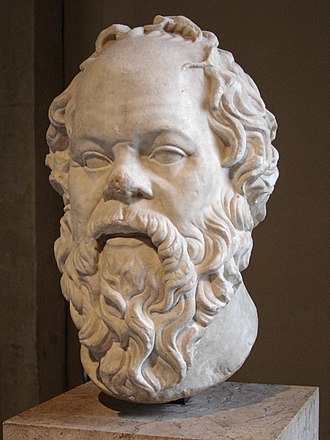
Socrates
The Athenian gadfly who wrote nothing, claimed to know nothing, questioned everyone — and was put to death for it, becoming philosophy’s martyr.
What Are the Limits of the Human Mind?
Can reason know everything — or are there things the mind can never reach? From the Upanishads’ unknowable knower to Kant’s boundary and Wittgenstein’s silence.