


Contents · 13 sections · 15 min
Kierkegaard in Six Ideas
the essentialsTruth is subjectivity
The decisive truths are not objective results but how one exists in relation to them — with passion, commitment, risk.
The three stages
The aesthetic (pleasure, boredom, despair), the ethical (duty, commitment, the universal), the religious (the single individual before God).
The leap of faith
Faith cannot be reached by reasoning; it is a leap into the absurd — believing by virtue of the absurd.
Anxiety
Anxiety is “the dizziness of freedom” — the vertigo of facing what one might do.
Despair
The sickness unto death is despair — not willing to be oneself, or despairingly willing to be oneself.
The teleological suspension of the ethical
Abraham, ready to sacrifice Isaac, stands outside ethics as a single individual in absolute relation to God. Is he a knight of faith or a murderer?
Søren Aabye Kierkegaard lived only forty-two years, almost all of them in Copenhagen, and wrote in Danish, a language few outside Denmark could read. He published most of his books under fantastical pseudonyms — Victor Eremita, Johannes de Silentio, Constantin Constantius, Johannes Climacus, Vigilius Haufniensis, Anti-Climacus — who contradict one another and sometimes review each other’s work. He was mocked in the satirical press for his trousers, which were of uneven length. He died almost unknown outside his city. And in the twentieth century he became recognized as the father of existentialism, a founder of modern psychology of anxiety and despair, a decisive influence on theology, and one of the most original writers in the history of philosophy.
His central question is not “what is true?” but “how should I exist?” — how does a single human being, here and now, with one life and an unavoidable death, become a self? Against Georg Wilhelm Friedrich Hegel‘s System, which explained everything except the person doing the explaining, Kierkegaard set the passionate, choosing, anxious, despairing, believing individual.
Life
The father
Kierkegaard was born on 5 May 1813, the youngest of seven children of Michael Pedersen Kierkegaard, a wealthy, retired Copenhagen hosier. The father had grown up a poor shepherd boy on the Jutland heath, where, Søren later learned, he had once, starving and cold, stood on a hill and cursed God. He had then grown rich — as if, he felt, in punishment. He had also married his housekeeper (Søren’s mother, Ane Sørensdatter Lund) a year after his first wife’s death, when she was already pregnant. He was a melancholy, intensely pious Lutheran, deeply influenced by the Moravian Brethren, who raised his youngest son with a severe, guilt-laden Christianity and a training in dialectic — they would walk up and down the room together imagining walks through Copenhagen, describing everything in detail.
Five of the seven children and the mother died between 1819 and 1834. The father became convinced that a curse lay on the family and that none of the children would live past thirty-three, the age of Christ. Søren later referred to a “great earthquake” — some revelation about his father (perhaps the curse, perhaps a sexual sin) — that shattered his childhood faith.
Student and dandy
He entered the University of Copenhagen in 1830 to study theology, but for years he lived as a dandy — cafés, theatre, fine clothes, debts his father paid — and took ten years to finish his degree. His journals from these years contain the famous entry (Gilleleje, 1 August 1835):
What I really need is to get clear about what I am to do, not what I must know… The thing is to find a purpose, to see what it really is that God wills that I shall do; the crucial thing is to find a truth which is truth for me, to find the idea for which I am willing to live and die.
In 1838 his father died, and Kierkegaard reconciled with his memory, returned to his studies, and inherited a fortune that would support him (until it ran out at his death) as a writer.
Regine
In 1840 he became engaged to Regine Olsen, seventeen, the daughter of a government official. Almost immediately he regretted it. Over the following months he tried to break it off, eventually adopting the strategy of appearing a scoundrel so that she would reject him. In October 1841 the engagement ended. Regine was devastated; Copenhagen was scandalized. Kierkegaard fled to Berlin, where he attended Schelling’s lectures (at first enthusiastically, then with disgust — “Schelling drivels quite insufferably”) and wrote much of Either/Or.
Why did he break it off? He never fully explained. His melancholy, his sense of a religious vocation, his father’s secret, a feeling that he could not reveal himself to her, a conviction that he was not made for marriage — all play a part. The broken engagement became the hidden centre of much of his writing — Repetition, Fear and Trembling, “The Seducer’s Diary”, Stages on Life’s Way. Regine later married Johan Frederik Schlegel, who became governor of the Danish West Indies. Kierkegaard left her everything in his will; she declined it.
The authorship
In an astonishing burst between 1843 and 1846 he published:
| Year | Work | Pseudonym |
|---|---|---|
| 1841 | On the Concept of Irony with Continual Reference to Socrates (dissertation) | — |
| 1843 | Either/Or | Victor Eremita (editor), “A” and “B” |
| 1843 | Fear and Trembling | Johannes de Silentio |
| 1843 | Repetition | Constantin Constantius |
| 1844 | Philosophical Fragments | Johannes Climacus |
| 1844 | The Concept of Anxiety | Vigilius Haufniensis |
| 1845 | Stages on Life’s Way | Hilarius Bookbinder |
| 1846 | Concluding Unscientific Postscript | Johannes Climacus |
| 1847 | Works of Love | — |
| 1849 | The Sickness unto Death | Anti-Climacus |
| 1850 | Practice in Christianity | Anti-Climacus |
Alongside the pseudonymous works he published, under his own name, dozens of “upbuilding discourses” — religious meditations — addressed to “that single individual whom with joy and gratitude I call my reader”.
The Corsair affair
In 1845–46 Kierkegaard provoked the satirical weekly The Corsair, which had praised one of his pseudonymous works, by publicly asking to be attacked rather than praised. The magazine obliged for months with caricatures of his spindly legs, uneven trousers and walking stick; street boys shouted “Either/Or!” after him. He, who had loved walking the streets talking with ordinary people, became a laughing-stock. The experience deepened his contempt for “the crowd” and “the public” and his sense of martyrdom.
The attack on Christendom
In his last years Kierkegaard turned against the Danish state Lutheran Church. When the late Bishop Mynster, his father’s pastor, was eulogized in 1854 as a “witness to the truth”, Kierkegaard exploded. In a series of articles and pamphlets (The Moment) he attacked “Christendom” — a comfortable, bourgeois, state-salaried Christianity that had abolished Christianity by making everyone a Christian by birth. “The Christianity of the New Testament simply does not exist.” He urged people to stop going to church.
In October 1855 he collapsed in the street, perhaps from a spinal infection, and died in Frederiks Hospital on 11 November. He refused communion from a priest of the state church. At his funeral, his nephew caused a scandal by protesting against his burial by the Church he had attacked. His gravestone bears a verse by the hymn-writer Brorson: “In a little while I shall have won…”
The method: indirect communication
Why the pseudonyms? Kierkegaard explained (in The Point of View for My Work as an Author, published posthumously) that he wanted to practise indirect communication, like Socrates. Existential truths cannot be handed over as results; a reader must appropriate them by choosing. So he created characters who embody different “existence-possibilities” — the aesthete, the ethicist, the humourist, the religious — and let them speak for themselves, leaving the reader to decide. “To deceive a person into the truth” is the art of the “maieutic” (midwife) teacher.
This means one must be careful attributing the pseudonyms’ views to Kierkegaard himself. In “A First and Last Explanation” appended to the Postscript, he asked that anyone who quotes the pseudonymous works cite the pseudonym, not him.
Against Hegel: the existing individual
The System
Kierkegaard’s target was the reigning Hegelianism of Danish intellectuals (Johan Ludvig Heiberg, Hans Lassen Martensen). Hegel claimed to comprehend everything in a System in which every opposition is “mediated” — reconciled in a higher unity. Kierkegaard objected that the System explained everything except existence: the concrete situation of a living individual who must choose, act and die.
In relation to their systems most systematizers are like a man who builds an enormous castle and himself lives alongside it in a shed; they do not themselves live in the enormous systematic building. (Journals, 1846)
A logical system is possible; an existential system is impossible. (Postscript)
An existing person is always “in becoming”, never finished; the system requires a finality that only God, viewing from eternity, could have.
Either/Or
Against Hegelian “both/and” mediation, Kierkegaard insists on the either/or of choice. Some alternatives cannot be synthesized; one must choose, and the choosing makes the self.
Truth is subjectivity
The Concluding Unscientific Postscript makes the claim most associated with Kierkegaard: truth is subjectivity. This does not mean that whatever anyone believes is true. It means that for existential and religious questions, what matters is not just what is believed (the objective “what”) but how — the passionate, committed, inward relation of the individual to it (the subjective “how”).
His most famous illustration:
If one who lives in the midst of Christendom goes up to the house of God, the house of the true God, with the true conception of God in his knowledge, and prays, but prays in untruth; and if one who lives in an idolatrous land prays with the entire passion of the infinite, although his eyes rest upon the image of an idol: where is there most truth? The one prays in truth to God though he worships an idol; the other prays falsely to the true God, and hence worships in fact an idol.
The formula: “An objective uncertainty, held fast through appropriation with the most passionate inwardness, is the truth, the highest truth there is for an existing person.”
The stages on life’s way
Kierkegaard describes three fundamental “spheres” or stages of existence. They are not chronological phases everyone passes through but possibilities of life, separated by leaps.
The aesthetic
The aesthete lives for the interesting, the pleasurable, the immediate, the possible. Volume I of Either/Or is the papers of “A”, a young aesthete — brilliant essays on Mozart’s Don Giovanni (the sensuous erotic in music), on tragedy, on boredom (“The Rotation of Crops”: boredom is the root of all evil; the gods were bored, so they created man), aphorisms (“Diapsalmata”), and the notorious “Seducer’s Diary”, in which Johannes the Seducer coldly orchestrates the seduction of a young girl, Cordelia, for the sake of the experience.
The aesthete avoids commitment — of marriage, career, faith — to keep all possibilities open. But this life ends in despair: a self dispersed in moods, with no continuity, no centre. “Marry, and you will regret it; do not marry, and you will also regret it… This, gentlemen, is the sum of all wisdom” (Either/Or I, “Diapsalmata”).
The ethical
Volume II consists of two long letters from Judge William (“B”), a happily married magistrate, urging “A” to choose himself. The ethical person commits — to marriage, work, duty, the universal — and thereby gives his life continuity and seriousness. Choosing is the key: “my either/or does not in the first instance denote the choice between good and evil; it denotes the choice whereby one chooses good and evil or excludes them.” By choosing to take responsibility for his life, a person becomes a self.
The religious
But the ethical, too, has limits. It assumes that the individual can fulfil the universal demand by his own powers, and it cannot cope with guilt, sin and the absolute relation to God. The religious stage — further divided into “Religiousness A” (immanent religiosity, the infinite resignation of the individual) and “Religiousness B” (paradoxical Christianity, faith in the God-man) — requires a leap beyond both aesthetic enjoyment and ethical self-sufficiency.
Between the stages lie irony (the boundary between the aesthetic and ethical) and humour (between the ethical and religious).
Fear and Trembling: Abraham
The story
Fear and Trembling (1843), by “Johannes de Silentio”, is Kierkegaard’s most famous book — see Fear and Trembling and Abraham on Mount Moriah. It is a meditation on Genesis 22: God commands Abraham to sacrifice his son Isaac, the son of the promise, on Mount Moriah. Abraham rises early, saddles his ass, travels three days, binds Isaac on the altar and raises the knife — when an angel stops him, and a ram is offered instead.
Johannes cannot understand Abraham. He retells the story four times, imagining Abraham doubting, deceiving Isaac, despairing; but the real Abraham did none of these. Abraham believed — by virtue of the absurd — both that he would sacrifice Isaac and that he would receive him back.
The three problems
Johannes poses three “problemata”:
- Is there a teleological suspension of the ethical? For Hegel, the ethical — the universal — is the highest; to act as a single individual against the universal is sin. If so, Abraham is a murderer. Faith is the paradox that the single individual stands higher than the universal, in an absolute relation to the absolute.
- Is there an absolute duty to God? If so, the ethical is relativized.
- Was it ethically defensible for Abraham to keep silent before Sarah, Eliezer and Isaac? The ethical requires disclosure; faith cannot be explained.
Knights of resignation and faith
Johannes distinguishes the knight of infinite resignation, who gives up the finite (a beloved, a son) and finds peace in eternal consciousness — Johannes can understand this — from the knight of faith, who gives up everything and gets it back, by virtue of the absurd, and then lives joyfully in the finite. Faith is “the double movement”. The knight of faith looks utterly ordinary — “he looks just like a tax collector!” — he enjoys his Sunday roast; nothing betrays the infinite within.
The scandal
The book is deliberately disturbing. It raises the question every religious ethics must face: can a divine command override morality? (Compare the Faith vs. Reason.) Many readers — Kant had already said that Abraham should have answered that he could not be sure the voice was God’s — think the answer must be no. Kierkegaard does not resolve the tension; he intensifies it, to show that faith, if it exists, is not a comfortable addition to bourgeois morality but something terrifying. Levinas, Derrida (The Gift of Death, 1992) and many theologians have wrestled with it.
Anxiety and despair
The Concept of Anxiety
In The Concept of Anxiety (1844), by “Vigilius Haufniensis” (the watchman of Copenhagen), Kierkegaard offers a psychology of the possibility of sin. Anxiety (Angest) is different from fear: fear has a definite object; anxiety is directed at nothing — at the possibility of possibility, at one’s own freedom. See Anxiety.
Anxiety may be compared with dizziness. He whose eye happens to look down into the yawning abyss becomes dizzy… Hence anxiety is the dizziness of freedom.
Adam before the Fall is innocent, but the prohibition (“you shall not eat”) awakens in him the anxious sense that he can. Anxiety is the psychological condition that precedes the leap into sin — but also, rightly understood, a teacher: “Whoever has learned to be anxious in the right way has learned the ultimate.” This book is the direct ancestor of Martin Heidegger‘s Angst and Jean-Paul Sartre‘s anguish.
The Sickness unto Death
The Sickness unto Death (1849), by “Anti-Climacus” (a Christian of an extraordinarily high order, as Kierkegaard said), defines the self and its central disorder, despair. Its opening is famously dense:
The self is a relation that relates itself to itself, or is the relation’s relating itself to itself in the relation; the self is not the relation but is the relation’s relating itself to itself.
A human being is a synthesis of opposites — infinite and finite, temporal and eternal, freedom and necessity. A self is not simply this synthesis but the activity of relating to it, taking it up. And since the self did not establish itself, it is properly a self only when it rests “transparently in the power that established it” — God.
Despair is the misrelation in this relation — “the sickness unto death”, which is not physical death but the inability to die to oneself. Its forms:
- Despair of infinitude (losing oneself in fantasy) and of finitude (losing oneself in conformity — “to forget oneself… to become a number, a copy, a cipher, one more man in the crowd”);
- Despair of possibility (endless possibilities, no reality) and of necessity (fatalism, nothing is possible);
- Despair that is unconscious of being despair (the commonest);
- Despair of not willing to be oneself (weakness);
- Despair of willing to be oneself — defiantly, without God (defiance).
The opposite of despair is faith. The most common despair, Anti-Climacus adds, is not even knowing one is in despair — which is why the cheerful bourgeois may be in a worse state than the anguished.
Philosophical Fragments: the paradox
Philosophical Fragments (1844), by “Johannes Climacus”, begins with a question from Plato’s Meno: can truth be learned? On the Socratic view, the learner already has the truth within (recollection); the teacher is only an occasion. Climacus asks: what if the learner does not have the truth, and cannot even recognize it — is in “untruth” (sin)? Then the teacher must give not only the truth but the condition for receiving it. Such a teacher would have to be God; and to teach as an equal, out of love, God would have to become a lowly human servant. This is the Absolute Paradox: the eternal in time, God as an individual human being — an offence to reason, which can be received only in faith. The “historical point of departure for an eternal consciousness” is what separates Christianity from Socratic wisdom.
The single individual and the crowd
The crowd is untruth. (The Point of View)
For Kierkegaard, “the public” — the abstract mass created by the press — is a phantom that relieves everyone of responsibility. In Two Ages (1846) he analyses the “present age” as one of reflection without passion, of levelling, in which everything is talked about and nothing done, and envy reduces every distinction to mediocrity. These pages anticipate Martin Heidegger‘s analysis of das Man (the “they”) and twentieth-century critiques of mass society — and Friedrich Nietzsche‘s “herd”, though the two never read each other.
Works of Love
Works of Love (1847), published under his own name, corrects the impression that Kierkegaard’s individual is isolated. It is a profound meditation on the commandment “You shall love your neighbour as yourself”. Preferential love (erotic love and friendship) is natural self-love in disguise; neighbour-love is a duty — and only as a duty is love secured against change: “only when it is a duty to love is love eternally secured against every change.” The neighbour is every human being, equally. One of its most moving chapters is “The Work of Love in Remembering One Who Is Dead” — love for the dead as the freest and most faithful love, since the dead can give nothing back.
Legacy
Discovery
Kierkegaard was little known outside Scandinavia until the Danish critic Georg Brandes lectured on him in the 1870s (and, in 1888, urged Friedrich Nietzsche to read him — too late). German translations appeared from the 1900s.
Theology
Karl Barth’s Epistle to the Romans (1919/22) launched “dialectical theology” on Kierkegaardian themes — the “infinite qualitative difference” between God and man. Rudolf Bultmann, Paul Tillich (The Courage to Be) and Dietrich Bonhoeffer (The Cost of Discipleship, against “cheap grace”) all drew on him.
Existentialism
Karl Jaspers, Gabriel Marcel and Martin Heidegger — whose Being and Time draws heavily, with few acknowledgments, on Kierkegaard’s analyses of anxiety, the “moment”, and the “they” — transmitted his thought to Jean-Paul Sartre and Beauvoir. See Existentialism. Albert Camus admired him but accused him of “philosophical suicide” — escaping the absurd by leaping into faith. Kafka read him with intense identification: “He’s on my side like a friend.”
Psychology and beyond
Rollo May’s The Meaning of Anxiety (1950) and existential psychotherapy (Irvin Yalom) drew on him. Wittgenstein called him “by far the most profound thinker of the last century… a saint”. Philosophers of personal identity, narrative selfhood and commitment (Alasdair MacIntyre, Charles Taylor, Harry Frankfurt) engage his ideas of choice and self-constitution.
Key terms
- Existence
- The concrete, temporal, choosing life of an individual — irreducible to any system.
- Indirect communication
- Communicating existential truth through pseudonyms and irony so the reader must choose for themselves.
- Stages (spheres) of existence
- Aesthetic, ethical, religious — possibilities of life separated by leaps.
- Either/Or
- The decisive choice that cannot be mediated.
- Truth is subjectivity
- For existential truths, the "how" of passionate appropriation matters as much as the "what".
Using Kierkegaard in conversation
- On decisions: “Life can only be understood backwards; but it must be lived forwards.”
- On anxiety: “Anxiety is the dizziness of freedom.”
- On choice: “Marry, and you will regret it; don’t marry, you will also regret it” — the aesthete’s despair.
- On systems and theories: the philosopher who builds a palace and lives in a shed beside it.
Søren Kierkegaard in two minutes
The melancholy Dane, father of existentialism, who set the passionate individual against Hegel’s System and faith against reason — “truth is subjectivity”.
- Truth is subjectivity. The decisive truths are not objective results but how one exists in relation to them — with passion, commitment, risk.
- The three stages. The aesthetic (pleasure, boredom, despair), the ethical (duty, commitment, the universal), the religious (the single individual before God).
- The leap of faith. Faith cannot be reached by reasoning; it is a leap into the absurd — believing by virtue of the absurd.
- Anxiety. Anxiety is “the dizziness of freedom” — the vertigo of facing what one might do.
- Despair. The sickness unto death is despair — not willing to be oneself, or despairingly willing to be oneself.
- The teleological suspension of the ethical. Abraham, ready to sacrifice Isaac, stands outside ethics as a single individual in absolute relation to God. Is he a knight of faith or a murderer?
“Life can only be understood backwards; but it must be lived forwards.” — Journals, 1843 (JJ:167)
Answering: Socrates, Augustine of Hippo, Georg Wilhelm Friedrich Hegel · Answered by: Franz Kafka, Martin Heidegger, Jean-Paul Sartre, Albert Camus
Curiosities
did you know?- He published under at least a dozen pseudonyms who argue with one another.
- A satirical magazine mocked his uneven trouser legs for months.
Questions to Argue About
debate club →- Was Abraham a man of faith or a would-be murderer?
- Is faith a leap that reason cannot make?
Arguments
argument library →Abraham's Dilemma
If the ethical is the highest, Abraham is a murderer; if he is the father of faith, there must be something higher than ethics.
- Abraham is honoured as the father of faith.
- Abraham was willing to kill his innocent son at God’s command.
- If the ethical (the universal) is the highest, such willingness is simply murderous.
∴ Either faith involves a “teleological suspension of the ethical” — or Abraham is lost.
2 objections
- Kant: Abraham should have answered that he could never be certain the voice was God’s, but he could be certain that killing his son was wrong.
- Levinas: The most important moment is when Abraham hears the second voice — the one that stops the knife.
In Their Own Words
3 quotationsLife can only be understood backwards; but it must be lived forwards.
Context & when to use it
Reflection always comes after; we must act before we understand.
For decisions under uncertainty, regret, the limits of hindsight.
Anxiety is the dizziness of freedom.
Context & when to use it
Like vertigo at an abyss — we fear our own possibility.
For existential anxiety, the burden of choice.
The most common form of despair is not being who you are.
Context & when to use it
Kierkegaard distinguishes despair at not willing to be oneself from despair at willing to be oneself.
For authenticity and self-alienation.
⚠ A popular paraphrase, not a direct quotation.
Sententiae
phrases in the originalCredo quia absurdum
Origin. Popularly attributed to Tertullian (c. 155–220 CE). What he actually wrote, in De Carne Christi 5, about the death and resurrection of Christ, is “credibile est, quia ineptum est … certum est, quia impossibile” — “it is credible because it is foolish … it is certain because it is impossible.” — Tertullian
⚠ The exact words “credo quia absurdum” never appear in Tertullian; the sharpened slogan circulated centuries later. Kierkegaard’s leap of faith made the attitude famous again.
When faith is defended precisely by its defiance of reason — and for the paradox at the heart of the absurd.
Angst
Origin. Kierkegaard’s Danish “Angest” (The Concept of Anxiety, 1844), then Heidegger’s Angst in Being and Time. — Martin Heidegger
For existential dread.
Explore Next
related by shared connections
Friedrich Nietzsche
Philosopher with a hammer who announced the death of God, unmasked the genealogy of morality, and called for new values — the will to power, eternal recurrence, the Übermensch, amor fati.
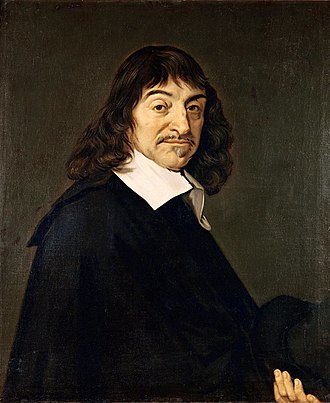
René Descartes
The father of modern philosophy, who doubted everything that could be doubted and found one thing that could not — that he himself was thinking.
The Leap of Faith
Kierkegaard’s claim that faith cannot be reached by reasoning — it is a passionate decision made in the face of the absurd.
The Road of Nihilism
How “nothing matters” became an idea, a movement, a diagnosis, and a test — from Jacobi to Camus.

Immanuel Kant
The philosopher who tried to end the war between rationalism and empiricism by asking what the mind itself contributes to experience — the “Copernican revolution” in philosophy.

Baruch Spinoza
The excommunicated lens-grinder of Amsterdam who identified God with Nature, wrote ethics in the form of geometry, and found freedom in understanding necessity.