Baruch Spinoza says freedom is understanding necessity. Immanuel Kant grounds morality in the autonomous will. Jean-Paul Sartre says we are “condemned to be free.” Dostoevsky’s The Grand Inquisitor argues that humanity cannot bear freedom and will trade it for bread. In the Indian schools, freedom is mokṣa — release from the cycle of birth and death.
Thinkers & Authors
37Kapila
The legendary founder of Sāṃkhya, revered as the “first knower” (ādividvān) and, in later Hinduism, as an incarnation of Viṣṇu — a sage known almost entirely through myth, to whom India credits the first systematic philosophy of consciousness and nature.

Laozi
The legendary “Old Master” credited with the Tao Te Ching — the short, paradoxical classic of the Way that cannot be named, of yielding water and effortless action.
Mahāvīra
The twenty-fourth and last tīrthaṅkara of Jainism — a prince of the eastern Gaṅgā plain who renounced everything at thirty, practised twelve years of extreme austerity, attained omniscience, and taught a path of radical non-violence, truth and non-possession for thirty years.
Zhuangzi
The wittiest of Chinese philosophers — the butterfly dreamer, sceptic, and teller of tales — who mocked fixed perspectives and taught the free and easy wandering of a mind attuned to the Dao.

Seneca
Roman Stoic, playwright and statesman — tutor and adviser to Nero — whose letters on time, death, anger and friendship are among the most readable works of ancient philosophy.

Epictetus
The former slave who became the greatest teacher of Stoicism — “We are disturbed not by things, but by our judgments about things.”
Patañjali
The compiler of the Yoga Sūtras — 196 terse aphorisms that define yoga as the stilling of the mind — honoured by tradition also as the grammarian of the Great Commentary on Pāṇini and as an incarnation of the serpent Ādiśeṣa.
Kundakunda
The most revered Digambara Jain teacher — author of the Samayasāra, which distinguishes the absolute standpoint, from which the soul is pure consciousness untouched by karma, from the conventional standpoint, from which it is bound.

Augustine of Hippo
North African bishop, convert, and the most influential Christian thinker of the Latin West — inventor of the autobiography of the inner self.
Āṇṭāḷ
The only woman among the twelve Tamil Āḻvār saints (9th century) — a girl who wore the garland meant for Viṣṇu, refused any human husband, and wrote the Tiruppāvai and Nācciyār Tirumoḻi, poems of longing for God as her bridegroom.
Abhinavagupta
The towering Kashmiri polymath (c. 950–1016) — the great systematiser of non-dual Kashmir Śaivism and the greatest theorist of Indian aesthetics, who taught that in the experience of art (rasa) the self tastes its own blissful consciousness.
Lal Ded (Lalleśvarī)
The 14th-century Kashmiri Śaiva mystic who wandered naked singing short verses (vākhs) of fierce, non-dual devotion — the mother of Kashmiri literature, claimed equally by Hindus and Muslims.

Niccolò Machiavelli
Florentine diplomat and political theorist whose Prince told rulers how power is actually won and kept — separating politics from conventional morality and giving the world the adjective “Machiavellian”.
Mīrābāī
The 16th-century Rajput princess who declared herself the bride of Kṛṣṇa, defied her royal in-laws, survived (the legends say) cups of poison and a basket with a snake, and left her palace to sing — the most beloved woman poet of North India.
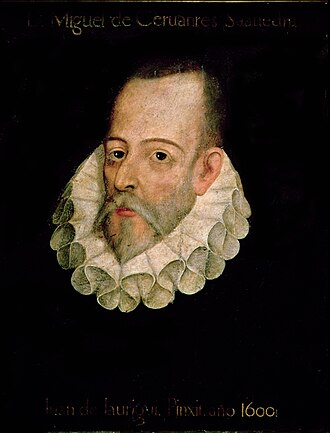
Miguel de Cervantes
Soldier, captive, tax collector and the father of the modern novel — whose Don Quixote made a deluded old knight and his earthy squire the most famous pair in literature.
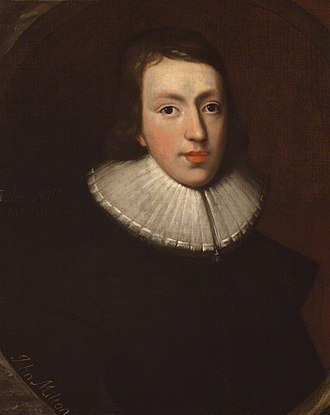
John Milton
English poet, polemicist and revolutionary whose Paradise Lost — written blind, after the defeat of his cause — retells the Fall of Man to “justify the ways of God to men”, and gave literature its most magnificent rebel, Satan.

John Locke
Father of British empiricism and of liberalism — the mind begins as a blank slate, and government rests on the consent of the governed.

Baruch Spinoza
The excommunicated lens-grinder of Amsterdam who identified God with Nature, wrote ethics in the form of geometry, and found freedom in understanding necessity.

Voltaire
The wittiest man of the Enlightenment — playwright, historian, satirist and campaigner against intolerance — whose Candide demolished Leibnizian optimism and whose cry was “Écrasez l’infâme!”

Jean-Jacques Rousseau
The Genevan philosopher of nature, freedom and feeling — “Man is born free, and everywhere he is in chains” — whose Social Contract inspired revolutionaries and whose Confessions invented modern autobiography.

Immanuel Kant
The philosopher who tried to end the war between rationalism and empiricism by asking what the mind itself contributes to experience — the “Copernican revolution” in philosophy.
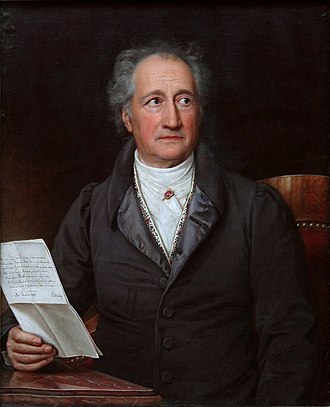
Johann Wolfgang von Goethe
Germany’s greatest writer — poet, novelist, dramatist, scientist and statesman — whose Faust is the modern myth of the striving soul, and whose life was itself treated as a work of art.

Georg Wilhelm Friedrich Hegel
The philosopher of Spirit and dialectic, for whom reality is a rational process working itself out through contradiction in history — “the real is the rational”.

Søren Kierkegaard
The melancholy Dane, father of existentialism, who set the passionate individual against Hegel’s System and faith against reason — “truth is subjectivity”.

Karl Marx
Philosopher, economist and revolutionary who turned Hegel’s dialectic into historical materialism — the history of all hitherto existing society is the history of class struggles.
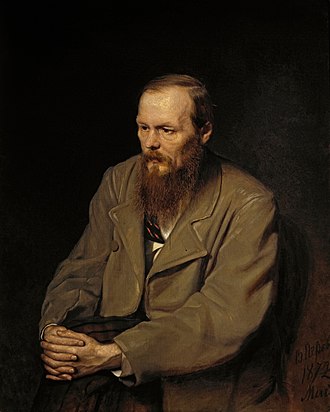
Fyodor Dostoevsky
The Russian novelist of the abyss — crime, faith, freedom, suffering — whose characters argue philosophy with their lives. Nietzsche called him the only psychologist he had anything to learn from.

Nikolai Chernyshevsky
Radical critic and author of What Is to Be Done? — the utopian novel of “rational egoism” that inspired Lenin and provoked Dostoevsky’s Underground Man.

Anton Chekhov
Russian doctor, short-story writer and playwright who revolutionised both forms — stories without neat plots or morals, plays where the drama happens beneath ordinary talk — and became the great artist of wasted lives, quiet longing and compassion.
Rabindranath Tagore
The Bengali poet, novelist, composer, painter, educator and philosopher — the first non-European Nobel laureate in literature (1913, for Gitanjali) — author of the national anthems of India and Bangladesh, founder of Santiniketan, and a universalist who argued with Gandhi and warned the world against nationalism.
Swami Vivekananda
The Bengali monk, disciple of Ramakrishna, who brought Vedānta and Yoga to the West at the 1893 Parliament of Religions in Chicago (“Sisters and brothers of America!”), preached a “practical Vedānta” of service to humanity as service to God, and awakened modern Hindu self-confidence.
Mahatma Gandhi
The leader of India’s independence movement and the philosopher of satyāgraha — “truth-force”, non-violent resistance — who turned the Jain and Hindu ideal of ahiṃsā into a method of mass politics, and whose ideas of truth, non-violence, self-rule and simplicity changed the twentieth century.
Sri Aurobindo
The revolutionary nationalist turned yogi and philosopher of Pondicherry, whose The Life Divine and Integral Yoga teach that evolution is spirit’s ascent through matter, life and mind toward a “supermind” that will divinise earthly life.
Muhammad Iqbal
The Urdu and Persian poet-philosopher of Lahore who preached “khudī” — the self’s dynamic development — as the heart of a reconstructed Islam, wrote “Sāre jahāṅ se acchā” for India, and later envisioned a Muslim homeland that became Pakistan.
B. R. Ambedkar
The Dalit jurist, economist, philosopher and statesman who rose from “untouchability” to become the principal architect of India’s Constitution — the fiercest critic of caste and of the Hindu scriptures that sanctified it, and the founder of modern Indian Buddhism.
Jiddu Krishnamurti
The philosopher raised by the Theosophists to be a “World Teacher”, who renounced the role in 1929 — “truth is a pathless land” — and spent sixty years teaching that freedom comes only from seeing the movement of one’s own mind, without authority, method or guru.

Jean-Paul Sartre
The face of French existentialism — existence precedes essence, we are condemned to be free, and hell is other people.

Simone de Beauvoir
French existentialist philosopher and novelist whose The Second Sex (1949) — “One is not born, but rather becomes, a woman” — founded modern feminist philosophy, and whose ethics of ambiguity argued that my freedom requires the freedom of others.
Works
18
Antigone
Sophocles’ tragedy of the young woman who buries her brother against the king’s decree — the founding drama of conscience against the state, which Hegel read as the collision of two rights.

Tao Te Ching
The 81 short chapters of the “Classic of the Way and its Power” — the foundational text of Daoism and one of the most translated books ever written.
The Dhammapada
423 verses of the Buddha’s teaching in 26 chapters — on the mind, the fool and the wise, anger, craving, the path and the true Brahmin. The best-loved Buddhist scripture, and the shortest door into the Buddha’s ethics.
Mūlamadhyamakakārikā
Nāgārjuna’s 450 verses in 27 chapters — the founding text of Madhyamaka, which examines causation, motion, the self, time and nirvāṇa, and shows that nothing has intrinsic existence; everything is empty because everything is dependent.
Tattvārtha Sūtra
Umāsvāti’s “Manual of the Meaning of the Reals” — the first Sanskrit summary of Jain philosophy, 350 sūtras accepted by both Digambaras and Śvetāmbaras, covering knowledge, souls, the universe, karma, ethics and liberation.
The Heart Sūtra
The shortest and most famous Mahāyāna scripture — a single page in which the bodhisattva Avalokiteśvara declares that “form is emptiness, emptiness is form”, negates every Buddhist category, and ends with a mantra: “gone, gone, gone beyond, gone altogether beyond — awakening, hail!”
The Yoga Sūtras
Patañjali’s 196 aphorisms — the root text of classical Yoga — which define yoga as the stilling of the mind’s fluctuations, diagnose the afflictions that cause suffering, set out the eight limbs of practice, and end in the “isolation” of pure consciousness.
Sāṃkhya Kārikā
Īśvarakṛṣṇa’s 72-verse poem that is the classical statement of Sāṃkhya philosophy — from the threefold suffering of life, through the evolution of nature in twenty-five principles, to the liberating vision in which nature, “seen”, stops dancing.

Don Quixote
Cervantes’s comic masterpiece about a country gentleman driven mad by chivalric romances, who sets out as a knight-errant with his squire Sancho Panza — often called the first modern novel and the greatest ever written.
Critique of Practical Reason
Kant’s second Critique — the moral law is a fact of reason, and through it we know we are free.
Phenomenology of Spirit
Hegel’s first masterpiece — the “voyage of discovery” of consciousness through sense-certainty, self-consciousness, reason, spirit and religion to absolute knowing.
What Is to Be Done?
Chernyshevsky’s prison-written utopian novel of “new people” and rational egoism — badly written, enormously influential, the target of Dostoevsky’s Underground Man.

Notes from Underground
A spiteful, hyper-conscious ex-official rants from his “mousehole” against reason, progress and the Crystal Palace — often called the first existentialist novel.

The Brothers Karamazov
Dostoevsky’s last and greatest novel — a murdered father, three brothers (the sensualist, the intellectual, the saint), and the deepest debate about God and evil in literature.
Hind Swaraj
Gandhi’s 1909 manifesto, written in ten days on a ship — a dialogue in which the “Editor” tells an impatient “Reader” that true home rule is rule over oneself, that modern civilisation is a disease, and that India must win freedom by non-violence and the spinning wheel.
Gitanjali
Tagore’s 1912 collection of devotional prose-poems, translated by himself from Bengali, which won the 1913 Nobel Prize — intimate songs to a God found in nature, in human labour, in love and in death.
Annihilation of Caste
Ambedkar’s 1936 undelivered speech — the most powerful critique of caste ever written — arguing that caste is a division of labourers, not of labour, that it rests on the authority of the Hindu scriptures, and that it cannot be reformed but only destroyed.
Existentialism Is a Humanism
Sartre’s 1945 public lecture — the most popular statement of existentialism — existence precedes essence, man is condemned to be free.
Ideas
9Karma
“Action” — and the law that every intentional action leaves a trace that ripens, in this life or a future one, as happiness or suffering. Shared by Hindus, Buddhists, Jains and Sikhs, karma explains the inequalities of fortune without a judge, and binds the self to the round of rebirth.
Mokṣa
Liberation — release from the cycle of rebirth and from all suffering, the highest goal of human life in the Hindu and Jain traditions (and, as nirvāṇa, in Buddhism). Every Indian school defines it differently, and the arguments over what it is, and how it is won, are the backbone of Indian philosophy.
Nirvāṇa
The Buddhist goal — the “blowing out” of the fires of greed, hatred and delusion, the end of suffering and of rebirth. The Buddha described it as unborn and unconditioned, and refused to say whether the awakened exist after death.
The Categorical Imperative
Kant’s supreme principle of morality — act only on maxims you could will as universal laws; treat humanity always as an end, never merely as a means.
Geist (Spirit)
Hegel’s name for reality as self-knowing mind unfolding through nature, history, culture and philosophy.
The Leap of Faith
Kierkegaard’s claim that faith cannot be reached by reasoning — it is a passionate decision made in the face of the absurd.
Anxiety
Not fear of something, but dread before freedom and nothingness — for Kierkegaard “the dizziness of freedom”, for Heidegger the mood that reveals the nothing.
Bad Faith
Self-deception about one’s own freedom — pretending to be a thing, determined by role or nature, to escape the anguish of choice.
Existence Precedes Essence
Sartre’s formula — humans have no pre-given nature; we exist first and make ourselves through our choices.
Schools & Movements
11Jainism
The ancient Indian tradition of the Jinas — radical non-violence toward every living being, a soul weighed down by karmic matter, the “many-sidedness” of truth, and liberation by self-discipline without a creator God. Small in numbers, immense in influence.
Buddhism
The tradition founded by the Buddha — suffering, impermanence, no-self, and the path to nirvāṇa — later dividing into Theravāda, Mahāyāna (Madhyamaka, Yogācāra) and Vajrayāna.
Sāṃkhya
The oldest of the classical Indian systems — a radical dualism of pure, inactive consciousness (puruṣa) and active, unconscious nature (prakṛti) with its three strands, the guṇas. Liberation is seeing that consciousness was never really entangled in nature.
Daoism
The Chinese tradition of the Dao — the nameless Way of nature — teaching spontaneity, simplicity, effortless action and harmony with the flow of things.
Stoicism
The Hellenistic and Roman philosophy of virtue, reason and acceptance — happiness lies in what is up to us, our judgments and choices, not in external things.
Yoga (darśana)
The classical school of Patañjali — Sāṃkhya’s dualism of consciousness and nature, plus a God and a practical method — defining yoga as “the stilling of the fluctuations of the mind” and mapping the eight limbs from ethics to absorption.
The Bhakti Movement
The great devotional revolution of Indian religion — from the Tamil Āḻvārs and Nāyaṉārs (6th–9th centuries) to Kabīr, Mīrābāī, Tulsīdās and Tukārām — which made passionate, personal love of God, sung in the languages of the people, a path to liberation open to every caste and to women.
Kashmir Śaivism
The non-dual Śaiva philosophy of medieval Kashmir — reality is the free, self-aware consciousness of Śiva, who playfully contracts himself into the many selves and the world, and liberation is the recognition that you are Śiva. The world is not illusion but God’s self-expression.
The Enlightenment
The eighteenth-century movement that put reason, science, tolerance and individual liberty at the centre of human affairs — “Sapere aude!”
German Idealism
The extraordinary philosophical movement after Kant — Fichte, Schelling, Hegel — that tried to complete his revolution by showing reality itself to be the work of mind or Spirit.
Existentialism
The philosophy of the existing individual — freedom, anxiety, authenticity, the absurd — running from Kierkegaard and Dostoevsky through Nietzsche and Heidegger to Sartre and Camus.
Debates
2Gandhi vs. Ambedkar
The great argument of modern India — can caste be reformed from within Hinduism, as Gandhi believed, or must it be annihilated, with the scriptures that sanctify it, as Ambedkar argued?
Sartre vs. Camus
The most famous intellectual break of the twentieth century — two friends of the Resistance fall out in 1952 over revolution, violence, and The Rebel.
Characters
2Alexei Kirillov
The engineer in Demons who reasons that if God does not exist, man must become God — and that the supreme act of self-will is suicide.
The Underground Man
Dostoevsky’s nameless, spiteful, hyper-conscious narrator who rebels against reason, progress and his own interests to prove he is free.
Great Scenes
2The Grand Inquisitor
Ivan Karamazov’s prose-poem — Christ returns to sixteenth-century Seville, and the aged Cardinal Inquisitor imprisons him, explaining that humanity cannot bear the freedom He offered.
Lordship and Bondage
Hegel’s parable — two self-consciousnesses fight for recognition to the death; one yields and becomes slave; but the slave, through fear and labour, wins the truer freedom.
Great Questions
4How Should One Act? — Dharma, Karma and Freedom
The Indian argument about action — from Vedic sacrifice to the Gītā’s action without attachment, the Buddha’s intention, the Jain refusal to harm, Kauṭilya’s realism, Gandhi’s satyāgraha and Ambedkar’s constitutional morality.
Are We Free?
Fate, karma, determinism, compatibilism, radical freedom — the long argument over whether we choose what we do.
What Is Justice?
From Thrasymachus’s “advantage of the stronger” to Rawls’s veil of ignorance — the question of what we owe each other and who should rule.
What Is the Self? — The Indian Argument
Three thousand years of Indian argument about the “I” — from the Upaniṣads’ Self that is Brahman, through the Buddha’s no-self, the Jain soul, the Nyāya substance, Sāṃkhya’s witness, to Ramana’s “Who am I?” and Ambedkar’s social self.
Lines to Remember
22 quotationsAnxiety is the dizziness of freedom.
Context & when to use it
Like vertigo at an abyss — we fear our own possibility.
For existential anxiety, the burden of choice.
Man is condemned to be free; because once thrown into the world, he is responsible for everything he does.
L'homme est condamné à être libre.
Context & when to use it
Condemned, because we did not create ourselves; free, because nothing determines us.
For responsibility without excuses.
Existence precedes essence.
L'existence précède l'essence.
Context & when to use it
The one-line definition of existentialism.
Hell is other people.
L'enfer, c'est les autres.
Context & when to use it
Three dead people locked in a room realize they are each other’s torturers — through the judging gaze.
For the gaze of others, social judgment, being trapped by how others see us.
⚠ Sartre later said it means that our relations with others are poisoned when we depend wholly on their judgment — not that other people are hell.
Two things fill the mind with ever new and increasing admiration and awe, the more often and steadily we reflect upon them: the starry heavens above me and the moral law within me.
Zwei Dinge erfüllen das Gemüt mit immer neuer und zunehmender Bewunderung und Ehrfurcht, je öfter und anhaltender sich das Nachdenken damit beschäftigt: der bestirnte Himmel über mir und das moralische Gesetz in mir.
Context & when to use it
The closing of the second Critique. The first “thing” humbles us — we are specks in an infinite cosmos; the second elevates us — as moral beings we stand outside the mechanism of nature. It is engraved on Kant’s tomb in Königsberg.
For wonder, for the dignity of conscience, or to answer anyone who says science has made morality small.
Out of the crooked timber of humanity no straight thing was ever made.
Aus so krummem Holze, als woraus der Mensch gemacht ist, kann nichts ganz Gerades gezimmert werden.
Context & when to use it
Kant on the difficulty of perfect government — the ruler is himself a human being who needs a master. Isaiah Berlin made it the title of a famous book.
Against utopias and perfectionist politics.
All things excellent are as difficult as they are rare.
Sed omnia praeclara tam difficilia, quam rara sunt.
Context & when to use it
For the difficulty of wisdom and freedom.
The philosophers have only interpreted the world, in various ways; the point, however, is to change it.
Die Philosophen haben die Welt nur verschieden interpretiert; es kömmt drauf an, sie zu verändern.
Context & when to use it
For praxis over theory; carved on his tomb in Highgate.
One is not born, but rather becomes, a woman.
On ne naît pas femme, on le devient.
Context & when to use it
The first line of the volume on lived experience.
For gender as social formation rather than fixed nature.
To will oneself free is also to will others free.
Context & when to use it
Against the charge that existentialist freedom is selfish.
The mind is its own place, and in itself / Can make a Heaven of Hell, a Hell of Heaven.
Context & when to use it
For the power of attitude — and its limits.
⚠ Spoken by Satan — and the poem shows him unable to escape his own Hell.
I made him just and right, / Sufficient to have stood, though free to fall.
Context & when to use it
For the free-will theodicy.
Who kills a man kills a reasonable creature, God’s image; but he who destroys a good book, kills reason itself.
Context & when to use it
Against censorship and book-burning.
Feed men, and then ask of them virtue!
Context & when to use it
What the people will inscribe on their banner, according to the Inquisitor — they will choose bread over freedom.
For welfare versus liberty, materialism, the politics of bread and circuses.
Nothing has ever been more insupportable for a man and a human society than freedom.
Context & when to use it
The Inquisitor’s accusation against Christ.
For Erich Fromm’s “escape from freedom”, authoritarianism, consumer comfort.
Twice two makes four is no longer life, gentlemen, but the beginning of death.
Context & when to use it
Against a world fully explained by reason — he even admits “twice two makes five is sometimes a very charming thing too.”
Against technocracy, determinism, utopias of calculation.
Man… would deliberately desire the most fatal rubbish… simply to prove to himself that men are still men and not the keys of a piano.
Context & when to use it
Against rational egoism — the most advantageous advantage is one’s own free, even foolish, choice.
Against behavioural economics, social engineering, algorithmic prediction of humans.
If there is no God, then I am God.
Context & when to use it
Kirillov’s logic — if God is dead, the highest point of my self-will is to kill myself.
For the man-god, the Übermensch before Nietzsche, the logical suicide.
Starting from unlimited freedom, I arrive at unlimited despotism.
Context & when to use it
The revolutionary theorist describing his own system.
For how utopian revolutions end in tyranny — prophetic of the twentieth century.
The fault, dear Brutus, is not in our stars, but in ourselves, that we are underlings.
Context & when to use it
Cassius tempting Brutus to conspire against Caesar.
For free will against fate, responsibility, Sartre before Sartre.
Freedom, Sancho, is one of the most precious gifts heaven has bestowed upon men; no treasure the earth holds or the sea conceals can compare with it.
Context & when to use it
For liberty — written by a man who spent five years as a slave.
In the beginning was the Deed.
Im Anfang war die Tat.
Context & when to use it
Faust, translating John’s Gospel, rejects “Word”, “Mind” and “Power” for “Deed”.
For action over words.
Sententiae
phrases in the originalSapere aude!
Origin. Horace, Epistles I.2.40 (“dimidium facti qui coepit habet; sapere aude” — “he who has begun is half done; dare to be wise”). Kant made it the motto of the Enlightenment in “What Is Enlightenment?” (1784). — Immanuel Kant
For intellectual courage and thinking for yourself.
Angst
Origin. Kierkegaard’s Danish “Angest” (The Concept of Anxiety, 1844), then Heidegger’s Angst in Being and Time. — Martin Heidegger
For existential dread.
L'enfer, c'est les autres
Origin. Sartre, No Exit (Huis clos), 1944. — Jean-Paul Sartre
⚠ Sartre said it means that if our relations with others are twisted, others become hell — because we depend on their judgment to know ourselves.
For the tyranny of the gaze and of reputation.
L'existence précède l'essence
Origin. Sartre, Existentialism Is a Humanism (1945). — Jean-Paul Sartre
The motto of existentialism.
Mauvaise foi
Origin. Sartre, Being and Nothingness (1943). — Jean-Paul Sartre
For self-deception, hiding behind roles.
Explore Next
related by shared connections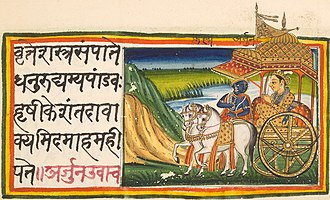
The Bhagavad Gītā
The “Song of the Lord” — Kṛṣṇa’s teaching to the despairing warrior Arjuna on the battlefield of Kurukṣetra, on duty, action without attachment, knowledge and devotion.
Advaita Vedānta
Non-dualist Vedānta — Brahman alone is real, the world is appearance (māyā), and the self is identical with Brahman.

David Hume
The great Scottish sceptic who showed that causation, the self, and induction cannot be justified by reason — and that reason is, and ought only to be, the slave of the passions.
Kabīr
The 15th-century weaver-poet of Vārāṇasī who mocked both Hindu and Muslim orthodoxy, taught devotion to a formless God found within, and left the most quoted couplets (dohās) in the Hindi language.

Gautama Buddha
The prince who left his palace to seek an end to suffering, awoke under the Bodhi tree, and taught the Four Noble Truths, the Middle Way and no-self (anattā).
Rational Egoism
Chernyshevsky’s doctrine that people always act from self-interest, and that enlightened self-interest will make everyone good.